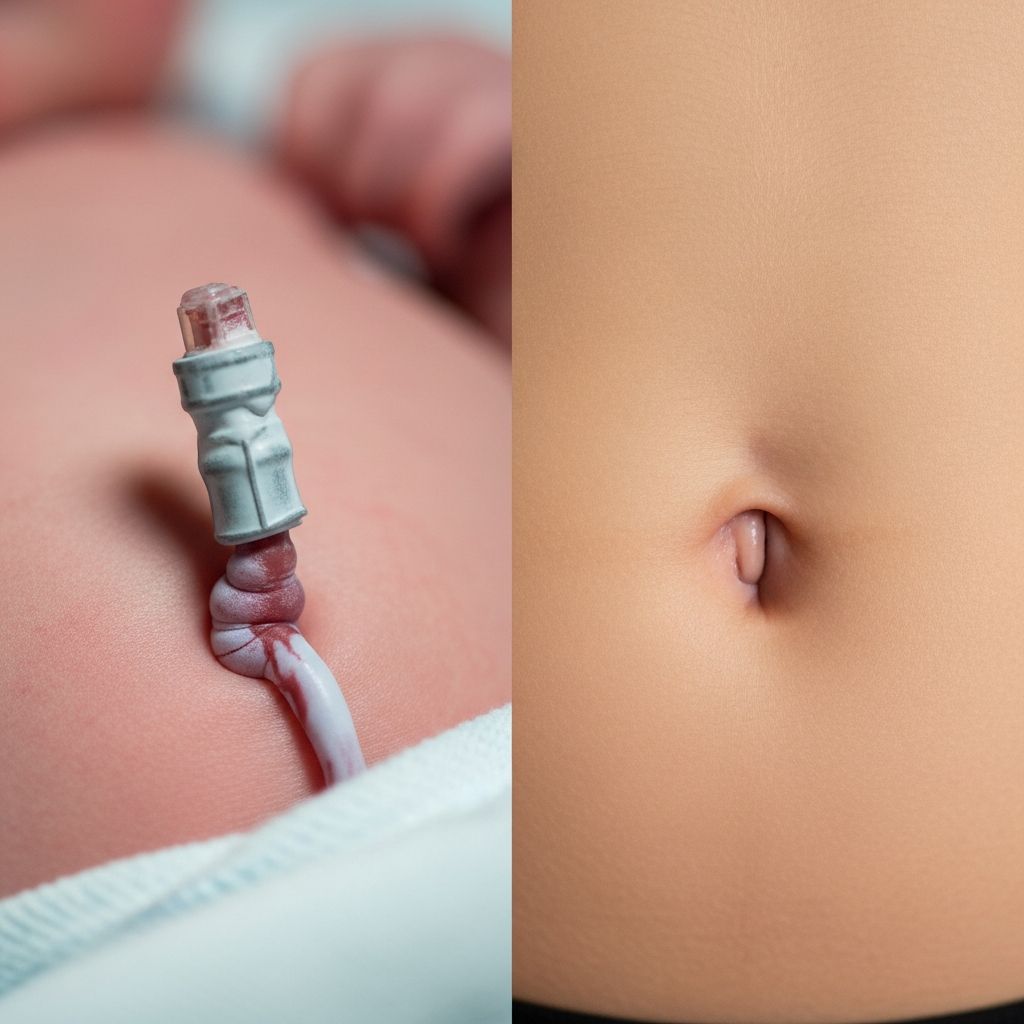
Your belly button, also called the navel, is a small mark in the center of your tummy that tells a big story about how you grew before you were born. It is the spot where your body was once attached to the umbilical cord, the cord that carried oxygen and nutrients from the placenta to you while you were in the uterus.
What Exactly Is a Belly Button?
A belly button is a scar on the front of your abdomen. It forms after the umbilical cord is cut and the short stump that is left behind dries up and falls off. The skin then heals, leaving a tiny dimple or bump.
In simple terms:
- The umbilical cord connects a fetus to the placenta, acting like a lifeline.
- After birth, the cord is clamped and cut because a baby can now breathe and eat on their own.
- The leftover stump shrivels and drops off within weeks, and the remaining area heals into the belly button.
How the Umbilical Cord Works Before Birth
Long before you ever saw your belly button, the umbilical cord was busy keeping you alive and growing. It starts forming around the third week of pregnancy and becomes fully developed by about the seventh week.
| Umbilical Cord Feature | What It Does |
|---|---|
| Umbilical vein | Carries oxygen-rich blood and nutrients from the placenta to the fetus. |
| Two umbilical arteries | Carry oxygen-poor blood and waste products from the fetus back to the placenta. |
| Wharton’s jelly | A soft, jelly-like tissue that cushions and protects the blood vessels inside the cord so they do not get squashed or twisted too tightly. |
| Average length | Usually about 50–60 centimeters long at birth (around the length of two school rulers). |
Inside the uterus:
- The placenta attaches to the inside of the uterus and acts like a temporary organ that trades oxygen, nutrients, and waste between mother and fetus.
- The umbilical cord connects the fetus to the placenta, making sure the fetus gets everything needed to grow.
- Blood flows through the cord in a loop: from the fetus to the placenta through arteries and back through a vein.
From Cord to Navel: What Happens at Birth?
At birth, a baby starts breathing air and can be fed by mouth, so the umbilical cord is no longer needed. The cord is clamped in two places and cut in between, leaving a small stump still attached to the baby’s tummy.
Over the next one to three weeks:
- The stump dries out, shrinks, and turns dark brown or black.
- Eventually it falls off on its own.
- The skin underneath heals, leaving behind the belly button.
Inside the body, the blood vessels from the cord close and turn into small bands of tissue called ligaments that help support certain organs, like the liver and parts of the abdominal wall.
Innies and Outies: Why Do Belly Buttons Look Different?
Lots of kids wonder why some people have belly buttons that go inward and others have ones that stick out. The main types are:
- Innie – a dimple or small hollow.
- Outie – a small bump or knob that sticks outward.
Most people have innies. Whether someone has an innie or an outie mostly depends on how the skin and tissues heal after the cord stump falls off, not on how the cord was cut or tied.
Sometimes an outie can be caused by a tiny bulge of tissue called an umbilical hernia, where a small part of the intestine or abdominal lining pushes through a weak spot near the navel. Many umbilical hernias in babies close on their own as the abdominal muscles grow stronger.
Fun Facts About Belly Buttons
- Every person’s belly button is unique, just like fingerprints.
- Humans are not the only animals with navels — other mammals that grow with a placenta also have them, though they can be harder to see under fur.
- After birth, the belly button does not connect to any open tube or hole into the belly; it is closed skin and scar tissue.
- Some medical procedures use the navel as a tiny doorway to place instruments for surgery, because it is in the middle of the abdomen and the scar tends to blend in.
Keeping Your Belly Button Clean and Healthy
Even though your belly button is small, it can collect sweat, dead skin, and dirt. Keeping it clean is part of good hygiene.
Tips for kids:
- Wash your belly button gently when you bathe, using warm water and mild soap.
- Rinse well so no soap is left inside a deep innie.
- Dry it carefully with a soft towel so it does not stay damp.
- Avoid poking sharp objects or cotton swabs deep into your navel.
- Tell an adult if you see redness, swelling, bad smell, or discharge.
Parents are usually given special instructions by health professionals on how to keep a newborn’s umbilical stump clean and dry until it falls off, which helps prevent infection.
When Belly Buttons Need a Doctor’s Check
Most of the time, belly buttons do not cause trouble. But there are a few signs that mean a child should see a healthcare professional:
- Redness, warmth, or swelling around the navel.
- Yellow or green fluid, blood, or a bad smell from the belly button area.
- A soft bulge near the navel that gets bigger when you cry, cough, or strain (this may be an umbilical hernia).
- Pain when touching the area near the belly button.
Doctors and nurses see belly buttons all the time and can quickly check if something is wrong and how to fix it. Many umbilical hernias are monitored and close without surgery, but some may need a simple operation if they stay large or cause symptoms.
The Science Behind How the Navel Forms
During early development, the body changes shape and the umbilical cord gradually forms from tissues that include the body stalk, yolk sac connection, and a structure called the allantois. As the fetus grows, the abdomen closes around the area where the cord enters, creating a ring of tissue called the umbilical ring.
By about the tenth to twelfth week of pregnancy, the intestines, which briefly extend into the cord as they grow, move back fully into the abdominal cavity. After birth and cord cutting, this opening in the abdominal wall stays closed and becomes the site of the belly button scar.
Common Myths About Belly Buttons
- Myth: How neatly the cord is cut decides whether you have an innie or an outie.
Fact: The shape mostly depends on how skin and tissues heal and whether there is a small hernia, not on the cutting style. - Myth: The belly button is a hole that leads straight into your stomach.
Fact: It is a closed scar on the skin. Inside, the original blood vessels have closed and turned into ligaments. - Myth: You should never touch or wash your belly button.
Fact: Gentle cleaning is safe and healthy. Rough poking or using sharp objects is what should be avoided.
How Doctors Use the Belly Button in Medicine
Because the navel is in the center of the abdomen, doctors sometimes use it as a helpful landmark or entry point:
- In some minimally invasive surgeries, tiny instruments can be inserted through or near the belly button to reduce visible scarring.
- Doctors examine the navel in newborns to make sure the cord stump is healing properly and there are no early signs of infection or hernia.
- In anatomy and physical exams, the area around the navel is often used to help divide the abdomen into regions for checking organs.
Quick Belly Button Facts for Kids
- The belly button is the leftover mark from where the umbilical cord was attached before birth.
- The cord carried oxygen and nutrients from the placenta to the fetus and removed waste products.
- After birth, the cord is cut, the stump falls off, and the skin heals into the navel.
- Innies and outies are both normal and mostly depend on healing and body shape.
- Keeping your belly button clean, dry, and free from irritation helps it stay healthy.
Frequently Asked Questions (FAQs)
Why do we need an umbilical cord in the first place?
Before birth, a fetus cannot eat food or breathe air, so the umbilical cord connects it to the placenta, which delivers oxygen and nutrients and carries away waste through the blood.
Does the belly button do anything after I am born?
After birth, the belly button does not transport blood or food anymore. It mostly serves as a scar and a landmark on your body, although the hidden ligaments inside remain from the old blood vessels.
Can cleaning my belly button be dangerous?
Gentle cleaning with water and mild soap is safe. Problems usually only happen if something sharp is pushed inside or if strong chemicals are used. If cleaning hurts, stings, or causes bleeding, you should stop and tell an adult.
Is an outie belly button bad or unhealthy?
Not usually. Many outies are just normal shapes of healed skin. Sometimes an outie can be related to a small umbilical hernia, which doctors can check. Most small hernias in babies get better as they grow.
Will my belly button change shape as I get older?
It can look a little different as you grow, gain or lose weight, or if you have surgery near the area, but it usually stays in about the same place at the center of your abdomen.
References
- Embryology, Umbilical Cord — Bianchi DW, et al., StatPearls Publishing. 2023-07-10. https://www.ncbi.nlm.nih.gov/books/NBK557490/
- Anatomy, Abdomen and Pelvis: Umbilical Cord — Nanduri VR, StatPearls Publishing. 2023-02-27. https://www.ncbi.nlm.nih.gov/books/NBK557389/
- Development of the Umbilical Cord — Osmosis / Elsevier. 2020-01-01. https://www.osmosis.org/learn/Development_of_the_umbilical_cord
- Umbilical Cord — Cleveland Clinic. 2022-08-01. https://my.clevelandclinic.org/health/body/umbilical-cord
- Umbilical cord — Stanford Medicine Children’s Health (patient education). 2021-06-01. https://www.stanfordchildrens.org/en/topic/default?id=umbilical-cord-90-P02382