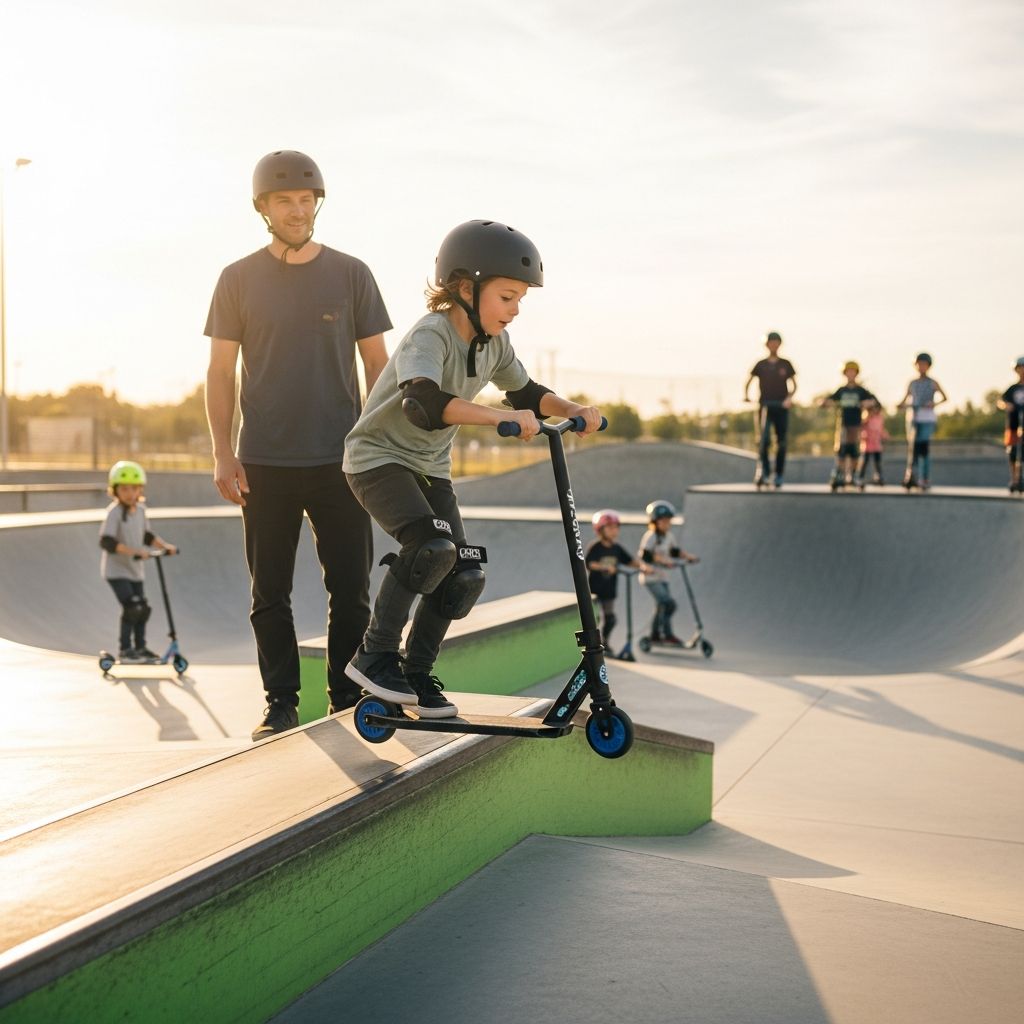
Watching kids zip around on scooters is exciting, but when they start asking how to “do tricks,” many parents worry about safety. This guide explains beginner scooter tricks in simple language, builds skills step by step, and shows how to keep things as safe as possible while still letting kids have fun.
Everything here is designed for beginners who can ride a scooter comfortably in a straight line but are new to tricks and stunts. You will find safety tips, skill progressions, and easy moves that help kids feel proud without pushing them too far, too fast.
Why Start With Simple Scooter Tricks?
Beginning with basic tricks helps kids build balance, coordination, and confidence before they try anything advanced. Simple moves give them a sense of progress, which keeps them motivated to ride and practice regularly.
Starting small also allows parents to set clear rules around safety gear, practice areas, and supervision. When expectations are in place from the beginning, it is much easier to keep trick-practice fun instead of stressful.
Essential Safety Rules Before Any Tricks
No trick is worth getting hurt. Before attempting even the easiest move, make sure your rider has the right protection and understands basic safety rules. Treat this as part of the trick-learning process, not an optional extra.
Protective Gear Checklist
- Helmet: A properly fitted, buckled helmet is non-negotiable for every ride.
- Wrist guards: Helpful for beginners who tend to catch themselves with their hands when they fall.
- Knee and elbow pads: Reduce scrapes and bruises, especially when learning tricks that involve small jumps.
- Closed-toe shoes: Sneakers with good grip protect toes and help riders keep steady footing on the deck.
- Comfortable clothing: Avoid long, loose strings or baggy items that can catch on wheels or bars.
Choosing a Safe Practice Area
Location matters just as much as gear. A busy street or rough hill is never the right place for a new rider to experiment with tricks. Look for a space that keeps distractions and hazards to a minimum.
- Use flat, smooth ground such as a quiet driveway, empty parking lot, or park path.
- Avoid steep slopes, gravel, puddles, and cracked pavement, which increase the risk of falls.
- Keep small children, pets, and obstacles out of the practice area so the rider can focus.
- For younger kids, stay close enough to guide and step in if needed.
Warm-Up and Scooter Control Basics
Just like any sport, a quick warm-up and review of basic skills make tricks easier and safer. Think of this section as a checklist: when these moves feel easy, your rider is ready to try simple tricks.
Quick Off-Scooter Warm-Up
- March in place for 30–60 seconds to wake up the legs.
- Do gentle ankle circles and calf stretches to prepare for pushing and landing.
- Swing arms forward and backward to loosen shoulders for steering and balance.
Core Riding Skills to Master First
| Skill | What It Looks Like | Why It Matters for Tricks |
|---|---|---|
| Balanced push | Rider pushes with one foot while the other stays steady on the deck. | Stable pushing makes it easier to prepare for jumps and quick movements. |
| Controlled stop | Rider can use the brake or foot to stop smoothly without wobbling. | Safe landings and bailing out of tricks require reliable stopping. |
| Gentle turns | Rider can turn left and right without losing balance. | Turns set up many tricks and help avoid obstacles. |
| Two-hand control | Both hands stay on the bars during normal riding. | Strong grip is the foundation of every bar-based trick. |
Foundational Trick: The Small Lift
Before any noticeable jump, kids should learn how to “lighten” the scooter under their feet. The goal is not height but control—teaching the body how it feels when both wheels leave the ground, even for a moment.
How to Practice the Small Lift
- On a flat surface, have the rider roll slowly forward with both feet on the deck.
- Ask them to bend their knees slightly, keeping their back straight and eyes forward.
- They gently pull up on the handlebars and push through their legs at the same time, lifting the wheels just a few centimeters off the ground.
- Land softly with bent knees, then roll away and repeat.
Encourage short, frequent practice sessions instead of long, tiring ones. Fatigue makes kids careless with form and more likely to fall. Once the small lift feels smooth, they are ready for tricks that build directly on this motion.
Beginner Trick 1: Basic Hop
The basic hop is simply a more confident version of the small lift. Both wheels leave the ground at the same time, and the rider learns to stay balanced while the scooter is in the air. This move becomes the starting point for many other tricks.
Step-by-Step Basic Hop
- Start at walking speed with both feet firmly on the deck and hands gripping the bars.
- Bend the knees deeper than for the small lift, lowering the body slightly.
- Jump upward using the legs while gently pulling the scooter up with the arms.
- Focus on keeping the scooter level, so front and back wheels leave and return to the ground together.
- Land with knees bent and roll forward to absorb the impact.
Remind kids that a low, controlled hop is better than a high, wobbly one. Mastery means being able to repeat the hop several times in a row without losing balance or drifting sideways.
Beginner Trick 2: Front Wheel Pop
The front wheel pop teaches riders how to shift their weight backward without tipping over. It helps with future tricks that require quick direction changes or small jumps off curbs or bumps.
How to Do a Front Wheel Pop
- Have the rider roll very slowly or even stand still at first.
- They bend their knees slightly and lean their chest back just a bit.
- At the same time, they gently pull up on the bars until the front wheel lifts a short distance off the ground.
- They keep their weight centered over the back wheel and do not yank hard on the bars.
- Lower the front wheel smoothly and continue rolling.
This trick should feel like a quick, controlled lift—not a big wheelie. If the scooter pops too high, ask your child to use smaller movements and slower speed.
Beginner Trick 3: Side Step Mount
The side step mount is a simple, stylish way to get onto the scooter. It teaches coordination and timing without requiring any jumping, making it a good choice for timid beginners.
Side Step Mount Instructions
- Place the scooter still on flat ground with the deck beside the rider.
- The rider steps one foot across the deck from the side, placing it near the front.
- As that foot settles, they gently push off the ground with the other foot.
- They bring the pushing foot onto the deck behind the first foot as the scooter starts to roll.
- Once both feet are on, they stand tall and ride away.
Once the basic version feels easy, kids can experiment with different step patterns, such as crossing one foot behind the other before stepping on. Keep the focus on smooth movement, not speed.
Beginner Trick 4: Gentle Scooter Spin-Around
This trick teaches kids how to turn the scooter around in a full circle while keeping at least one wheel on the ground. It improves balance and helps them learn to move both the scooter and their body together.
Step-by-Step Spin-Around
- Start from a complete stop with the rider standing on the scooter.
- They place one foot on the deck and the other lightly on the ground for control.
- The rider gently pushes the back of the scooter around in a circle using their ground foot, turning their body with it.
- They continue pushing and turning until they have rotated all the way around.
- Once comfortable, they can try doing the turn while rolling very slowly instead of from a full stop.
Encourage riders to try spinning in both directions. This prevents them from becoming one-sided and makes future tricks easier to learn.
Beginner Trick 5: Tiny Curb Drop (For Ready Riders)
Once a child is very steady with basic hops and front wheel control, a small step or curb can become a fun challenge. This is only for kids who already handle bumps confidently and always ride with full protective gear.
How to Practice a Tiny Drop
- Choose the lowest possible drop: a small step, a safe ledge, or a purpose-built scooter obstacle.
- Have the rider roll slowly toward the edge with both feet on the deck.
- As the front wheel reaches the edge, they bend their knees and keep their weight centered.
- They let the scooter roll off the edge, using their legs like springs to absorb the drop.
- After landing, they roll straight for a few meters before turning or stopping.
Stay very close when kids try this for the first time, and be prepared to pause practice if they seem nervous or rushed. Confidence and calm body language are more important than getting it perfect immediately.
Helpful Practice Routines for Progress
Random attempts rarely lead to steady progress. Short, repeatable practice sessions help kids improve while keeping things safe and fun. Think of each session as a mini-lesson rather than open-ended playtime.
Sample 15-Minute Practice Plan
- Minutes 1–3: Quick warm-up off the scooter and one or two easy rides around the practice area.
- Minutes 4–7: Practice three to five basic hops in a row, then rest, and repeat.
- Minutes 8–11: Work on one new or slightly harder trick, such as a front wheel pop or side step mount.
- Minutes 12–15: Free riding time to combine tricks, ride in gentle circles, and cool down.
End each session on a successful attempt, even if it is just a clean basic hop or a smooth stop. Ending on a win keeps kids excited to come back and try again another day.
Common Mistakes Beginners Make (And Easy Fixes)
Most early problems come from rushing, looking down, or forgetting the basics once tricks start. Knowing what to watch for helps parents coach calmly instead of feeling unsure how to help.
| Common Mistake | What It Looks Like | How to Fix It |
|---|---|---|
| Eyes on the ground | Rider stares at the front wheel and loses balance. | Remind them to look ahead where they want to go, not down. |
| Locked knees | Legs stay straight, landings feel stiff and jarring. | Practice soft, bent-knee landings without tricks first. |
| Too much speed | Rider builds speed before they can control the trick. | Slow everything down; focus on form before speed or height. |
| Loose grip | Hands slip or hover instead of holding firmly. | Practice simple rides and turns with strong, relaxed grip. |
Parent Tips for Keeping Scooter Tricks Fun and Safe
Parents play a huge role in whether kids see tricks as an exciting challenge or as something scary and stressful. A calm attitude and clear limits help your rider take smart risks while still enjoying the learning process.
- Set a rule that safety gear is always required, not just for “big” tricks.
- Praise effort and good form, not just height or speed.
- Encourage breaks if your child looks tired, frustrated, or sloppy with movements.
- Let kids choose which trick to practice next so they feel in control of their progress.
Frequently Asked Questions About Beginner Scooter Tricks
At what age can kids start learning scooter tricks?
Age is less important than coordination and maturity. Many children around six to eight years old can handle simple tricks, as long as they already ride confidently, follow instructions, and always wear protective gear.
How long does it take to learn the first tricks?
Some kids pick up basic hops and small lifts in a single afternoon, while others need several short sessions to feel comfortable. Progress is usually faster when practice is frequent, calm, and focused on one skill at a time.
Should beginners use a regular scooter or a stunt scooter?
For true trick practice, a sturdy, non-folding stunt-style scooter is safer because it is built to handle impact and stress. That said, many kids can start with very simple tricks on a standard scooter as long as it is in good condition and the folding mechanism locks securely.
What if my child is scared to try a trick?
Fear is normal and often helpful, because it shows that your child understands risk. Break the trick into smaller steps, let them practice each part at slow speed, and accept if they decide to stop for the day.
How do I know when my child is ready for more advanced tricks?
Look for smooth, repeatable landings, good balance while rolling, and consistent use of safety gear without reminders. When basic hops, turns, and simple drops feel easy and relaxed, your child is probably ready to gradually explore more challenging moves under supervision.
With patience, proper gear, and a step-by-step approach, beginner scooter tricks can be a safe and rewarding way for kids to develop balance, courage, and confidence on two wheels.