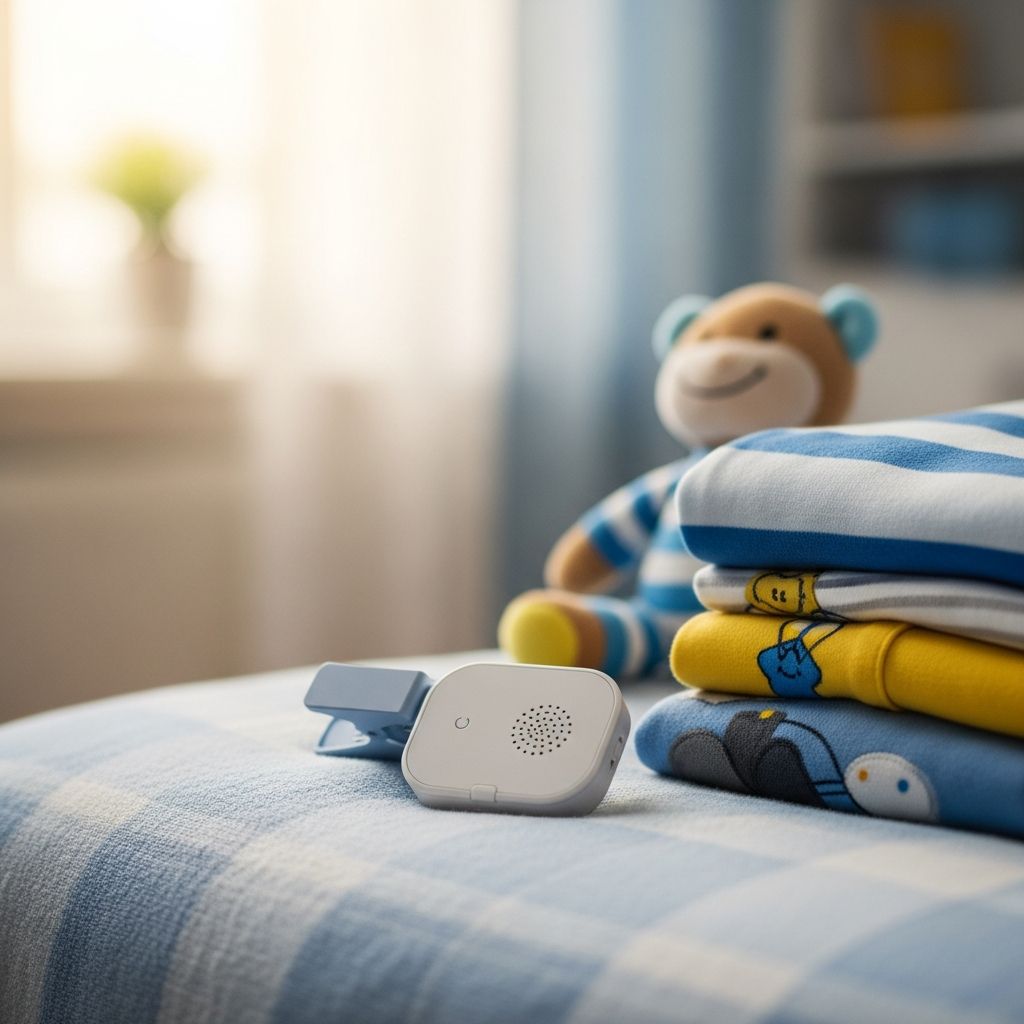
Nighttime wetting is one of the most common and most stressful challenges in early childhood and the primary school years. Yet for many families, a simple device called a bedwetting alarm can be a turning point in the journey to dry nights.
This guide explains in clear, practical terms how bedwetting alarms work, which children they benefit most, how to choose and set one up, and what to realistically expect over the following weeks.
Understanding Bedwetting (Nocturnal Enuresis)
Bedwetting, also called nocturnal enuresis, is involuntary urination during sleep in a child old enough that staying dry at night is generally expected. Many children who wet the bed have no daytime bladder issues and are otherwise healthy.
Several factors often overlap:
- A deep sleep pattern where the child does not notice bladder signals.
- A bladder that fills quickly or holds less volume than average at night.
- Slow maturation of the brain–bladder communication pathways.
- A family history of bedwetting that resolves naturally as children grow.
Because the root causes are usually developmental and not behavioural, punishment, shaming, or pressure do not help and often make the situation worse. Tools like alarms aim to gently train the brain to respond differently to the bladder’s early signals.
What Is a Bedwetting Alarm?
A bedwetting alarm is a small device that detects the first drops of urine and responds with a sound, vibration, light, or combination of signals. This immediate feedback helps wake the child so they can stop urinating in bed and finish in the bathroom.
Over repeated nights, the child’s brain gradually links the feeling of a filling bladder with waking up. This process is a form of conditioning, similar to training any new habit, and typically takes weeks rather than days.
How Bedwetting Alarms Train the Brain
Alarms do not simply “catch” accidents; they are designed to change how the brain responds to bladder fullness. They work through three main stages:
- Detection: A moisture sensor near the underwear or on a bed pad notices the first drops of urine.
- Activation: The alarm sounds, vibrates, or flashes to interrupt sleep as early in the wetting episode as possible.
- Learning: Over time, the brain begins to anticipate this interruption and wakes up before wetting starts.
In the early weeks, most children wake after they have already started to wet. With consistent practice, they shift to waking during the urge, and eventually, many children sleep through the night without wetting at all.
Main Types of Bedwetting Alarms
While every brand has its own features, most alarms fit into a few broad categories. Understanding these helps you match a device to your child’s temperament and sleeping style.
Body-Worn (Wearable) Alarms
Body-worn alarms are small units clipped to the child’s pajama top or waistband, connected by a short lead or plug to a moisture sensor placed in or on the underwear.
- Advantages: Detects moisture very early, portable for travel, and usually less expensive.
- Drawbacks: Some children dislike wires or clips; cords can tangle; the alarm is close to the ears and can be startling.
Wireless Alarms
Wireless systems use a sensor in the underwear or special briefs that transmits a signal to a separate alarm box on a bedside table or across the room.
- Advantages: No wires; the child often must leave the bed to turn off the alarm, reinforcing the bathroom trip; parents can hear more easily.
- Drawbacks: Typically higher cost; pairing or batteries require more setup; special briefs may be needed.
Bed-Mat or Pad Alarms
Pad-style alarms use a moisture-sensitive mat placed under the child’s sheet or on top of it. When urine reaches the pad, a connected alarm unit sounds.
- Advantages: Nothing is attached to the child, often more comfortable for sensitive sleepers; suitable for children who resist wearable sensors.
- Drawbacks: Detection may be slightly later; if the child rolls away from the pad or wets in a small area, the alarm may not trigger as promptly.
Key Features to Consider
Beyond type, several features affect daily ease of use:
- Volume and tone options to match your child’s sensitivity.
- Vibration mode for older or anxious children.
- Simple controls that half-asleep parents can operate easily.
- Reliable sensor design that resists false alarms from sweat or movement.
- Washable or easily cleaned components for hygiene.
Choosing the Right Alarm for Your Child
There is no single “best” bedwetting alarm; the right choice depends on your child’s age, sleep style, and preferences, plus your family’s bedtime routines.
| Alarm Type | Best For | Potential Challenges |
|---|---|---|
| Body-worn | Younger children who are okay with clips and wires; families wanting early moisture detection. | Some kids dislike cords; may need practice attaching sensors correctly. |
| Wireless | Deep sleepers; children who can get out of bed to turn off the alarm; households with larger bedrooms. | Higher price; requires reliable batteries; may need special underwear. |
| Bed-mat | Children who refuse wearable devices; kids with sensory sensitivities; families prioritizing comfort. | Detection can be slightly slower; may miss very small leaks or if the child moves off the pad. |
When comparing models, think about who will respond to the alarm at 2 a.m. If your child is a very deep sleeper, an alarm that parents can also hear clearly is essential so you can help them wake, walk, and use the toilet.
Is Your Child Ready for an Alarm?
Alarms work best when a child is developmentally ready and genuinely interested in working toward dry nights. A rough checklist for readiness includes:
- Age around 5–7 or older, especially if bedwetting is frequent.
- Ability to understand simple cause-and-effect explanations.
- Willingness to participate (even if a little nervous).
- Parents or caregivers who can consistently respond at night for several weeks.
If a child becomes very distressed, ashamed, or resistant, it may be better to pause and revisit the idea later rather than forcing a solution that feels like punishment.
Step-by-Step: How to Use a Bedwetting Alarm
Consistency matters more than perfection. The following routine offers a solid starting point that you can adapt to your family’s schedule.
1. Prepare Together in the Daytime
- Explain that the alarm is a helper that will support the brain in learning to wake up when the bladder is full.
- Show how the alarm looks, how the sensor works, and let your child practice turning it off and on.
- Agree on a simple nighttime plan: what to do when the alarm sounds and who will help.
2. Create an Evening Routine That Supports Success
- Encourage steady fluid intake earlier in the day rather than loading drinks near bedtime.
- Offer a last drink at least an hour before sleep, followed by a final toilet trip right before lights out.
- Set up spare pajamas and bedding within easy reach to minimize disruption if a change is needed.
3. Attach and Test the Alarm Before Sleep
- Position the sensor where the first drops of urine are most likely to appear (usually the front of underwear for boys, central area for girls).
- Check that cords are secure but not pulling; test the sound or vibration briefly so you know it works.
- Place the alarm unit where both your child and you can hear or feel it clearly.
4. Respond Calmly When the Alarm Sounds
- Wake your child fully, even if they seem to be moving automatically. Speaking calmly and turning on a dim light can help.
- Guide them to the bathroom to finish urinating, then help with changing clothes and bedding if needed.
- Reset the alarm each time, and briefly praise your child for waking and using the toilet, not for staying dry.
5. Track Progress Over Time
- Use a simple chart or calendar to mark dry nights, alarm nights, and any patterns you notice.
- Resist the urge to judge progress by single nights; look at trends across weeks.
- Plan for at least 6–8 weeks of use before deciding if the method is helping.
What Results to Expect (and When)
Every child’s timeline is unique, but many families notice a series of stages:
- Weeks 1–2: Frequent alarms, sometimes multiple times per night; the child often wakes after wetting has started.
- Weeks 3–5: Fewer alarms; the child begins waking earlier in the episode and may occasionally wake before wetting.
- Weeks 6–8 and beyond: A growing cluster of dry nights; alarms sound only occasionally or not at all.
A good rule of thumb is to continue using the alarm until your child has two to four consecutive weeks of dry nights. After that, you can try stopping and resume if wetting consistently returns.
Supporting Your Child Emotionally
Bedwetting can feel embarrassing and isolating for children, especially if they worry about sleepovers or teasing. Using an alarm is not just a technical fix; it is also an opportunity to build resilience and trust.
- Emphasize that bedwetting is common and not the child’s fault.
- Avoid jokes, shaming comments, or comparing siblings.
- Celebrate effort—getting up, resetting the alarm, cooperating with the routine—rather than only dry nights.
- Involve your child in problem solving, such as adjusting bedtime or choosing comfortable pajamas that work well with the alarm.
When to Talk With a Health Professional
Most children who wet the bed are healthy, but certain signs warrant a conversation with a pediatrician or continence specialist before or alongside using an alarm.
- Daytime accidents, urgency, or painful urination.
- Sudden onset of bedwetting after a long dry period.
- Snoring, restless sleep, or breathing pauses at night.
- Constipation, stool accidents, or belly pain.
- Excessive thirst, weight loss, or other new health symptoms.
A professional can help rule out infections, sleep apnea, constipation-related issues, or other medical conditions and may suggest combining an alarm with other strategies.
Common Problems and Practical Fixes
“My Child Sleeps Through the Alarm”
- Plan for a parent to wake with the alarm and physically rouse the child during the first weeks.
- Place the alarm unit further from the bed so the adult must stand up, making it easier to stay awake and guide the child.
- If possible, use a device with both sound and vibration for stronger stimulation.
“We Keep Getting False Alarms”
- Check sensor placement and ensure it is firmly attached to underwear or correctly positioned on the pad.
- Make sure cords are not being tugged loose when your child moves.
- If sweat seems to be triggering the alarm, try breathable cotton pajamas and a slightly cooler room.
“My Child Is Frustrated and Wants to Quit”
- Take a short break of a week or two if emotions are running high, then reassess together.
- Shift focus from results to teamwork: “We’re figuring this out together,” instead of “You must be dry by a certain date.”
- Consider combining the alarm with rewards for participation (responding to the alarm, going to the toilet), not just dry sheets.
Frequently Asked Questions
How old should a child be to start using a bedwetting alarm?
Most experts suggest that alarms are most helpful for children around age 5 or 6 and older who wet the bed regularly and feel bothered by it. Younger children may not yet have the maturity or motivation to follow the routine, but readiness can vary widely.
Do bedwetting alarms really work?
For many children who are medically healthy and wet the bed purely due to delayed nighttime control, alarms are one of the most effective long-term training tools. They do require patience and consistency, and results typically build over weeks rather than overnight.
How long does my child need to use the alarm?
Many families notice improvement within the first month, but it is common to use an alarm for at least 8–12 weeks. Continuing until your child has several weeks of dry nights in a row reduces the chances of relapse when you stop.
Can bedwetting alarms help teenagers or adults?
Yes, alarms can also be useful for motivated teens and some adults, especially when bedwetting has been present since early childhood. Older users may prefer more discreet, wireless, or vibration-only options, and progress can take a little longer.
Will my child need to use the alarm forever?
No. The goal is to train the brain–bladder connection so that the child eventually wakes up independently or sleeps through without wetting. Once the brain has learned this pattern, most children stay dry without ongoing devices.
Is using an alarm better than just wearing nighttime pull-ons?
Absorbent pants or pull-ons help manage laundry and stress but do not actively teach the body to respond differently. Bedwetting alarms, by contrast, are a training tool aimed at building lasting dryness. Many families use both during the early stages and gradually rely less on absorbent products as progress appears.
Final Thoughts for Parents
Bedwetting alarms are not magic gadgets, but they can be powerful allies when used with empathy, patience, and realistic expectations. Think of the process as coaching a new skill rather than fixing a fault.
By choosing an alarm that suits your child, responding calmly at night, and staying consistent over several weeks, you give your child a practical, respectful way to move toward dry, confident nights—and the freedom to enjoy sleepovers, camp, and everyday life without fear of wet sheets.