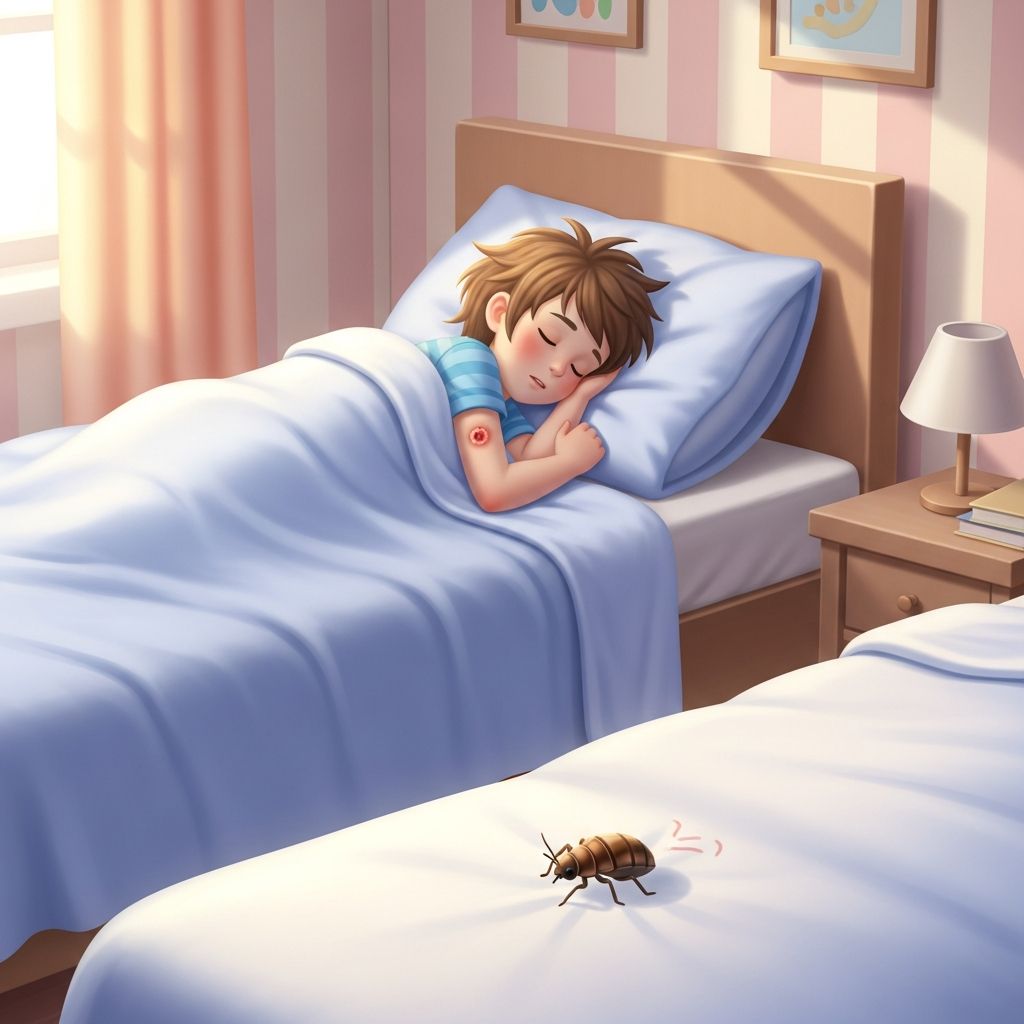
Finding bedbugs anywhere near your child’s bed can feel alarming, but these pests are usually more upsetting than dangerous. This guide explains what bedbugs are, how to recognize bites and signs at home, and what steps to take to clean, treat, and prevent them in a practical, family-friendly way.
What Exactly Are Bedbugs?
Bedbugs are tiny, flat, wingless insects that feed on blood, usually at night when people are asleep. They do not jump or fly; instead, they crawl and hide in small cracks close to places where people rest, such as mattresses, box springs, bed frames, and nearby furniture.
Adult bedbugs are about the size of an apple seed and may look reddish-brown after feeding. Younger bedbugs (called nymphs) are smaller and paler, which can make them harder to notice on light-colored bedding or walls.
Where Bedbugs Hide in a Family Home
Because bedbugs like to stay close to sleeping people, they often start in bedrooms but can spread to other rooms over time. Their flat bodies let them squeeze into cracks that are easy to overlook.
- In seams of mattresses and box springs
- In gaps in wooden bed frames or headboards
- Behind baseboards, wall trim, or peeling wallpaper
- In joints of nightstands, dressers, and chairs
- Inside fabric folds of curtains, couches, and soft toys near the bed
Because they prefer to stay hidden during the day, the first noticeable sign for many parents is usually their child’s skin reaction rather than seeing a bug itself.
Recognizing Bedbug Bites on Children
Bedbug bites can look very similar to mosquito bites, flea bites, or simple skin irritation. They usually appear on areas of skin that were not covered by clothing at night, such as the face, neck, arms, and legs.
- Small red bumps that may be raised or flat
- Itching that can range from mild to very bothersome
- Bumps clustered or lined up in a small area of skin
Not all kids react the same way. One child may have red, itchy bumps, while another in the same room may have almost no visible reaction at all.
Do Bedbugs Spread Disease?
Bedbugs are unpleasant and can cause a lot of stress, but they are not known to spread diseases to people. The main medical concerns are itching, scratching, skin irritation, and potential infection if the skin is broken and germs get in.
Children with allergies, eczema, or very sensitive skin may react more strongly to bites and might need extra help from a health care professional to stay comfortable and avoid infection.
Simple Care for Bedbug Bites
Most bedbug bites heal on their own without special treatment, but there are steps parents can take to help kids feel better and reduce scratching.
- Gently wash the bitten areas with mild soap and water.
- Use a cool, damp cloth for a few minutes to soothe itching or swelling.
- Ask a health care provider about child-safe anti-itch creams or oral allergy medicine if your child is very uncomfortable.
If the skin becomes very red, warm, painful, or starts oozing, or if your child has fever or looks generally unwell, contact a health care professional to check for infection or other causes.
When to Call the Doctor
Call your child’s doctor if any of the following occurs after suspected bedbug bites:
- Extensive rash or swelling that spreads beyond the bite area
- Blistering or large welts
- Signs of skin infection (increasing redness, pain, warmth, or pus)
- Trouble sleeping, change in behavior, or anxiety related to the infestation
Pediatricians can help rule out other conditions, suggest itch-relief options, and advise you if allergy testing or a referral to a dermatologist might be helpful.
How Bedbugs Get Into Your Home
Bedbugs are excellent hitchhikers. They usually arrive on belongings rather than walking in from outdoors. Families can bring them home accidentally from many places.
- Suitcases or travel bags after staying in hotels, dorms, or other homes
- Used mattresses, couches, or upholstered chairs
- Secondhand clothing, curtains, or soft toys
- Shared spaces such as child care centers, dormitories, shelters, or apartment buildings
Finding bedbugs is not a sign that a home is dirty. Even very tidy homes can have an infestation if bugs are carried in on belongings or furniture.
Early Clues: Spotting Bedbugs Before They Spread
Identifying bedbugs early makes them easier to control. Keep an eye out for more than just bites on the skin.
- Tiny dark spots on sheets or mattress seams that may be dried blood or bug droppings
- Very small, pale, oval shells from molting bedbugs
- Live bugs crawling on bedding, curtains, or walls, especially near the bed
- A subtle musty odor in heavily infested rooms
If you see something that might be a bedbug, place it in a clear, sealable plastic bag to show to a pest control professional for confirmation.
Home Inspection Checklist for Parents
A careful, systematic check of your child’s sleeping area can reveal hidden bedbugs. Use a flashlight and, if possible, a thin card (like an old credit card) to slide along seams and cracks.
| Area to Check | What to Look For | Tips |
|---|---|---|
| Mattress seams and tags | Live bugs, tiny dark spots, shed skins | Lift the mattress and inspect all edges and corners. |
| Box spring and bed frame | Clusters of bugs in cracks and joints | Remove fabric covers if possible; check screw holes and joints. |
| Headboard and nearby wall | Insects hiding behind headboard or pictures | Carefully pull furniture slightly away from the wall. |
| Nightstands and drawers | Bugs in corners, under drawer slides | Empty drawers and inspect undersides and backs. |
| Baseboards and floor edges | Insects or dark spotting in gaps | Pay attention to cracks where the wall meets the floor. |
Non-Chemical Steps You Can Start Today
Once bedbugs are suspected or confirmed, early cleaning efforts can reduce their numbers and help professionals treat the problem more effectively. Many helpful steps do not involve chemicals at all.
- Wash bedding, pajamas, and washable stuffed animals in hot water and dry them on the hottest safe dryer setting.
- Store clean items in large, sealable plastic bags or containers until the infestation is under control.
- Vacuum mattresses, box springs, floors, and furniture carefully and empty the vacuum outside into a sealed bag.
- Reduce clutter around beds to eliminate hiding spots and make inspection easier.
These measures alone rarely remove every bedbug, but they are an important part of a complete plan and can quickly reduce bite frequency for children.
Working with Professional Pest Control
Because bedbugs are tough, many families need help from a licensed pest control company. Professionals have access to tools and treatments that are more effective and carefully regulated than over-the-counter products.
- Look for a company experienced in bedbug control and ask what methods they use.
- Discuss safety steps if you are pregnant, have infants or toddlers, or if anyone in the home has asthma or chemical sensitivities.
- Follow preparation instructions closely, including bagging items, moving furniture, and leaving the home if required during treatment.
Most infestations need more than one professional visit. Staying consistent with follow-up appointments and at-home cleaning improves the chances of long-term success.
Heat, Encasements, and Other Tools
Besides insecticides, other tools can make it harder for bedbugs to survive and feed. These methods are usually used alongside professional treatment.
- Heat: High temperatures can kill bedbugs and their eggs. Hot dryers, portable heaters designed for pest control, or whole-room heat treatment may be used.
- Mattress and pillow encasements: Special zippered covers can trap existing bugs inside and keep new ones out of the mattress and box spring.
- Interceptors: Small devices placed under bed or furniture legs can catch bugs as they climb, helping both to monitor and reduce bedbug movement.
Parents should avoid homemade heating attempts like using space heaters unsafely or plastic-wrapping items in direct contact with high heat sources, because fire and burn risks can outweigh any benefit.
Keeping Your Child’s Bed as Safe as Possible
While an infestation is being treated, parents often look for ways to protect children from bites at night. While no method offers perfect protection, you can make the sleeping space less accessible to bugs.
- Pull beds slightly away from walls and avoid letting bedding touch the floor.
- Use encasements on mattresses and box springs as recommended by your pest professional.
- Encourage older children to wear snug pajamas with long sleeves and long pants to cover exposed skin.
Children should not sleep on treated surfaces until pest control experts confirm that it is safe and the area is fully dry and ventilated.
Preventing Future Bedbug Problems
Once bedbugs are under control, some simple habits can reduce the risk of bringing them back into your home. These habits are especially useful for families who travel or live in multi-unit buildings.
- Inspect hotel beds and headboards with a quick flashlight check before unpacking.
- Keep suitcases on hard surfaces or luggage racks, not on beds or upholstered chairs.
- After trips, wash and dry clothing and washable travel items on the warmest safe settings before putting them away.
- Check used furniture thoroughly or consider avoiding secondhand mattresses and upholstered pieces.
Apartment residents may want to report suspected bedbugs promptly to property managers so that inspections can be done in neighboring units if needed.
Supporting Children Emotionally
Bedbugs can cause anxiety, embarrassment, and sleep disturbances for kids, especially if they worry that the bugs are a sign of being unclean or “in trouble.”
- Reassure your child that bedbugs can happen in any home and are not their fault.
- Explain in simple terms what you are doing to get rid of them and how long it may take.
- Keep bedtime routines as normal and comforting as possible, even if you temporarily change sleeping locations.
If a child shows ongoing fear, nightmares, or school difficulties linked to the infestation, consider talking with a pediatrician or counselor for extra support.
FAQs About Bedbugs and Kids
Are bedbugs dangerous for my child?
Bedbugs are upsetting but are not known to spread illnesses to people. The main concerns are itching, possible skin infection from scratching, and emotional stress. Most children recover well once bites are treated for comfort and the infestation is controlled.
Can I treat bedbugs by myself with store-bought sprays?
Over-the-counter sprays alone rarely solve a bedbug problem and can be risky if used incorrectly around children. Always read and follow labels exactly, keep kids and pets away from treated areas, and strongly consider involving a licensed pest control professional for safe and effective treatment.
Should I throw away my child’s mattress?
Many mattresses can be kept, especially if they are covered with a high-quality bedbug-proof encasement after professional treatment. Before discarding any large item, ask your pest control provider whether cleaning and encasing it is a better option.
Do bedbugs live only in dirty homes?
Bedbugs do not care if a home is clean or messy; they care about access to people they can feed on. Clutter can give them more hiding spots, but even spotless homes can get bedbugs if they are brought in through luggage, clothing, or furniture.
How long does it take to get rid of bedbugs?
The timeline depends on how severe the infestation is, how quickly it was discovered, and how closely treatment instructions are followed. Many families need several weeks and multiple professional visits before an infestation is fully resolved.
Key Takeaways for Busy Parents
- Bedbugs are a nuisance but not a sign of poor hygiene or parenting.
- Most bites improve on their own, but watch for signs of infection or allergy.
- Early detection, thorough cleaning, and professional support are the most effective combination.
- Simple prevention habits during travel and when bringing items into the home can reduce the chance of future infestations.
With calm, step-by-step action and the right support, families can clear bedbugs from the home and help children feel safe and comfortable again.