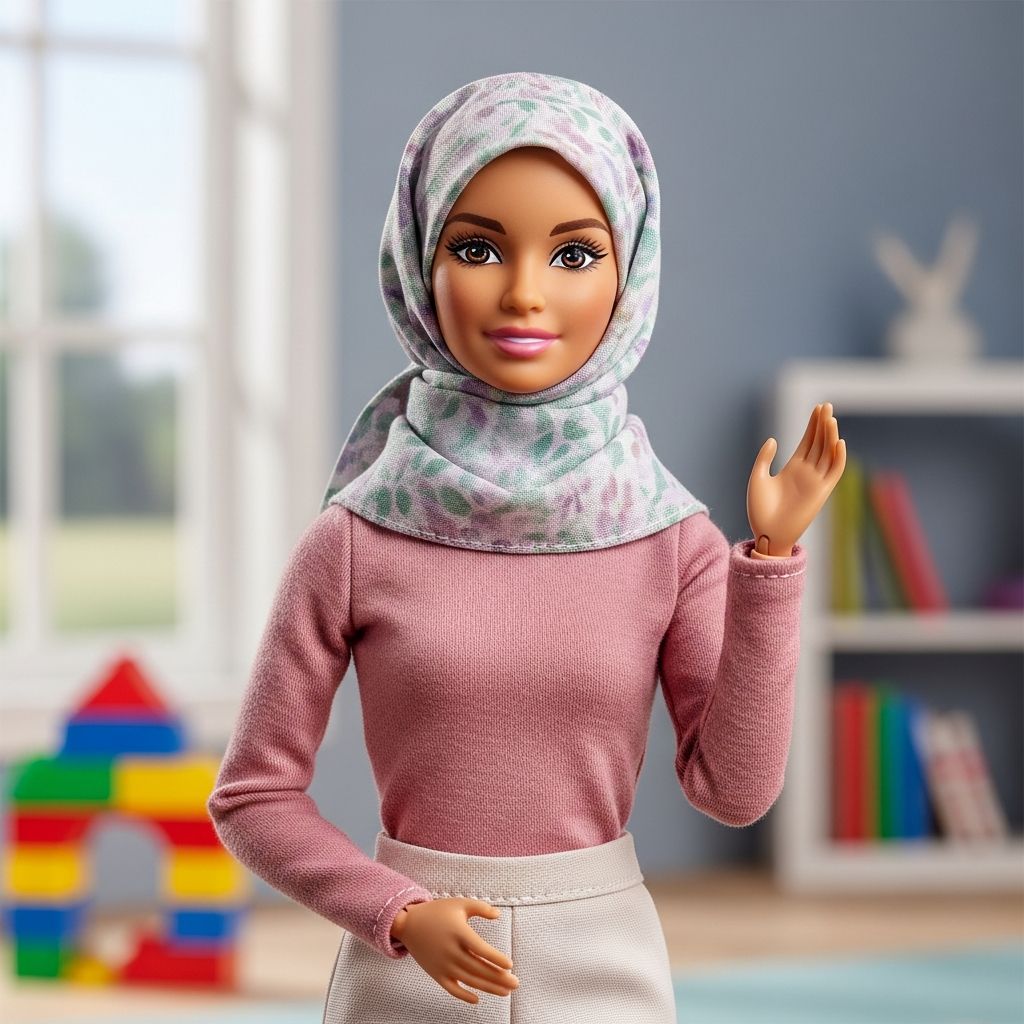
Mattel has introduced a landmark addition to the Barbie lineup: the first doll featuring a hijab, modeled after Olympic fencer Ibtihaj Muhammad. This release marks a significant step toward greater representation in children’s toys, honoring a trailblazing athlete who made history at the 2016 Rio Olympics.
The Athlete Behind the Doll
Ibtihaj Muhammad captured global attention as the first U.S. Olympian to compete wearing a hijab. During the Rio Games, she secured a bronze medal in the women’s team sabre event, showcasing not only her fencing prowess but also her commitment to her faith and cultural identity.
Born in 1985 in Maplewood, New Jersey, Muhammad began fencing at age 13 as a way to participate in a sport that accommodated her religious requirements for modest dress. Her journey from local competitions to the Olympic podium exemplifies perseverance and cultural pride. By donning her hijab on the world stage, she challenged stereotypes and opened doors for Muslim women in sports.
Muhammad’s influence extends beyond athletics. As founder of Afrophunk and an advocate for diversity, she uses her platform to promote inclusivity. Her selection as a Barbie Shero—Mattel’s term for female heroes who inspire girls—highlights her role in boundary-breaking achievements.
A New Era for Barbie’s Representation
Barbie has long been a cultural icon, but criticisms of limited diversity prompted Mattel to evolve. The hijab-wearing doll is part of the Shero collection, which previously featured figures like Tessa Virtue and Ashley Graham. This doll, unveiled in 2017 at the Glamour Women of the Year Summit, was personally presented to Muhammad by Graham.
Designed with meticulous attention to detail, the doll replicates Muhammad’s fencing uniform, complete with a hijab, jersey, pants, sneakers, and a miniature saber. Available for purchase in 2018, it aimed to reflect real-world heroes and encourage girls from all backgrounds to see themselves in playthings.
- Key Design Features: Authentic fencing gear, removable hijab, poseable limbs for action play.
- Target Age: 3 years and up, promoting imaginative role-play.
- Collection: Shero line, focusing on inspirational women.
This initiative responds to growing demands for toys that mirror diverse identities, helping children build self-esteem through relatable figures.
Impact on Children’s Development and Inclusivity
Representation in toys profoundly shapes young minds. Studies show that dolls reflecting a child’s ethnicity, religion, or culture foster positive self-image and empathy. For Muslim girls, who often feel underrepresented, the hijab Barbie provides validation and normalizes modesty in mainstream play.
Parents report that diverse dolls spark conversations about heritage and acceptance. By featuring Muhammad, Mattel not only celebrates one athlete but also amplifies voices from underrepresented communities. This doll encourages girls to pursue sports, regardless of attire or background.
| Benefit | Description |
|---|---|
| Self-Esteem Boost | Girls see themselves reflected, reducing feelings of exclusion. |
| Cultural Pride | Honors hijab-wearing traditions in a positive light. |
| Empathy Building | Exposes all children to diverse role models. |
| STEM/Sports Interest | Inspires active play and athletic aspirations. |
Evolution of Diversity in the Toy Industry
The toy sector has seen a surge in inclusive products. Mattel’s move aligns with competitors like American Girl, which offers hijab accessories, and LEGO’s diverse minifigures. This shift is driven by consumer advocacy and market research showing diverse toys sell well and promote social good.
Since 2016, Barbie has expanded with dolls in various body types, skin tones, and abilities. The hijab doll builds on this, addressing religious diversity—a less common but vital aspect. Industry experts note that such innovations correlate with higher engagement among multicultural families.
Broader Cultural and Social Significance
Muhammad’s doll transcends play; it symbolizes progress in media representation. In a time of heightened cultural discussions, it counters narratives that marginalize Muslim women, portraying them as strong, accomplished athletes.
The unveiling at Glamour’s summit, attended by influencers and youth, amplified its message. Muhammad herself emphasized the lack of representation she faced, making the doll a tool for future inclusion. Sales success and media buzz affirmed its resonance.
Challenges remain, including ensuring authenticity in design consultations with cultural experts. Mattel collaborated closely with Muhammad to get details right, from fabric textures to uniform accuracy.
Parenting Perspectives on Inclusive Toys
Many parents hail the doll as a game-changer. It facilitates teaching moments about respect and achievement. For non-Muslim families, it introduces global cultures through fun, accessible play.
- Mothers of diverse backgrounds share stories of daughters beaming with pride.
- Educators incorporate it into lessons on Olympics and women’s history.
- Collectors value it as a milestone in Barbie’s 60-year legacy.
Critics argue for even broader representation, like dolls for other faiths or disabilities. Nonetheless, this launch sets a precedent for thoughtful inclusivity.
FAQs
What inspired the hijab-wearing Barbie?
The doll honors Ibtihaj Muhammad, the first U.S. Olympian to fence in a hijab, earning bronze in Rio 2016.
When was the doll released?
Unveiled in 2017, it became available for purchase in 2018 as part of the Shero collection.
Does the doll come with accessories?
Yes, it includes a fencing saber, uniform, and removable hijab for versatile play.
How does this promote diversity?
It provides Muslim girls with a relatable role model, fostering inclusion and cultural pride in toys.
Where can I learn more about Ibtihaj Muhammad?
Check official Olympic records or her advocacy work with Afrophunk for her full story.
Looking Ahead: Future of Inclusive Play
Mattel’s commitment signals a toy industry prioritizing reflection of society’s diversity. Future releases may feature more athletes, scientists, and leaders from varied backgrounds. For parents, selecting such toys invests in empathetic, confident children.
This doll’s legacy endures, reminding us that play is a powerful vehicle for change. By putting a hijab-wearing fencer in girls’ hands, Mattel empowers dreams unbound by convention.
References
- Mattel Debuts Barbie With Hijab Based on Ibtihaj Muhammad — TIME. 2017-11-13. https://time.com/5023094/mattel-hijab-barbie-ibtihaj-muhammad/
- Barbie Honors Ibtihaj Muhammad With One-Of-A-Kind Doll — PR Newswire / Mattel. 2017-11-13. https://www.prnewswire.com/news-releases/barbie-honors-ibtihaj-muhammad-with-one-of-a-kind-doll-at-glamour-women-of-the-year-live-summit-300554019.html
- Olympian Ibtihaj Muhammad Is the First Hijab-Wearing Barbie — YouTube / Glamour. 2017. https://www.youtube.com/watch?v=yK-t1j-Xumc