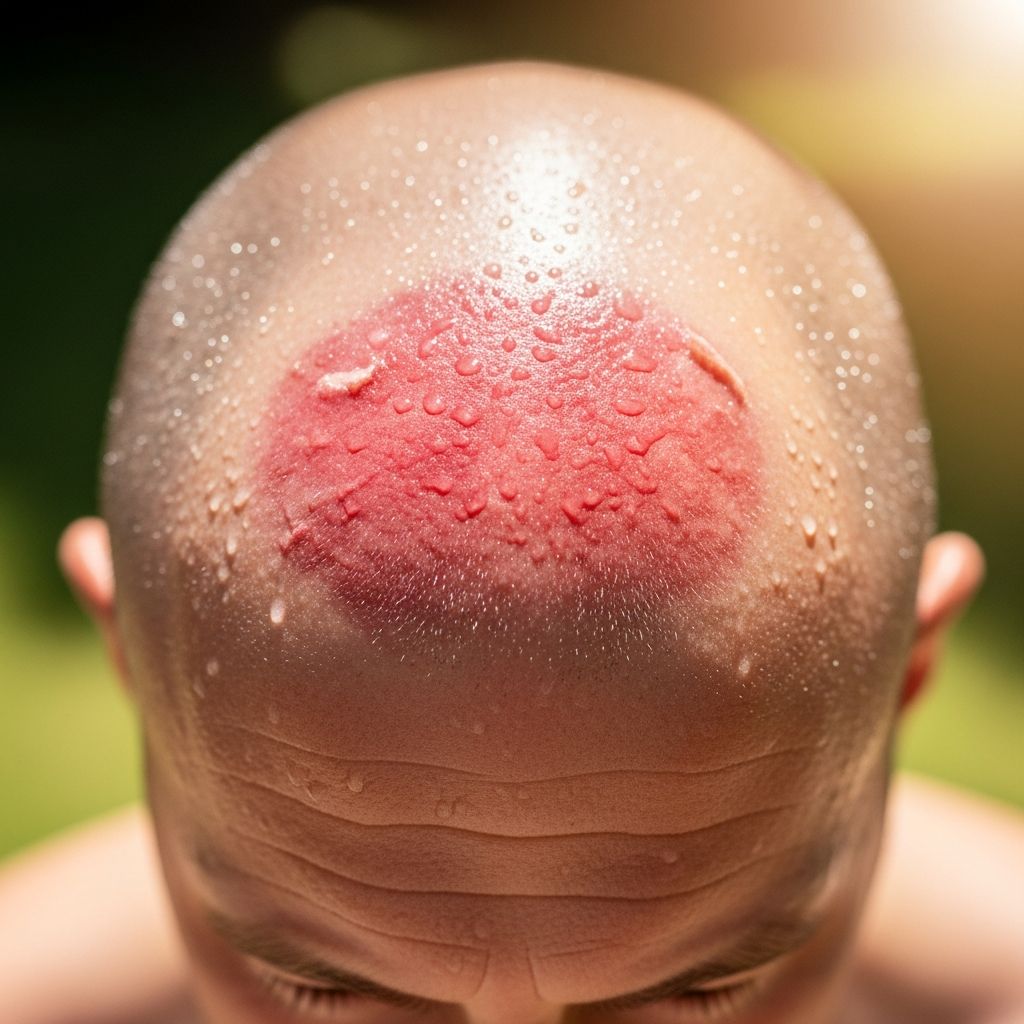
Sunburn on a bald or thinning scalp can turn a great day outside into days of throbbing pain, itching, and peeling. Beyond the immediate misery, repeated burns on a bald spot can significantly raise your risk of skin cancer and accelerate visible aging of the scalp.
This guide explains why bald spot sunburn feels uniquely brutal, what it does to your skin and hair follicles, and the most effective ways to protect, treat, and monitor your scalp over the long term.
Why Bald and Thinning Scalps Burn So Easily
The scalp is one of the most sun-exposed areas of the body, and a bald spot is essentially unfiltered skin facing direct ultraviolet (UV) radiation every time you step outside.
Unique Vulnerabilities of the Scalp
- Direct UV exposure: Without hair as a physical barrier, UV rays hit the scalp at full strength, often for hours at a time.
- High angle of sunlight: The top of the head points straight at the sun, especially around midday, increasing cumulative exposure compared with vertical body surfaces.
- Often neglected in routines: Many people regularly protect their face and arms but forget to put sunscreen on a bald spot or part line.
- Hard to see damage: It is difficult to visually inspect the scalp, so early redness, rough patches, or scaly lesions are often missed until they worsen.
Why It Feels So Intensely Painful
The scalp is packed with blood vessels and nerve endings that normally help regulate temperature and protect hair follicles. A burn in this area therefore feels disproportionately painful.
- Rich nerve supply: Dense sensory nerves mean inflammation and swelling from a burn translate into sharp, throbbing pain and extreme tenderness.
- Constant friction: Pillows, hats, headphones, and even a light breeze can irritate burned scalp skin, keeping pain and itching active.
- Thin, sun-exposed skin: Repeated past exposure may thin the epidermis and damage collagen, making each subsequent burn easier and more severe.
What Sunburn Actually Does to a Bald Spot
Sunburn is more than temporary redness. It reflects actual damage to skin cells and their DNA caused by ultraviolet radiation.
The Biology of a Scalp Sunburn
- UVB damage: UVB rays primarily cause the visible burn – redness (erythema), swelling, and sometimes blisters.
- UVA damage: UVA rays penetrate deeper, accelerating aging and contributing to DNA damage that underlies skin cancer.
- Inflammation cascade: Damaged cells release inflammatory signals, drawing fluid and immune cells into the area, which creates heat, pain, and swelling.
- Peeling and shedding: The body intentionally destroys and sheds severely damaged cells, leading to flaky or peeling patches on the scalp.
Short-Term Symptoms You Might Notice
- Redness and the feeling that the scalp is hot to the touch
- Pain, tenderness, or burning sensation, often worse when lying down or showering
- Itching as the burn begins to heal
- Flaking or peeling skin several days after exposure
- In more severe cases, blisters or yellowish crusts that signal deep damage or possible infection
Long-Term Risks: More Than Just a Painful Burn
Repeated sunburns on a bald or thinning scalp are strongly associated with skin cancer and precancerous lesions.
Increased Skin Cancer Risk on Bald Spots
The Skin Cancer Foundation notes that bald areas and the scalp in general are common sites for actinic keratoses (AKs), rough, scaly precancerous patches that can develop into squamous cell carcinoma if not treated.
- Actinic keratoses: Dry, rough, or crusty spots that may feel like sandpaper; caused by chronic UV exposure.
- Squamous cell carcinoma (SCC): A type of skin cancer that often arises from AKs and can be aggressive on the scalp if ignored.
- Basal cell carcinoma (BCC): Another common skin cancer that may appear as a shiny bump or sore that does not heal on sun-exposed skin.
- Melanoma: Less common but more dangerous; can appear as a changing mole or dark lesion on the scalp.
Impact on Hair Follicles and Hair Loss
Most mild scalp sunburns cause only temporary issues, but more serious burns can damage hair follicles.
- Temporary shedding: Inflammation and heat can disrupt follicles, causing increased shedding that usually reverses as the skin heals.
- Permanent damage: Deeper burns risk scarring the follicle units; in those localized spots, hair may not regrow, leading to permanent thinning or small patches of hair loss.
How to Treat a Bald Spot Sunburn Safely
Most first-degree and many second-degree sunburns on the scalp can be treated at home with careful, gentle care. The priorities are cooling the skin, controlling pain, and supporting healing.
Immediate Steps in the First 24 Hours
- Get out of the sun: Move into shade or indoors as soon as you notice tenderness or burning.
- Cool the area: Use a cool (not ice-cold) damp cloth on the scalp for 10–15 minutes at a time, repeating several times a day.
- Hydrate: Drink extra water or non-alcoholic fluids to support your body’s response to the burn.
- Avoid harsh products: Skip alcohol-based sprays, fragranced shampoos, or strong exfoliants on the scalp.
Comfort Measures Over the Next Few Days
- Pain relief: Over-the-counter medications such as ibuprofen or acetaminophen can reduce pain and inflammation when taken as directed.
- Soothing moisturizers: Gels or lotions containing aloe vera or soy can cool the skin and support healing.
- Gentle cleansing: Use lukewarm water and a mild, sulfate-free shampoo to avoid further irritation.
- Hands off: Do not pick at peeling skin or pop blisters; this increases the chance of infection and scarring.
- Protection during healing: Keep the area shaded with a loose, breathable hat when outdoors; avoid re-exposing the burn to direct sun until redness fully resolves.
When to See a Doctor
According to dermatology and hospital guidance, seek medical advice promptly if you notice:
- Large or numerous blisters on the scalp
- Yellow crusting, pus, or spreading redness that may suggest infection
- Severe pain, fever, chills, confusion, or signs of heat illness
- Burns covering a large area of the head or involving deeper, white, or charred-looking skin
- New rough, scaly, or bleeding patches on a previously burned bald spot that do not heal
Smart Prevention: Protecting a Bald or Thinning Scalp
Preventing a burn is far easier than treating one. A few consistent habits can dramatically reduce UV damage to your scalp and bald spots.
Daily Protection Habits
- Wear a hat: A tightly woven, broad-brimmed hat offers reliable protection. Dermatology organizations recommend hats that shade the face, ears, and neck as well as the scalp.
- Use SPF on bare areas: Apply a broad-spectrum sunscreen with SPF 30 or higher to any exposed scalp skin, including bald spots and wide part lines.
- Reapply regularly: Reapply sunscreen approximately every two hours, and after sweating or swimming.
- Time your outdoor activity: When possible, avoid peak UV hours around midday, when the sun is highest in the sky.
Choosing the Right Scalp Sunscreen
Some products are better suited for the scalp and bald spots than traditional body sunscreens.
- Lightweight formulations: Look for non-greasy lotions, gels, or sprays that absorb quickly and do not leave a heavy residue.
- Mineral vs. chemical filters: Mineral sunscreens with zinc oxide or titanium dioxide can be less irritating for sensitive or previously burned skin.
- Stick or powder formats: These can be convenient for touch-ups on part lines or thinning areas without matting hair.
Comparing Protection Options for a Bald Spot
| Protection Method | Advantages | Limitations |
|---|---|---|
| Wide-brimmed hat | Physical barrier, no reapplication, protects ears and neck | Can be hot, may not be worn consistently |
| Scalp sunscreen (SPF 30+) | Flexible, works even without a hat, good for everyday urban exposure | Must be applied and reapplied correctly; can feel greasy if product is not well-chosen |
| Seeking shade | Reduces overall UV exposure, no product needed | Reflected UV from water, sand, and concrete can still reach the scalp |
Monitoring a Bald Spot for Trouble Signs
Once a bald spot has been burned, it deserves extra attention over time. Early detection of problems offers the best outcomes.
Self-Checks You Can Do at Home
- Use a mirror or smartphone camera (or ask a partner) every few months to inspect the scalp.
- Feel for rough, sandpaper-like patches that persist beyond a few weeks; these can signal actinic keratoses.
- Watch for any sore, scab, or spot that repeatedly heals and reopens or bleeds.
- Note new or changing moles, dark spots, or nodules on the scalp surface.
Professional Skin Exams
- Dermatologist visits: Regular full-skin checks are particularly important if you are bald, have a history of frequent sunburns, or have already had actinic keratoses or skin cancer treated.
- Treatment options for precancerous lesions: Dermatology care for scalp AKs may include topical medications, freezing (cryotherapy), or light-based treatments such as photodynamic therapy.
Practical Everyday Strategies for Bald Spot Care
Integrating scalp care into your daily routine can minimize both burns and long-term damage.
Simple Daily Routine
- Morning: Cleanse gently if needed; apply a lightweight moisturizer and broad-spectrum SPF to bald or thinning areas.
- Outdoors: Put on a hat for extended time outside; carry a small sunscreen for reapplication.
- Evening: Rinse away sweat and sunscreen with a mild shampoo; apply a soothing, fragrance-free moisturizer if the scalp feels dry.
Frequently Asked Questions (FAQs)
Q: Why does my bald spot always burn faster than the rest of my skin?
A: A bald spot receives direct, high-angle sunlight without the shielding effect of hair. The scalp is also richly supplied with blood vessels and nerves, so even mild burns can feel very intense compared with other body areas.
Q: Can a single bad sunburn on my scalp cause skin cancer?
A: Skin cancer usually results from cumulative UV exposure over years, not one burn. However, a severe sunburn is clear evidence of significant DNA damage and raises lifetime risk, especially when burns are repeated.
Q: Will hair grow back after my scalp has peeled from sunburn?
A: In most mild to moderate burns, any shedding is temporary and hair regrows once the skin recovers. Deeper burns that scar the follicles can lead to permanent patchy hair loss, but this is less common.
Q: What SPF should I use on a bald or thinning head?
A: Dermatology and hospital guidelines generally recommend using a broad-spectrum sunscreen with at least SPF 30 on all exposed skin, including the scalp and bald spots, and reapplying every two hours when outdoors.
Q: Is wearing a hat enough, or do I still need sunscreen?
A: A tightly woven hat is excellent protection, but UV light can reflect from surfaces like water, sand, and pavement. Combining a hat with sunscreen on exposed areas offers the most reliable defense, especially during long periods outside.
References
- Save Your Scalp from Sun Damage! — The Skin Cancer Foundation. 2022-06-15. https://www.skincancer.org/blog/save-your-scalp-from-sun-damage/
- Sunburn — Cleveland Clinic. 2022-08-31. https://my.clevelandclinic.org/health/diseases/21858-sunburn
- Scalp Sunburn: How It Happens, How to Heal, and Prevention Tips — GoodRx Health. 2023-07-10. https://www.goodrx.com/health-topic/dermatology/how-to-treat-scalp-sunburn
- Sunburned Scalp: Symptoms, Treatment, and Prevention — Healthline. 2018-05-29. https://www.healthline.com/health/sunburned-scalp
- Looking After Your Scalp in the Sun — LloydsPharmacy Online Doctor. 2021-06-01. https://onlinedoctor.lloydspharmacy.com/uk/hair-loss-advice/looking-after-your-scalp-in-the-sun
- Sunburned Scalp: Symptoms to Watch & What Actually Helps — Neofollics Hair Technology. 2023-04-12. https://neofollics.com/blogs/articles/sunburned-scalp
- Sunburned Scalp: Will I Lose My Hair? — Hospital Capilar. 2022-04-05. https://hospitalcapilar.com/en/cuero-cabelludo-quemado/