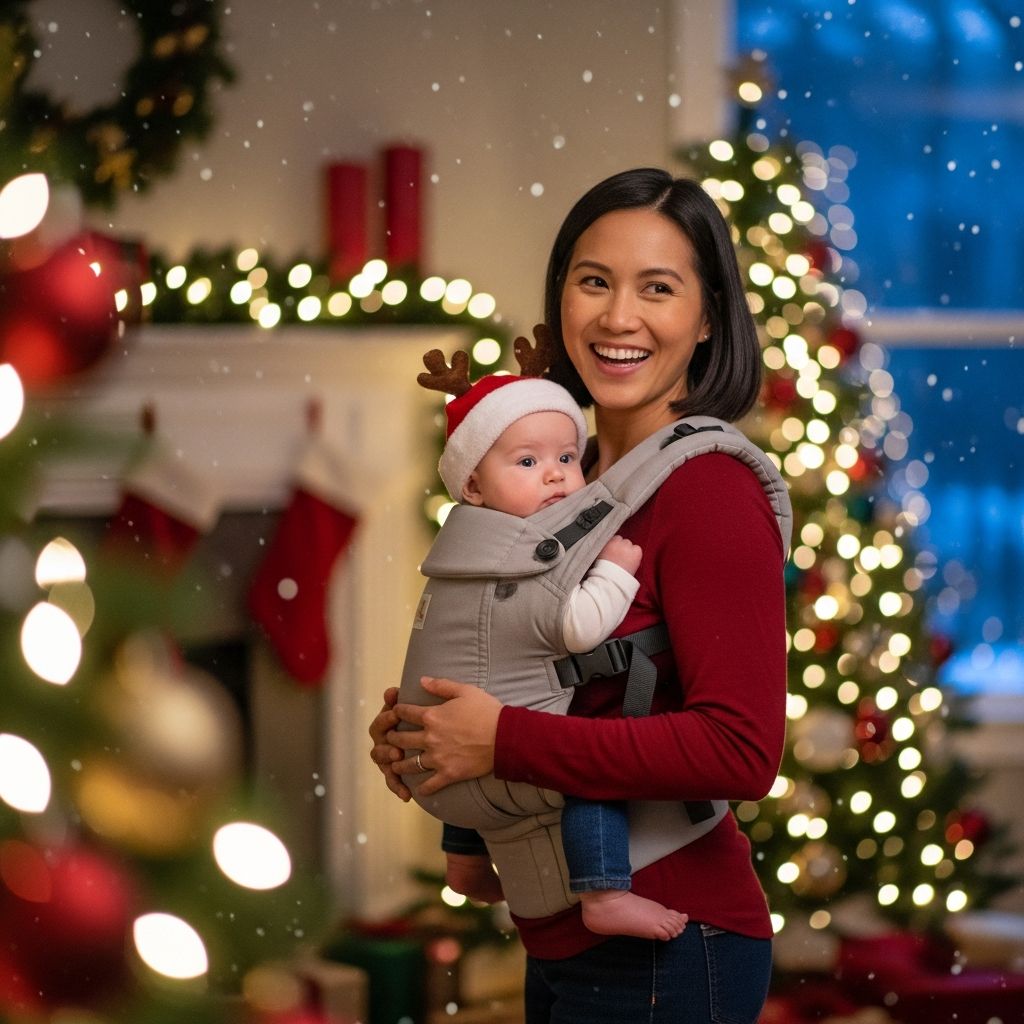
Bringing a newborn or infant into the whirlwind of holiday celebrations can feel overwhelming. Crowded malls, family gatherings, and chilly weather add layers of complexity to parenting. Babywearing—using carriers, slings, or wraps to hold your baby close—offers a simple yet powerful solution. This practice, rooted in centuries-old traditions worldwide, provides hands-free mobility while fostering deep emotional connections. During festive periods, it shines by addressing common challenges like navigation hurdles, sensory overload for babies, and the need for quick caregiving transitions.
Scientific studies affirm babywearing’s value beyond convenience. Research shows carried infants cry less, exhibit better physiological regulation, and develop stronger social skills. The American Academy of Pediatrics recognizes safe babywearing as supportive for infant development, emphasizing proper positioning to maintain airway patency and hip health. With holidays amplifying daily stresses, integrating a carrier can elevate your experience, making joyful moments more accessible.
Navigating Festive Crowds with Ease
Holiday shopping districts and event venues often brim with shoppers, transforming pathways into obstacle courses. Strollers, while useful in open spaces, falter in tight aisles, elevators, or snow-dusted sidewalks. A baby carrier eliminates these barriers, allowing fluid movement through congested areas.
Parents report maneuvering restaurants, markets, and parties becomes intuitive. No more wrestling foldable frames or dodging fellow pedestrians. In urban holiday settings, where escalators and stairs abound, carriers provide stability without sacrificing closeness. This proximity also acts as a gentle shield; strangers think twice before reaching for your baby when held securely against you.
- Compact versatility: Slip through narrow doorways or holiday markets effortlessly.
- Multi-tasking freedom: Carry gifts, sip warm drinks, or snap photos hands-free.
- Safety in motion: Babies remain protected from ground-level germs and accidental bumps.
For international travel during breaks, carriers comply with airline regulations more readily than bulkier gear, per TSA guidelines for infant transport.
Calming Babies Amid Holiday Chaos
Festive atmospheres pulse with lights, music, and chatter—thrilling for adults but potentially startling for young infants. Their developing nervous systems process stimuli intensely, often leading to fussiness. Babywearing recreates womb-like security, positioning baby chest-to-chest where your heartbeat and breathing serve as rhythmic anchors.
Studies from the Institute of Child Health confirm proximity reduces crying by up to 50% in carried infants, attributing this to elevated oxytocin levels that soothe both parent and child. During gatherings, overwhelmed babies can burrow into your warmth, tuning out excess noise while observing at their pace. This ‘secure base’ effect, akin to attachment theory principles, promotes emotional resilience.
| Stimulus | Stroller Impact | Babywearing Benefit |
|---|---|---|
| Loud music | Amplified exposure | Chest buffers sound |
| Bright lights | Direct glare | Head can nestle away |
| Crowd movement | Isolation feels unstable | Shared motion calms |
Transitioning from nap to party? A quick snug-in often lulls baby to sleep, freeing you to engage fully.
Discreet Nursing in Social Settings
Breastfeeding amid holiday visits presents unique hurdles—unfamiliar environments, prying eyes, or juggling multiple children. Carriers enable covered or kangaroo-style nursing, aligning baby optimally without halting activities. The fabric drapes naturally, offering privacy while your arms remain available for tasks.
La Leche League International notes carriers enhance breastfeeding success by improving latch recognition and milk supply through constant cue awareness. At family dinners or outings, feed seamlessly: continue conversations, serve food, or chase toddlers. For pumping parents, this setup supports on-demand expression indirectly via bonding hormones.
- Positioning precision: Front-facing inward supports natural feeding angles.
- Hygiene edge: Elevates baby above public surfaces.
- Empowerment tool: Normalizes nursing without confrontation.
WHO recommends exclusive breastfeeding for six months, and babywearing facilitates this during transient disruptions like holidays.
Shared Warmth Against Winter Chills
December’s bite turns errands into endurance tests. Bundling baby separately risks over-layering or exposure during transfers. Wearing distributes your body heat efficiently, maintaining infant temperature via direct contact. The carrier adds insulation, trapping warmth like a portable cocoon.
Pediatric research from the Journal of Pediatrics highlights skin-to-skin’s role in thermoregulation, preventing hypothermia in vulnerable newborns. A drowsy baby on your torso becomes a mutual heater—your movements generate friction, while their presence conserves yours. Ideal for doorstep waits, outdoor light displays, or car-to-home dashes.
Layering tips: Opt for breathable carriers with weather covers. Monitor for sweat indicators, adjusting as needed. This synergy ensures comfort without excess bulk, per CDC winter infant care protocols.
Family Involvement and Bonding Boost
Holidays emphasize togetherness, yet primary caregivers often shoulder solo duties. Babywearing’s universality empowers partners, relatives, or older siblings to step in effortlessly. Adjustable straps accommodate various body types, fostering equitable load-sharing.
Developmental psychologists observe multi-caregiver exposure builds secure attachments and social adaptability. Dads report heightened paternal bonds; grandparents relish revived nurturing roles. A simple handoff during feast prep lets everyone partake, deepening holiday memories.
- Partner parity: Dads wear during sports viewing or gift assembly.
- Elder engagement: Grandparents bond strolling neighborhood lights.
- Sibling synergy: Older kids ‘help’ with short wears under supervision.
Choosing and Using Carriers Safely
Selecting a carrier matches your lifestyle: soft-structured for versatility, ring slings for quick ins/outs, wraps for custom fits. Key safety tenets from the International Hip Dysplasia Institute: knees above bottom, chin off chest, clear airways. Practice at home; consult fit experts if unsure.
Age guidelines vary—newborns thrive in fetal positions, older infants in forward-facing. Maintenance involves gentle washing to preserve elasticity. Budget options abound, but prioritize ergonomic designs endorsed by pediatric bodies.
Frequently Asked Questions (FAQs)
What age is best for starting babywearing?
Babies from birth (with newborn inserts) to toddlers benefit. Consult pediatricians for preemies.
Does babywearing spoil infants?
No—responsive carrying builds trust, per attachment research. Independence follows naturally.
Which carrier for holidays?
Structured carriers for crowds; wraps for nursing. Test for comfort.
Back pain concerns?
Proper fit distributes weight evenly; strengthen core via exercises.
Hot climates?
Breathable meshes prevent overheating; layer minimally.
Real Parent Stories: Holiday Wins
Many families share triumphs. One parent navigated Black Friday sales unscathed, baby napping through bargains. Another hosted 20 guests, nursing covertly while mingling. These anecdotes underscore babywearing’s adaptability, turning potential meltdowns into milestones.
Integrate gradually: Start with short wears, build endurance. Pair with holiday rituals—carrier walks for light-viewing, family carrier relays during games. This weaves practicality into tradition.
Babywearing reframes holidays from survival to savoring. It honors infants’ needs while amplifying parental presence. As seasons evolve, this tool endures, nurturing bonds year-round.
References
- Infant Carriage and Crying — Institute of Child Health, University College London. 2018-06-15. https://www.ucl.ac.uk/ioo/research/parent-infant-projects/babywearing
- Breastfeeding and Babywearing — La Leche League International. 2024-03-10. https://llli.org/breastfeeding-info/babywearing/
- Safe Babywearing Guidelines — International Hip Dysplasia Institute. 2025-01-20. https://hipdysplasia.org/babywearing/
- Infant Thermoregulation — Centers for Disease Control and Prevention (CDC). 2024-11-05. https://www.cdc.gov/infant-toddler-nutrition/newborns/infant-care.html
- Babywearing Position Statement — American Academy of Pediatrics. 2023-07-12. https://publications.aap.org/pediatrics/article/152/1/e2023061283/193456