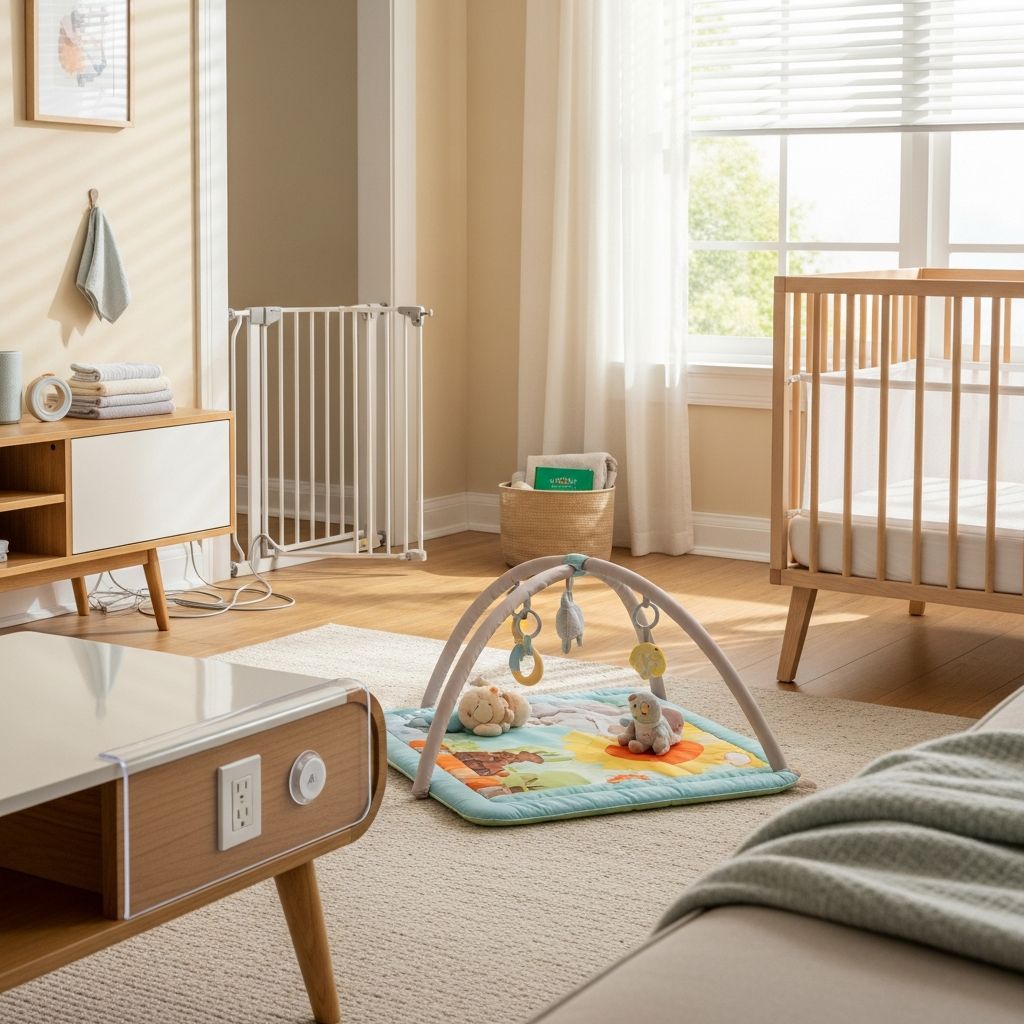
Welcoming a newborn transforms your daily life, making home safety a top priority. Start preparations early to eliminate hazards and streamline routines, allowing you to focus on bonding with your little one. This guide outlines actionable measures across your entire living space, drawing from proven pediatric recommendations.
Assess Your Space from a Baby’s Viewpoint
Begin by crawling on the floor to identify overlooked dangers like dangling cords or unstable shelves. This low-level perspective reveals risks invisible from adult height, such as sharp edges or accessible small objects.
- Scan for loose rugs that could cause slips while carrying baby.
- Check for low-hanging decor or plants that might tempt curious hands.
- Note areas with heavy items on high shelves prone to falling.
Addressing these early prevents accidents as your child becomes mobile around six months.
Fortify the Nursery: A Safe Sleeping Sanctuary
The nursery demands meticulous attention since infants spend hours there daily. Prioritize a breathable, firm crib setup free of soft bedding to minimize suffocation risks.
| Element | Safety Action | Why It Matters |
|---|---|---|
| Crib Placement | Position away from windows, vents, and cords | Prevents strangulation and overheating |
| Mattress | Use firm, waterproof, breathable model | Supports safe sleep per CPSC standards |
| Changing Area | Anchor station; store supplies high | Avoids falls and access to creams |
Install monitors at least three feet from the crib, ensuring cords are tucked away. Avoid hanging mobiles or toys overhead to eliminate drop hazards.
Secure Common Areas: Living and Play Spaces
Living rooms evolve into play zones, requiring anchors for all tip-prone furniture. TVs and bookshelves must be wall-mounted immediately, as climbing starts early.
- Apply padding to coffee table corners and hearth edges.
- Tuck remote cords behind furniture or use cord shorteners.
- Remove heavy vases from low surfaces; opt for lightweight, unbreakable decor.
These steps reduce topple injuries, a leading ER concern for mobile babies.
Kitchen Safeguards: Block Access to Dangers
Kitchens harbor cleaners, knives, and hot surfaces. Install latches on all lower cabinets and use stove knob guards to prevent burns.
Prefer rear burners for cooking; cover front ones when idle. Store appliances like toasters high up, unplugging after use. Create a ‘no-go’ zone with gates during meals.
- Lock trash bins to hide sharp waste.
- Elevate dish detergents and spices.
- Use nonslip mats near sinks.
Bathroom Protections: Water and Chemical Hazards
Bathrooms pose drowning and poisoning risks. Set water heaters to 120°F max, and install toilet locks plus nonslip tub mats.
| Hazard | Countermeasure |
|---|---|
| Medicines | Lock in high cabinet or safe |
| Cosmetics/Cleaners | Safety latches on vanities |
| Scalding Water | Thermostatic mixing valves |
| Door Access | Childproof knobs |
Never leave baby unattended near water, even briefly.
Stairways and Transitions: Gate Strategically
Baby gates at stair tops and bottoms are non-negotiable, using hardware-mounted models for security. Block unfinished rooms too.
For multi-level homes, pressure gates suffice for doorways but not stairs. Test stability regularly as baby tests them.
Electrical and Window Precautions Home-Wide
Outlet plugs cover all unused sockets; swap corded blinds for cordless. Window guards limit openings to 4 inches, moving climbers away.
- Secure radiator covers.
- Pinch guards on doors.
- Lock battery storage separately.
Declutter and Organize Daily Essentials
Streamline with designated spots for diapers, wipes, and burp cloths near changing areas. Stock a first-aid kit with baby thermometer, saline drops, and bulb syringe high up.
Label emergency contacts visibly. Purge expired meds and consolidate purses out of reach to avoid choking on loose items.
Smoke and Gas Detection: Lifesaving Installs
Mount smoke and CO detectors in every room, testing monthly. Place near bedrooms and kitchens. Fire extinguishers belong in accessible spots sans baby reach.
Outdoor and Garage Security Measures
Garage doors auto-reverse; lock tools and chemicals. Fence pools with self-locking gates. For yards, pad playground edges and supervise outdoor play.
Frequently Asked Questions (FAQs)
When should I start babyproofing my home?
Begin in the third trimester or earlier to spread tasks. Prioritize nursery and high-traffic areas first.
What are the most critical items for babyproofing?
Furniture anchors, outlet covers, cabinet latches, and gates top the list for preventing falls, shocks, and tip-overs.
Do I need to babyproof for a newborn?
Yes, though basics like crib safety apply immediately; expand as they roll and crawl.
How often should I recheck safety measures?
Monthly or after changes like new furniture; babies grow fast, accessing new areas.
Are there budget-friendly babyproofing options?
DIY anchors from hardware stores work; focus on essentials like free decluttering before buying.
Final Thoughts on Proactive Preparation
Systematic babyproofing fosters peace of mind. Tackle one room weekly, involving partners for thoroughness. Regular updates match your child’s development stages.
References
- An ER Doctor’s Childproofing Checklist — Babylist. 2023. https://www.babylist.com/hello-baby/doctor-childproofing-checklist
- Babyproof Checklist: Prepare Your Home for Baby — Lullaby Earth. 2023. https://www.lullabyearth.com/blog/babyproof-checklist
- Baby Proofing Checklist: How to Create a Safe Home for Your Child — Weecare Pediatrics. 2024. https://weecarepediatrics.com/baby-proofing-checklist/
- Childproofing your home: A checklist for parents — Children’s Hospital. 2023. https://answers.childrenshospital.org/childproofing-your-home/
- Childproofing Checklists — Childproofing Experts (PDF). 2022. https://www.childproofingexperts.com/childproofing-checklist.pdf
- Your Ultimate Baby Proofing Checklist — The Bump. 2023. https://www.thebump.com/a/checklist-babyproofing-part-1
- Childproofing Your Home — U.S. Consumer Product Safety Commission (CPSC). 2024. https://www.cpsc.gov/safety-education/safety-guides/kids-and-babies/Childproofing-Your-Home