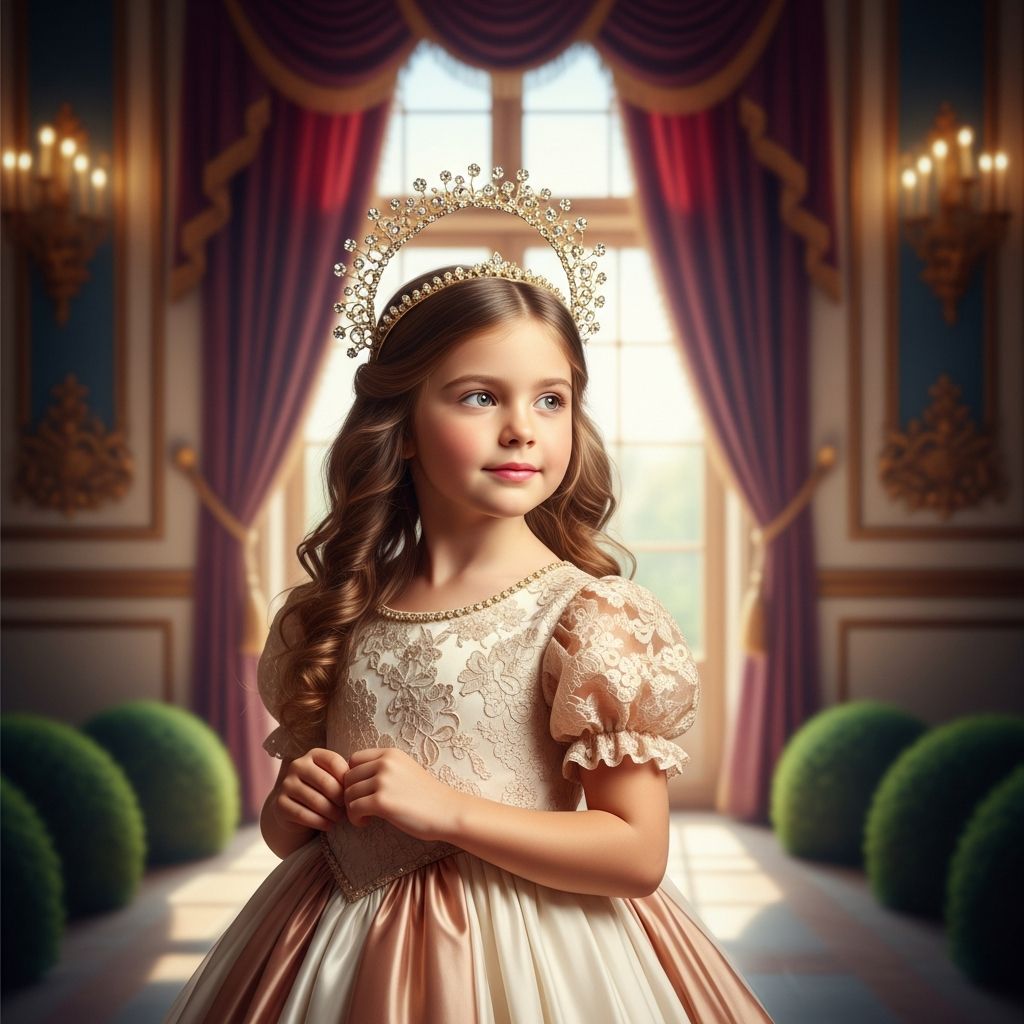
Choosing a name for your daughter that evokes the poise and enduring legacy of royalty offers a beautiful way to connect her to centuries of history and strength. These names, borne by queens, princesses, and noblewomen, carry meanings rooted in virtue, power, and grace. From classic English choices to those with continental European flair, this guide presents over 30 regal options, organized by style, with insights into their origins, notable bearers, and contemporary appeal. Parents often select these for their timeless sophistication and the sense of quiet authority they impart.
Classic English Royal Names
England’s monarchy has long set the standard for elegant girl names, favoring those that blend tradition with subtle strength. These selections have graced the cradles of future queens and remain popular today for their familiar yet distinguished sound.
- Elizabeth: Derived from Hebrew, meaning ‘God is my oath.’ Iconic for Queen Elizabeth I and II, symbolizing steadfast leadership across generations.
- Victoria: Latin for ‘victory.’ Queen Victoria’s 63-year reign defined an era, making this a name of imperial endurance.
- Charlotte: French diminutive of Charles, meaning ‘free man.’ Princess Charlotte of Wales carries it today, echoing historical figures like Queen Charlotte.
- Mary: Hebrew origin, ‘beloved’ or ‘wished-for child.’ Multiple queens consort, including Mary of Teck, embodied its gentle regal quality.
- Anne: Hebrew for ‘grace.’ Queen Anne’s union of England and Scotland highlights its unifying legacy.
These names top popularity charts in many countries, offering reliability for parents who value heritage without obscurity.
Graceful Hanoverian and Victorian Gems
The House of Hanover brought fresh continental influences to British royalty, introducing names that softened the palette while retaining majesty. Victoria’s expansive family popularized many, blending German roots with English adoption.
- Alice: Old German for ‘noble.’ Queen Victoria’s daughter Princess Alice and her descendant Princess Alice of Battenberg link it to modern royals.
- Amelia: Germanic, ‘work.’ Used by King George III’s daughter and echoed in European courts as Amalia.
- Beatrice: Latin, ‘she who brings happiness.’ Princess Beatrice of York revives her great-grandmother’s name, with roots in 13th-century English nobility.
- Helena: Greek, ‘light.’ Queen Victoria’s daughter Helena Augusta Victoria was affectionately called Lenchen.
- Feodora: Russian/German variant of Theodora, ‘God’s gift.’ Victoria’s half-sister and youngest daughter bore this rare treasure.
Such names peaked in the 19th century but see revivals, appealing to families seeking vintage charm with royal pedigree.
European Continental Elegance
Beyond Britain, European royals offer melodic choices with diverse linguistic origins. These names from Denmark, Sweden, Luxembourg, and beyond provide international sophistication.
- Sophia (or Sofia, Sophie): Greek for ‘wisdom.’ Widespread, from King George III’s daughters to Sweden’s Princess Sofia.
- Alexandra: Greek, ‘defender of mankind.’ Queen Alexandra of England and Russia’s last empress elevated it.
- Margaret: Greek, ‘pearl.’ Princess Margaret and Sweden’s Crown Princess Margaret exemplify its enduring favor.
- Josephine: Hebrew, diminutive of Joseph, ‘God will increase.’ Napoleon’s empress and Denmark’s Princess Josephine add cross-cultural appeal.
- Camilla: Latin, ‘attendant at religious rites.’ Queen Camilla’s prominence brings ancient Roman roots to modern royalty.
These variants allow flexibility—Sophia in English, Sofia in Spanish—making them adaptable for global families.
Timeless Names from Early Monarchies
Medieval and early modern royals inspire names with deep historical resonance, often tied to legendary queens who shaped nations.
- Eleanor: Old French/Provençal, ‘the other Aenor.’ Eleanor of Aquitaine, queen of France and England, mother to Richard the Lionheart.
- Joan (or Joanna): Hebrew, ‘God is gracious.’ Queen Joan of Navarre and England’s Princess Joan during the Black Death.
- Diana: Latin, ‘divine.’ Princess Diana’s legacy transformed it into a symbol of compassion and style.
- Birgitte: Celtic variant of Bridget, ‘exalted one.’ Denmark’s Duchess of Gloucester carries it gracefully.
- Bernice: Greek, ‘bringer of victory.’ A ruler in Roman provinces from 39 B.C. to 92 A.D..
These evoke epic tales, ideal for parents drawn to literature or history.
Modern Royal Inspirations and Variants
Recent royals introduce fresh twists, blending tradition with accessibility. Middle names often honor ancestors, creating layered choices.
- Lilibet: A childhood nickname for Elizabeth II, now Princess Lilibet Diana Mountbatten-Windsor, symbolizing familial intimacy.
- Zara: Arabic/Greek, ‘princess’ or ‘radiance.’ Zara Phillips broke conventions with her dawn-inspired name.
- Augusta: Latin, ‘majestic.’ Frequent in Georgian royals, paired with Sophia or Matilda.
- Matilda: Germanic, ‘mighty in battle.’ Historical English empresses lend it warrior-queen energy.
- Eugénie: Spanish/French, form of Eugenia, ‘well-born.’ France’s last empress under Napoleon III.
Today’s royals like those in the House of Windsor use multiple names—e.g., Charlotte Elizabeth Diana—encouraging creative middles.
Choosing the Perfect Regal Name for Your Daughter
Selecting from royal inspirations involves balancing heritage with practicality. Consider pronunciation across languages, as Alexandra flows in English but Aleksandra in Slavic contexts. Popularity matters: Elizabeth ranks high globally, while Feodora offers rarity. Test nicknames—Victoria might become Vicky, Amelia to Mia. Cultural fit is key; European names suit diverse backgrounds without appropriation when chosen thoughtfully.
Discuss family history: Does a Beatrice echo a grandmother? Visualize monograms and signatures. Legal aspects vary—some countries limit long names, but multiples allow formality and pet forms. Ultimately, the best name feels like a crown: fitting, shining, and uniquely hers.
Frequently Asked Questions
Can I use a royal name if it’s not from my heritage?
Yes, many royal names like Sophia or Amelia have broad adoption across cultures, honoring universal qualities like wisdom without claiming exclusivity.
Are there nickname conflicts with common names?
Names like Margaret (Meg, Maggie) or Josephine (Jo, Fifi) offer versatile short forms, but check local trends to avoid duplicates in school or family.
How do spelling variants affect a name’s royal feel?
Sofia feels more continental than Sophia, yet both link to royals; choose based on desired international vibe or simplicity in your region.
Do royal names age well into adulthood?
Absolutely—Elizabeth suits a child and a CEO, providing lifelong poise without childish connotations.
References
- Royal Names for Girls: Traditional to Daring — Appellation Mountain. Accessed 2026. https://appellationmountain.net/cambridge-princess-names-alice-eleanor-and-sophia/
- 1000 Years of Royal Baby Names — Amanda Matta, The Fascinator (Substack). Accessed 2026. https://mattaoffact.substack.com/p/1000-years-of-royal-baby-names
- 75 Royal Girl Names — FamilyEducation. Accessed 2026. https://www.familyeducation.com/pregnancy/girl-names/75-royal-names-for-girls
- Royal Names for Girls — Nameberry. Accessed 2026. https://nameberry.com/list/340/royal-names-for-girls