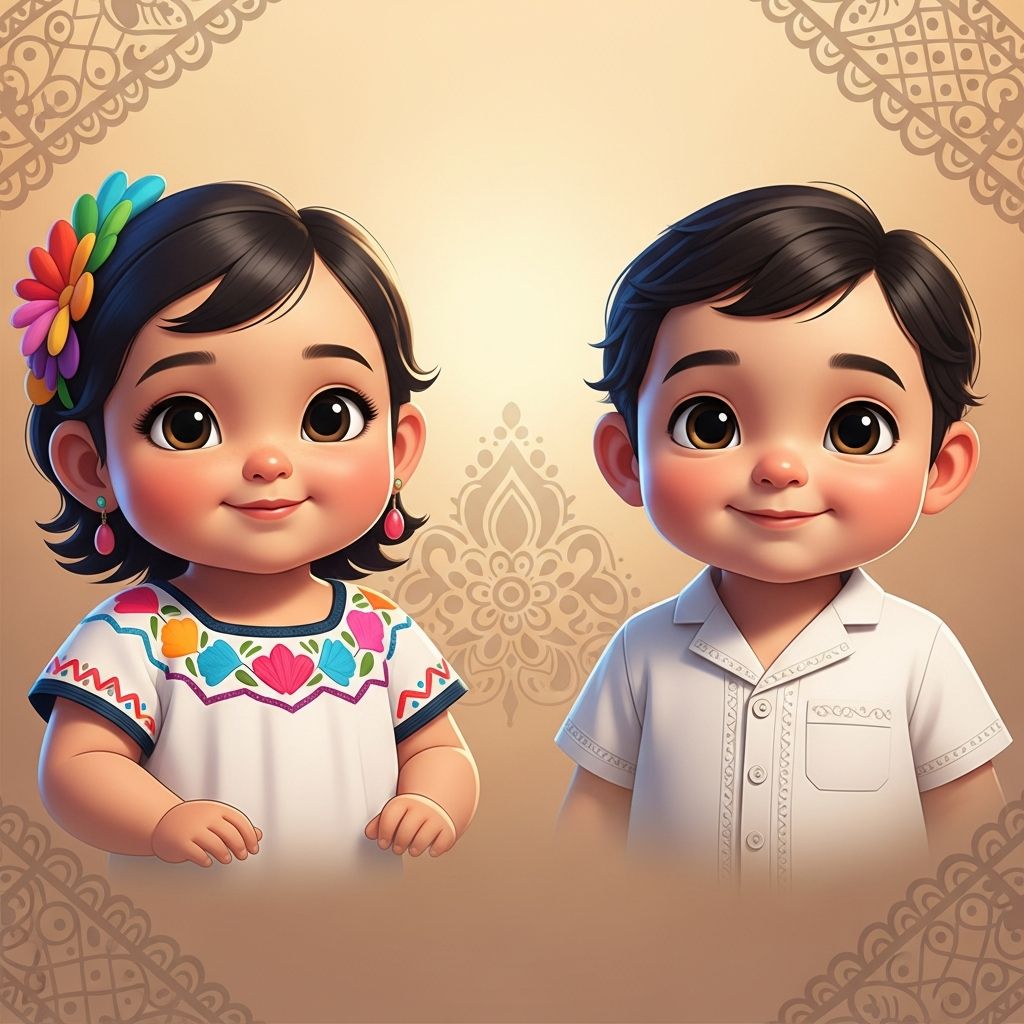
Mexican naming traditions reflect a vibrant fusion of indigenous languages like Nahuatl and Mayan, alongside Spanish colonial influences and Catholic devotion. These names often draw from nature’s beauty, ancient deities, virtues, and family legacies, offering parents a way to honor cultural depth while embracing timeless appeal. Whether seeking strength for a son or grace for a daughter, Mexican names provide options that resonate across generations.
The Roots of Mexican Naming Practices
Mexico’s naming heritage stems from pre-Hispanic civilizations such as the Aztecs, Maya, and Zapotecs, where names evoked natural elements, animals, or celestial bodies to invoke protection and identity. The arrival of Spanish explorers in the 16th century introduced biblical and saintly names, creating a blended system still evident today. Modern Mexican children typically receive a first name followed by paternal and maternal surnames, preserving both family lines— for instance, a child of parents Juan García López and María Hernández Ruiz might be named Sofia García Hernández. This structure underscores familial bonds and continuity.
Indigenous names persist in rural communities and urban revivals, celebrating languages spoken by over 60 native groups. Spanish-derived names dominate due to widespread Catholicism, with many honoring the Virgin Mary or apostles. Parents today often select names for their phonetic beauty, ease of pronunciation globally, and profound symbolism, bridging old-world traditions with contemporary life.
Popular Mexican Girl Names with Timeless Charm
Girl names in Mexico frequently embody femininity, purity, and natural splendor. Here is a selection of beloved choices, each carrying layers of cultural resonance:
- Sofia: Meaning ‘wisdom’ from Greek via Spanish, this name evokes intelligence and serenity, popular for its soft sound and global familiarity.
- Valentina: Derived from Latin for ‘strong and healthy,’ it suggests vitality and courage, often linked to Saint Valentine traditions.
- Isabella: A Spanish form of Elizabeth meaning ‘devoted to God,’ celebrated for its elegant flow and royal connotations.
- Camelia: Inspired by the camellia flower, symbolizing adoration and perfection in Mexican gardens and poetry.
- Emilia: From Latin ‘rival’ or ‘industrious,’ this name conveys diligence and grace, rising in use for its classic appeal.
These names balance tradition with modernity, suitable for families honoring Hispanic roots worldwide.
Unique Indigenous Girl Names from Ancient Tongues
Names rooted in Nahuatl (Aztec language) or Mayan offer exotic flair and direct ties to Mexico’s pre-colonial past. They highlight elements like stars, flowers, and feathers, reflecting indigenous worldviews:
- Ximena: Basque origin meaning ‘hearkening’ or ‘listener,’ adopted widely in Mexico for its melodic rhythm.
- Itzel: Mayan for ‘rainbow lady’ or ‘dew,’ evoking iridescent beauty and renewal after rain.
- Citlali: Nahuatl word for ‘star,’ a celestial nod to guidance and eternal light in night skies.
- Xochitl: Pure Nahuatl meaning ‘flower,’ representing life’s fleeting yet vibrant bloom in Aztec lore.
- Nayeli: Zapotec for ‘I love you,’ a tender expression of affection from southern indigenous groups.
- Quetzalli: Nahuatl for ‘precious feather’ or ‘beautiful,’ alluding to the sacred quetzal bird’s plumage.
- Zitlali: Variant of Citlali, also meaning ‘star,’ emphasizing individuality in the cosmos.
These selections revive endangered languages, allowing parents to pass on ancestral pride.
Strong Mexican Boy Names Inspired by Heroes
Boy names often channel valor, leadership, and protection, drawing from warriors, saints, and nature’s might:
- Santiago: Spanish for ‘Saint James,’ patron of Spain and Mexico, symbolizing pilgrimage and faith.
- Mateo: Biblical ‘gift of God,’ cherished for its warm tone and spiritual depth.
- Diego: Possibly from Santiago, meaning ‘supplanter’ or ‘teacher,’ famously borne by muralist Diego Rivera.
- Leonardo: Italian-Spanish for ‘brave lion,’ denoting boldness and creativity.
- Emiliano: From Emiliano Zapata, meaning ‘rival’ but tied to revolutionary zeal for justice.
Such names instill a sense of heritage and resilience from Mexico’s storied past.
Powerful Indigenous Boy Names from Myth and Nature
Aztec and other native influences yield bold, evocative boy names connected to gods, animals, and landscapes:
- Cuauhtémoc: Nahuatl for ‘descending eagle,’ last Aztec emperor embodying unyielding resistance.
- Tláloc: Nahuatl name of the rain god, signifying fertility and life-giving storms.
- Tenoch: From Nahuatl ‘stone cactus fruit,’ legendary founder of Tenochtitlán (Mexico City).
- Yaotl: Nahuatl for ‘warrior,’ a fierce call to inner strength and battle readiness.
- Xipilli: Nahuatl meaning ‘jeweled face’ or ‘prince,’ evoking adorned royalty and sparkle.
Choosing these honors Mexico’s diverse ethnic mosaic, from central highlands to Yucatán jungles.
Nature-Inspired Mexican Names for Both Genders
Mexico’s lush biodiversity inspires unisex or adaptable names celebrating flora, fauna, and elements:
- Indigo: Referring to the deep blue dye from plants, linked to intuition and southern landscapes.
- Mariposa: Spanish for ‘butterfly,’ symbolizing transformation and delicate power.
- Mazatl: Nahuatl for ‘deer,’ graceful and swift, tied to forest spirits.
- Ameyalli: Nahuatl meaning ‘spring’ or ‘fountain,’ representing renewal and pure water sources.
- Coszcatl: Nahuatl for ‘jewel’ or ‘ornament,’ like glittering obsidian crafts.
These evoke Mexico’s ecosystems, from Sierra Madre peaks to Pacific coasts, fostering environmental appreciation.
Names Honoring Faith and Saints
Catholicism shapes many names, with devotion to Mary and apostles prominent:
- Guadalupe: From Our Lady of Guadalupe, meaning ‘river of the wolf,’ Mexico’s patroness apparition site.
- Ángel: Spanish for ‘messenger’ or ‘angel,’ invoking divine protection.
- Graciela: Meaning ‘grace,’ a virtuous nod to divine favor.
- Inés: Spanish form of Agnes, ‘pure’ or ‘holy,’ symbolizing chaste innocence.
These carry spiritual weight, often chosen during baptisms or feast days.
Choosing the Right Mexican Name for Your Family
Selecting a name involves balancing sound, meaning, and practicality. Consider pronunciation in multilingual settings—names like Sofia adapt easily, while Xochitl may need spelling notes. Research family trees for recurring motifs, or consult elders for indigenous authenticity. Test nicknames: Ximena becomes Xime, Cuauhtémoc shortens to Cuau. Reflect on values—nature for eco-conscious parents, saints for faithful ones. Ultimately, the name should feel like a loving embrace of identity, growing with your child through life’s chapters.
Gender-neutral options like Ángel or Itzel offer flexibility amid evolving norms. Pair with surnames thoughtfully, ensuring rhythmic harmony, as in Elena Ruiz Morales.
Frequently Asked Questions
Are Mexican names easy to pronounce outside Mexico?
Many like Sofia or Mateo are intuitive globally, but indigenous ones like Citlali (sit-LAH-lee) benefit from phonetic guides shared with family and teachers.
Can non-Mexican families use these names respectfully?
Yes, with appreciation for origins—learning basic cultural context honors the heritage without appropriation.
What if a name has multiple spellings?
Variants like Zitlali/Citlali exist; choose based on regional ties or personal preference, confirming meaning consistency.
Do Mexican names suit modern nicknames?
Absolutely—Xochitl to Xochi, Nayeli to Naye—allowing fresh, casual adaptations while retaining roots.
References
- Indigenous Languages of Mexico — Instituto Nacional de Lenguas Indígenas (INALI), Government of Mexico. 2023-05-15. https://www.inali.gob.mx/
- Etymological Dictionary of Nahuatl — Universidad Nacional Autónoma de México (UNAM). 2022-11-20. https://www.unam.mx/
- Cultural Heritage of Mexican Naming Conventions — Secretaría de Cultura, Government of Mexico. 2024-03-10. https://www.cultura.gob.mx/
- Historical Linguistics of Mesoamerican Names — Journal of Latin American Studies (Cambridge University Press). 2021-07-01. https://doi.org/10.1017/S0022216X21000543
- Religious Iconography in Mexican Culture — UNESCO World Heritage Centre. 2020-09-12. https://whc.unesco.org/en/list/