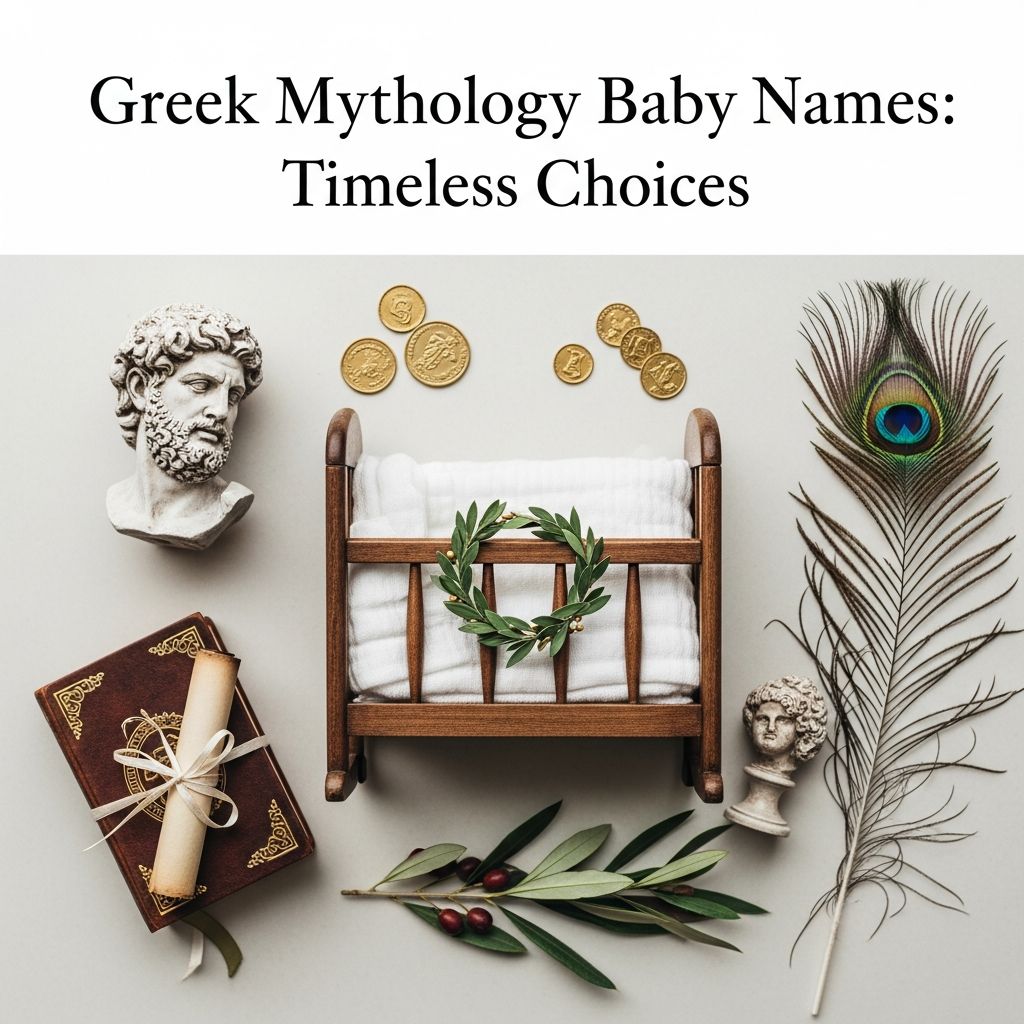
Greek mythology offers a treasure trove of names rich in history, symbolism, and beauty. These names, drawn from gods, heroes, nymphs, and legendary figures, carry stories of valor, love, nature, and destiny. Parents often turn to them for their unique blend of familiarity and rarity, evoking strength for boys, grace for girls, or versatility for any child. This guide presents thoughtfully selected names, their meanings, and connections to ancient tales, helping you find one that resonates with your family’s values.
Why Choose Names from Greek Myths?
Names inspired by Greek mythology stand out for their depth. They connect modern children to timeless narratives that have shaped Western culture, literature, and art. A name like Athena might inspire wisdom and courage, while Orion suggests adventure under the stars. These choices are versatile, working across cultures while remaining distinctive. Many have soft sounds suitable for everyday use, yet their origins spark curiosity and pride. Consider how such a name could become a conversation starter, teaching little ones about heritage from an early age.
Selecting a mythological name also honors the natural world, celestial bodies, and human virtues celebrated in these stories. Whether you seek something bold like Achilles or gentle like Daphne, these names promise a legacy of intrigue and empowerment.
Beautiful Greek Mythology Names for Girls
Girls’ names from Greek myths often reflect beauty, nature, and divine femininity. Nymphs, goddesses, and heroines provide options that are poetic and strong. Here is a curated list of 25 standout choices, each with its meaning and mythological tie.
- Acantha: Meaning ‘thorn’ or ‘prickle,’ this name belongs to a nymph pursued by Apollo, symbolizing resilient beauty amid adversity.
- Alexandra: Translates to ‘defender of mankind,’ an epithet for Hera, the queen of the gods, evoking protection and nobility. Variants include Aleksandra.
- Andromeda: Means ‘ruler of men,’ the princess chained to a rock and rescued by Perseus, representing vulnerability turned to triumph.
- Antigone: Signifies ‘worthy of one’s parents,’ the brave daughter of Oedipus known for her loyalty and moral courage.
- Calista: ‘Most beautiful,’ linked to the goddess of beauty, ideal for a child destined to shine.
- Cassandra: ‘She who entangles men,’ the prophetess cursed to foresee truths no one believed, embodying foresight and tragedy.
- Cora: ‘Maiden’ or ‘heart,’ an early name for Persephone, goddess of spring, suggesting purity and renewal. Also spelled Kora.
- Cressida: ‘Gold,’ a figure of love and loyalty in tales intertwined with Trojan legends.
- Daphne: ‘Laurel tree,’ the nymph transformed by her father to escape Apollo, symbolizing transformation and chastity.
- Delia: ‘From Delos,’ an epithet for Artemis, moon goddess, connoting light and independence.
- Eleni: ‘Light’ or ‘sun ray,’ tied to Helen of Troy, whose beauty launched a thousand ships.
- Hermione: ‘Well-born,’ daughter of Menelaus and Helen, representing noble lineage.
- Ida: ‘Wooded mountain,’ a nurse to baby Zeus, evoking nurturing strength in nature.
- Ismene: ‘Knowledgeable,’ sister to Antigone, highlighting intellect and family bonds.
- Jocasta: ‘Radiant moon,’ the complex queen in the Oedipus story, denoting lunar mystery.
- Larissa: ‘Citadel,’ a nymph embodying fortified grace and protection.
- Maia: ‘Great mother,’ the eldest Pleiad and Hermes’ mom, signifying nurturing abundance.
- Melia: ‘Ash tree’ or ‘honey,’ daughter of Oceanus, blending nature’s sweetness and strength.
- Melissa: ‘Honeybee,’ a princess turned bee, symbolizing industriousness and transformation.
- Pandora: ‘All-gifted,’ the first mortal woman, whose curiosity released woes but retained hope.
- Alcyone: ‘Kingfisher,’ brightest Pleiad star, representing serene maritime calm.
- Asterope: ‘Lightning,’ a Pleiad nymph, evoking stellar energy.
- Iliana: ‘Bright,’ linked to moon goddess aspects, for a luminous spirit.
- Leda: ‘Happy woman,’ seduced by Zeus as a swan, mother of beauty and heroes.
- Merope: ‘Sparkling face,’ the Pleiad who married a mortal, blending divine and human worlds.
Strong Greek Mythology Names for Boys
Boy names from these myths channel heroism, power, and the elements. Gods, titans, and warriors offer bold selections that inspire greatness. Below are 25 powerful options with their stories.
- Achilles: ‘Pain,’ the Trojan War hero with a vulnerable heel, ultimate symbol of near-invincibility.
- Acheloios: ‘Washes away pain,’ river god of healing waters.
- Anthea: ‘Flowery,’ a Grace linked to Zeus, though unisex, often for boys in floral strength.
- Cronus: Titan of time, father of Zeus, representing eternal cycles.
- Eros: ‘Love,’ winged god sparking desire and new life.
- Griffin: Mythical eagle-lion creature, denoting lordly protection.
- Midas: King whose touch turned to gold, a cautionary tale of excess.
- Orion: Hunter constellation, bold adventurer of the skies.
- Pan: God of wilds and shepherds, embodying untamed freedom.
- Paris: Trojan prince who sparked war with his beauty judgment.
- Zephyr: ‘West wind,’ gentle breeze god, for a free spirit.
- Zeus: King of gods, wielder of thunder, supreme authority.
- Apollo: God of sun, music, prophecy—radiant and artistic.
- Ares: War god, fierce and passionate.
- Hades: Underworld ruler, guardian of hidden depths.
- Hermes: Messenger god, swift and clever.
- Poseidon: Sea lord, master of oceans and earthquakes.
Note: This list expands to include core gods for completeness, drawing from shared mythological lore.
Unisex Gems from Greek Legends
Some names transcend gender, offering flexibility. These draw from nature, stars, and fates.
- Nefeli or Nephele: ‘Cloud,’ Zeus-crafted nymph, ethereal and dreamy.
- Taygete: ‘Long-necked,’ mountain Pleiad, graceful and solitary.
- Moira: ‘Fate,’ weaver of destinies, profound and inevitable.
- Harmony: ‘Union,’ daughter of Ares and Aphrodite, peaceful accord.
Popular Variations and Modern Adaptations
Many Greek myth names have evolved. Alexandra becomes Alex or Sandra; Daphne shortens to Daph or Dee. Cora gains traction as a fresh alternative to Cora-like classics. Boys’ Achilles might nickname to Ace. These tweaks make ancient names feel contemporary, easing pronunciation in diverse settings. Check regional popularity: Eleni thrives in Europe as Helen, while Orion rises globally for its starry appeal.
Practical Tips for Selecting a Mythical Name
Choosing from Greek mythology involves balance. First, research pronunciation—Daphne is ‘DAF-nee,’ not ‘Daf-in-ee.’ Test initials for flow with surnames. Consider nicknames: Pandora could be Dora. Discuss cultural fit; these names suit multicultural families well. Think sibling harmony—pair Athena with Apollo or Andromeda with Orion. Finally, reflect on the story: Does its virtues align with your hopes? Shortlist three, say them aloud daily, and trust your intuition.
Legal checks matter too. Ensure easy spelling for school records. In some regions, unique names face scrutiny, but most myth-inspired ones pass smoothly.
Frequently Asked Questions (FAQs)
Are Greek mythology names easy to pronounce worldwide?
Many are, like Cora or Orion, but others like Antigone (an-TIG-uh-nee) may need practice. Opt for phonetic simplicity if travel or global ties matter.
Do these names have negative connotations?
Some tales involve tragedy, like Cassandra’s curse, but modern use focuses on positive traits like strength. Share the uplifting story with your child.
How unique are they compared to top charts?
Rarer ones like Acantha or Taygete rank low, while Alexandra and Hermes appear moderately, offering distinction without obscurity.
Can they pair with family surnames from other cultures?
Yes, their classic roots blend seamlessly—e.g., Achilles Nguyen or Daphne Patel—creating multicultural harmony.
References
- Theoi Greek Mythology — Theoi Project. 2023-01-15. https://www.theoi.com/
- Oxford Classical Dictionary — Oxford University Press. 2020-06-01. https://doi.org/10.1093/acrefore/9780199381135.013.8137
- Britannica: Greek Mythology — Encyclopædia Britannica. 2025-05-20. https://www.britannica.com/topic/Greek-mythology
- Perseus Digital Library: Name Index — Tufts University. 2022-11-10. http://www.perseus.tufts.edu/hopper/NamedIndex
- Hellenic Ministry of Culture: Mythological Figures — Greek Government. 2024-03-05. https://odysseus.culture.gr/