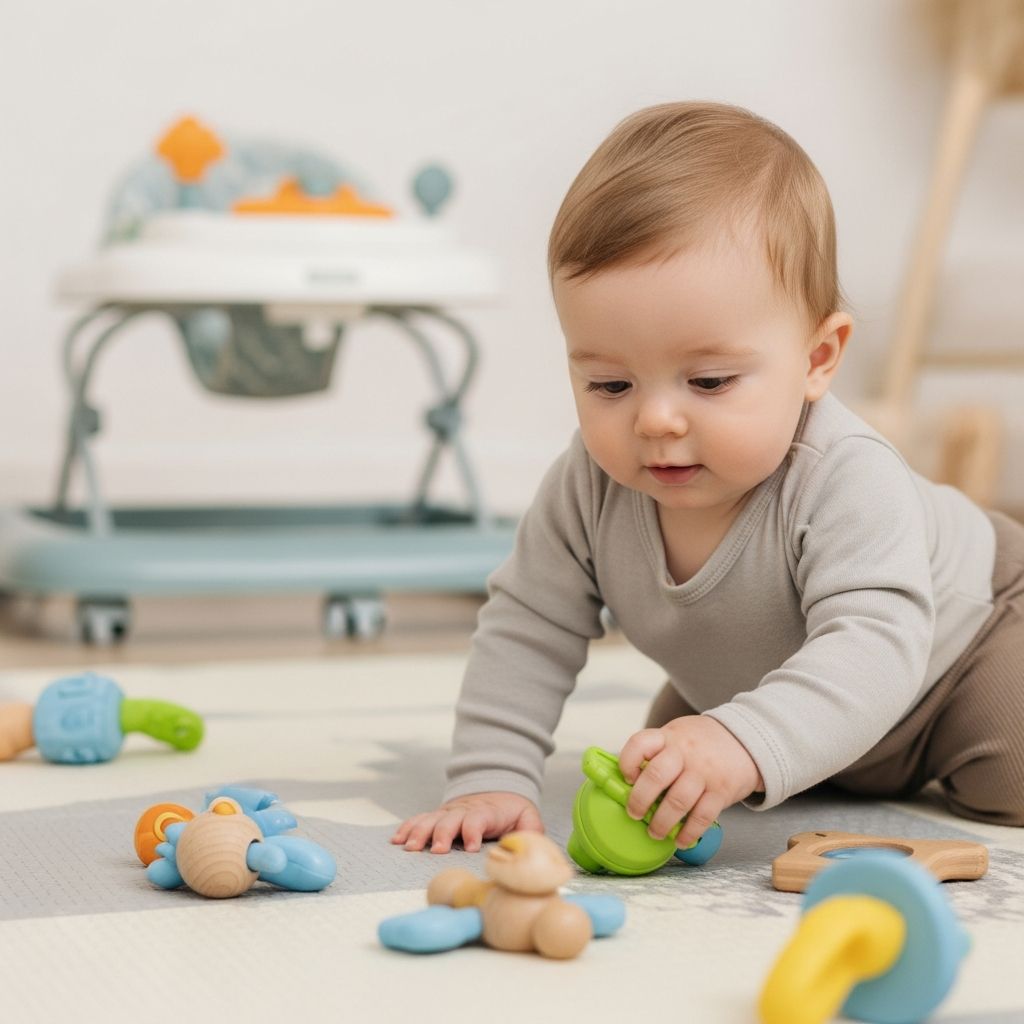
Baby walkers, often marketed as fun aids for early movement, carry substantial safety and developmental risks that outweigh any perceived benefits. Major pediatric organizations strongly advise against their use due to thousands of annual injuries and evidence of hindered motor skills.
Understanding the Appeal and Reality of Baby Walkers
Parents frequently turn to baby walkers for convenience, believing they entertain infants, promote exercise, or speed up walking milestones. Surveys indicate 50%-77% of parents with infants aged 3-12 months use them, driven by cultural norms and misconceptions about facilitating development. However, clinical data reveals these devices position babies unnaturally, potentially leading to atypical gait patterns like toe-walking or external leg rotation.
In reality, babies in walkers propel themselves at speeds up to three feet per second—faster than many adults can react—turning a simple toy into a high-speed hazard. This rapid mobility, combined with elevated height, allows access to dangers like countertops and cords that crawling babies cannot reach.
Documented Injury Statistics and Common Accidents
Emergency departments report alarming injury rates from baby walkers. Between 1990 and 2014, nearly 231,000 U.S. children under 15 months sought care for walker-related incidents, with 90% involving head and neck trauma. Daily, about 21 children are hospitalized, making walkers the leading cause of injuries among nursery products.
In Australia, injuries include burns, cuts, head trauma, and fractures, often from falls down stairs, crashes into objects, or tip-overs. Even supervised use fails to prevent accidents, as babies can swiftly roll into pools, fireplaces, or heaters. Drownings have occurred near water, and hot liquids or irons have caused severe burns when pulled within reach.
| Injury Type | Frequency/Examples | Source |
|---|---|---|
| Head/Neck Trauma | 90% of cases; falls down stairs (74%) | |
| Burns & Lacerations | Hot drinks, irons, stoves | |
| Fractures & Falls | Tip-overs, stairs; 21 hospitalizations/day | |
| Other (Poisoning, Drowning) | Cords, pools, chemicals |
These figures underscore why injuries persist even with adults nearby—walkers outpace supervision.
Why Walkers Hinder Natural Development
Contrary to advertising, walkers do not accelerate walking; they may delay it. Babies skip crucial stages like crawling, pulling up, cruising along furniture, and balancing independently. The seated position forces unnatural leg alignment, stressing joints and fostering poor muscle development.
A study on walker effects confirmed no developmental advantages, with users experiencing delays in standing, walking, and crawling ages. Professionals note this creates a false progress illusion for parents while impeding authentic skill-building.
- Skipped Milestones: Crawling strengthens core and arms; walkers bypass this.
- Gait Abnormalities: Promotes toe-pointing and rotation, risking long-term issues.
- Balance Deficit: No weight-bearing practice on real floors.
Global Bans, Standards, and Expert Consensus
Baby walkers face strict scrutiny worldwide. Canada has banned them outright, and the American Academy of Pediatrics (AAP) urges a U.S. ban, citing overwhelming risks. In Australia, while regulated for features like brakes, labels, and no sharp edges, government health authorities still discourage use entirely.
U.S. standards mandate stopping mechanisms for stairs, but experts like those at Children’s Hospital of Philadelphia emphasize these are insufficient—walkers cause more harm than any other baby gear. Recent emergency room trends, including traumatic brain injuries, reinforce calls to abandon them.
Safety Protocols If Using a Walker (Strongly Discouraged)
Though not recommended, if a walker is unavoidable, adhere to rigorous rules:
- Use only on flat, clear surfaces; block stairs and hazards.
- Never leave baby unattended; limit to 15 minutes max per session.
- Ensure brakes, latches, and no tip-prone add-ons; remove hot items/cords.
- Choose models meeting local standards (e.g., Australian brakes/no finger traps).
Even then, risks remain high, as two-thirds of injured infants continue walker use post-accident.
Superior Alternatives for Safe Exploration
Opt for devices promoting natural progression without wheels or false support. Experts endorse:
| Alternative | Benefits | Age Range |
|---|---|---|
| Stationary Activity Centers | Bouncer-like; toys encourage reaching/balancing; no mobility risks. | 6+ months |
| Walkers with Push Bars | Baby pushes self; builds strength/balance like furniture cruising. | 9+ months |
| Exersaucers/Jumpers | Contained jumping; develops legs safely (watch for finger/spring risks). | 6-12 months |
| Floor Time & Tummy Time | Free play; essential for crawling/milestones; zero injury risk. | Birth+ |
Push walkers allow self-propelled movement post-crawling, mimicking real walking practice. Prioritize unstructured play—babies walk when ready, typically 9-15 months, without aids.
Real Parent Experiences and Prevention Tips
Many parents report close calls: a baby scorching from a tipped coffee mug or tumbling downstairs despite gates. Prevention starts with awareness—discard or avoid walkers. Educate caregivers, secure homes (gate stairs properly, anchor furniture), and focus on supervision during active play phases.
Trauma coordinators stress: “Parents can’t react fast enough to a walker’s speed.” Investing in safe alternatives fosters confidence and joy in mobility.
Frequently Asked Questions About Baby Walkers
Are baby walkers banned in any countries?
Yes, Canada has a full ban. The AAP calls for one in the U.S., and Australia heavily discourages them despite regulations.
Do baby walkers help my child walk faster?
No, they often delay walking and cause improper gait by skipping natural stages like crawling.
What are the most common injuries?
Head/neck trauma from falls (74%), burns, fractures, and drownings near hazards.
Are there safe baby walkers?
No truly safe wheeled model exists; even regulated ones lead to injuries. Choose stationary options instead.
How can I encourage walking without a walker?
Use push toys, ensure tummy time, and provide safe spaces for cruising. Patience yields better results.
Empowering Your Baby’s Journey to Independence
Steer clear of baby walkers to protect your child’s health and growth. Embrace evidence-based alternatives that nurture true milestones, ensuring safe, joyful exploration. Consult pediatricians for personalized advice tailored to your family.
References
- Baby walkers and exercise jumpers: why they’re best avoided — Pregnancy Birth & Baby (Australian Government). Accessed 2026. https://www.pregnancybirthbaby.org.au/baby-walkers
- Dangers of Baby Walkers and Safer Alternatives — Banner Health. Accessed 2026. https://www.bannerhealth.com/healthcareblog/advise-me/dangers-of-baby-walkers-and-safer-alternatives
- Why Baby Walkers Aren’t Safe—and What to Buy Instead — The Bump. Accessed 2026. https://www.thebump.com/a/baby-walkers
- Baby Walker Safety — Children’s Hospital of Philadelphia. Accessed 2026. https://www.chop.edu/centers-programs/injury-prevention-program/baby-walker-safety
- Baby Walkers: What Every Parent Needs to Know — Tufts Medicine. Accessed 2026. https://www.tuftsmedicine.org/about-us/news/baby-walkers-what-every-parent-needs-know
- Consumer Reports: Danger of baby walkers — YouTube (KCRA 3). Accessed 2026. https://www.youtube.com/watch?v=M_dh-L-LAm4
- The Effect of Baby Walker on Child Development — National Center for Biotechnology Information (PMC). 2017-11-06. https://pmc.ncbi.nlm.nih.gov/articles/PMC5703622/