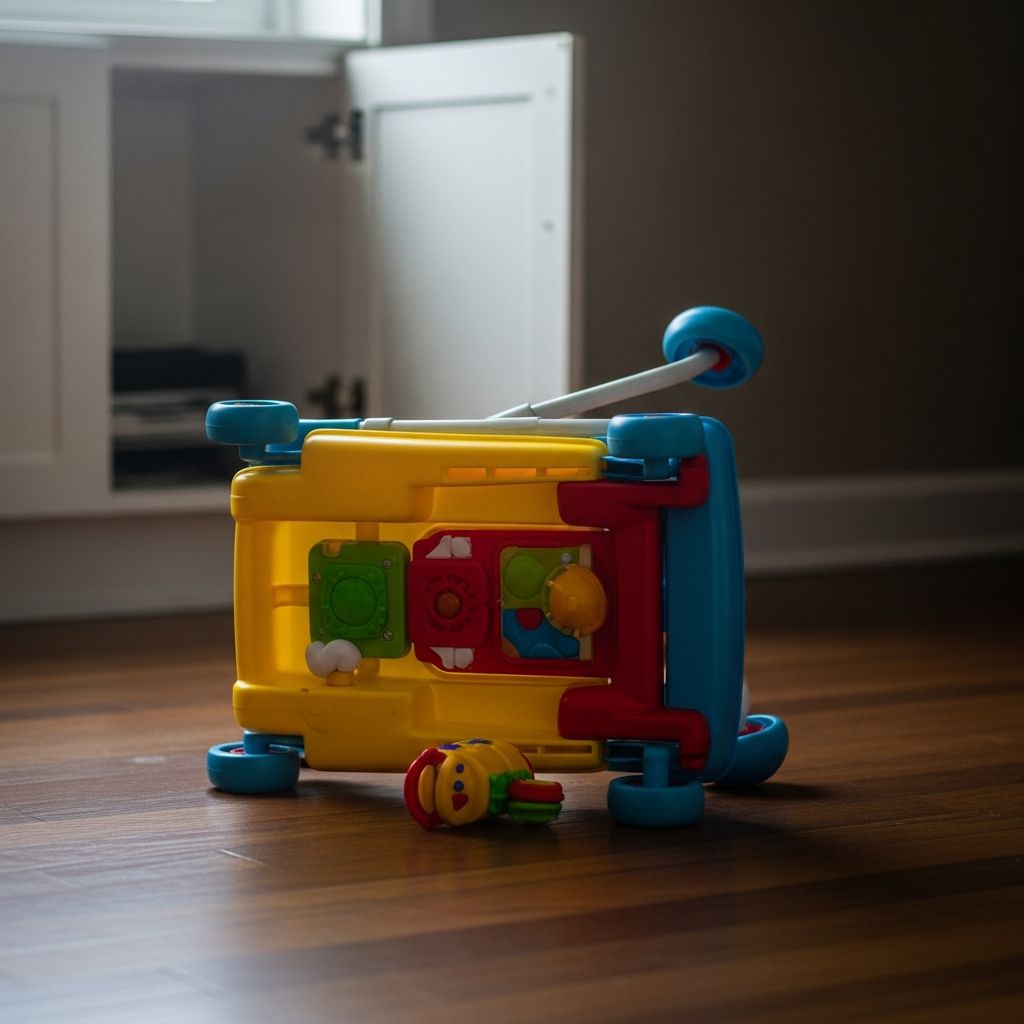
Baby walkers, those wheeled devices designed to help infants explore their surroundings, have long been a staple in many households. Marketed as tools for early mobility and entertainment, they allow babies to scoot around faster than their little legs could carry them alone. However, mounting evidence from medical experts, government data, and safety organizations reveals a stark reality: these products pose significant risks to young children, leading to thousands of emergency room visits annually. Despite improved standards and warnings, injuries persist, prompting renewed calls for a complete nationwide ban in the United States, similar to the one implemented in Canada over two decades ago.
Understanding the Scope of the Problem
The dangers associated with baby walkers are not anecdotal; they are backed by decades of data from emergency departments across the country. From 1990 to 2014, an estimated 230,676 children under 15 months old were treated for walker-related injuries in U.S. emergency rooms. Even with safety enhancements, the problem endures. Recent figures from the National Electronic Injury Surveillance System (NEISS) indicate an average of 2,467 injuries per year to children under age 5 in baby walkers, jumpers, or similar devices between 2021 and 2023. These numbers highlight that while awareness has grown, the hazards remain prevalent.
Infants in walkers can propel themselves at speeds exceeding three feet per second, outpacing even vigilant adults. This rapid movement turns everyday home environments into potential disaster zones, where a momentary lapse can result in catastrophe. Parents often purchase these items believing they promote development, but pediatricians argue the opposite: walkers delay natural milestones like crawling, standing, and walking.
Common Injuries and Their Devastating Impact
The majority of baby walker incidents involve falls, particularly down stairs, accounting for over 74% of cases in some studies. In one analysis of 271 injuries, 96% occurred when children tumbled down stairs, with falls exceeding 10 steps tripling the risk of skull fractures. Head and neck injuries dominate, comprising 90% of accidents, often leading to concussions, fractures, or worse.
Beyond falls, walkers enable access to hazards previously out of reach. Babies can pull hot pots from stoves, knock over toxic cleaners, or roll into pools and bathtubs, resulting in burns, poisonings, and drownings. From 2004 to 2008 alone, the Consumer Product Safety Commission (CPSC) documented an average of 3,000 injuries yearly and eight deaths linked to these devices. Hospital admissions occur in about 4% of cases, with severe outcomes like brain injuries and organ damage.
| Injury Type | Percentage of Cases | Common Outcomes |
|---|---|---|
| Head/Neck Injuries | 90% | Skull fractures, concussions |
| Stair Falls | 74-96% | Hospitalization in 4% |
| Burns/Poisonings | Variable | Access to hazards |
| Drownings | Rare but fatal | Pool/bathtub access |
This table summarizes key injury patterns, underscoring the predictability and preventability of most incidents.
A History of Half-Measures and Persistent Risks
Safety efforts date back decades. In the 1990s, warning labels and caregiver education were introduced, yet a study of 271 cases found supervision in 78% of injuries, including 69% under adult watch. Injuries dropped from 21,000 in 1990 to 3,200 by 2003 due to awareness, but thousands continued.
Federal mandates strengthened in 2010 required brakes to block stair passage and wider bases to prevent doorway tip-overs, reducing injuries by 23% initially. However, recent data shows no further decline, with over 2,000 ER visits in 2014 alone. Recalls are frequent, but products persist on shelves. The CPSC monitors data but has not pursued a ban, stating it reviews standards continuously.
Expert Consensus: Pediatricians Unite Against Walkers
The American Academy of Pediatrics (AAP) has unequivocally recommended banning the sale of infant walkers, citing their inherent dangers. “Infant walkers continue to cause serious injuries in young children, and parents should not use them,” warns pediatric emergency physician Jerri Rose, MD. HealthyChildren.org emphasizes that adults cannot react fast enough to a child’s three-foot-per-second speed.
Consumer Reports echoes this, noting that even “improved” designs fail to eliminate risks like head injuries, burns, and drownings. Internationally, Canada’s 2004 ban on mobile walkers—requiring designs that cannot pass through standard doorways—drastically cut injuries, proving prohibition works.
Industry Defenses Versus Safety Realities
The Juvenile Products Manufacturers Association claims modern walkers are safer with features like brakes and labels. Sales have dipped, with 351,000 fewer units in 2023 versus 2013, per MRI Simmons. Yet advocates like Kids in Danger argue no design mitigates core risks: speed and accessibility to dangers.
Hispanic families are nearly twice as likely to buy walkers recently, highlighting targeted education needs. Despite this, over 9,000 U.S. children suffer injuries yearly.
Debunking Myths: No Developmental Benefits
- Myth: Walkers help babies learn to walk sooner. Fact: They delay walking by 2-3 months and hinder crawling.
- Myth: Supervision makes them safe. Fact: 78% of injuries occur under supervision.
- Myth: New standards eliminate risks. Fact: Injuries persist post-2010 at thousands annually.
Safer Alternatives for Infant Mobility and Play
Experts recommend stationary activity centers, which keep babies in place while offering entertainment. These reduce fall risks and promote natural development. Floor time with toys encourages tummy time, strengthening muscles for unaided crawling and walking. Walkers provide false security, often used to occupy babies while parents multitask, but true safety lies in direct interaction.
Install stair gates, secure furniture, and childproof outlets. For mobility, baby-wearing carriers or high chairs offer secure positioning without propulsion dangers.
Frequently Asked Questions (FAQs)
Are all baby walkers dangerous?
Yes, according to the AAP; even compliant models pose risks due to speed and access to hazards.
Why hasn’t the U.S. banned baby walkers like Canada?
The CPSC prioritizes standards over bans, but advocates push for prohibition given persistent injuries.
What should I do if I own a baby walker?
Discard or donate it immediately; switch to stationary seats or floor play.
Do baby walkers actually speed up walking?
No, they delay milestones by encouraging improper posture and muscle use.
How fast can a baby move in a walker?
Over three feet per second, faster than many adults can intervene.
The Path Forward: Advocating for Change
As injuries continue unabated, safety advocates intensify calls for a U.S. ban. A national recall campaign, design mandates preventing stair access, and public education could mirror Canada’s success. Parents deserve products that protect, not endanger. Until change comes, awareness is key: skip the walker, embrace safer play.
References
- Babywalker-related injuries continue despite warning labels — PubMed. 1997-07. https://pubmed.ncbi.nlm.nih.gov/9233972/
- Some baby walkers linked to injuries, death, Consumer Reports says — KSAT. 2024-10-21. https://www.ksat.com/news/local/2024/10/21/some-baby-walkers-linked-to-injuries-death-consumer-reports-says/
- Why Baby Walkers Can Put Your Child in Danger — University Hospitals. 2018-09. https://www.uhhospitals.org/blog/articles/2018/09/why-baby-walkers-can-put-your-child-in-danger
- Baby Walker Safety — Children’s Hospital of Philadelphia. N/A. https://www.chop.edu/centers-programs/injury-prevention-program/baby-walker-safety
- Why Baby Walkers Are Unsafe – Consumer Reports — Consumer Reports. N/A. https://www.consumerreports.org/product-safety/baby-walkers-unsafe-still-sold-in-us-a3111814380/
- Baby Walkers: A Dangerous Choice — HealthyChildren.org (AAP). N/A. https://www.healthychildren.org/English/safety-prevention/at-home/Pages/baby-walkers-a-dangerous-choice.aspx
- Infant Walker–Related Injuries in the United States — AAP Publications. 2018. https://publications.aap.org/pediatrics/article/142/4/e20174332/37420/Infant-Walker-Related-Injuries-in-the-United