Your baby’s eyes embark on an extraordinary transformation right from birth, evolving from limited, fuzzy perceptions to the vibrant, detailed world adults experience. This guide explores the timeline of infant visual maturation, drawing on established pediatric insights to help parents nurture this vital sense.
The Foundations of Newborn Eyesight
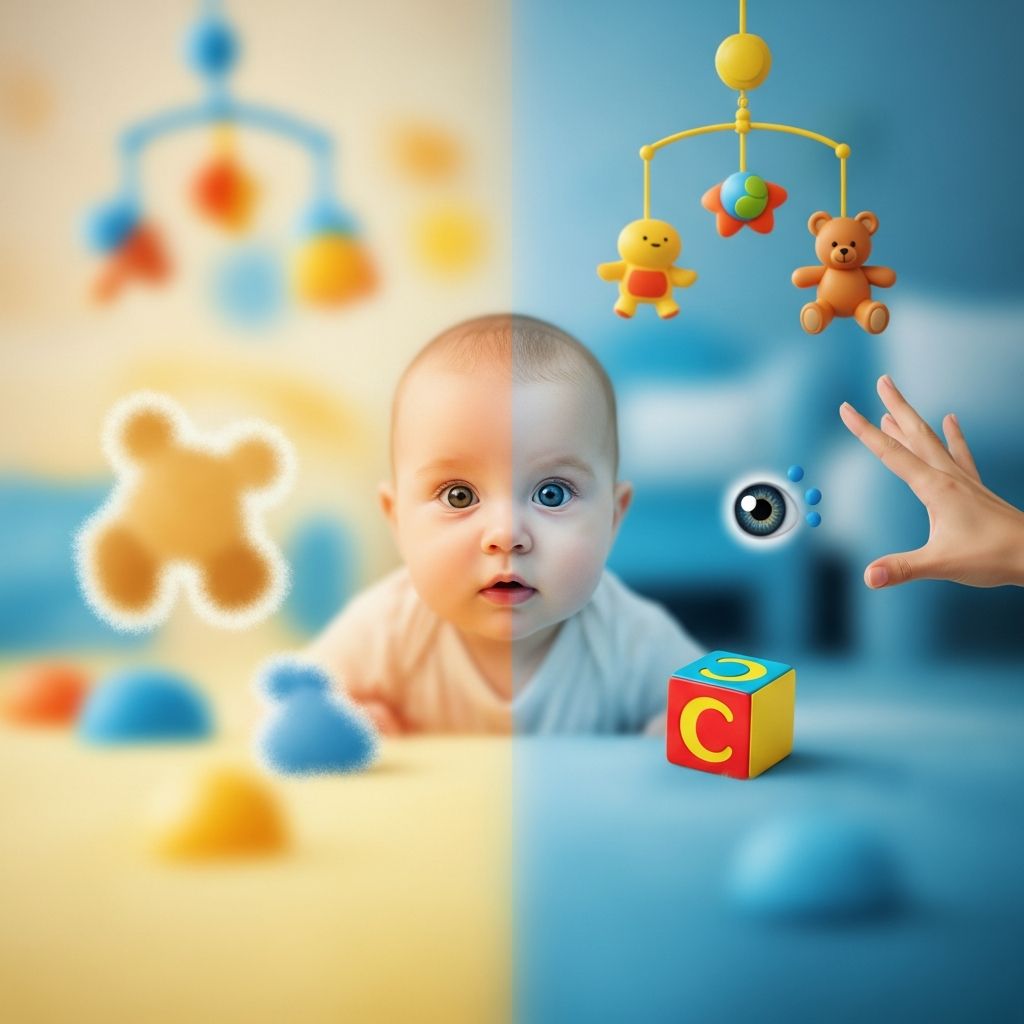
At birth, a newborn’s visual system is immature, with acuity around 20/400—meaning they see at 20 feet what adults see at 400 feet. They detect light, motion, and basic shapes but struggle with fine details. The retina, the light-sensitive layer at the back of the eye, continues maturing post-birth, while small pupils limit light intake initially.
Newborns prefer faces and high-contrast patterns, focusing best at 8-12 inches—the ideal distance for parent-baby bonding during feeds. Occasional eye wandering or crossing is normal as brain-eye connections form; coordination improves by 2-3 months.
- Key newborn traits: Blurry distance vision, light sensitivity, attraction to bold black-and-white contrasts.
- Parental tip: Hold toys or your face 8-12 inches away; use striped or geometric patterns for engagement.
Months 1-3: Emerging Focus and Tracking
By 1 month, babies sharpen focus slightly, tracking slow-moving objects near their face. Eye muscles strengthen, reducing random drifts. At 2-3 months, they fixate on faces, follow motion horizontally and vertically past midline, and smile in response to visual cues—signaling social vision development.
Color detection begins faintly, prioritizing reds and yellows over greens and blues. Hand regard emerges, where infants study their own moving fists, laying groundwork for coordination.
| Milestone | Age | What to Expect |
|---|---|---|
| Eye contact | 1-2 months | Steady gaze during interactions |
| Tracking objects | 2-3 months | Smooth pursuit of toys or fingers |
| Face recognition | 3 months | Preference for familiar caregiver faces |
Activities like dangling high-contrast mobiles or gently swaying toys enhance these skills. If eyes consistently misalign after 2 months, consult a pediatrician.
Months 4-6: Color Blooms and Depth Emerges
Around 4 months, vision leaps forward: babies track objects across full visual fields independently of head turns, grasp what they see, and delight in circular patterns like spirals. Color vision matures, matching adult levels by 5-6 months, with full spectrum appreciation.
Binocular vision activates, fusing images from both eyes for 3D perception—crucial for reaching accurately. Depth judgment helps distinguish near from far, aiding motor milestones like rolling over.
- Stimulation ideas: Roll colorful balls for tracking; offer textured toys for eye-hand practice.
- Watch for: Persistent squinting or head tilting, which may indicate focusing issues.
This phase coincides with increased babbling and laughter, as clear visuals boost emotional connections.
Months 7-12: Coordination and Exploration
From 7 months, eye-body synchronization refines through crawling, which bolsters depth perception and bilateral skills. Babies spot tiny items like crumbs, point at book illustrations, and recognize familiar faces from afar.
Eye color stabilizes around 9 months as iris melanin settles. Visual acuity nears 20/20, supporting precise pincer grasps and object permanence understanding—hiding toys under cloths becomes a game.
Fun Visual Games for 7-12 Months
- Peek-a-boo with textures: Builds object permanence.
- Shape sorters: Enhances recognition and fine motor ties.
- Outdoor walks: Boosts distance vision with landscapes.
Crawling’s role is pivotal; experts recommend floor time over early walkers to maximize these gains.
Toddler Years: 1-2 Years of Refinement
Between 1-2 years, vision polishes to adult-like sharpness. Toddlers match shapes, scribble intentionally, name pictured objects, and throw balls with accuracy—hallmarks of mature eye-hand coordination.
Depth perception solidifies for safe navigation, like descending stairs. They explore environments independently, recognizing details from distances.
| Skill | 1 Year | 2 Years |
|---|---|---|
| Acuity | 20/50 improving | 20/20 |
| Recognition | Familiar faces/objects | Pictures, letters |
| Coordination | Stacks blocks | Draws lines/circles |
Encourage puzzles, threading beads, and nature play to sustain progress.
Signs of Concern and When to Act
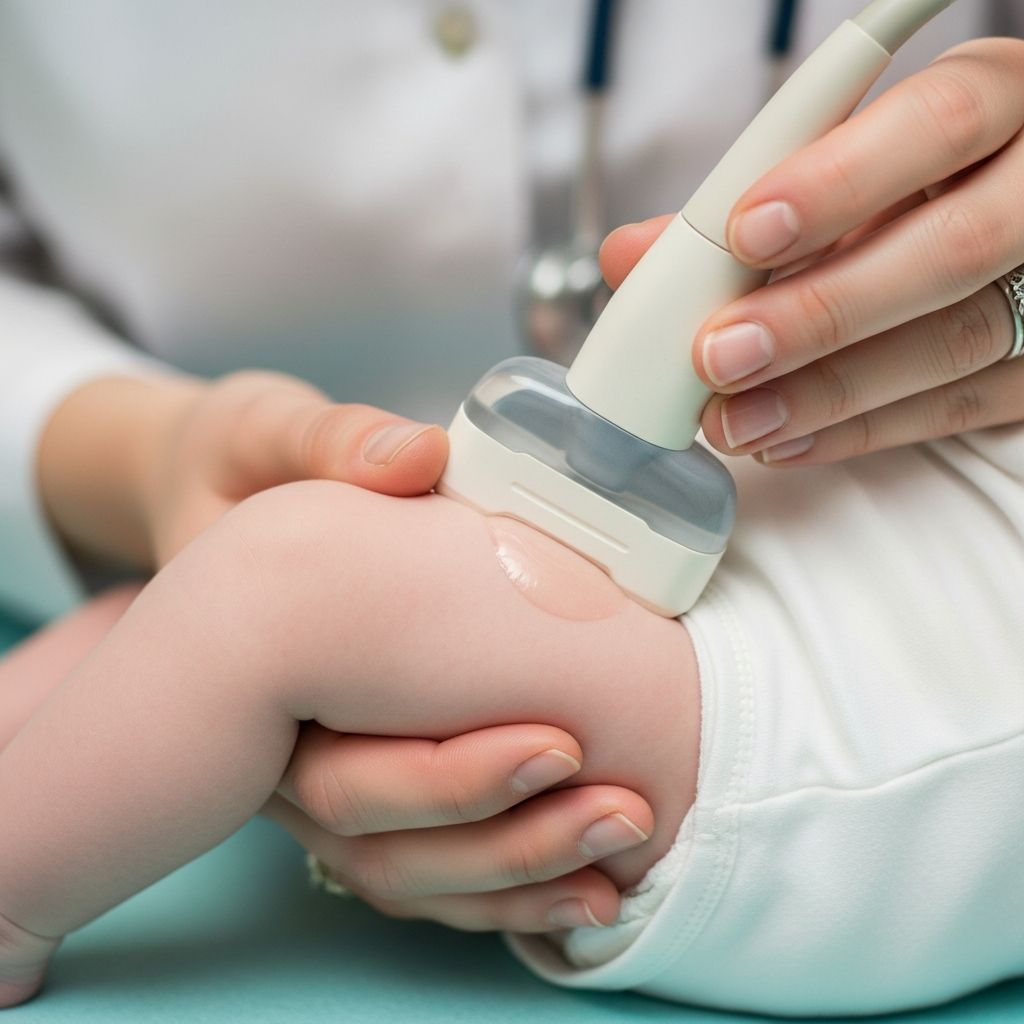
Most visual issues are detectable early. Red flags include constant misalignment after 4 months, no tracking by 3 months, excessive tearing, or light sensitivity beyond infancy. Routine screenings at well-child visits catch problems like amblyopia (lazy eye) or refractive errors.
Family history of eye conditions warrants earlier checks. Early intervention, like patching or glasses, yields best outcomes.
- Immediate checks if: Eyes don’t align by 5 months; pupil appears white; baby rubs eyes excessively.
Everyday Ways to Boost Visual Growth
Parents play a starring role in vision nurturing. Alternate daily activities prevent overstimulation:
- Contrast play (0-3 mo): Black/white cards, mobiles.
- Tracking games (3-6 mo): Flashlights, feather wands.
- Depth builders (6-12 mo): Stacking cups, crawling mazes.
- Toddler challenges (1-2 yr): Simple mazes, color sorting.
Limit screens; prioritize real-world interactions. Tummy time from day one strengthens neck muscles for better gazing.
Frequently Asked Questions (FAQs)
At what age does a baby see full colors?
By 5-6 months, color vision reaches adult maturity, with all hues distinguishable.
Is it normal for newborn eyes to cross?
Yes, intermittently up to 2-3 months; persistent crossing needs evaluation.
How far can a newborn see?
Clearly at 8-12 inches; beyond is blurry until 2-4 months.
Does crawling help vision?
Absolutely— it integrates eyes, hands, and body for depth and tracking.
When should I worry about vision delays?
If no object following by 3 months or misalignment after 4 months, see a doctor.
Long-Term Visual Health Outlook
By age 2, most children achieve near-perfect vision, setting the stage for learning. Continued monitoring through preschool ensures issues like nearsightedness are addressed promptly. Outdoor time combats rising myopia rates in modern kids.
Understanding this journey empowers parents to foster confident explorers, turning every gaze into a step toward discovery. With attentive care, your baby’s eyes will light up their world brilliantly.
References
- Infant Vision: Birth to 24 Months of Age — American Optometric Association (AOA). 2023. https://www.aoa.org/healthy-eyes/eye-health-for-life/infant-vision
- Infant Vision Development: What Can Babies See? — American Academy of Pediatrics (AAP), HealthyChildren.org. 2024-01-15. https://www.healthychildren.org/English/ages-stages/baby/Pages/Babys-Vision-Development.aspx
- Baby Vision: How Newborn and Infant Eyes Develop — All About Vision. 2025-03-10. https://www.allaboutvision.com/eye-care/parents-kids/infant-vision/
- Infant Vision Birth to One Year — Nationwide Children’s Hospital. 2024. https://www.nationwidechildrens.org/family-resources-education/health-wellness-and-safety-resources/helping-hands/infant-vision-birth-to-one-year
- 18 Vision Development Milestones From Birth to Baby’s First Birthday — National Center for Children’s Vision and Eye Health (Prevent Blindness). 2020-05. https://nationalcenter.preventblindness.org/wp-content/uploads/sites/22/2020/05/6-Milestones-poster-Final.pdf