Welcoming a new baby brings immense joy, but it also means prioritizing protection against serious illnesses. Vaccines are one of the most effective tools for safeguarding infants from diseases that can cause lifelong complications or even death. Health authorities like the Centers for Disease Control and Prevention (CDC) and the American Academy of Pediatrics (AAP) recommend a precise schedule starting at birth to build immunity gradually and safely. This guide outlines the key vaccines, their timing, benefits, and tips for parents to ensure their little ones stay healthy.
Why Vaccinate Your Baby Early?
Infants enter the world with immature immune systems, making them vulnerable to infections. Vaccines stimulate the body to produce antibodies without causing the disease itself. Early vaccination is crucial because many pathogens spread easily in communities, and babies under 6 months can’t rely on maternal antibodies alone for all threats. Studies show vaccinated children are protected against 16 serious diseases by age 2, dramatically reducing hospitalization rates.
Following the schedule optimizes immune response: doses are timed when a baby’s system responds best, balancing protection with minimal risk. Delays can leave gaps in immunity, especially during peak seasons for illnesses like flu or RSV.
First Line of Defense: Birth Dose
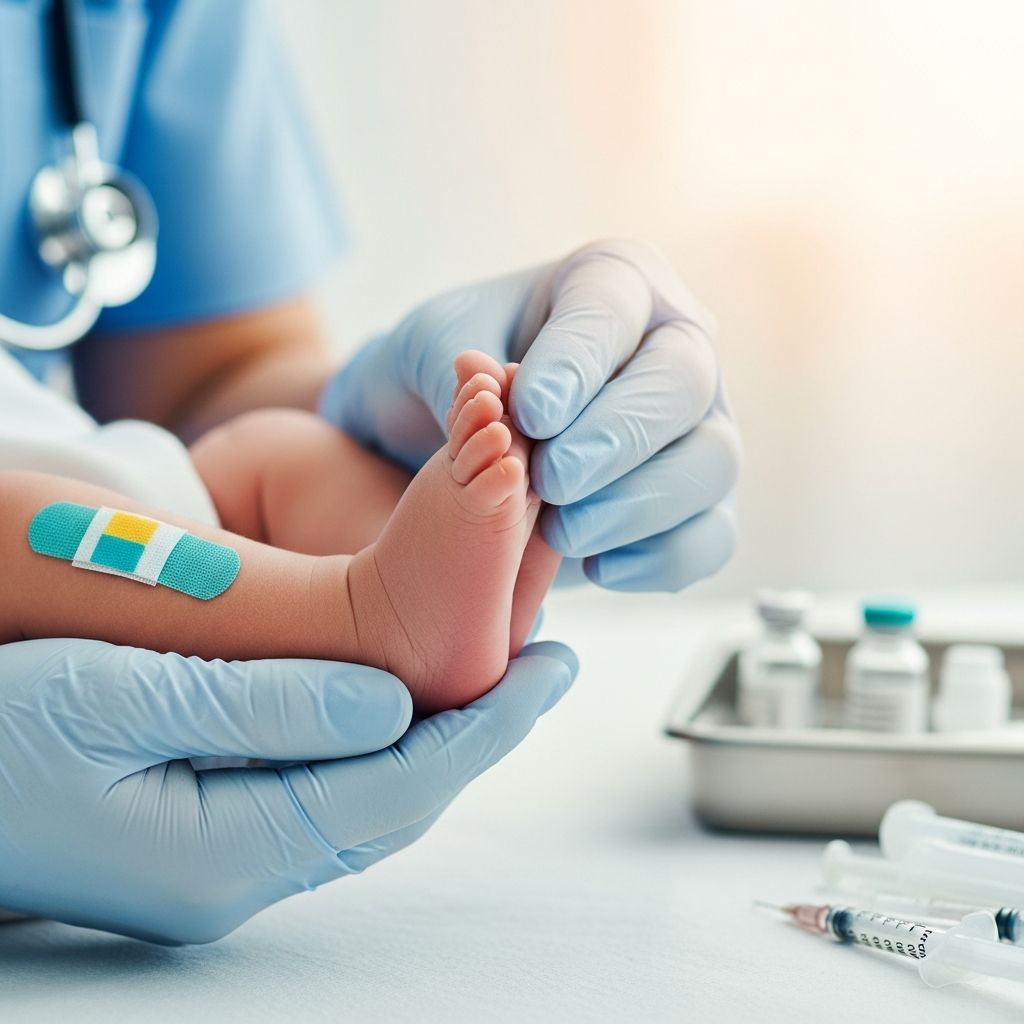
The journey begins right away. Within 24 hours of birth, most newborns receive their initial protection.
- Hepatitis B Vaccine (HepB, 1st dose): This shot guards against a virus that attacks the liver, potentially leading to chronic infection, cirrhosis, or cancer. It’s vital even if the mother tests negative, as transmission can occur in hospitals or households. The CDC mandates this dose at birth for all infants.
Some hospitals also administer eye ointment for gonorrhea prevention, but that’s not a vaccine. Parents should confirm the HepB shot is given and note it on the baby’s immunization record.
Building Immunity: 1-2 Month Visit
At the first well-baby checkup, around 1-2 months, multiple vaccines are combined to minimize shots while maximizing coverage.
| Vaccine | Disease Prevented | Doses Needed |
|---|---|---|
| HepB (2nd dose) | Liver infection/cancer | 3 total |
| DTaP (1st dose) | Diphtheria, tetanus, pertussis (whooping cough) | 5 total |
| Hib (1st dose) | Bacterial meningitis, pneumonia | 3-4 total |
| PCV (1st dose) | Pneumococcal disease (ear infections, meningitis) | 4 total |
| IPV (1st dose) | Polio (paralysis) | 4 total |
| Rotavirus (RV, 1st dose) | Severe diarrhea, dehydration | 2-3 total (oral) |
DTaP targets three killers: diphtheria causes breathing issues, tetanus locks muscles, and pertussis leads to violent coughing fits dangerous for tiny lungs. Hib prevents invasive infections hitting the brain or blood, once a top cause of child mortality. PCV fights pneumococcus, responsible for many infant ear infections and worse. Polio vaccine (IPV) eradicates a paralyzing virus still lurking globally. Rotavirus is given orally to stop gut-wrenching diarrhea that hospitalizes thousands yearly.
For preterm or high-risk babies in RSV season (fall-spring), an RSV monoclonal antibody (RSV-mAb) may be added—it’s not a traditional vaccine but provides passive protection.
Strengthening Protection: 4 Months
Repeat doses at 4 months reinforce immunity as babies grow more active and exposed.
- HepB (if needed, depending on brand)
- DTaP (2nd)
- Hib (2nd)
- PCV (2nd)
- IPV (2nd)
- RV (2nd)
These boosters ensure antibodies peak when risk heightens. Note: Some brands skip certain doses, so consult your pediatrician. Combination vaccines like Pediarix reduce injections to 2-3 shots.
Critical Boosters at 6 Months
By 6 months, babies qualify for seasonal protections amid crawling and teething.
- DTaP (3rd)
- Hib (3rd, if needed)
- PCV (3rd)
- IPV (3rd)
- RV (3rd, if needed)
- HepB (3rd dose, 6-18 months window)
- Influenza (Flu): Annual from 6 months; initial two doses 4 weeks apart.
- COVID-19: Discuss annually; 1-2 doses based on history.
Flu season hits hard—vaccination cuts severe cases by over 50% in kids. COVID guidance evolves yearly.
Toddler Milestones: 12-18 Months
Between 12-23 months, live vaccines introduce broader immunity.
- Hib (final)
- PCV (4th)
- HepB (final, if pending)
- MMR (1st: measles, mumps, rubella—highly contagious, rash/fevers/brain swelling)
- Varicella (chickenpox—itchy rash, rare but serious complications)
- HepA (1st: liver infection from contaminated food/water; 2nd at 6+ months)
MMR and varicella are live but safe for healthy kids, given separately if needed. HepA series starts here as toddlers explore.
Preschool Preparations: 4-6 Years
Before school, boosters lock in long-term defense.
- DTaP (5th)
- IPV (4th)
- MMR (2nd)
- Varicella (2nd)
These ensure 95%+ efficacy against outbreaks.
Understanding Vaccine Safety and Side Effects
Vaccines undergo rigorous testing; the immune challenge from shots is far less than daily germs. Common reactions include mild fever, soreness, or fussiness—acetaminophen helps. Serious issues are rarer than 1 in a million. Myths about overload or autism are debunked by decades of data.
Keep a record card for every visit—it’s your proof for daycare/school. Catch-up schedules exist for delays.
Special Considerations for High-Risk Infants
- Preemies: Adjusted timing but start early.
- Chronic conditions: Extra RSV or flu doses.
- Travel: Accelerate HepA or others.
Frequently Asked Questions (FAQs)
Can vaccines overwhelm my baby’s immune system?
No. Babies handle thousands of antigens daily; vaccines add negligible load.
What if we miss a dose?
Catch up promptly—doctors create personalized plans without restarting series.
Are combination vaccines safe?
Yes, rigorously tested for equal efficacy and fewer shots.
Do breastfed babies still need vaccines?
Absolutely—breast milk complements, doesn’t replace, vaccine protection.
When does my baby get the HPV vaccine?
Starts at 11-12 years; protects against cancers.
References
- Immunizations for Babies – A Guide for Parents — Immunize.org. 2024. https://www.immunize.org/clinical/a-z/immunizations-babies-guide-parents/
- Vaccine Schedule: Timetable — Children’s Hospital of Philadelphia. 2025-01-15. https://www.chop.edu/vaccine-education-center/vaccine-schedule/timetable
- Vaccines by Age — Centers for Disease Control and Prevention (CDC). 2025-11-01. https://www.cdc.gov/vaccines/by-age/index.html
- Vaccine Schedule for Children and Infants — Dartmouth Health Children’s. 2025-03-20. https://childrens.dartmouth-health.org/departments-services/vaccine-schedule-children-infants
- All About the AAP Recommended Immunization Schedule — American Academy of Pediatrics (AAP)/HealthyChildren.org. 2025-10-10. https://www.healthychildren.org/English/safety-prevention/immunizations/Pages/Recommended-Immunization-Schedules.aspx