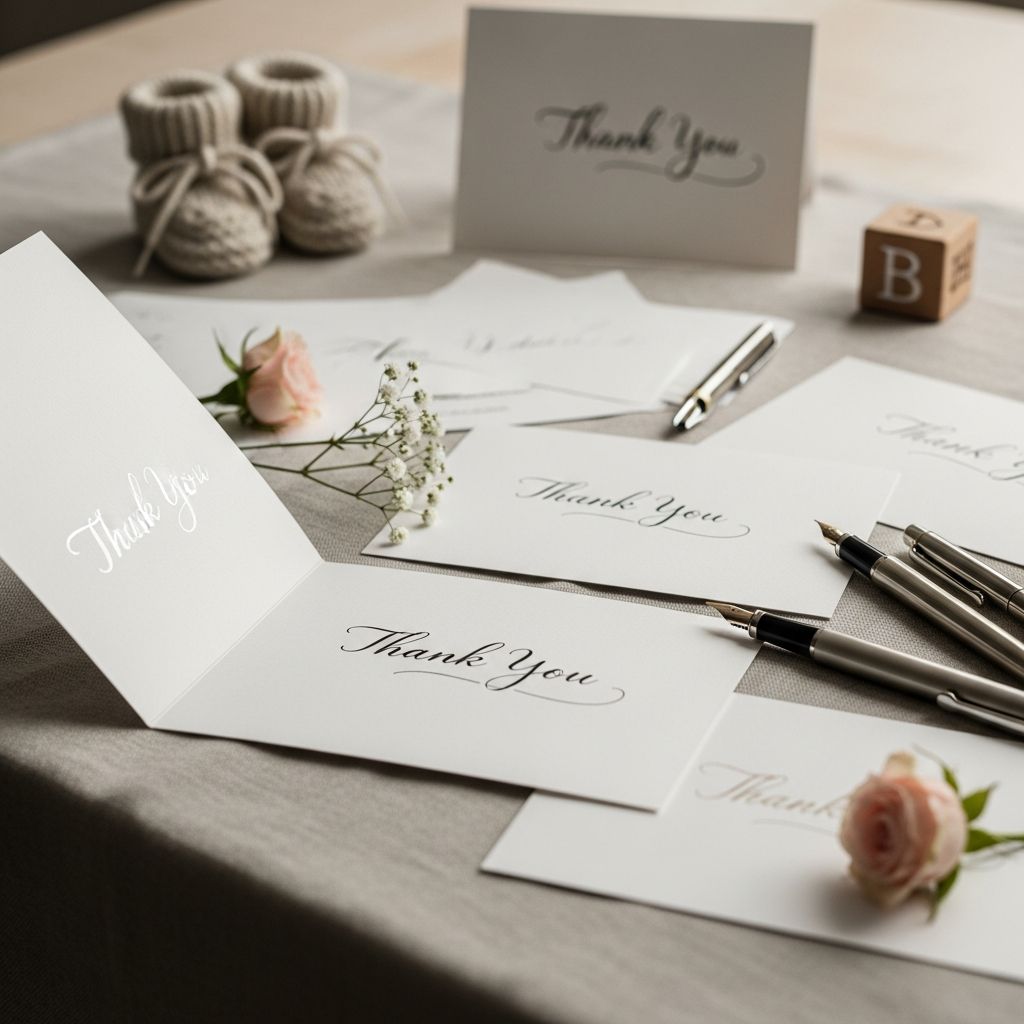
Baby gifts and baby showers often arrive in a whirlwind of excitement, appointments, and sleepless nights, which makes the thank-you note question feel surprisingly stressful. Parents wonder: how soon is soon enough, how late is too late, and does everyone really expect a handwritten note when you are trying to figure out feeding and sleep?
This article offers a modern, realistic look at baby thank-you notes: what traditional etiquette says, how real life often looks very different, and how to balance courtesy with compassion for yourself.
Why Baby Thank-You Notes Matter
At their core, baby thank-you notes are not about perfection, calligraphy, or matching stationery; they are a way to recognize that friends and family chose to support your growing family with time, money, and care. A brief, sincere message acknowledges that generosity and strengthens those relationships.
Even a simple card or short message reassures the giver that the gift arrived safely and that it is appreciated, which can mean a lot to someone who may not live close enough to see you or your baby often.
- Thank-you notes close the loop between giver and recipient.
- They communicate appreciation in a tangible, lasting way.
- They set a tone of gratitude your child can one day observe and learn from.
Typical Timing Guidelines (And What They Really Mean)
Traditional etiquette often suggests sending thank-you notes for baby shower gifts and early baby presents within a few weeks to a couple of months, depending on when the gift was received. These time frames are best viewed as targets rather than rigid rules.
Real life with pregnancy and a newborn is rarely orderly. Complications, exhaustion, feeding challenges, and childcare demands can easily push polite deadlines aside, and most reasonable gift givers understand that.
| Gift Situation | Ideal Timing | Still Acceptable | Special Notes |
|---|---|---|---|
| Baby shower before birth | Within a few weeks after the shower | Up to a couple of months after baby arrives | Many parents write these before birth to reduce stress later. |
| Gifts mailed during late pregnancy | Within 4–6 weeks of receiving the gift | Any time in the first several months if birth is difficult or complicated | A quick text or email when the gift arrives is a nice immediate acknowledgment. |
| Presents given at the hospital or first visit | Within 2–3 months of birth | Later is understandable; people often prioritize health and recovery. | In-person thanks at the time still benefit from a follow-up note later. |
| Gifts received months after birth (holidays, first milestones) | Within 3–4 weeks of receiving the gift | As soon as reasonably possible once you are aware and settled | Mention how the baby is using or will use the item now that they are older. |
| Extremely late notes (6+ months) | Send as soon as you can | Better late than never, especially with a brief explanation | Most people respond warmly to an apologetic but thankful note. |
Balancing Etiquette With Real Life
The strictest etiquette rules were largely created for a world where households had more help, fewer medical interventions, and slower communication. Modern parents juggle healthcare systems, jobs, older children, and often distance from extended family, which changes what is realistic.
It helps to treat etiquette as guidance for kindness rather than a scoreboard. The goal is not a perfect record but a good-faith effort to show appreciation, even if that effort happens later than you planned.
- If you are physically recovering, healing takes precedence over stationery.
- If you are in survival mode, a short message is better than waiting for the “perfect” note.
- If mental health is fragile, it is acceptable to simplify and set modest expectations.
How Late Is “Too Late” for Baby Thank-You Notes?
Most people worry most about this question, especially if weeks have turned into months. In practice, there is rarely a hard cutoff beyond which a thank-you note becomes offensive; in fact, silence is almost always more awkward than a late expression of gratitude.
When a significant amount of time has passed, a short acknowledgment that you are aware of the delay combined with a warm, specific thank you almost always feels gracious rather than rude.
Simple Late-Note Principles
- Address the delay briefly: one short sentence is enough.
- Focus the rest of the note on appreciation, not apology.
- Mention how the gift is useful at your baby’s current age.
- Assume generosity rather than judgment from most gift givers.
Quick Organization Strategies Before and After Birth
Staying organized before the baby arrives can make the thank-you process far less overwhelming later. A small amount of preparation during pregnancy can prevent the “mystery onesie” situation where you have no idea who sent what.
After the baby is born, think in terms of tiny systems rather than big, ambitious projects; a notebook on the coffee table or a simple note in your phone is often enough.
Easy Tracking Ideas
- Keep a single running list of gifts with three columns: name, gift description, date received.
- Assign one person (partner, friend, or family member) to be “gift recorder” during showers or visits.
- Snap a quick photo of each gift with the card and save them in a labeled album on your phone.
- Mark off gifts as notes are written to avoid duplicate or missing thank-yous.
Step-by-Step: Writing a Baby Thank-You Note
When you are exhausted, even small tasks feel larger than they are. Breaking the note into simple steps can make the job easier and help you avoid overthinking your wording.
- Greet the giver by name. Use the form of address that feels natural for your relationship.
- Say thank you clearly and quickly. Include the gift or gesture you are thanking them for.
- Add one specific detail. Mention how you plan to use the gift or why it is meaningful.
- Connect the gift to the relationship. Include a line about how much you value their support or presence in your life.
- Close warmly. Sign with your name(s) and, if you like, include the baby’s name.
Sample Phrases You Can Personalize
While you should always use your own voice, it can help to have a menu of short phrases to adapt. Combine and customize them rather than copying them word for word so your notes still sound like you.
- “Thank you so much for the thoughtful gift for our baby.”
- “We are excited to use this as we settle into life as new parents.”
- “Your support during this season means more than you know.”
- “It was wonderful to see you and celebrate together.”
- “We can’t wait for you to meet the baby soon.”
Parents who feel uncomfortable with flowery language can keep their wording plain and sincere. A straightforward, honest message is always better than something elaborate that feels forced or delayed indefinitely because it never seems polished enough.
Choosing How to Send Your Thanks
Handwritten notes remain the gold standard for formal etiquette, especially for showers hosted in your honor and significant gifts from relatives, close friends, or coworkers. However, modern communication options expand what counts as a thoughtful thank you, particularly in difficult circumstances.
Instead of treating every message as an all-or-nothing judgment of your manners, you can match the style of your thanks to the context and your capacity.
Options for Expressing Gratitude
- Traditional card: Ideal for showers, larger gifts, and older relatives who value paper notes.
- Email: A good option for coworkers, acquaintances, or when mailing addresses are hard to track.
- Text message: Best as a quick acknowledgment when the gift arrives, or when health, finances, or distance make cards difficult.
- Video message: A short clip of you or the baby can feel very personal, especially for long-distance friends.
Special Circumstances: When Life Goes Sideways
Not every birth story is simple. Complications, NICU stays, postpartum depression or anxiety, and major life changes around the time of birth can make small tasks feel understandably insignificant. Etiquette is never meant to add to suffering or guilt in these situations.
If you have come through a particularly hard season, it is perfectly acceptable to simplify or even delegate the thank-you process. Most people are far more concerned about your health and your baby’s wellbeing than about timelines.
Gentle Approaches for Difficult Seasons
- Ask a partner or close friend to draft or send notes on your behalf.
- Send a single group message or email updating everyone and expressing collective gratitude.
- Focus on key relationships first: grandparents, hosts, and those who helped in tangible ways.
- Combine a baby announcement with a short thank-you paragraph if that feels more manageable.
Managing Expectations: What Most Gift Givers Actually Think
Parents often imagine that every gift giver is secretly tallying how quickly a thank-you arrives, but in reality, most people remember their own chaotic baby days and offer you much more grace than you offer yourself. Expectations vary by generation and personality, but outright resentment over a delayed note is less common than many new parents fear.
People usually want two simple things: to know their gift arrived and to feel that their effort was noticed. As long as those needs are met eventually, the exact timeline is rarely a relationship-defining issue.
- Some relatives may value promptness more, but also tend to be the ones who understand new-baby chaos.
- Friends who do not receive a note at all may briefly wonder, but are unlikely to end a friendship over it.
- Clear appreciation, even late, does far more good than harm.
Setting a Simple Thank-You Plan
To keep the process from becoming overwhelming, it can help to set a small, realistic plan instead of resolving to “finish all the thank-you notes” in one heroic session. Approaching the task in tiny pieces often leads to better follow-through.
- Gather your list of gifts and addresses in one place.
- Choose your primary thank-you format (cards, emails, or a mix).
- Set a goal such as “two notes per day” or “10 messages per week.”
- Pair note-writing with an existing routine, like evening feeding or morning coffee.
- Celebrate progress instead of fixating on what is left to do.
Frequently Asked Questions About Baby Thank-You Notes
Do I have to send a note if I already said thank you in person?
For a casual, small gift given during a visit, an in-person thank you may be enough, especially with close friends. For showers, mailed gifts, and anything that required extra effort or expense, a written note or message is still considered best practice, even if you expressed thanks at the time.
Is a group text or email rude?
A group message is less formal than individual notes, but it can be appropriate when many people contributed collectively, such as coworkers or a large friend group. If you choose this route, make the message warm and specific, and consider following up individually with anyone particularly close to you.
What if I truly cannot remember who gave which gift?
This happens more often than people admit, especially with unmarked packages or busy showers. In that situation, a general thank-you message to the group, combined with more specific notes for gifts you can confidently match, is a reasonable solution.
Should the note come from me, my partner, or “the baby”?
Any of these options is acceptable. Some parents sign together, some add the baby’s name for sweetness, and others write in the baby’s “voice” as a playful touch. Choose the style that feels most natural to you and your family.
What if my note is many months late—should I still send it?
In almost every case, yes. A late note that briefly acknowledges the delay and emphasizes appreciation is usually received with kindness and relief. Silence leaves people unsure whether their gift was received, which is both more awkward and more likely to cause hurt feelings than a delayed expression of thanks.
Gratitude Without Guilt
Expressing thanks for baby gifts should not become one more measuring stick for whether you are doing parenthood “correctly.” Etiquette offers a framework, but it is not a moral judgment. Your baby will not remember how quickly you mailed cards, but the people who love you will remember that you took time, at some point, to say that their support mattered.
Give yourself permission to keep your thank-you notes simple, your expectations realistic, and your focus on what truly counts: genuine appreciation for the people who are celebrating your new child alongside you.