Understanding Primary Tooth Development in Infants
The journey toward a baby’s first visible tooth begins long before any white buds break through the gumline. Dental development is a fascinating biological process that starts during pregnancy and continues throughout early childhood. Most parents are surprised to learn that tooth development has already been underway for months by the time their infant reaches six months of age. This foundational understanding helps caregivers recognize that teething is a natural, predetermined developmental milestone rather than an unexpected event.
Primary teeth, commonly referred to as baby teeth or milk teeth, represent the first complete set of teeth that erupts in children. By the second trimester of pregnancy, the formation of these temporary teeth begins beneath the developing gums. This early start means that at birth, babies possess a full set of 20 primary teeth waiting beneath the gum tissue, even though they remain invisible. These teeth are smaller and whiter than permanent adult teeth, and their structure is specifically designed to meet the nutritional and developmental needs of infants and young toddlers.
The General Timeline for First Tooth Appearance
Although considerable variation exists among individual infants, most babies begin showing visible signs of teething between four and seven months of age. The most commonly cited benchmark suggests that around six months, the first primary teeth start their emergence through the gumline. However, the acceptable range extends from as early as three months to as late as eighteen months, with all variations falling within the scope of normal development.
The complete eruption process extends over approximately two years, with all 20 primary teeth typically appearing by the third birthday. This gradual emergence means that parents experience an extended period of teething rather than a single concentrated event. Understanding this extended timeline helps normalize what might otherwise seem like an unusually prolonged period of infant discomfort.
Sequential Order of Tooth Eruption
Teeth follow a fairly predictable sequence when they emerge, though individual variations occur. The lower central incisors—the two front bottom teeth—typically appear first, usually between six and ten months of age. These small but significant teeth mark the beginning of visible dental development.
The upper central incisors follow next, emerging between eight and twelve months. After the central incisors establish themselves, lateral incisors gradually appear between nine and sixteen months, completing the front tooth arrangement. First molars then emerge between thirteen and nineteen months, introducing teeth designed for grinding and breaking down food into smaller pieces. Canine teeth follow between sixteen and twenty-two months, positioned between the incisors and molars. Finally, second molars arrive between twenty-three and thirty-three months, completing the full primary dentition.
| Tooth Type | Typical Eruption Age Range |
|---|---|
| Lower Central Incisors | 6–10 months |
| Upper Central Incisors | 8–12 months |
| Upper Lateral Incisors | 9–13 months |
| Lower Lateral Incisors | 10–16 months |
| First Molars | 13–19 months |
| Canines (Cuspids) | 16–22 months |
| Second Molars | 23–33 months |
Recognizing the Developmental Phases of Teething
Teething progresses through distinct phases, each characterized by specific physical changes and behavioral indicators. Recognizing these phases helps parents understand what their child is experiencing and adjust their comfort strategies accordingly.
Phase One: Pre-Eruption Preparation (Birth to Three Months)
During the earliest phase of dental development, no visible changes occur in the mouth, yet significant biological activity happens beneath the surface. Babies during this period typically show no obvious teething symptoms because tooth buds remain deeply embedded in the jawbone. This phase sets the stage for later development but requires no specific parental intervention related to teething.
Phase Two: Early Signs of Readiness (Three to Six Months)
As the first teeth prepare to move upward through the jawbone toward the gumline, parents may notice increased saliva production. Babies begin drooling more noticeably, and gums may appear slightly swollen or feel sensitive to pressure. During this phase, infants often increase their desire to chew on objects as their bodies naturally respond to the pressure building beneath the gums. While discomfort may not be severe, subtle behavioral changes like increased fussiness during feeding or more frequent hand-to-mouth movements may become apparent.
Phase Three: Visible Gum Changes (Six to Nine Months)
As teeth push closer to the gum surface, visible physical changes become more apparent. Gums develop small bumps or ridges as erupting teeth create pressure from below. Some parents report seeing white or bluish spots on the gums, which represent the tooth pushing through the tissue. Drooling intensifies during this phase, and babies may experience increased irritability. The urge to chew becomes more pronounced, and many infants seek relief by gnawing on available objects or their own fingers.
Phase Four: Breakthrough and Early Eruption (Nine to Twelve Months)
This phase marks the moment when the first tooth finally breaks through the gumline. While this breakthrough may be accompanied by temporary increased discomfort, the actual emergence often brings relief as the pressure that built during earlier phases finally releases. Once a tooth penetrates the gum tissue, the acute phase of teething for that particular tooth typically subsides. However, as additional teeth continue their developmental journey through the phases, parents often see waves of renewed symptoms.
Phase Five: Multiple Tooth Development (Twelve to Eighteen Months)
During the latter part of the first year and early second year, multiple teeth progress through their eruption cycles simultaneously. This overlapping development means that while some teeth are just beginning their upward journey, others are breaking through the gums, and still others have recently emerged. This phase often brings the most intense and prolonged period of teething symptoms because several teeth are in various stages of eruption concurrently. Sleep disturbances become more noticeable during this phase, and parents may find their previous comfort strategies less effective.
Phase Six: Completion of Primary Dentition (Eighteen to Thirty-Three Months)
The final phase encompasses the eruption of the largest and most powerful teeth—the second molars. These molars, which arrive last, represent the conclusion of primary tooth development. Because of their size and the force required to push them through the gumline, this phase can be exceptionally uncomfortable for some toddlers. Many parents report that second molar eruption brings the most severe teething symptoms, though sensitivity gradually decreases once the molars have fully emerged. By the end of this phase, the complete primary dentition is established, though permanent teeth will not begin their eruption process for several more years.
Common Symptoms Parents Should Recognize
Teething manifests through multiple symptoms that vary in intensity from child to child. Understanding these indicators helps parents distinguish teething discomfort from other potential health concerns.
- Excessive Drooling: Increased saliva production is perhaps the most characteristic teething sign, often beginning weeks before the first tooth appears.
- Swollen or Tender Gums: Gum tissue becomes puffy, sensitive, and may appear darker red than normal as teeth prepare to erupt.
- Increased Chewing Behavior: Babies instinctively bite and chew on objects, fingers, or clothing to relieve the pressure beneath their gums.
- Face Rubbing and Ear Pulling: Referred pain from erupting teeth can cause babies to rub their cheeks or pull at their ears, leading parents to sometimes suspect ear infections.
- General Irritability: Discomfort from the eruption process causes babies to become fussier than usual, often without obvious cause.
- Sleep Disturbance: Pain and discomfort may disrupt normal sleep patterns, causing both babies and parents exhaustion.
- Mild Appetite Changes: Some babies prefer softer foods or show reduced interest in eating when their gums are particularly tender.
These symptoms typically appear approximately four days before a tooth breaks through the gum and may continue for a few days afterward. However, recognizing that fever, diarrhea, and other significant symptoms are not directly caused by teething is important. If a baby displays these symptoms, medical evaluation may be warranted to rule out unrelated conditions.
Factors Influencing Individual Teething Timelines
While developmental timelines provide useful guidelines, individual variation in teething onset and progression is substantial and completely normal. Several factors influence when and how quickly teeth erupt in individual children.
Genetics play a significant role in teething timing. Children often follow similar patterns to their parents, with early or late teething running in families. If both parents experienced early tooth eruption, their child is more likely to follow a similar pattern.
Birth history affects developmental timelines. Premature infants are typically assessed for developmental milestones using their corrected age (chronological age minus the number of months born early) rather than their actual chronological age. This adjusted timeline usually applies to teething as well during infancy.
Overall health status influences the pace of tooth eruption. Children with certain medical conditions or nutritional deficiencies may experience delayed teething. Conversely, some perfectly healthy children simply erupt teeth earlier or later than typical timelines suggest.
Nutritional factors support proper tooth development. Adequate calcium, phosphorus, and vitamin D contribute to healthy tooth formation, though these nutrients affect tooth strength and structure more significantly than timing of eruption.
Comfort Strategies for Teething Discomfort
Parents can implement various evidence-based strategies to help their teething infants manage discomfort. Different approaches work for different children, and parents often need to experiment to find what helps their individual baby.
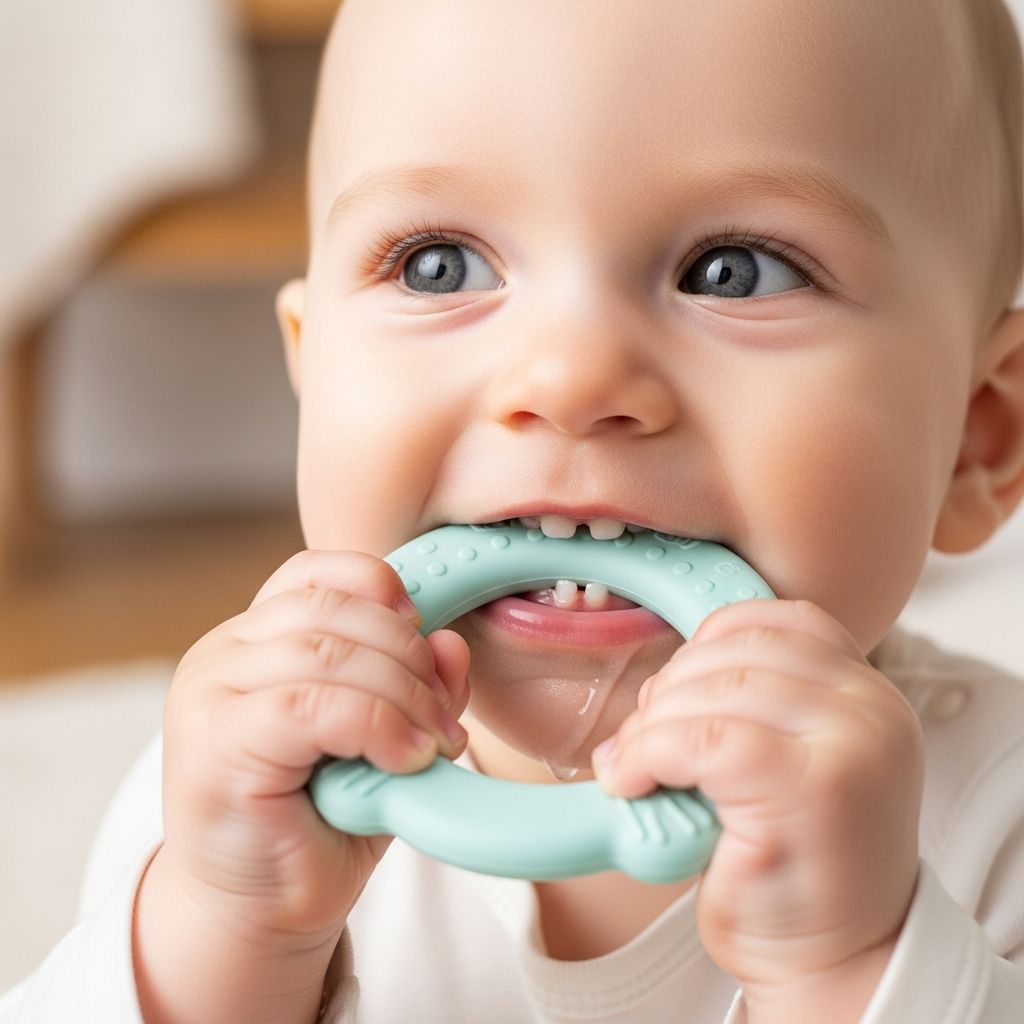
Cold Relief Methods: Cold temperatures numb inflamed gums and reduce discomfort. Teething rings designed to be refrigerated (not frozen) provide safe cold relief when chewed. Cold, damp washcloths can also be offered for gnawing, though supervision is necessary to prevent choking. Some parents offer cold fruits or vegetables (such as chilled cucumber or apple slices) to older teething toddlers, though these require careful supervision.
Pressure Application: Gentle pressure applied to tender gums provides counter-pressure relief. Parents can use a clean finger to gently massage inflamed gum tissue, or specially designed teething gels created for this purpose may be applied. Many babies find the firm pressure of a solid object to chew on more effective than softer alternatives.
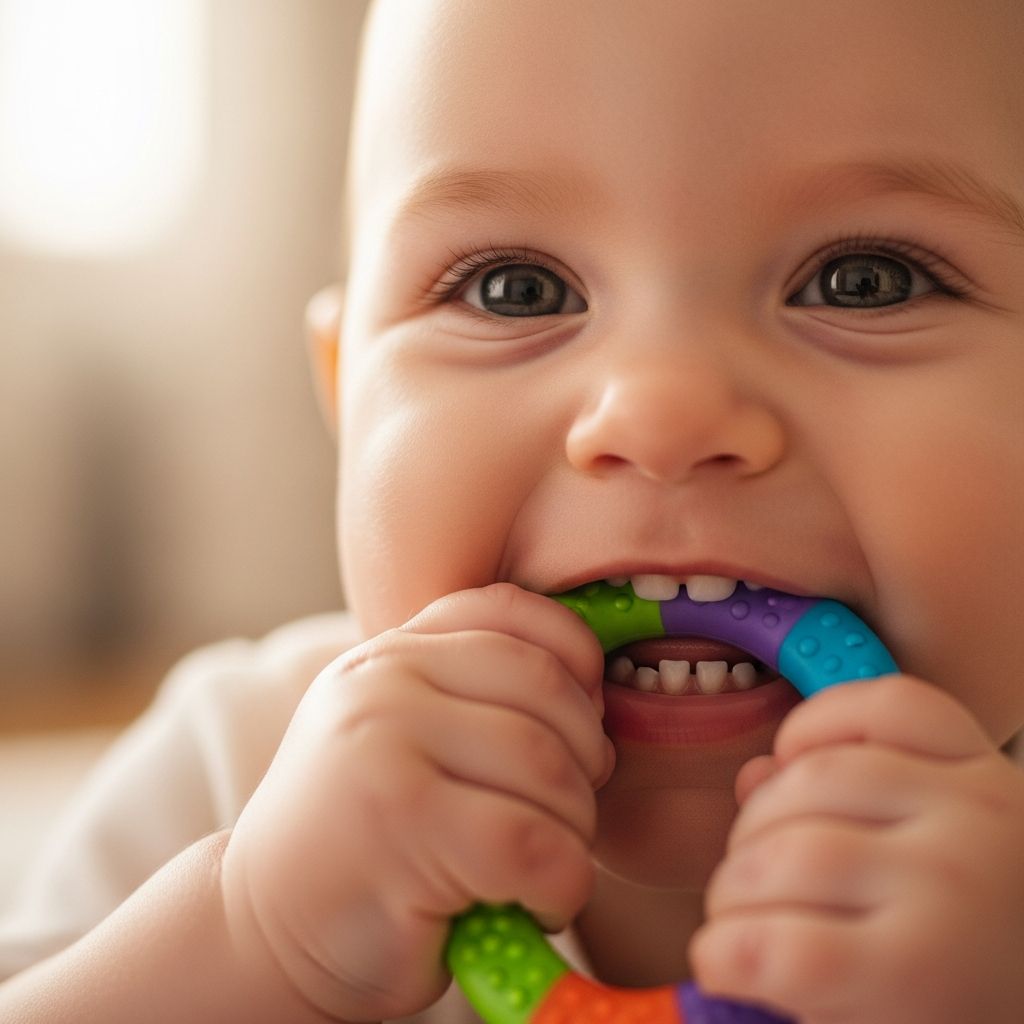
Safe Teething Objects: Toys specifically designed for teething provide appropriate objects for chewing. These should be firm enough to resist breaking and free from small parts that could become choking hazards. Some parents avoid teething necklaces and similar wearable items due to strangulation risks.
Distraction Techniques: Engaging babies with new toys, activities, or interactions can redirect their focus away from gum discomfort. Additional attention and play during teething phases helps soothe both physical discomfort and the emotional distress that accompanies pain.
Dietary Adjustments: For older babies eating solid foods, softer foods that require minimal chewing reduce additional irritation to tender gums. Cold foods straight from the refrigerator provide the dual benefit of cold sensation and soft texture.
Frequently Asked Questions About Baby Teething
Is it normal for teething to cause fever?
While minor temperature elevation may occur, significant fever is not directly caused by teething. If your baby develops fever above 101°F, consult your pediatrician to rule out infection or other medical concerns.
Can teething cause diarrhea?
Increased drooling associated with teething may result in slightly looser stools, but true diarrhea is not a direct effect of tooth eruption. Persistent diarrhea warrants medical evaluation.
What should I do if my baby hasn’t sprouted any teeth by twelve months?
While eighteen months represents the outer limit of normal delayed teething, mention delayed eruption to your pediatrician at regular check-ups. Evaluation is typically recommended if no teeth appear by twenty-four months.
Are baby teeth important if they’ll eventually fall out?
Primary teeth are essential for chewing, speaking, and maintaining proper jaw alignment during crucial developmental years. They also serve as placeholders for permanent teeth, making their health important for long-term dental development.
When should my baby visit a dentist for the first time?
The American Academy of Pediatric Dentistry recommends a first dental visit by age one or within six months of the first tooth’s appearance, whichever comes first.
Should I use over-the-counter teething gels?
Consult your pediatrician before using any teething products. Some ingredients in over-the-counter gels are no longer recommended for young infants due to safety concerns. Your pediatrician can recommend safe alternatives appropriate for your child’s age.
References
- Stages of Teething and Helpful Hints — Kids Dental Online. Retrieved January 16, 2026. https://www.kidsdentalonline.com/dental-topics/baby-dental-topics/stages-teething-helpful-hints/
- Stages of Teething Gums — My Teeth and Me. Retrieved January 16, 2026. https://www.myteethandme.com/blog/stages-of-teething-gums/
- Teething Timeline — Magicland Dental. Retrieved January 16, 2026. https://www.magiclanddental.com/teething-timeline/
- The Timeline of Baby Teeth: When Do They Erupt and Fall Out? — Pediatric Dental Partners. Retrieved January 16, 2026. https://pediatricdentalpartners.com/the-timeline-of-baby-teeth-when-do-they-erupt-and-fall-out/
- How Long Does Teething Last and When to Consult a Dentist — Pediatric Dentist Houston Texas. Retrieved January 16, 2026. https://www.pediatricdentisthoustontexas.com/how-long-does-teething-last-and-when-to-consult-a-dentist/
- Teething (Teething Syndrome): Symptoms & Tooth Eruption Chart — Cleveland Clinic. Retrieved January 16, 2026. https://my.clevelandclinic.org/health/articles/11179-teething-teething-syndrome
- Teeth Development in Children — Better Health Channel. Retrieved January 16, 2026. https://www.betterhealth.vic.gov.au/health/conditionsandtreatments/teeth-development-in-children