Understanding Baby Swing Safety Fundamentals
Baby swings are valuable tools for soothing infants and providing temporary entertainment during busy household moments. However, their safe operation requires parents and caregivers to understand critical safety protocols. The American Academy of Pediatrics (AAP) emphasizes that swings, while generally safe when used correctly, demand constant supervision and adherence to specific guidelines to prevent accidents and injuries. Between 2009 and 2012, more than 350 swing-related safety incidents were reported, including fatalities and serious injuries, prompting the Consumer Product Safety Commission (CPSC) to establish updated safety standards in 2012. Understanding these standards and implementing them consistently is essential for protecting your infant.
Parents often view swings as convenient soothing devices, but they must recognize the distinction between their intended purpose and proper sleep environments. A swing should never replace a crib or bassinet as a primary sleeping space. The motion and inclined positioning found in many swing models create conditions that increase the risk of sudden infant death syndrome (SIDS) and airway obstruction if babies sleep for extended periods without supervision or proper placement.
The Five-Point Harness: Your First Line of Defense
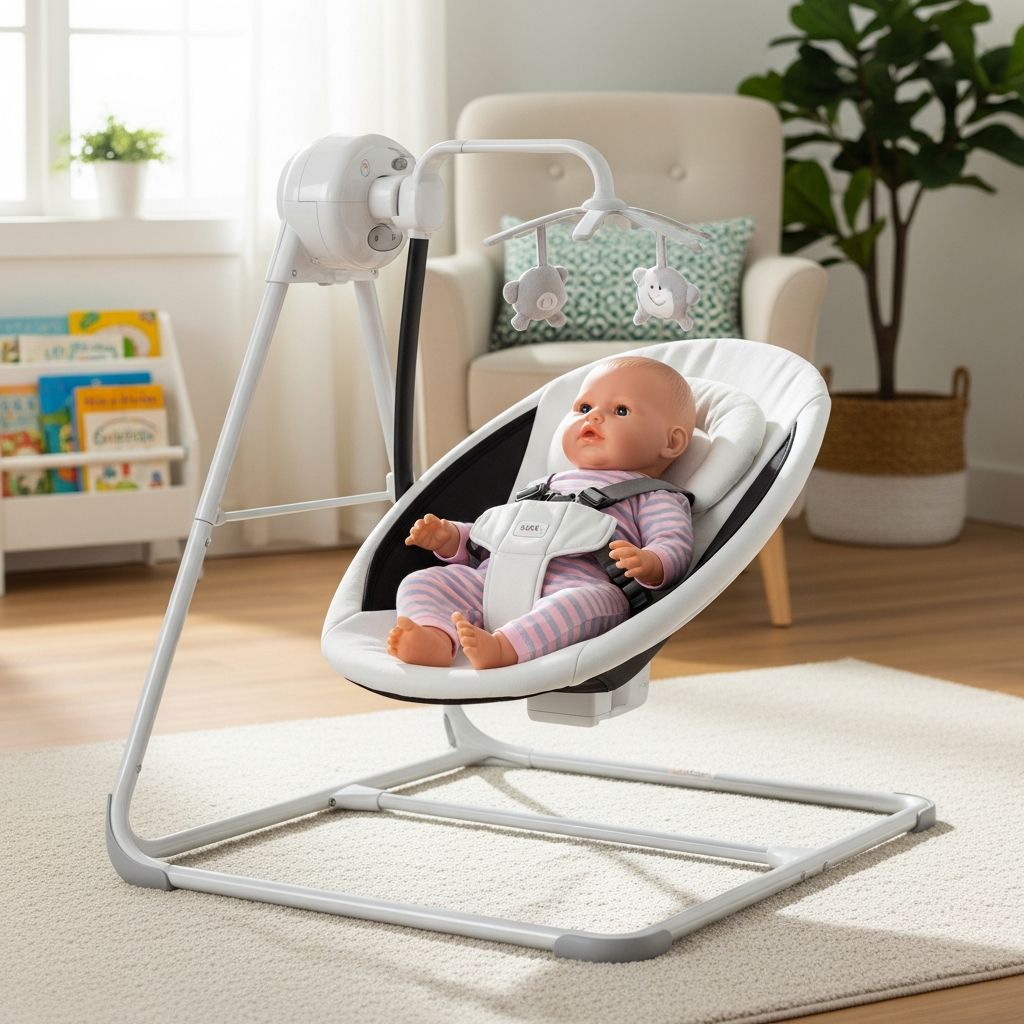
The five-point harness system represents the cornerstone of baby swing safety. This restraint mechanism includes shoulder straps, lower body straps, and an additional strap positioned between the legs, functioning similarly to automotive safety harnesses. Proper harness use prevents infants from leaning forward excessively as the swing moves and reduces the risk of tumbling or escaping the seat.
Before each use, inspect all harness components for signs of damage, fraying, or deterioration. Verify that buckles are intact and function smoothly without sticking or requiring excessive force. When securing your baby, ensure the harness fits snugly against their body without restricting circulation or breathing. A practical test involves attempting to slip one or two fingers between the straps and your baby’s body; if you cannot do this, the harness may be too tight, but if you can slip your entire hand underneath, it is too loose.
Double-check all buckle connections before initiating swing motion. Give the straps a gentle tug to confirm they are completely fastened and secure. When the swing is not in use, keep the harness fastened in its secured position to prevent accidental entanglement, which can pose a choking hazard if a crawling infant becomes tangled in loose straps.
Weight and Age Considerations for Safe Operation
Manufacturers establish weight and age limits for specific reasons related to proper support, structural integrity, and accident prevention. Most standard infant swings accommodate babies up to 25 pounds, though portable or specialized models may have different specifications. Exceeding the manufacturer’s weight recommendations compromises the swing’s structural stability and may cause the frame or support mechanisms to fail.
Age guidelines are equally important because they ensure your baby possesses the developmental maturity and physical strength necessary for safe positioning in the device. Newborns require different support considerations than four-month-old infants, and six-month-olds have different needs than one-year-olds. Using a swing designed for an older age group with a younger infant risks inadequate head and neck support, while placing an older baby in a swing designed for younger infants may result in insufficient leg room or improper positioning.
If your baby frequently fusses, attempts to crawl out, or appears uncomfortable, these behavioral signals suggest they have outgrown the swing, regardless of whether they technically remain within weight specifications. Respecting these developmental cues prevents accidents and discomfort.
Positioning and Head Support Requirements
Proper positioning within the swing directly impacts your baby’s respiratory safety and comfort. The AAP recommends that infants under four months be positioned in the most reclined seat angle the swing allows. This positioning strategy prevents forward head slumping, which can restrict airway passage and increase SIDS risk.
Newborns and very young infants lack the neck strength to support their heads independently, making appropriate recline positioning essential. As babies develop stronger neck muscles around four to six months of age, slightly more upright positions become acceptable, but the manufacturer’s guidance should always take precedence. Select swings with adjustable recline options to accommodate your baby’s changing developmental needs.
Inspect your baby’s positioning regularly during swing use. Their head should remain upright and supported, never slumped to one side or tucked too tightly against their chest. Many quality swings include padded headrests or additional neck support accessories designed specifically to maintain proper alignment. If your swing includes these features, ensure they are installed correctly and remain in place during operation.
Environmental Safety and Swing Placement
The location where you position the swing significantly influences its stability and your baby’s safety. Always place the swing on a level, even surface such as hardwood or tile flooring. Never position swings on elevated surfaces like tables, counters, couches, or beds, regardless of the perceived stability of the furniture. The swinging motion can cause vibrations that gradually shift the swing toward the edge of furniture, or a curious toddler might jostle the furniture unexpectedly, causing the swing to tumble.
Ensure the swing’s base is wide and sturdy enough to resist tipping when empty and during normal operation. Before placing your baby in the swing, manually test its stability by gently pushing or shifting the seat. A properly designed swing should not fold, collapse, or tip over easily. If it demonstrates any tendency toward instability, do not use it.
Position the swing away from stairs, ledges, windows, cords, or any environmental hazards. Keep the device away from ceiling fans, hanging decorations, or overhead structures that could pose collision risks as the swing moves. Ensure electrical cords are secured and not positioned where they could become wrapped around your baby or become a tripping hazard for other family members.
Hazard Elimination: Creating a Safe Swing Environment
Before each swing session, conduct a thorough scan of the swing interior and surrounding area to identify and remove potential hazards. Soft objects like blankets, pillows, bumpers, or stuffed animals should never be placed in the swing, as they present suffocation risks, particularly for younger infants. Even items intended for comfort or warmth can cover your baby’s nose and mouth, restricting airflow.
Small objects pose choking hazards and should be kept far from the swing’s vicinity. Buttons, hair clips, coins, small toys, or any items small enough to fit in an infant’s mouth should be removed from the area. Inspect the swing itself for loose buttons, damaged stitching, or deteriorating components that might separate and become choking hazards.
The swing’s mechanical components require regular inspection for proper function. Check joints, connections, and fasteners to ensure they remain tight and secure. Look for signs of rust, corrosion, or structural damage that might compromise safety. If you notice any concerning issues, discontinue use until repairs are completed or the swing is replaced.
Duration of Use and Preventing Overreliance
While swings provide temporary soothing benefits, they should not become your baby’s primary source of comfort or stimulation. Extended, frequent swing use can create dependency on motion for falling asleep or remaining calm, potentially complicating sleep training and independent soothing skill development later. Many swings include automatic shut-off timers that prevent overuse by discontinuing operation after a set duration.
Use the swing strategically for specific purposes: soothing a fussy baby while you prepare meals, maintaining safety while showering, or brief entertainment during household tasks. Balance swing time with other soothing techniques such as rocking, swaddling, white noise, or gentle movement to help your baby develop diverse calming skills. Some swings feature built-in vibration and white noise functions that enhance soothing effects without relying solely on motion, offering an alternative approach when needed.
Sleep Safety: Why Swings Are Not Appropriate Sleep Surfaces
The AAP explicitly advises against allowing babies to sleep in sitting devices like swings for extended periods due to SIDS and suffocation risks. The inclined positioning common in swings differs significantly from the firm, flat surfaces recommended for safe infant sleep. When a baby becomes drowsy or falls asleep in a swing, their head may slump forward or to the side, potentially restricting their airway.
If your baby falls asleep in the swing, gently transfer them to an appropriate sleep surface as quickly as possible. This means moving them to a crib or bassinet with a firm, well-fitted mattress and no additional objects. While this transfer might seem like an inconvenience, especially when your baby is finally asleep, it represents an essential safety practice. Establishing early sleep habits that center on appropriate sleep surfaces helps your baby develop healthy sleep associations and reduces dependence on motion-based soothing.
Regular Maintenance and Manufacturer Compliance
Treat your baby swing as you would any piece of infant equipment requiring regular maintenance and inspection. Before initial use, thoroughly read the manufacturer’s instruction manual to understand all operational features, safety guidelines, and weight specifications specific to your model. Different swing designs have varying requirements, and the manual provides essential information about your particular device.
Register your swing with the manufacturer after purchase to receive notifications about recalls or safety updates. Check the CPSC website periodically for any recalls affecting your specific swing model. Manufacturers can contact registered owners directly about safety concerns, potential defects, or recommended repairs. This proactive step takes only minutes but provides critical protection.
Perform visual inspections before each use, checking for loose screws, damaged padding, torn fabric, or any signs of wear that might compromise safety or hygiene. Tighten any loose fasteners promptly. If you notice significant damage, missing components, or concerns about structural integrity, discontinue use until the swing is professionally evaluated or replaced.
Supervision Requirements and Caregiver Responsibilities
Never leave your baby unattended in a swing, even briefly, regardless of whether they appear happy, content, or drowsy. Infants can experience unexpected situations requiring immediate caregiver response: they may spit up, vomit, develop breathing difficulties, wiggle into uncomfortable positions, or experience other medical concerns. Your presence as a supervisory adult serves as your baby’s lifeguard, enabling immediate intervention if any problem emerges.
Babies can escape from swings or find themselves in compromising positions more quickly than many parents expect. The difference between a safe situation and an emergency can occur in seconds. Constant, attentive supervision while your baby is in the swing is non-negotiable, regardless of how secure the harness appears or how peacefully your baby seems to be resting.
Choosing and Evaluating Quality Swings
When selecting a baby swing, prioritize models with robust bases that provide stable support without tipping easily. Wide, weighted bases offer superior stability compared to narrow designs. Non-slip grips on the base prevent the swing from shifting during operation, particularly important if you have multiple children or pets in the home that might interact with the device.
Look for swings with adjustable recline positions, allowing you to modify the angle as your baby grows and develops stronger neck control. Swings with multiple speed settings enable you to start at the gentlest motion and gradually increase speed as your baby becomes accustomed to the movement. Built-in features like white noise, vibration, or musical selections provide multi-sensory soothing options without relying solely on swinging motion.
Examine harness systems carefully, confirming that they are easy for adults to fasten and unfasten but secure enough that your baby cannot accidentally release them. The harness should be adjustable to accommodate growth while maintaining proper fit throughout your baby’s swing-using years.
Frequently Asked Questions About Baby Swing Safety
Q: At what age can babies start using swings?
A: Most full-size swings are designed for babies from birth, but always verify your specific swing’s manufacturer guidelines. Some portable swings have minimum weight requirements of 8-10 pounds, making them more appropriate for slightly older infants. Newborns require swings with excellent head and neck support and highly reclined positioning.
Q: How long can my baby stay in a swing daily?
A: There is no fixed duration limit, but swings are best used intermittently for soothing rather than as extended entertainment. If your swing has an automatic shut-off timer, use that as guidance. Aim to balance swing time with other activities, handling, and interaction to promote overall development and prevent excessive motion dependence.
Q: What should I do if my baby hates the swing?
A: If your baby seems uncomfortable or distressed in the swing, try starting at the lowest speed setting and gradually increasing speed as they acclimate. Experiment with built-in white noise or vibration features if available. Some babies simply prefer alternative soothing methods like rocking or swaddling, and that preference is perfectly normal.
Q: Can I use a swing for a baby who has outgrown the weight limit?
A: No. Exceeding weight limits compromises the swing’s structural integrity and safety. Once your baby reaches the manufacturer’s maximum weight, discontinue swing use and explore age-appropriate alternatives like bouncers or jumpers designed for older infants.
Q: How often should I inspect my swing for safety issues?
A: Inspect your swing before each use, checking for loose screws, damaged components, and harness function. Perform deeper maintenance inspections monthly, checking all joints, connections, and structural elements. If you notice any concerns, address them immediately before using the swing again.
References
- Baby Swing Safety 101: How to Use Swings Correctly at Every Stage — AngelBliss. https://angelbliss.us/blogs/news/baby-swing-safety-101-how-to-use-swings-correctly-at-every-stage
- Essential Safety Tips for Baby Swings and Bouncers Every Parent Should Know — Fairy Baby. https://fairybaby.com/blogs/babysafe/essential-safety-tips-for-baby-swings-and-bouncers-every-parent-should-know
- Are Baby Swings Safe? 9 Things You Need to Know — Reviewed. https://www.reviewed.com/parenting/features/are-baby-swings-safe
- Are Baby Swings Safe? What Parents Should Know — Today’s Parent. https://www.todaysparent.com/baby/are-baby-swings-safe-what-parents-should-know/
- Safety Standard for Infant Swings — Federal Register, U.S. Consumer Product Safety Commission. 2022-09-20. https://www.federalregister.gov/documents/2022/09/20/2022-20246/safety-standard-for-infant-swings