New parents quickly learn that a baby’s skin is softer, thinner, and more sensitive than adult skin, which makes sun protection a top priority. Thoughtful sun habits and the right sunscreen strategy can greatly reduce the risk of painful burns now and skin damage later in life.
Why Babies Need Extra Sun Protection
Sunlight is important for well-being, but ultraviolet (UV) radiation can damage skin cells even on cool or cloudy days. Babies are especially vulnerable because their natural defenses are not fully developed and they have more surface area relative to body weight than adults, so they can burn faster and more severely.
Good sun safety for infants combines smart timing, shade, clothing, and careful sunscreen use for older babies. Instead of relying on one tactic alone, think of these tools as layers that work together to keep skin safe.
Understanding UV Rays and SPF
Two main types of UV rays affect the skin: UVA and UVB. UVA rays penetrate more deeply, contributing to long-term aging and some forms of skin cancer, while UVB rays primarily cause sunburn and also raise skin cancer risk over time.
Sun Protection Factor (SPF) describes how well a product protects against UVB rays. In simple terms, higher SPF offers more protection, but no sunscreen blocks 100 percent of rays. For babies and children, dermatology and pediatric groups commonly recommend a broad-spectrum sunscreen labeled SPF 30 or higher.
Can Young Babies Wear Sunscreen?
For newborns and babies under about six months, most pediatric guidance emphasizes sun avoidance and physical protection such as hats and clothing rather than routine sunscreen use. At this age, infant skin is still developing and may be more prone to react to sunscreen ingredients.
When avoiding direct sun is not realistic, many experts consider a small amount of mineral-based sunscreen on limited exposed areas safer than allowing the skin to burn. Parents who feel uncertain should speak with their child’s pediatrician for individualized advice.
Safe Sun Habits by Age
| Baby age | Primary strategy | Sunscreen approach |
|---|---|---|
| 0–6 months | Maximize shade, avoid direct midday sun, use hats and lightweight long clothing. | Generally avoid; if needed, a small amount of mineral sunscreen on limited exposed areas after discussing with a pediatrician. |
| 6–12 months | Continue shade and clothing; begin teaching simple sun-safe routines. | Use baby-friendly, broad-spectrum mineral sunscreen on exposed skin; reapply regularly. |
| Toddlers and older | Encourage seeking shade, wearing hats and sun-protective clothing. | Use broad-spectrum sunscreen SPF 30+ on all exposed areas, reapply at least every two hours and after water play. |
Choosing the Right Sunscreen for Your Baby
The sunscreen aisle can feel overwhelming, but a few key criteria can help you quickly narrow your options. Focus on ingredients, spectrum of protection, SPF level, and how well the product suits sensitive skin.
- Look for mineral (physical) filters: Products that use zinc oxide, titanium dioxide, or both sit on the surface of the skin and reflect UV rays rather than needing to be absorbed.
- Check for “broad spectrum” on the label: This indicates coverage against both UVA and UVB rays, which is crucial for complete protection.
- Choose SPF 30 or higher: Higher SPF blocks a greater percentage of UVB rays; for most babies and children, SPF 30–50 is a reasonable range.
- Favor fragrance-free and hypoallergenic formulas: Added scents, dyes, and certain preservatives raise the chance of irritation or rashes on delicate skin.
- Pick lotions or creams over sprays: Sprays are easy to over- or under-apply and carry inhalation concerns, especially in squirmy infants.
Ingredients Parents Often Ask About
Parents commonly read sunscreen labels carefully and may notice both mineral and so-called chemical filters. Mineral filters (zinc oxide and titanium dioxide) are generally favored for very young children and people with sensitive or eczema-prone skin.
Some families choose to avoid certain chemical filters due to concerns about skin irritation or environmental impact. Anyone with questions about specific ingredients or a child with severe skin sensitivity should discuss options with a pediatrician or pediatric dermatologist.
How to Apply Sunscreen Safely on Babies
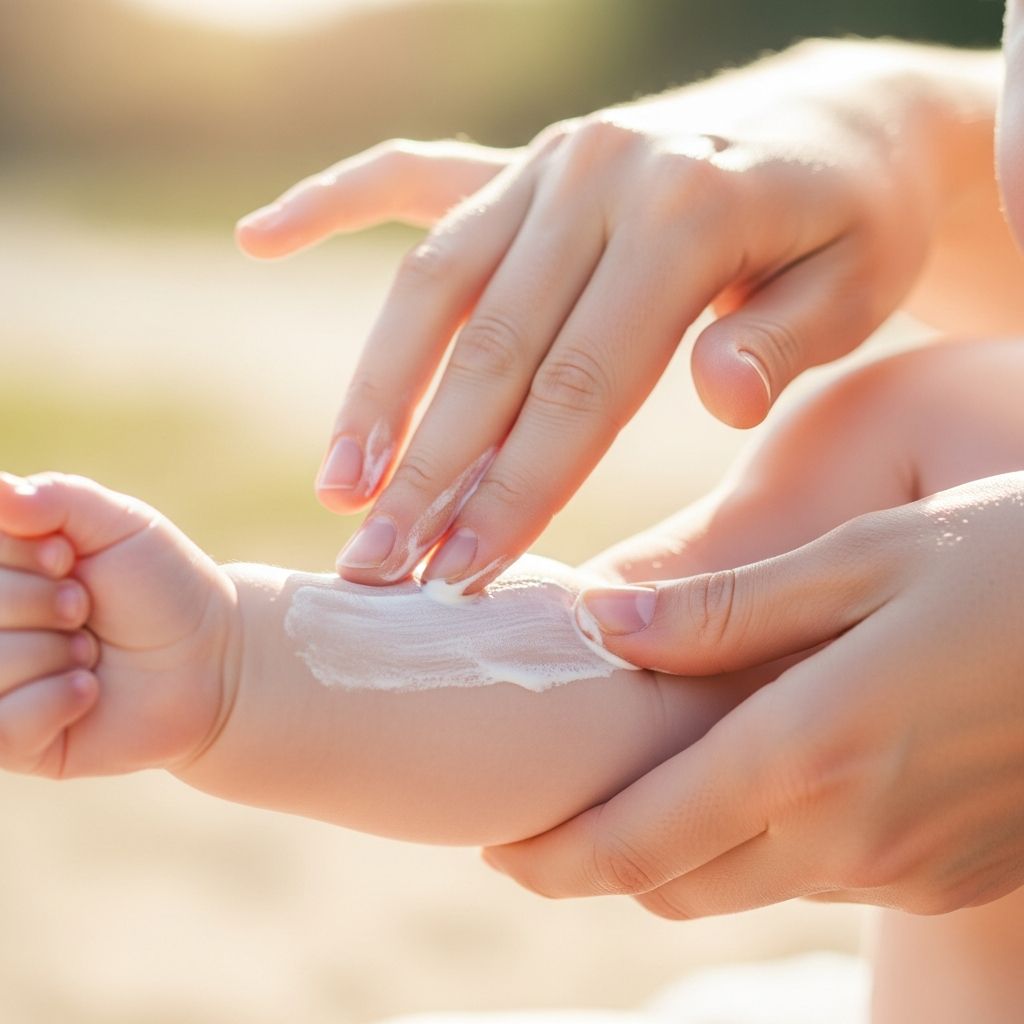
Good technique is just as important as choosing the right product. A thin, patchy layer will not provide the level of protection promised on the label, while overly frequent reapplication cannot fully make up for missed spots.
- Start with a test patch: A day or two before extended outdoor time, place a small amount of the new sunscreen on the inside of your baby’s wrist or behind the knee and watch for redness or irritation.
- Apply before going outside: Put sunscreen on about 15 minutes before you head outdoors so you are not rushing while your baby is distracted or warm.
- Use enough product: For a baby’s face and neck, a pea-sized to small almond-sized amount is usually needed; for the body, use a generous, even layer.
- Cover easy-to-miss spots: Don’t forget the tops of ears, back of the neck, backs of hands, tops of feet, and along clothing edges where fabric can shift.
- Reapply often: Renew sunscreen at least every two hours and immediately after swimming, heavy sweating, or towel-drying.
Clothing, Hats, and Shade: Your First Line of Defense
Before even reaching for sunscreen, think about how to limit direct sun exposure. Partial shade plus protective clothing can greatly reduce the amount of skin that needs sunscreen at all, which is especially helpful for younger infants.
- Use wide-brimmed hats: A soft hat with a brim that covers the face, ears, and back of the neck offers simple, effective protection.
- Dress in lightweight long sleeves and pants: Tightly woven, breathable fabrics help block UV rays while keeping your baby cool.
- Consider UPF-rated clothing: Some garments are designed and tested to block higher levels of UV radiation and can be handy for beach days or long outings.
- Bring your own shade: Stroller canopies, clip-on umbrellas, pop-up tents, and blankets over play yards create portable shade wherever you go.
Timing Outdoor Activities
The intensity of UV rays changes throughout the day. Midday sunlight, roughly from late morning to mid-afternoon, tends to be strongest and most likely to cause burns.
When possible, schedule walks, playground time, or backyard play for early morning or late afternoon. If you must be outdoors during peak hours, rely heavily on shade, clothing, and a thoughtful sunscreen routine for older babies and toddlers.
Recognizing and Responding to Sunburn
Even careful parents may occasionally find a pink nose or slightly red cheeks at the end of a day out. Mild redness is a sign that UV exposure has been more than the skin can comfortably handle, and it is important to act quickly.
- Move out of the sun: Bring your baby indoors or into deep shade immediately to prevent further damage.
- Cool the skin gently: Use a cool, damp cloth or a brief lukewarm bath to soothe; avoid ice, very cold water, or harsh soaps.
- Offer fluids: Breast milk or formula helps maintain hydration; for older babies, small sips of water may be appropriate if recommended by your pediatrician.
- Call your pediatrician for concerns: Seek medical advice if your baby is under a year old with a noticeable burn, has blisters, seems very fussy, or shows signs like fever, lethargy, or vomiting.
Common Myths About Baby Sunscreen
Well-meaning friends and family often pass along advice that is outdated or just incorrect. Clearing up a few myths can make it easier to stick with effective habits.
- Myth: Darker-skinned babies do not need sunscreen. While more melanin offers some natural protection, it does not prevent all damage; all babies and children benefit from sun-safe routines.
- Myth: Clouds make sunscreen unnecessary. UV rays pass through clouds, and many people receive significant exposure on overcast days without realizing it.
- Myth: A base tan protects the skin. A tan is a visible sign of damage, not safety, and should not be used as a substitute for sun protection.
- Myth: Higher SPF means you can stay out all day. Even with high SPF, reapplication, clothing, hats, and shade remain essential.
Practical Sun-Safe Routines for Families
Sun protection works best when it becomes a predictable routine rather than a last-minute scramble as you head out the door. Keeping key items packed and ready makes it easier to stay consistent, especially with a baby in tow.
- Keep a small “sun kit” near the door or in the diaper bag with baby-safe sunscreen (for age-appropriate use), a hat, sunglasses for older babies, and a light blanket.
- Apply sunscreen on older babies and toddlers at the same time every day when you plan to go outside, such as right after dressing in the morning.
- Model sun-safe behavior as adults by wearing hats and sunscreen yourself so older children see these actions as normal.
Frequently Asked Questions About Baby Sunscreen
1. At what age can I start using sunscreen on my baby?
Most pediatric sources suggest focusing on shade and clothing during the first months of life and delaying regular sunscreen use until around six months. For very short exposures when shade is not possible, some clinicians may support using a small amount of mineral sunscreen on limited areas after weighing risks and benefits with parents.
2. How much sunscreen should I apply to my baby’s skin?
Use enough to create a thin, even film on all exposed skin without leaving obvious gaps. On the face and neck, that often means a small, pea-sized to almond-sized amount, while arms and legs each need a similar generous layer for consistent coverage.
3. Do babies need sunscreen in the shade?
Shade reduces but does not totally eliminate UV exposure, because rays can reflect off surfaces like sand, water, and pavement. In older babies and toddlers, many pediatricians still recommend using sunscreen on exposed skin even when playing in partial shade, especially during midday hours or at the beach and pool.
4. Is mineral sunscreen better than chemical sunscreen for infants?
Mineral formulas with zinc oxide and titanium dioxide are often recommended for babies and young children because they are less likely to irritate sensitive skin and do not need to be absorbed to work. Some parents choose to use mineral sunscreens exclusively, while others may use different types as their children get older and after discussing concerns with their pediatrician.
5. How can I tell if my baby is overheating while covered up?
Check often for flushed skin, unusual fussiness, rapid breathing, or a hot, damp neck or back. Dress your baby in lightweight, breathable layers, keep them well hydrated according to age, take frequent breaks in cooler indoor spaces, and avoid leaving a baby in a stroller or car seat in direct sun for extended periods.
Helping Your Baby Grow Up Sun-Safe
Thoughtful sun habits in the first years of life can pay off for decades. By combining shade, clothing, hats, appropriate sunscreen use, and smart timing of outdoor activities, parents can protect their baby’s delicate skin while still enjoying the outdoors as a family.
Over time, these practices become second nature, and children who grow up with clear, consistent sun-safety routines are more likely to carry those habits into adulthood. That investment of a few extra minutes before heading outside is one of the most powerful gifts you can offer your child’s future health.