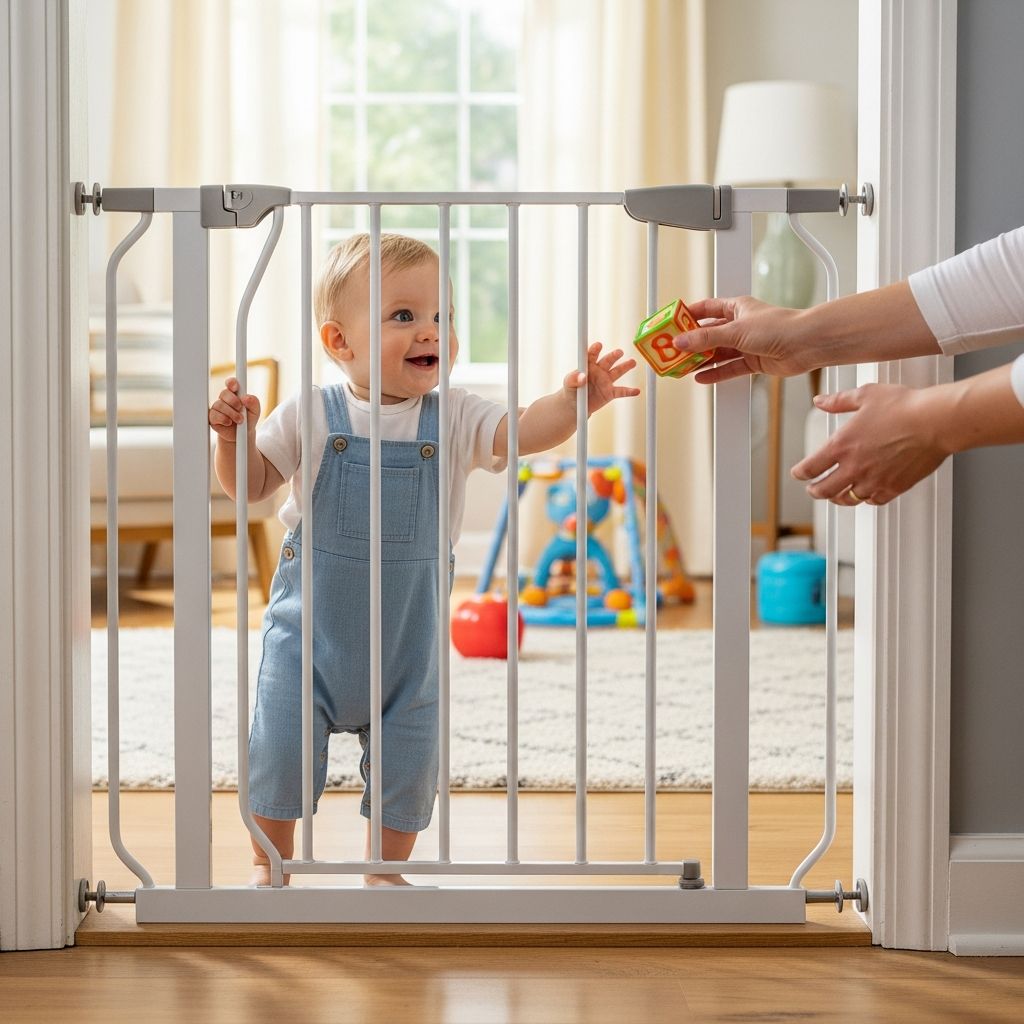
When babies discover how to pull up to stand, the crib suddenly becomes a practice gym instead of a sleep space. Many parents find that a baby who used to fall asleep easily now spends long stretches standing, playing, or crying at the rails. This phase is normal, but it can be exhausting and confusing. The good news: with practice, safety tweaks, and calm consistency, most babies move through this stage in a few weeks.
Why Babies Start Standing in the Crib
Standing in the crib usually appears around the same time as other big motor milestones like pulling to stand and cruising along furniture. These skills commonly emerge between 8 and 10 months, although some babies may do them earlier or later. As they master new movements, babies often want to repeat them constantly—especially in familiar spaces like the crib.
What looks like bedtime mischief is often your baby’s brain and body practicing coordination, balance, and strength. Sleep temporarily takes a back seat while the new skill gets rehearsed. Understanding this makes it easier to respond calmly and avoid turning standing into a power struggle or a game.
First Priority: Make the Crib as Safe as Possible
Before changing routines or sleep expectations, confirm that your baby’s crib is set up safely for a new stander. Most injuries in cribs are minor bumps, but there are clear steps to reduce risk.
Crib Safety Checklist
- Lower the mattress: Once your baby can sit or pull up, the mattress should be at the lowest approved setting so the top rail reaches about mid-chest when your baby is standing.
- Keep the crib mostly empty: Remove pillows, comforters, extra blankets, stuffed animals, crib bumpers, and sleep positioners, which can increase suffocation risk and act as stepping stools.
- Avoid bumpers and vertical liners: Soft bumpers and similar products are unsafe and have been restricted or banned in several regions because of suffocation and entrapment risks.
- Use a firm, snug mattress: The mattress should fit tightly with no gaps at the sides, and only a fitted sheet should be on top.
- Consider a sleep sack: A wearable blanket can keep your baby warm and often makes it harder to climb or gain momentum for big jumps.
Simple Safety Enhancements Around the Crib
- Remove nearby furniture your baby could grab if they ever climb out.
- Use a firm carpet or rug around the crib to soften small accidental bumps.
- Ensure cords, curtains, and wall hangings are well out of reach from inside the crib.
Supporting the New Skill During the Day
The fastest way to reduce nighttime standing is to give your baby plenty of safe chances to practice getting up and down while they are awake. When babies learn how to transition back to sitting or lying independently, they are much less likely to get stuck standing and upset at bedtime.
Daytime “Up and Down” Practice Ideas
- Crib practice sessions: Once or twice a day, place your baby in the crib awake, stay close, and encourage them to pull up and then return to sitting. Use the same words each time, like “down, down” as you pat the mattress.
- Low furniture play: Let your baby stand at a sturdy couch edge or low table and gently guide their knees to bend until they reach a sitting or crawling position.
- Floor time for balance: Extra crawling and rolling practice helps build core strength and coordination, which make controlled lowering easier.
- Minimal rescuing: If your baby safely appears “stuck,” pause briefly before helping. Short windows to figure it out encourage learning and problem-solving.
Use Consistent Verbal Cues
Pair a simple phrase with the motion each time you help your baby come down, such as:
- “Down, down.”
- “Sit, please.”
- “Lie down now.”
Over time, many babies begin to respond to the cue alone, especially if parents’ tone stays calm and predictable.
How to Respond When Baby Stands in the Crib at Bedtime
Once safety and daytime practice are in place, the next step is choosing a nighttime response—and repeating it the same way, every time. Consistency is what teaches your baby that the crib is for sleep, not for long play sessions.
Step 1: Pause and Observe
If your baby stands up but is calm, give them a few minutes to experiment on their own.
- Watch on a monitor if you have one, or listen from nearby.
- As long as your baby is not very distressed, let them try getting back down independently.
- Many babies sit or lie back down on their own after a short burst of practice.
Step 2: Offer Quiet Support if They Are Upset
If your baby is crying hard or has been standing for several minutes and seems genuinely stuck, you can step in with very low-key help.
- Enter the room without lights and without making it playful.
- Sit or kneel beside the crib instead of towering above it, which can invite more standing.
- Pat the mattress and repeat your cue word: “Down, down.”
- Give your baby a moment to try lowering on their own while you are nearby.
Step 3: Gently Help Them Down (If Needed)
If your baby still cannot get down or is very upset, you can briefly guide them into a sitting or lying position.
- Support behind the knees or hips to help them bend and sit.
- Lay them on their back or side, then keep a light hand on their chest or back for a minute to prevent an immediate bounce up.
- Keep words soft and short: “Sleep time. Night-night.”
- Avoid picking them up unless necessary for safety or extreme distress, so standing does not become a reliable way to get lifted out.
Building a Sleep-Supportive Routine Around This Phase
Standing in the crib often overlaps with a developmental sleep regression. Along with the new skill, you might see more night waking, shorter naps, or early-morning starts. A predictable routine helps anchor your baby while their body and brain are changing quickly.
Evening Routine Example
You can adapt the details to your family, but aim for a calm, repeatable pattern:
- Light play and connection (no roughhousing close to bed).
- Bath or gentle wash-up.
- Feeding, with lights dimmed.
- Short book or song, spoken in a low voice.
- Sleep sack on, lights low or off.
- Into the crib drowsy or awake, with your usual goodnight phrase.
Daytime Sleep and Wake Windows
Overtired or under-tired babies both tend to stand and protest in the crib. Age-appropriate wake windows and nap lengths can reduce bedtime battles.
| Approximate Age | Typical Naps | Common Wake Windows |
|---|---|---|
| 6–8 months | 3 naps | 2–3 hours |
| 8–10 months | 2–3 naps | 2.5–3.5 hours |
| 10–12 months | 2 naps | 3–4 hours |
These ranges are approximate; your baby’s behavior (happy and engaged vs. fussy and hyper) is the best guide.
Common Challenges and How to Handle Them
Baby Falls While Standing
It can be alarming to see a baby lose balance and bump on the mattress or rail. Fortunately, serious injury in a properly set-up crib is rare.
- If your baby cries after a small bump, briefly comfort them, check for any signs of injury, and then resume the normal bedtime routine.
- Avoid adding padded bumpers, which increase suffocation and entrapment risk and are not recommended by pediatric safety guidelines.
- More practice at lowering during the day usually makes falls less frequent.
Baby Treats Standing as a Game
Some babies realize that standing brings parents back into the room. To avoid reinforcing this:
- Keep interactions extremely brief, calm, and boring.
- Use the same words and same actions every time.
- Avoid turning on bright lights, offering toys, or starting new activities.
- When safe, pause a few minutes before going in so your baby has a chance to settle.
Baby Has Been Sleeping Well and Suddenly Starts Standing
This sudden change is often part of a temporary regression around 6–9 months and again around the first birthday.
- Maintain your usual sleep schedule and rituals as much as possible.
- Allow extra practice time for the new skill during the day.
- Expect a period of disrupted sleep but remind yourself that this stage is temporary.
When to Consider Adjusting the Sleep Setup
In most cases, babies can safely remain in a crib well into toddlerhood. However, a few signs suggest it may be time to reconsider the setup.
- Repeated climbing attempts: If your child is actively trying to climb over the rail and has succeeded or nearly succeeded, the risk of a high fall increases.
- Top rail below chest height: If, even at the lowest mattress setting, the rail falls significantly below mid-chest when your child stands, talk to your pediatrician about timing for a floor bed or toddler bed.
- Serious or recurrent injuries: Discuss with a healthcare provider and review crib setup, room safety, and possible alternatives.
Frequently Asked Questions (FAQs)
Is it safe to let my baby stand in the crib?
Occasional standing is expected and generally safe in a crib with a firm mattress, properly lowered base, and no bumpers or extra items. Current safety guidance emphasizes an empty crib with a tight-fitting sheet and rails high enough that your baby cannot climb out.
Should I always lay my baby back down when they stand?
Not always. If your baby is calm, it is fine to wait and let them explore and attempt to lie down independently. If they are very upset or clearly stuck, briefly and calmly help them down while using a consistent cue phrase.
How long does this standing-in-the-crib phase last?
Many families notice the most intense period lasts about one to two weeks once the baby has regular chances to practice getting down during the day, although every child is different.
Do I need to buy special products to keep my baby from standing?
No extra devices are usually needed. In fact, items like padded bumpers or crib tents can introduce new safety risks. A properly designed crib, firm mattress, and optional sleep sack are typically sufficient when combined with supervision and consistent routines.
Could my baby’s standing be a sign of a medical problem?
In most cases, standing is a normal developmental step. However, if your baby seems to be in pain, has unusual muscle stiffness or weakness, or is not meeting other milestones, consult your pediatrician or a pediatric physical therapist for an individualized assessment.
References
- Safe Sleep for Babies — U.S. Consumer Product Safety Commission. 2022-11-01. https://www.cpsc.gov/SafeSleep
- When babies learn to stand: Developmental milestones — Centers for Disease Control and Prevention. 2023-01-10. https://www.cdc.gov/ncbddd/actearly/milestones/index.html
- Crib Safety Tips — American Academy of Pediatrics. 2022-10-15. https://healthychildren.org/English/safety-prevention/at-home/Pages/Choosing-a-Crib.aspx
- What to do when your child starts standing in the crib — Sleep Training Solutions. 2021-08-05. https://www.sleeptrainingsolutions.com/blog/5-things-to-do-when-baby-starts-standing-in-the-crib
- My baby stands (or sits up) in the crib and won’t sleep! — Baby Sleep Made Simple. 2022-06-20. https://www.babysleepmadesimple.com/baby-stands-sits-up-in-crib-wont-sleep/
- Baby Standing in Crib and Won’t Sit Down — Bella Luna Family. 2021-09-14. https://bellalunafamily.com/baby-standing-in-the-crib-and-wont-sit-down/
- 6–9 Month Sleep Regression: Tips for Standing in the Crib — Cozy Baby Sleep. 2022-04-02. https://www.cozybabysleep.com/blog/standing-in-the-crib