Every parent eagerly awaits their baby’s first words, a magical moment that marks a leap in cognitive and social growth. Language development begins at birth, evolving through distinct stages as infants process sounds, mimic voices, and eventually form meaningful speech. Understanding these **early signs** helps parents support their child’s progress and identify when professional input might be needed.
The Foundations of Communication in Newborns
From the moment of birth, babies communicate primarily through cries, which convey needs like hunger or discomfort. By recognizing a parent’s voice, newborns quieten and turn toward familiar sounds, laying the groundwork for language acquisition. This responsiveness demonstrates early auditory processing.
In the initial weeks, infants produce pleasure sounds such as coos and gurgles, distinct from cries. They smile and vocalize when spoken to, fostering interactive exchanges. Loud noises trigger startle reflexes, while softer voices elicit calming responses. These interactions build neural pathways essential for speech.
- Quiets to parent’s voice
- Startles at loud sounds
- Coos, laughs, or fusses variably
- Smiles during conversations
These behaviors signal that the auditory system is maturing, preparing for more complex sound discrimination.
Emerging Vocal Play: 4 to 6 Months
Around 4 months, babies actively engage with their environment through sound. They turn toward new noises, respond to tonal changes like “no,” and delight in toys that rattle or chime. Vocal imitation begins, with babies echoing simple syllables like “ooh” or “aah.”
This period introduces **vocal play**, where infants experiment with lip and tongue movements. Bubbly raspberries and repetitive sounds emerge, alongside smiles and facial mimicry. Such play strengthens oral muscles critical for articulation.
| Milestone | Description |
|---|---|
| Turns to sounds | Locates noise sources visually |
| Imitates tones | Matches parent’s pitch variations |
| Repeats syllables | Produces ba-ba or ma-ma chains |
Encourage this by narrating daily activities and pausing for responses, turning playtime into dialogue practice.
Babbling Breakthrough: 7 to 12 Months
By 7 months, comprehension surges. Babies recognize their name, familiar voices across rooms, and contextual phrases like “bye-bye,” often waving in response. They understand common objects (“cup,” “shoe”) and follow simple gestures.
Babbling intensifies, blending consonants and vowels into tuneful sequences: “ba-ba-ba,” “da-da,” or “ga-ga.” Front-mouth sounds (mama, baba) mix with back-throat ones (kaka). Babies repeat favorites rhythmically, mimicking speech intonation.
- Responds to name
- Babbles with rhythm
- Copies gestures like clapping
- Understands “no”
This stage bridges pre-verbal communication to words. Babies become more vocal during social play, using sounds to attract attention.
From Babble to First Words: 12 to 18 Months
At 12 months, vocabulary comprehension expands to 4-6 words, with babies labeling objects or people, though pronunciation is approximate. They follow one-step directions with gestures (“get the ball”) and answer yes/no by action.
By 18 months, understanding deepens: action words (clap, jump), body parts, size concepts (big/little), and negatives (“not now”). Expressive language grows to 50 words, including animal sounds (“moo”), two-word combos (“more milk”), and pronouns (“mine”).
First meaningful words appear around 10-14 months, like specific “mama” for mother. Gestures reinforce requests, such as pointing or shaking head “no.”
| Age Range | Key Signs |
|---|---|
| 12-17 Months | 2-6 words; imitates; follows simple commands |
| 18-23 Months | 50 words; 2-3 word phrases; asks for food |
Strangers may struggle with clarity, but consistent exposure accelerates improvement.
Toddler Talk Explosion: 2 to 3 Years
Speech blossoms into sentences by age 2. Vocabulary hits 100+ words, with three-to-four-word structures (“My ball?”). Questions use rising inflection, plurals emerge (“shoes”), and past tenses form (“jumped”).
Comprehension includes spatial terms (“in/on”), descriptors (“big/happy”), and two-step directions (“Get shoes and come”). Pronouns diversify (“you/me/her”), and speech, though imperfect, conveys full ideas.
- Follows complex instructions
- Uses descriptive language
- Asks/answers questions fluidly
- Strangers understand most speech
This phase solidifies grammar foundations, influenced by rich interactions.
Activities to Boost Language Skills
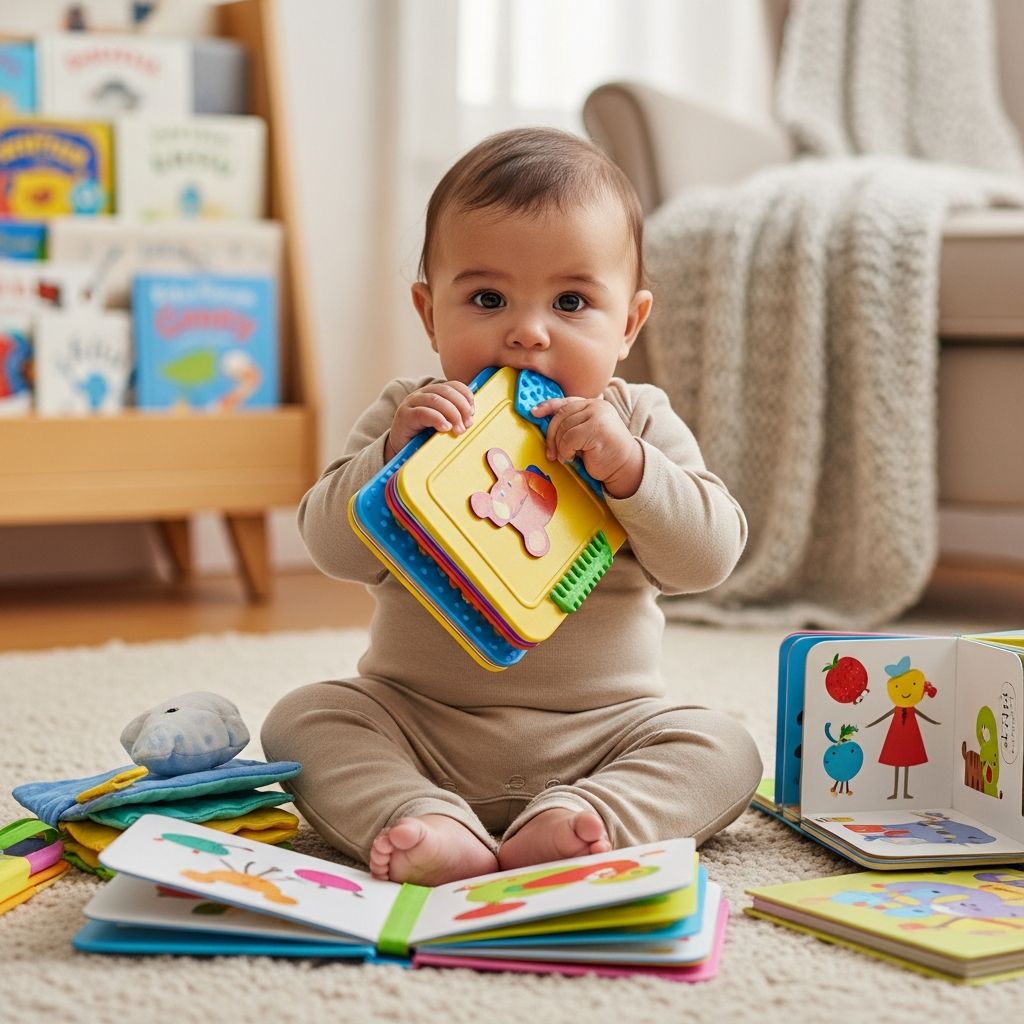
Active parental involvement accelerates development. Read daily, pointing to pictures and asking questions. Sing songs with repetitive lyrics, imitate sounds, and describe actions narratively.
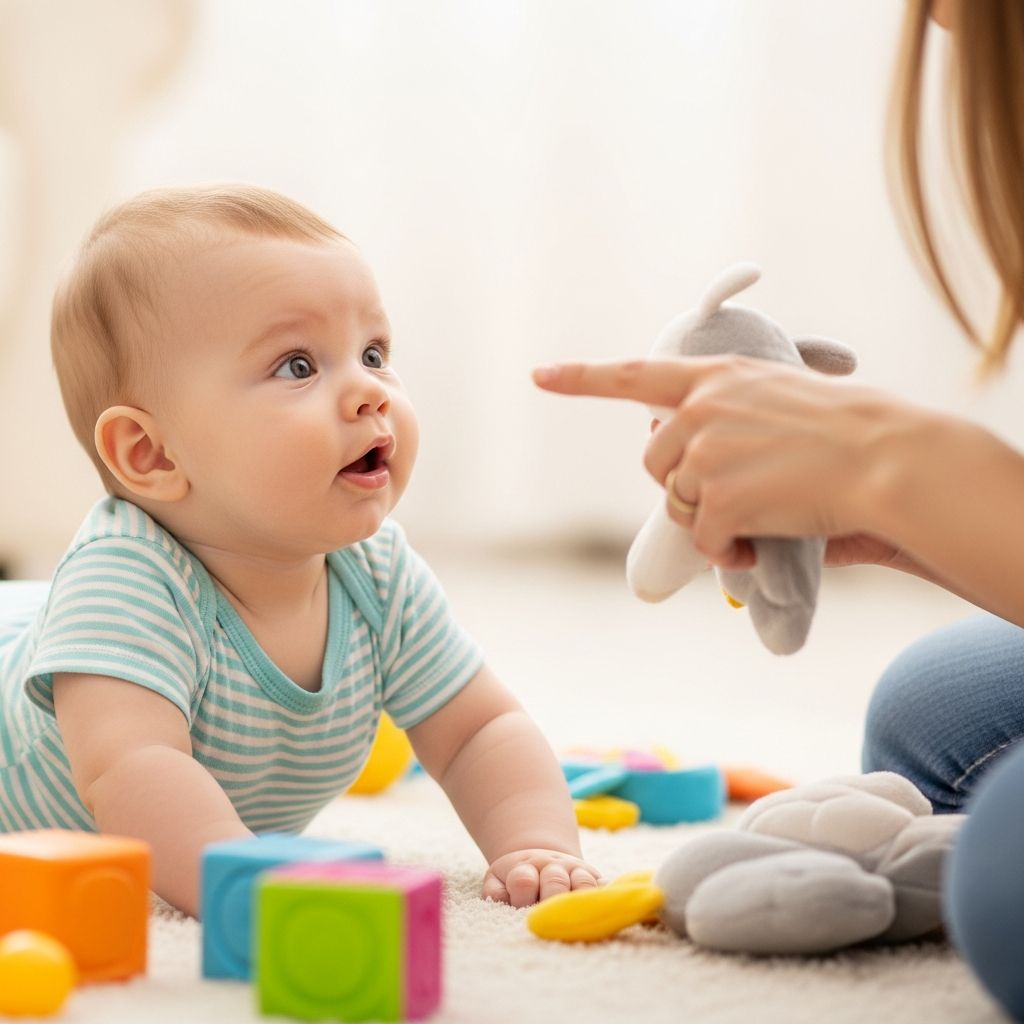
Face-to-face play encourages mimicry: exaggerate expressions, pause for turns. Limit screens; prioritize live talk. Respond to all vocalizations as meaningful conversation.
- Daily reading routines
- Echo babbling
- Label everything
- Use gestures alongside words
These strategies, rooted in responsive caregiving, enhance neural connections for speech.
Recognizing Potential Delays
Not all babies hit milestones identically; wide variation is normal. However, consult professionals if by certain ages:
- 12 months: No babbling or gestures
- 16 months: No first words
- 24 months: Fewer than 50 words or no two-word phrases
Other flags include no eye contact, poor sound response, or regression. Early intervention via speech therapy yields best outcomes, per CDC guidelines.
Frequently Asked Questions
At what age do babies typically say their first word?
Babies often utter first meaningful words between 10-14 months, though some start earlier or later.
Should I worry if my baby isn’t talking by 18 months?
Monitor closely; consult a pediatrician if vocabulary is under 50 words or phrases absent. Early screening helps.
How can I encourage my baby’s speech?
Talk constantly, read books, imitate sounds, and respond enthusiastically to their efforts.
Is babbling a reliable sign of future talking?
Yes, rhythmic babbling with intonation strongly predicts word acquisition.
Do bilingual homes delay speech?
No, bilingual exposure enriches development without delays if interactions are consistent.
Long-Term Benefits of Early Language Exposure
Robust early speech correlates with literacy, social skills, and academic success. Babies absorbing diverse vocabulary grow into confident communicators. Parental narration expands worlds, turning everyday moments into learning opportunities.
Track progress with milestone charts from trusted sources like CHOP or NIDCD. Celebrate small victories—each coo leads to conversation.
References
- Age-Appropriate Speech and Language Milestones — Children’s Hospital of Philadelphia (CHOP). Accessed 2026. https://www.chop.edu/health-resources/age-appropriate-speech-and-language-milestones
- Speech and Language Development from Birth to 12 Months — Great Ormond Street Hospital (GOSH). Accessed 2026. https://www.gosh.nhs.uk/conditions-and-treatments/procedures-and-treatments/speech-and-language-development-birth-12-months/
- Baby Language Development: 3-12 Months — Raising Children Network. Accessed 2026. https://raisingchildren.net.au/babies/development/language-development/language-3-12-months
- Speech and Language Developmental Milestones — National Institute on Deafness and Other Communication Disorders (NIDCD), NIH. Accessed 2026. https://www.nidcd.nih.gov/health/speech-and-language
- CDC’s Developmental Milestones — Centers for Disease Control and Prevention (CDC). Accessed 2026. https://www.cdc.gov/act-early/milestones/index.html