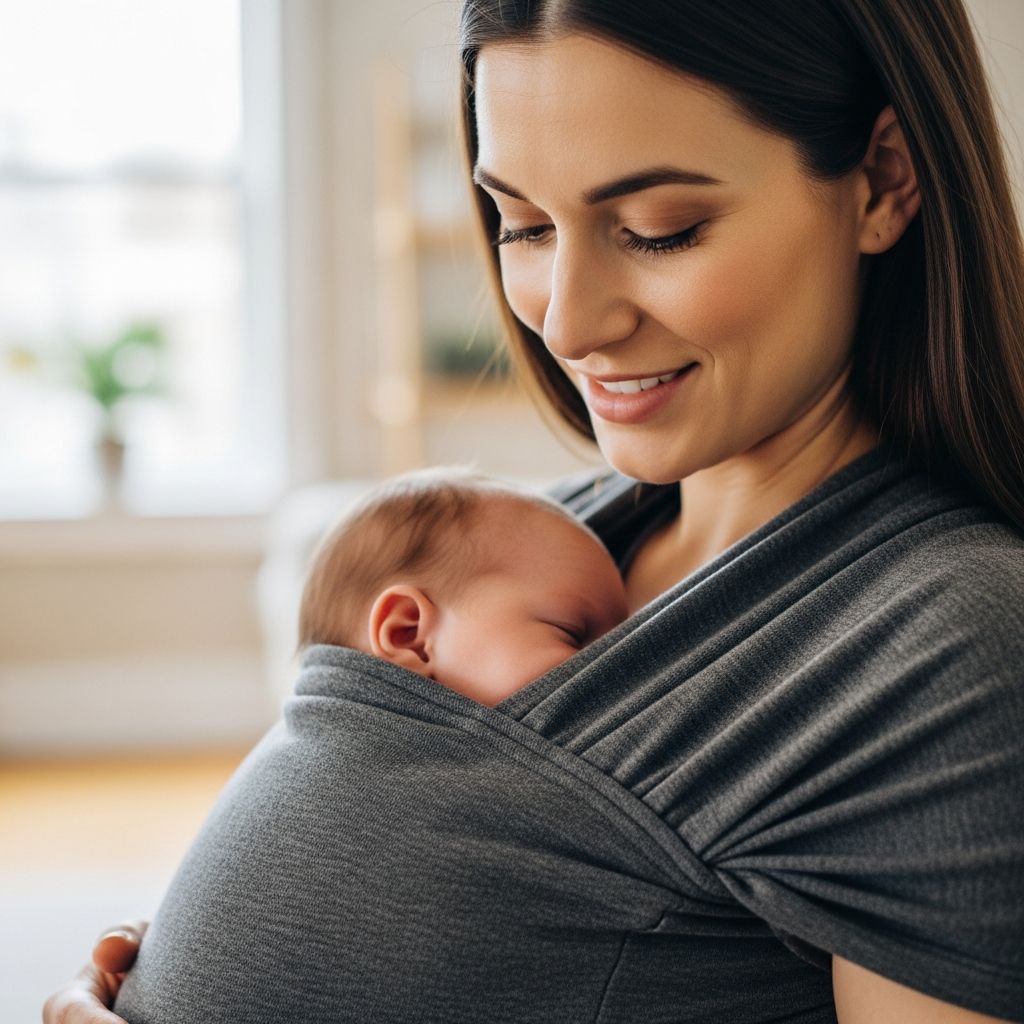
Baby slings can be lifesavers when a baby wants to be held all day and a parent still needs to eat, answer a text, or drink coffee while it is actually hot. They offer a way to keep a baby close, calm, and secure while freeing up at least one hand. This guide walks through how slings work, how they compare to other carriers, what to watch out for, and how to decide which style is right for a particular family.
Why Parents Reach for Slings
Newborns arrive with a strong need to be held and soothed, and many will only nap for long stretches when resting on a caregiver’s chest. A sling creates a soft, nest-like space that mimics the snug feeling of the womb while still allowing the parent to move around the house or take short walks. For some parents, that hands-free closeness becomes the difference between feeling trapped on the couch and feeling functional again.
- Slings keep a baby at chest level where the sound of a heartbeat, warmth, and movement can help them settle and sleep.
- They make daily tasks more manageable, from loading the dishwasher to comforting older siblings, without leaving the baby crying in a crib.
- They can support bonding for both parents and other caregivers, especially if one person did not give birth and wants more skin-to-skin contact.
Slings, Wraps, and Carriers: What’s the Difference?
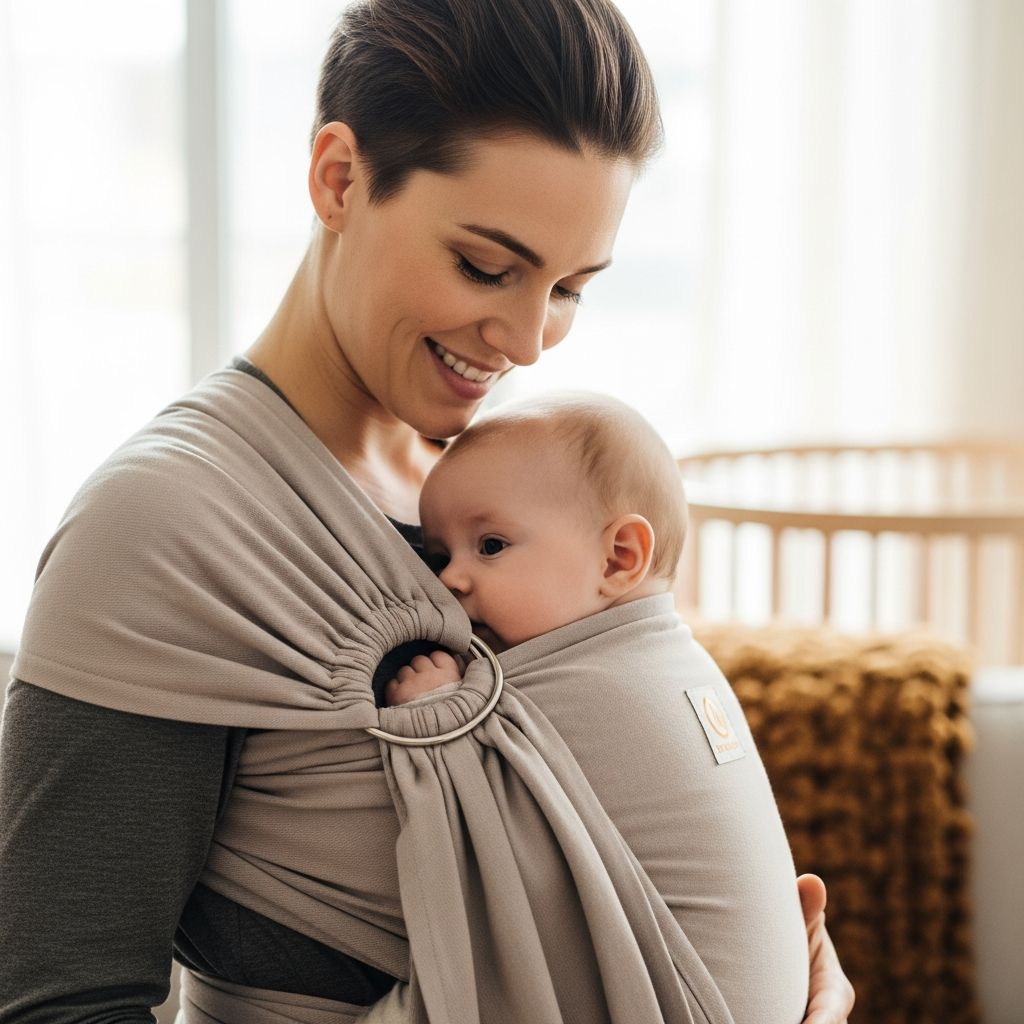
“Baby carrier” is a broad term that includes soft structured carriers, wraps, and slings. Slings are usually a single piece of fabric worn across one shoulder to create a pouch or hammock for the baby. Unlike many buckle carriers that use both shoulders and a waistband, slings often feel more minimal but also put weight on one side of the body.
| Type | Basic Design | Best For | Learning Curve |
|---|---|---|---|
| Ring sling | Woven fabric threaded through two rings, worn across one shoulder | Newborns to toddlers; quick ups and downs | Moderate; threading and tightening take practice |
| Pouch sling | Pre-sewn loop of fabric that forms a pocket | Short trips, older babies with good head control | Low to moderate; correct sizing is crucial |
| Stretchy wrap | Long stretchy fabric, wrapped around both shoulders and torso | Newborns; long cuddly naps | Moderate to high; multiple wrapping steps |
| Soft structured carrier | Panel with buckles, padded straps, and waist belt | Heavier babies; longer walks | Low; adjustments are more straightforward |
Slings sit somewhere between the coziness of a wrap and the convenience of a buckle carrier. They shine when a baby needs frequent “up and down” carries throughout the day, but they ask a bit more awareness of positioning and fit than some structured options.
Key Benefits of Baby Slings
Used correctly, slings offer advantages that go beyond convenience. They can support emotional bonding, help regulate a baby’s body, and even ease some types of fussiness. Many hospitals now use skin-to-skin contact with a sling-like setup for premature babies, and there is growing research on how close contact helps stabilize a newborn’s heart rate, temperature, and breathing patterns.
- Soothing and sleep: Being held upright and snug against a caregiver often reduces crying and helps babies transition to sleep more smoothly.
- Hands-free caregiving: With a baby secure in a sling, parents can prepare meals, do light chores, or simply drink water more easily.
- Bonding for multiple caregivers: Partners, grandparents, and other caregivers can use slings to build their own rhythm of comforting and carrying.
- On-the-go feeding support: Some experienced users nurse discreetly in a sling, although it is safer to pause walking and re-position the baby afterward for optimal airway protection.
Risks and Safety Basics You Cannot Ignore
For all the benefits, it is important to acknowledge that slings are not risk-free. The main concern is a baby’s airway being blocked by fabric, the wearer’s body, or the baby’s own chin pressing into their chest. Young babies, especially those under four months, lack strong neck control, which makes them more vulnerable to breathing problems if positioned poorly.
- Improper positioning can lead to a baby’s chin curling down toward the chest, which may compress the airway.
- Fabric or clothing pressed against the nose and mouth can restrict airflow without obvious warning signs.
- Falling is another risk if the sling is too loose, the baby is positioned too low, or the parent trips while walking.
Parents of premature or medically fragile babies should consult a healthcare provider before using any sling or carrier. Babies with breathing, heart, or muscle tone issues may need more support or a different carrying option.
The Essentials of Safe Positioning
Different countries have created simple checklists to help caregivers remember safe babywearing. While wording varies, the core ideas are the same: keep the baby high, snug, upright, and visible. A quick mental checklist every time the sling is used can prevent many common mistakes.
- Airway first: The baby’s face should always be uncovered and visible without moving fabric or clothing.
- Chin off chest: Aim for at least a finger’s width of space under the baby’s chin; this helps maintain a clear airway.
- Upright over cradle: For very young babies, upright carries are generally safer than deep cradle positions that tilt the head forward.
- Close enough to kiss: When standing up straight, a caregiver should be able to tilt their head down and kiss the baby’s head easily.
- Snug and supported: The sling fabric should be firm enough that the baby does not slump or sway away from the adult’s chest.
Hip Health and Leg Position
Beyond the airway, hip health matters as well. Some orthopedic groups caution that carriers which let the baby’s legs dangle straight down with most of the weight pulling on the crotch area may put stress on developing hips. A sling can support healthier alignment when the fabric is spread carefully and the baby’s knees are kept higher than the bottom.
- Look for a “M” or “froggy” shape, with knees bent and spread outward, and the bottom forming the middle point of the letter.
- The fabric should reach from one knee to the other, supporting the thighs, rather than cutting into the back of the legs.
- Avoid forcing legs straight or tightly together, especially in the newborn period or if there is any concern about hip development.
Comparing Common Sling Styles
No single sling works best for every family. Shoulder width, chest size, back strength, and climate all play a role in whether a particular style feels comfortable and secure. The table below highlights how three main sling categories often differ in everyday use.
| Feature | Ring Sling | Pouch Sling | Hybrid/Adjustable Pouch |
|---|---|---|---|
| Adjustability | Highly adjustable with rings | Mainly size-specific | Limited adjustment via snaps or zippers |
| Learning curve | Moderate; needs practice to tighten evenly | Low; slip it on like a sash | Low to moderate |
| Longevity | Often newborn through toddlerhood | Usually best for short periods or older babies | Varies by brand and design |
| Fit for multiple caregivers | Easy to share by re-tightening | Hard to share if sizes differ | Somewhat shareable due to adjustments |
| Weight distribution | Across one shoulder and back | Heaviest on one shoulder | Similar to pouch, sometimes slightly improved |
When trying different styles, it helps to focus less on the pattern or color and more on how easy it feels to get a secure fit in under a minute. The “prettiest” sling is not the best choice if it always sits crooked or leaves a parent’s shoulder aching after fifteen minutes.
Signs a Sling Fits Well
A good sling should feel like a firm hug shared by the caregiver and the baby. The baby should rest high on the chest without causing strain in the neck, and the wearer should be able to stand upright, not leaning backward or forward to compensate for the weight. With that in mind, there are some practical checks that make fit easier to judge.
- The shoulder fabric lies flat and does not dig sharply into the neck.
- The baby’s tummy is against the adult’s body, not turned outward or slumping to the side.
- No part of the baby’s body is sinking deep into the fabric like a hammock; instead, the fabric holds them snug against the wearer.
- The wearer can walk normally without holding the baby with a supporting hand, except during tricky movements like bending or stepping off a curb.
Daily Life: What You Can (and Shouldn’t) Do in a Sling
Slings tempt parents to multitask, but some activities are simply not safe with a baby on the chest. As a general rule, if an activity would feel risky while holding a baby directly in arms, it is also too risky in a sling. The fabric does not turn everyday life into a hands-free adventure park.
- Safe activities include slow walking, gentle rocking, reading, grocery shopping, or light chores away from heat or sharp tools.
- Activities to avoid include cooking over hot surfaces, handling boiling liquids, running or jogging, biking, driving, and any kind of contact or high-impact sport.
- When the baby falls into a deep sleep, many safety experts suggest transferring them to a firm, flat sleep surface instead of letting naps continue unattended in the sling.
Common Problems and How to Fix Them
Almost every parent has at least one frustrating babywearing moment: the fabric twists, the rings slide down, or the baby arches and cries the second they are buckled in. Many of these issues can be improved with small adjustments instead of giving up on the sling entirely.
- Baby slumps or vanishes into fabric: Tighten the sling in small sections, starting from the back of the knee up to the neck, until the baby’s chest rests firmly against the caregiver’s.
- Shoulder pain or neck strain: Spread the shoulder fabric wider, shift the rings higher toward the collarbone in a ring sling, and keep the baby higher on the chest.
- Overheating worries: Dress the baby in fewer layers and remember that the sling counts as another layer. Check the back of the neck often for sweat or clamminess.
- Baby fusses every time: Try shorter practice sessions around feeding and nap times, and begin walking or swaying as soon as the baby is placed in the sling.
When to Consider a Different Carrier
Sometimes the most loving choice is to admit that a particular sling is not the right match. That does not mean babywearing has failed; it simply means the combination of body types, baby temperament, and lifestyle calls for a different tool. Sensitive shoulders or chronic back pain, for example, may respond better to a two-shoulder wrap or a soft structured carrier.
- If the wearer experiences sharp or persistent pain, even after adjustments, it may be time to consider a carrier with more even weight distribution.
- Very active families who walk long distances might prefer a carrier with a supportive waistband.
- Some babies are calmer when carried more vertically and more snugly than certain slings allow, especially as they get heavier.
Practical Buying Tips for New Parents
Baby gear aisles can be overwhelming, and slings are no exception. Marketing photos do not always reflect safe positioning, and price alone does not guarantee comfort or quality. A little planning and a checklist can keep parents from ending up with three unused slings in the closet.
- Check that the sling is labeled for the baby’s current weight and age range.
- Look for strong stitching, sturdy rings or fasteners, and fabric with enough grip that it will not slip and loosen while in use.
- Consider climate: thinner linen or cotton may be better for hot regions, while heavier fabrics suit cooler weather.
- Whenever possible, test-wear with a doll or weighted object to see how the sling feels on shoulders and back before putting in a real baby.
SEO-Friendly FAQs About Baby Slings
Are baby slings safe for newborns?
Slings can be safe for newborns when used correctly, with special attention to airway protection and head support. New babies should be carried upright, high on the chest, with the chin clear of the chest and the face visible at all times.
How long can a baby stay in a sling?
There is no strict time limit, but it is wise to take regular breaks to check posture, temperature, and comfort. Both baby and caregiver benefit when position is changed throughout the day, alternating between sling time, floor play, and other safe resting places.
Can I breastfeed in a sling?
Many experienced users learn to nurse in a sling by lowering the baby slightly and adjusting the fabric for privacy. However, active walking or multitasking during feeding increases risk, so it is safer to feed while stationary and then re-position the baby upright with a clear airway when feeding is finished.
Do slings cause hip problems?
When used with good leg and hip positioning, slings can actually support healthy hip alignment. The key is to allow the baby’s legs to spread around the caregiver’s body, with knees higher than the bottom and thighs supported by the fabric.
What if my baby hates the sling?
Some babies resist at first, especially during the fumbling early attempts at putting them in. Trying for short periods when the baby is calm, adjusting the tightness, and beginning to walk or sway immediately can help; if frustration continues for both baby and caregiver, another style of carrier may be a better fit.
Creating Your Own Babywearing Routine
A sling is not just a piece of fabric; it is a tool for building daily rhythm with a new baby. Over time, parents often discover that certain moments—after naps, during the late-afternoon fussy stretch, or on quick errands—are perfect for babywearing, while others are better suited to a stroller or play mat. Experimenting with timing, positions, and activities helps a family settle into a routine where the sling supports everyone’s comfort rather than adding stress.
The goal is not to wear a baby all day or to master every fancy carry. The goal is to find safe, sustainable ways to keep a baby close and content while allowing caregivers to move, breathe, and feel a little more like themselves. With realistic expectations, attention to safety, and a willingness to switch strategies when needed, a baby sling can be one of the most useful—and most comforting—items in the baby gear arsenal.