Preparing Your Home for Baby’s Arrival: A Practical Framework
Welcoming a newborn into your family is one of life’s most transformative experiences, and thoughtful preparation can make the transition significantly smoother. Rather than feeling overwhelmed by the infinite options available, focusing on what genuinely matters helps new parents invest wisely in items that will truly support daily life with an infant. Understanding the core categories of baby gear and prioritizing based on your family’s unique circumstances creates a foundation for success.
The key to effective preparation lies in distinguishing between true necessities and nice-to-have conveniences. Different families have different needs based on whether they plan to bottle-feed or breastfeed, whether they live in apartments or homes with outdoor space, and their personal preferences for parenting style. This comprehensive guide walks through each essential category to help you build a registry that reflects your actual needs rather than marketing trends.
Setting Up Safe Sleep Spaces for Your Infant
A secure sleeping environment forms the foundation of your nursery setup. Your primary consideration should be selecting a crib that meets current safety standards, paired with a firm mattress designed specifically for cribs. The mattress itself requires protection through a waterproof mattress cover, which guards against accidents and extends the mattress’s lifespan.
Beyond the crib itself, you’ll need an adequate supply of fitted crib sheets. Most experts recommend having 3 to 5 fitted sheets on hand, allowing you to change bedding frequently without immediately running laundry loads. Swaddle blankets or sleep sacks serve multiple purposes—they keep infants warm while reducing the risk associated with loose bedding. If you choose swaddle sacks, selecting several sizes accommodates your baby’s growth through the early months.
The sleep environment benefits significantly from environmental controls. Blackout curtains or shades help establish healthy sleep patterns by blocking external light, particularly beneficial for daytime naps and evening routines. A white noise machine masks household sounds and external traffic, creating a consistent auditory environment that many infants find soothing. For nighttime caregiving, a dim night light provides sufficient visibility for diaper changes and feeding without fully waking either parent or baby.
Additional sleep-support items include a monitor to observe your baby from other areas of your home, pacifiers for soothing, and board books for quiet time activities. Some families also invest in a bassinet for the first several weeks, positioning the infant’s sleep space closer to the parents’ bed during this intensive newborn phase.
Feeding Infrastructure and Supplies
Feeding represents one of the most frequent daily interactions with your newborn, making the right equipment genuinely important. Whether you plan to breastfeed, bottle-feed, or combine both approaches, you’ll need thoughtfully selected feeding gear.
For bottle-feeding families, purchasing 10 to 16 bottles in both 4-ounce and 8-ounce sizes provides flexibility as your baby grows. Having multiple bottles reduces the frequency of washing, particularly valuable during the exhausting newborn phase. A bottle brush specifically designed for reaching the interior surfaces, a drying rack for efficient air drying, and a bottle warmer for quickly bringing cold milk to appropriate temperature all streamline the feeding routine.
If breastfeeding is part of your plan, a quality breast pump—particularly if not covered by insurance—becomes essential. Many mothers appreciate expressing milk to maintain supply, provide feeding flexibility, and allow partners to participate in nighttime feeds. Milk storage bags designed for freezer preservation help you build a supply of expressed milk.
Burp cloths numbered at 5 to 10 pieces prevent feeding-related spills from damaging furniture and clothing. A nursing pillow provides ergonomic support during feeding sessions, reducing strain on your back and arms during extended feeding times. Bibs similarly numbered at 5 to 10 offer quick protection and replacement when spit-up occurs. As your baby transitions to solid foods, having baby-appropriate bowls, spoons with rounded edges, and feeding support equipment facilitates this developmental milestone.
Diapering Stations and Hygiene Products
Diapering happens remarkably frequently during infancy, making efficient diaper-changing stations genuinely life-changing. Most families benefit from establishing at least two changing areas: a primary station in the nursery and a portable caddy in main living spaces where you spend the majority of your day.
Stock your changing area with newborn-size diapers (1 to 2 boxes) and Size 1 diapers (2 to 3 boxes), understanding that newborns outgrow sizes quickly. Disposable wipes designed for sensitive skin or reusable cloth wipes provide gentle cleaning. Two applications of diaper rash cream kept in different locations mean you’ll always have treatment readily available when needed. Diaper rash cream applicators maintain hygiene and allow single-handed application when you’re supporting an infant with your other hand. A dedicated diaper pail containing used diapers helps manage odors and keeps your living space clean.
Essential diapering accessories include a changing pad protecting your surfaces during changes, with dimensions that fit your changing table or dresser. A changing pad cover provides an additional washable layer between baby and the pad itself.
Bathing and Personal Care Essentials
Bathing your newborn requires specific equipment ensuring both safety and comfort. A baby-specific bathtub or insert fits securely in your regular tub, providing appropriate dimensions and depth for tiny infants. A water temperature gauge prevents accidentally exposing your baby to water that’s too hot, as infant skin burns easily. A nonslip mat becomes important as your baby grows and eventually sits in the regular tub.
Personal care products should be specifically formulated for infant skin. Tear-free baby shampoo and body wash prevent irritation if products contact eyes. Baby lotion hydrates skin without harsh chemicals, though many babies do fine with just plain water for basic cleaning. Soft washcloths designed for delicate skin, safety-designed cotton swabs for ear cleaning, and a hooded towel for post-bath warmth complete the bathing station.
For safety and health monitoring, a reliable baby thermometer allows you to track fever accurately. Additional grooming items including infant nail clippers, a soft comb, and a rubber bulb for clearing nasal passages provide basic health maintenance. A simple first aid kit containing age-appropriate medications and supplies prepares you for minor illnesses and injuries.
Clothing for Every Season and Situation
Despite common assumptions, you likely don’t need to register extensively for baby clothing since relatives and friends enthusiastically purchase outfits without prompting. However, understanding practical clothing categories helps guide gift-givers and ensures you have functional pieces.
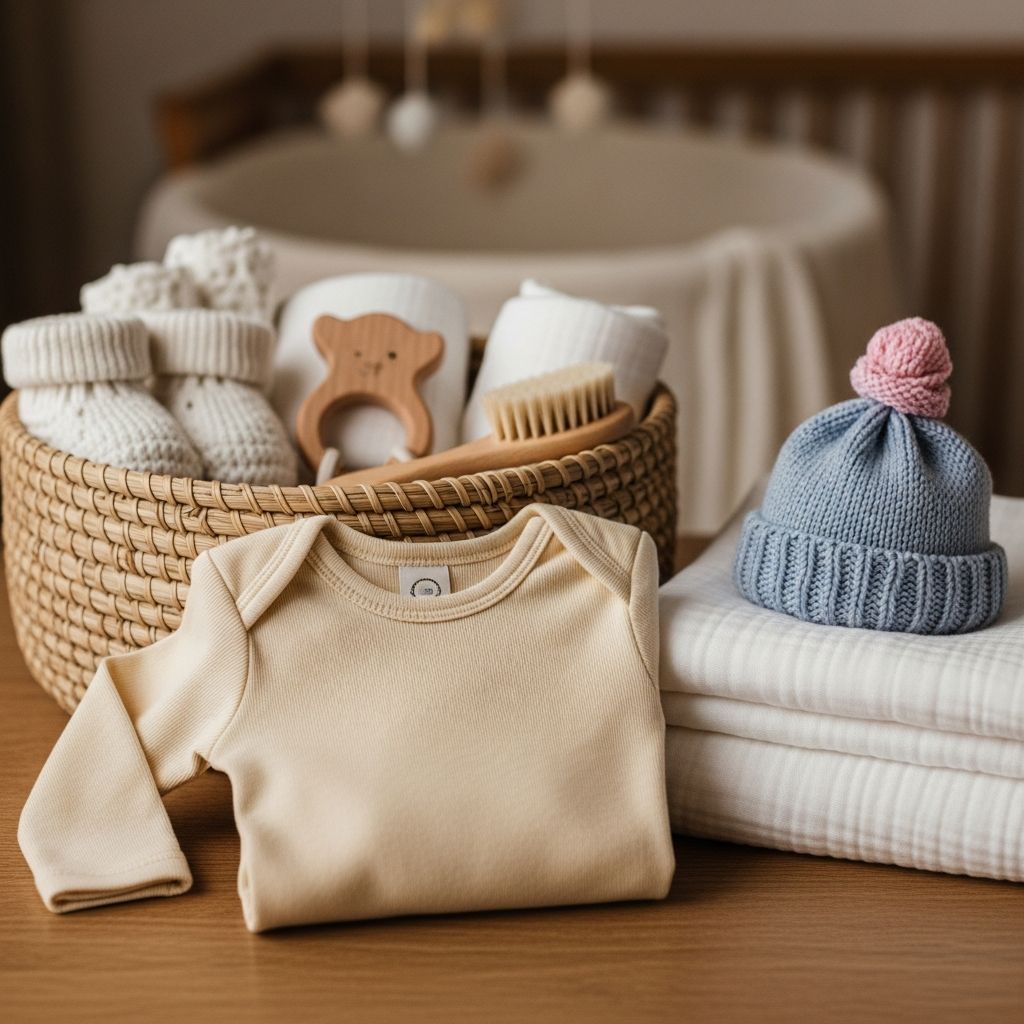
Fundamental clothing staples include one-piece footie pajamas or sleep-and-play outfits that simplify nighttime changes. Multiple onesies in both short-sleeved and long-sleeved options work as layering pieces or standalone garments. Soft, stretchy pants accommodate your baby’s comfort and diaper changes more easily than rigid materials. Plan for complete outfits numbering 10 to 12 sets, accounting for spit-up, diaper accidents, and the reality that you’ll sometimes change clothing multiple times daily.
Seasonal considerations matter significantly. Summer babies benefit from sun hats protecting delicate skin, while winter infants need hats, mittens, and snowsuits or snow sacks. Layering pieces including sweaters, cardigans, and zip-up jackets provide temperature flexibility. As your baby grows, socks, swim outfits for warmer months, and special occasion clothing complete a practical wardrobe.
Furniture and Room Organization
Creating a functional nursery involves selecting pieces that serve practical purposes and grow with your child. A crib remains the centerpiece, but supporting furniture makes the space work efficiently. A changing table with storage underneath keeps diaper supplies, wipes, and clothing organized at arm’s reach during changes. Alternatively, a dresser with a changing pad on top serves dual purposes, storing clothing while providing changing surface.
A comfortable seat—whether a glider, rocking chair, or reclined chair—provides a sanctuary for feeding, soothing, and bonding. This piece matters more than any other in terms of parental comfort during those lengthy newborn feeding and soothing sessions. Storage solutions including baskets, shelves, and organizers keep the room functional and items accessible. Soft lighting including a dimmer or lamp with adjustable brightness facilitates nighttime care without harsh overhead lights.
Wall decor, mobiles, and an activity mat contribute to the room’s aesthetic while supporting your baby’s visual development as they grow. Many families appreciate a hamper keeping soiled clothing organized and contained.
Mobility and Travel Equipment
Once you bring your baby home, venturing into the world requires specific gear ensuring safety and convenience. A travel system combining a car seat with stroller base streamlines transitions from vehicle to stroller. The car seat itself isn’t optional—it’s legally required for safe transportation and represents perhaps the most non-negotiable registry item.
A stroller matching your lifestyle becomes invaluable for daily outings and walks. Consider whether you need a full-size stroller for regular use, a compact travel stroller for vacations, or both. A hands-free baby carrier—whether a wrap, structured carrier, or hybrid design—enables you to hold your baby while maintaining free hands for other tasks. A play yard or portable crib provides safe enclosed space during travel or at other family members’ homes.
A diaper bag with multiple compartments and changing pad keeps supplies organized during outings. Some parents invest in portable stain removal pens or pre-treatment products for managing accidents away from home.
Supporting Items for Parent Wellness
While the focus naturally centers on your baby’s needs, many registries overlook items supporting parent comfort and recovery. A quality postpartum support pillow aids healing during recovery after birth. A comfortable chair or lounger in a main living area creates a dedicated space for feeding and soothing without requiring constant migration to the nursery.
Some parents appreciate registry items benefiting their own wellbeing, whether that’s a white noise machine for their bedroom, blackout curtains in their sleeping space, or other comfort items supporting their adjustment to parenting. A well-prepared home includes considerations for the entire family’s adjustment.
Determining Appropriate Registry Size and Scope
New parents often wonder how many items constitute an appropriate registry. A minimum starting point of 25 items with varied price points gives gift-givers meaningful options without overwhelming choices. However, registries containing 50 or more items prove entirely normal and help guide friends and family members toward genuinely useful gifts rather than duplicate items or impractical novelties.
Creating distinct price tiers—including budget-friendly options around $10 to $25, mid-range items between $25 and $75, and investment pieces over $75—accommodates different gift-giving preferences and budgets. This structure ensures that anyone wanting to contribute can do so meaningfully.
Category Summary Table
| Category | Key Items | Quantity Guide |
| Sleep Essentials | Crib, mattress, sheets, swaddles, monitor, blackout curtains | 3-5 fitted sheets, multiple swaddles |
| Feeding Supplies | Bottles, breast pump, nursing pillow, bibs, burp cloths | 10-16 bottles, 5-10 bibs, 5-10 burp cloths |
| Diapering | Diapers, wipes, rash cream, changing pad, caddy | Multiple boxes of various sizes, 2 rash creams |
| Bathing | Baby tub, thermometer, gentle wash, towels, washcloths | Multiple washcloths and towels |
| Clothing | Onesies, pajamas, pants, seasonal items | 10-12 complete outfits minimum |
| Furniture | Dresser, changing table, comfortable chair, storage | One comfortable chair essential |
| Travel & Mobility | Car seat, stroller, carrier, diaper bag, play yard | One complete travel system minimum |
Frequently Asked Questions
Q: What are the absolute must-haves that every registry should include?
A: The non-negotiable essentials include a safe crib with mattress and sheets, a car seat for safe transportation, diapers and wipes, basic clothing, bottles or breastfeeding equipment depending on your feeding plan, and a thermometer for health monitoring. These items address fundamental safety and daily care needs.
Q: How do I decide between a minimalist registry and including many items?
A: Consider your family’s lifestyle, available space, and how much you already own. A minimum registry should contain 25 items across essential categories, but 50+ items is normal. Include items you’ll genuinely use rather than aspirational pieces. Ask yourself whether each item solves a real problem or simply represents what you think you should have.
Q: Should I register for multiple copies of certain items?
A: Absolutely. Duplicates of frequently-used, washable items like sheets, burp cloths, bibs, and clothing reduce laundry frequency during the demanding newborn phase. Having backups means you’re not constantly doing loads. Plan for 3-5 crib sheets, 5-10 bibs, and similar quantities for other washables.
Q: Are luxury baby items worth including on a registry?
A: High-end items can be meaningful if they genuinely improve your daily experience—like a comfortable glider where you’ll spend hours feeding and soothing. However, many budget-friendly alternatives work equally well. Prioritize comfort for you and safety for your baby over brand names or trendy designs.
Q: What items do second-time parents need to add to their registries?
A: Second babies may need fewer clothing items and duplicate furniture, but fresh supplies of consumables like diapers, wipes, and creams remain essential. Some parents want updated gear reflecting new safety standards or personal lessons learned. Focus your second registry on items you didn’t have the first time that you wish you’d had, plus consumable replacements.
Q: How should I organize my registry to help gift-givers?
A: Organize by category (sleep, feeding, diapering, etc.) and price point. Include both low-cost items ($10-25) and investment pieces over $75. This structure helps people choose gifts matching their budget. Many registry platforms handle this automatically, but explicit organization ensures clarity.
Creating Your Personalized Registry Strategy
Building a comprehensive registry doesn’t mean including every possible item available. Instead, thoughtfully assess your family’s unique circumstances, living situation, and parenting philosophy. First-time parents benefit from asking experienced parents what items they genuinely used constantly versus what gathered dust. Many families discover that sometimes the simplest solutions work best, while strategic investments in comfort items—like a quality chair or reliable monitor—pay dividends across months of use.
Remember that registry creation represents an evolving process. You don’t need to finalize your complete list immediately. Many parents add items as they learn more about their preferences and specific needs. The goal isn’t accumulating maximum stuff; it’s building a thoughtfully curated collection that genuinely supports your family through this exciting transition.
References
- Baby Registry Checklist (Interactive + Printable PDF) — Babylist. Accessed April 2026. https://www.babylist.com/baby-registry-checklist
- Top Baby Registry Ideas: Essential Items for Your Newborn — Dreft. Accessed April 2026. https://www.dreft.com/en-us/parenting-tips/before-baby-arrives/baby-registry-checklist
- Baby Registry Checklist: The Ultimate Baby Registry List — Boppy. Accessed April 2026. https://www.boppy.com/blogs/boppy/must-have-baby-registry-items
- Baby Registry Must Haves — Taking Cara Babies. Accessed April 2026. https://www.takingcarababies.com/blogs/pregnancy/baby-registry-must-haves
- Baby Registry Checklist Must-Haves — The Bump. Accessed April 2026. https://www.thebump.com/a/registry-101
- The Ultimate Baby Registry Checklist for First Time Parents — Posh Peanut. Accessed April 2026. https://poshpeanut.com/blogs/news/the-ultimate-baby-registry-checklist-for-first-time-parents
- Baby Registry Basics — Lucie’s List. Accessed April 2026. https://www.lucieslist.com/baby-registry-basics/