Baby-proofing does not have to mean living in a plastic fortress. With a thoughtful plan and a realistic view of your baby’s development, you can create a safer home that still feels like home.
Start With How Babies Actually Explore
New parents are often told to baby-proof everything in sight, but not all risks are equal. Understanding how babies move, grab, and explore helps you focus on the hazards that matter most instead of buying every gadget on the shelf.
For roughly the first year or so, most household injuries come from a handful of patterns: falling from heights, getting into water, swallowing small objects or toxic substances, pulling heavy objects onto themselves, and discovering electricity and heat. Baby-proofing is really about interrupting those patterns before they happen.
- Newborns are mostly where you put them, so focus on sleep and safe arms-length care.
- Rollers and early sitters can unexpectedly reach edges, cords, and low shelves.
- Crawlers and early walkers turn every reachable surface, drawer, and door into an experiment.
The Big-Picture Safety Priorities
Instead of thinking in terms of rooms first, think in terms of risks. Once the major hazards are handled, the rest of your checklist becomes simpler and less overwhelming.
These four risk categories cover the vast majority of preventable injuries inside the home:
- Falls: Stairs, changing tables, beds, sofas, unstable furniture, and windows.
- Water: Bathtubs, toilets, buckets, pet bowls, and outdoor water features.
- Poisons and choking: Medications, cleaners, batteries, small objects, and coins.
- Heat and electricity: Hot surfaces, cords, outlets, and appliances.
Room-by-Room Risk Snapshot
The table below gives a quick overview of the kinds of hazards you are most likely to encounter in common rooms. Use it as a starting map, then tailor it to your actual home layout.
| Area | Primary Risks | Key Baby-Proofing Actions |
|---|---|---|
| Living room | Falls, sharp corners, heavy furniture tip-over | Secure furniture, pad corners, manage cords, create a safe play zone |
| Kitchen | Burns, cuts, poisons, heavy objects | Lock cabinets, move chemicals up high, use stove and oven safety devices |
| Bathroom | Drowning, slipping, medicines, cleaners | Lock storage, use toilet locks, non-slip mats, constant supervision in water |
| Nursery | Sleep safety, cords, tipping furniture | Safe crib setup, anchor dressers, keep cords and small objects away |
| Hallways & stairs | Falls, pinched fingers, doors | Install gates, use door stoppers, keep floors clear |
Step 1: Look at Your Home From Baby Height
Before buying anything, spend a few minutes literally getting on the floor. Scan each room from knee level downward. This view reveals exposed outlets, dangling cords, unstable furniture, and tempting low shelves that are easy to miss when standing upright.
As you crawl or sit at baby level, make a simple list rather than trying to fix everything at once. Group hazards into three categories: “do now” (serious risks like stairs and water), “do soon” (moderate risks like reachable drawers), and “nice to have” (cosmetic or low-likelihood hazards).
Step 2: Create a Safe Core Zone
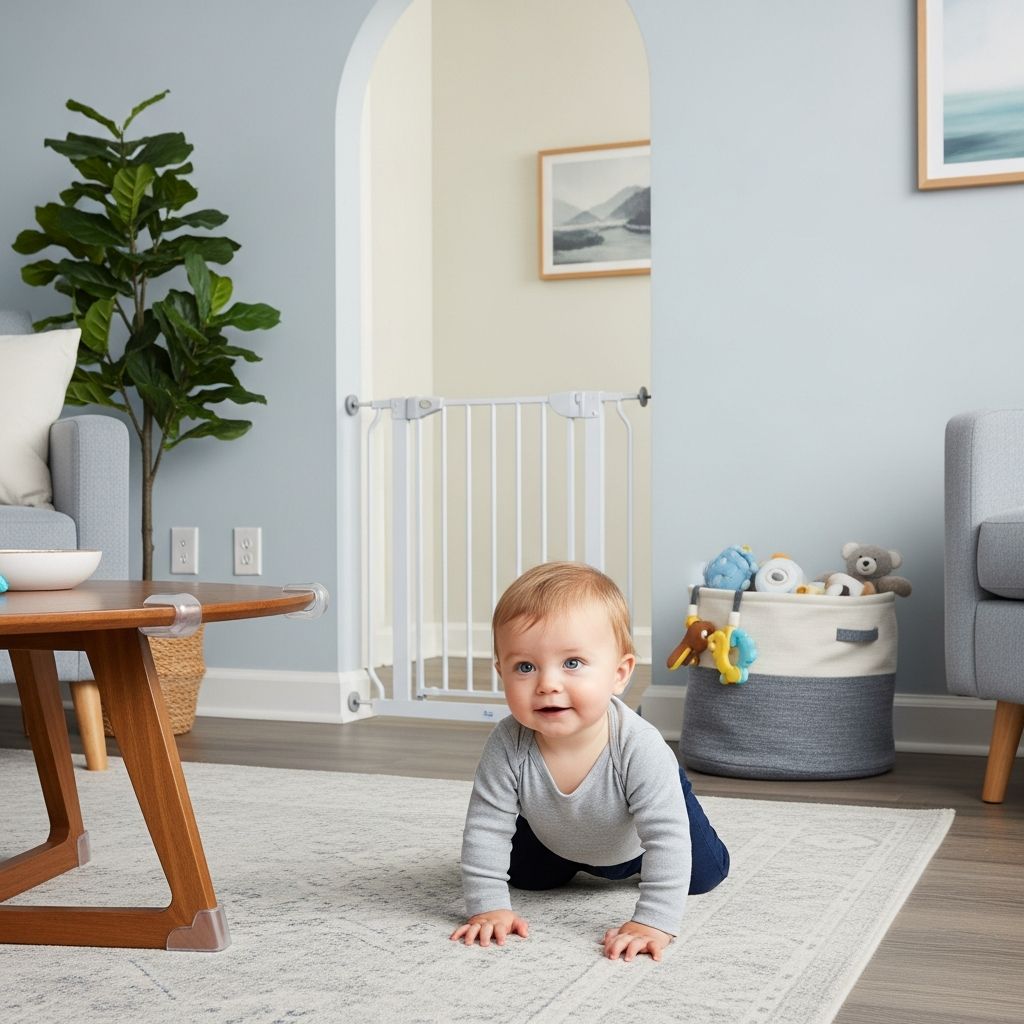
Instead of trying to make every inch of the house baby-friendly, choose one primary area where your baby spends the most awake time and make that space as safe and easy to supervise as possible. This might be a corner of the living room, a playroom, or a gated section of an open floor plan.
A well-designed safe zone lets you relax a bit more while your baby explores and plays. The rest of the house can then be handled in layers over time, rather than all at once in a weekend panic.
- Use a sturdy play yard or quality gates to define the boundaries.
- Clear small objects from low surfaces and shelves within the zone.
- Provide a soft floor surface, such as a rug or play mat, to cushion tumbles.
- Rotate a small selection of toys to keep the space engaging without clutter.
Step 3: Tackle the High-Impact Fixes First
Some safety upgrades dramatically reduce risk with minimal effort. Prioritize these before worrying about cosmetic details or minor annoyances. Once these are in place, you have covered the most likely sources of serious injury.
- Secure heavy furniture and TVs: Use wall anchors for dressers, bookcases, and large screens so they cannot tip if a child pulls or climbs.
- Block stair access: Install hardware-mounted gates at the top of stairs and either hardware- or pressure-mounted gates at the bottom, following installation instructions carefully.
- Cover electrical outlets: Use secure covers or built-in child-resistant outlet plates, and avoid small plug caps that can become choking hazards if removed.
- Relocate dangerous items up high: Store medicines, cleaning products, sharp tools, alcohol, and small batteries in high cabinets or locked boxes, not just behind a basic door.
- Manage cords and cables: Route them behind furniture, use cord clips, and shorten blind cords or replace window coverings that rely on long dangling strings.
Living Spaces: Making Everyday Areas Safer
Living rooms and family rooms are usually where babies first attempt crawling, cruising along furniture, and eventually taking wobbly steps. These spaces are also full of adult items that are not meant for small hands.
A few thoughtful adjustments go a long way without making your main living areas feel like a playroom.
- Use corner guards or soft bumpers on sharp coffee table or TV stand edges.
- Choose sturdy, heavy-bottomed lamps or secure them to reduce tipping risk.
- Move fragile decor, candles, and picture frames to higher shelves for a while.
- Bundle TV and electronics cables, keeping power strips out of reach or inside a covered box.
- Check for small decorative items (stones, beads, potpourri) that could pose choking risks.
Kitchen Safety Without Losing Your Mind
The kitchen combines nearly every type of common hazard in one place: heat, sharp objects, heavy cookware, glass, cleaning chemicals, and food that may not be safe for babies. The goal is not to make the kitchen child-free, but to prevent your baby from having unsupervised access while still letting family life function.
Think in terms of zones: a “no-baby” zone around the stove and oven, a locked zone for chemicals and breakables, and a supervised participation zone where your child can eventually sit or stand safely as they get older.
- Install latches or child-resistant locks on lower cabinets and drawers that store cleaners, knives, glassware, or heavy pots.
- Use rear stove burners when possible and turn pot handles in so small hands cannot grab them.
- Consider stove knob covers or child-lock features on ovens and cooktops.
- Store plastic bags, foil, and small appliances with accessible cords out of reach.
- Keep a clear rule that babies and toddlers do not play on the kitchen floor when cooking with hot surfaces.
Bathrooms: Small Rooms, Big Hazards
Bathrooms pack multiple risks into a small space, particularly water, medicines, and slippery surfaces. The single most important rule is that babies and toddlers are never left alone in or near water, not even for a moment.
Beyond supervision, a few simple changes can reduce everyday hazards and make bath time more relaxed.
- Store all medications, razors, cosmetics, and cleaning products in a high cabinet with a lock or child-resistant latch.
- Use a toilet lock if your baby can reach and open the lid, and keep toilet brushes and plungers out of sight.
- Place a non-slip mat in the tub and on the floor just outside the bath or shower.
- Remove electrical appliances like hair dryers from counters and unplug when not in use.
The Nursery: Safe Sleep and Calm Nights
Baby-proofing the nursery centers primarily on safe sleep and stable furniture. This is the room where your child may be alone the longest, so quiet hazards deserve extra attention even if the room looks orderly.
It can be tempting to decorate with pillows, blankets, and stuffed animals, but minimalism is safest for the crib, especially in the early months.
- Use a well-fitted mattress with a tight sheet and keep soft bedding and toys out of the crib for infants.
- Ensure that curtains, baby monitor cords, and blind cords are well away from the crib and changing area.
- Anchor dressers and bookshelves to the wall, and avoid placing heavy items on top where they could fall.
- Keep a small basket or box for tiny items like hair clips or batteries so they never sit loose on surfaces.
Hallways, Doors, and Stairs
Connecting spaces can be deceptively risky because adults pass through them quickly and often do not think of them as “rooms.” For a crawling or toddling baby, however, hallways and doorways are full of exploration potential.
Pay attention to how your home flows. The way doors open and where you place gates or rugs can either create or reduce fall and pinch hazards.
- Install sturdy baby gates at the top and bottom of staircases, secured as recommended by the manufacturer.
- Use door pinch guards to keep fingers from getting slammed in heavy doors.
- Keep floors free from loose rugs that slide easily or bunch up into tripping hazards.
- Place nightlights in corridors if older siblings or adults move around at night while the baby is beginning to walk.
When Safety Products Help (and When They Don’t)
The market is full of baby-proofing tools, and not all of them are necessary. A small collection of well-chosen products usually works better than a house full of rarely used gadgets.
Before buying, think about whether a product actually reduces risk or simply adds inconvenience. Sometimes rearranging furniture, moving an item to a higher shelf, or closing a door is more effective than installing a complicated device.
- Very useful for most homes: furniture anchors, quality gates, outlet covers, cabinet locks, corner bumpers, and non-slip mats.
- Useful in specific situations: oven knob covers, door handle covers, appliance locks, and blind cord wind-ups.
- Often optional: products that duplicate a simple rule (like constantly locking a door) or solutions for items you can easily store out of reach.
Baby-Proofing by Age and Stage
Your baby’s abilities change quickly, which means baby-proofing is not a one-time project. Instead, treat it as an evolving system that you adjust every few months as your child learns new skills.
Newborn to Rolling
During this stage, focus on safe sleep, safe arms, and safe surfaces. Most risk comes from falls from furniture and unsafe sleep environments, not from independent exploration.
- Always use a firm, flat sleep surface with no extra pillows or loose blankets.
- Never leave the baby unattended on couches, beds, or elevated changing pads.
- Begin keeping small objects, plastic bags, and cords away from any surface the baby uses.
Rolling to Crawling
Once babies can roll and pivot, they can reach edges and unexpected items even if they are not yet crawling. This phase is when low-level hazards become more important.
- Cover outlets, clear low shelves, and remove floor-level clutter.
- Block off stairs and dangerous rooms like the bathroom with gates or closed doors.
- Secure cords from lamps, blinds, and electronics where the baby plays.
Crawling to Early Walking
This is often the most intense exploration stage. Babies can suddenly reach doorknobs, pull themselves up on furniture, and grab items from higher surfaces than you expect.
- Double-check furniture anchors and gate installations and tighten if needed.
- Move breakables and heavy items on tables and counters further back from edges.
- Teach simple boundaries (“no touching” areas) while still assuming supervision is needed.
Keeping Perspective: Common Sense Over Perfection
No home can be made completely risk-free, and trying to eliminate every possible danger is exhausting and unrealistic. The goal of baby-proofing is to meaningfully lower the chances of serious injury, not to eliminate every bruise or tumble.
Regular supervision, calm routines, and age-appropriate expectations do as much for safety as any device in the store. Allowing your child to explore within thoughtfully set limits also helps them learn balance, problem-solving, and body awareness.
Frequently Asked Questions About Baby-Proofing
Do I need to baby-proof before my baby is born?
Most families benefit from doing a few basics before birth, such as planning a safe sleep setup, deciding where diapers will be changed, and moving obvious hazards like poisons and sharp objects out of easy reach. More detailed baby-proofing can wait until your baby begins rolling and moving independently.
Is it safe to rely only on supervision instead of devices?
Close supervision is essential and cannot be replaced by equipment, but humans are distracted and tired, especially with a baby in the house. Devices like gates, latches, and outlet covers are there to support your supervision, catching the moments when you turn away to answer the door, pick up a phone, or help a sibling.
How do I know if a baby-proofing product is worth buying?
Ask yourself three questions: Does it reduce the chance of a serious injury? Will it be used daily, not just occasionally? Can it be installed and used correctly in your specific home? If the answer is yes to all three, it is likely worth considering.
Do I need to baby-proof other people’s homes?
When visiting friends or relatives, it is not realistic to remodel their spaces, but you can take temporary precautions. Keep your baby in one supervised area, scan for small objects on the floor, move obvious hazards out of reach, and consider traveling with a portable play yard or a couple of outlet covers.
When can I start removing gates and locks?
There is no universal age, but you can gradually transition as your child shows consistent safe behavior, follows simple rules, and can safely navigate stairs or avoid certain rooms. Many families keep stair gates and cabinet locks in place well into the preschool years, especially if there are younger siblings or visiting children.
Baby-proofing works best when guided by calm observation instead of fear. Revisit your setup every few months, adjust as your child grows, and remember that a safe home is also one where everyone can breathe, move, and live comfortably together.