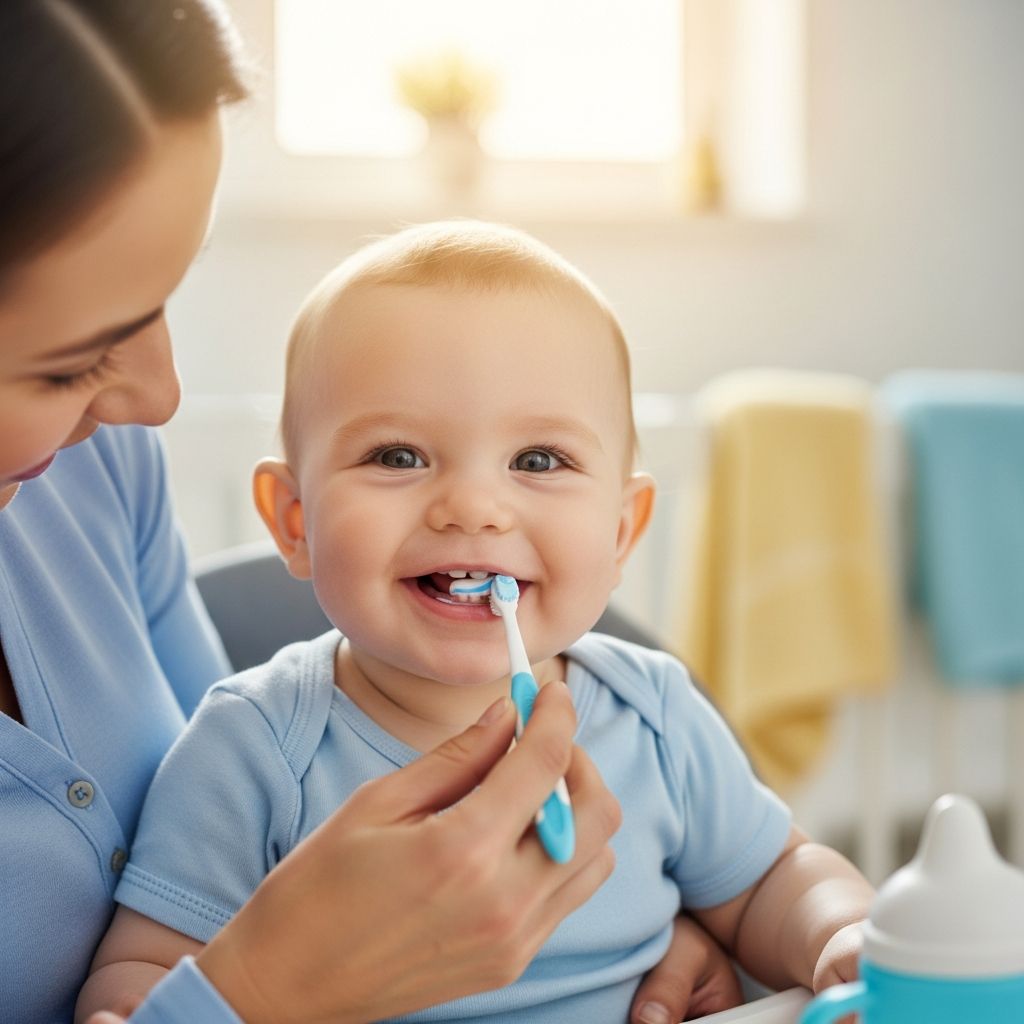
Establishing proper oral hygiene from infancy lays the foundation for your child’s dental health. Begin gentle gum cleaning shortly after birth and transition to brushing as teeth emerge around six months to ward off early decay.
Building Oral Care Habits from Day One
New parents often wonder about the right moment to introduce toothbrushing. Oral care starts before any teeth appear. Health authorities emphasize daily gum wiping with a clean, damp cloth to remove milk residue and bacteria, fostering familiarity with the routine.
This practice acclimates babies to touch in the mouth area, easing the shift to actual brushing. Perform it once daily, ideally during a calm time like after a feed or bath. By starting early, you normalize hygiene, reducing resistance later.
Recognizing the Arrival of First Teeth
Baby teeth typically erupt between 4-7 months, with lower front incisors first. Signs include drooling, fussiness, and gum swelling. Once a tooth breaks through, plaque can accumulate rapidly, risking decay even in primary teeth.
- Monitor gums daily for white tips signaling eruption.
- First teeth are smaller but enamel is thin, making them decay-prone.
- Aim for first dental visit by age 1 or six months post-eruption.
Selecting Age-Appropriate Brushing Tools
Choose tools designed for tiny mouths to ensure safety and effectiveness. Soft-bristled, small-headed infant toothbrushes prevent gum irritation. Silicone fingertip brushes offer control for newborns.
| Age Stage | Recommended Tool | Key Features |
|---|---|---|
| 0-6 months (no teeth) | Damp washcloth or silicone finger brush | Gentle, no bristles needed |
| 6-12 months (first teeth) | Infant toothbrush | Soft bristles, tiny head, handle grip |
| 1-3 years | Toddler toothbrush | Rounded bristles, fun designs |
Replace brushes every 3 months or after illness to maintain hygiene.
Mastering the Brushing Technique Step-by-Step
Proper method ensures thorough cleaning without overwhelming your child. Brush twice daily: morning and bedtime, for two minutes total.
- Wet the brush; apply minimal toothpaste if age-appropriate.
- Position at 45-degree angle to gums.
- Use gentle circular motions on all tooth surfaces and gumline.
- Avoid rinsing to retain fluoride benefits.
- Supervise until age 7-8 for complete coverage.
Make it interactive: sing songs or use timers. For wiggly babies, lay them back on your lap with head supported.
Understanding Fluoride’s Role in Baby Oral Health
Fluoride strengthens enamel, but amounts vary by age. Pre-1 year: water only. Ages 1-3: rice-grain smear of fluoride paste. Ages 3+: pea-sized.
Overuse risks fluorosis (mottled enamel), so measure precisely. Smearing allows safe swallowing in small quantities. Consult pediatric dentists on water fluoridation levels.
Key Tip: Never use adult toothpaste; it contains excessive fluoride.
Addressing Common Hurdles in Infant Brushing
Resistance is normal. Strategies include:
- Model behavior: Brush together, letting baby hold a brush.
- Fun elements: Use flavored (mild) pastes, character brushes, or toy demos.
- Routine integration: Pair with stories or songs for positivity.
- Patience: Short sessions build to full time; praise efforts.
If aversion persists, seek dentist advice for potential sensory issues.
Importance of Early Dental Examinations
Schedule first checkup by first birthday. Pediatric dentists assess development, apply sealants if needed, and guide parents.
Early visits detect issues like bottle decay from prolonged milk exposure. Twice-yearly cleanings normalize dental care.
Preventing Cavities Through Diet and Habits
Diet impacts teeth: limit sugars, avoid bedtime bottles with juice/milk. Wipe gums post-feeding.
- Offer water after meals.
- Breastfeed or bottle-feed upright; wean night feeds by 12 months.
- Introduce sippy cups by 1 year, transitioning to open cups.
Flossing Introduction for Growing Smiles
Start flossing when teeth touch, often by 2-3 years. Use child flossers or threaders for interproximal cleaning.
Gentle daily flossing prevents hidden decay. Demonstrate on your teeth first.
Long-Term Benefits of Consistent Care
Primary teeth guide permanent ones; poor care leads to misalignment, speech issues. Early habits correlate with lifelong compliance.
By age 6, when independence grows, routines are ingrained.
Frequently Asked Questions
What if my baby has no teeth by 12 months?
Continue gum cleaning; consult dentist if delayed eruption, as it may signal issues.
Is fluoride safe for babies under 2?
Yes, in tiny smears; it prevents decay without harm when used correctly.
How do I know if brushing is effective?
No visible plaque, fresh breath, dentist confirmation during checkups.
Can I use electric brushes for infants?
Wait until age 3+; manual suffices and teaches technique.
What causes baby bottle tooth decay?
Sugary liquids pooling during sleep; prevent with water at bedtime.
References
- When to Start Brushing Baby Teeth: A Parent’s Complete Guide — Center for Pediatric Dentistry. 2023. https://cpdaugusta.com/when-to-start-brushing-baby-teeth/
- Tips for Brushing Baby & Toddler Teeth — Hurst Pediatric Dentistry. 2023. https://hurstpediatricdentistry.com/blog/tips-for-brushing-baby-toddler-teeth/
- When Should I Begin to Brush My Baby’s Teeth? — Nicklaus Children’s Hospital. 2023-02-09. https://www.youtube.com/watch?v=7PCjHA8BDEI
- When (And How) To Start Brushing Baby Teeth — Cabezon Kids Dentistry. 2023. https://www.cabezonkidsdentistry.com/when-and-how-to-start-brushing-baby-teeth/
- When to Start Brushing Baby Teeth: A Guide to Kids’ Oral Care — CVS Health. 2023. https://www.cvs.com/learn/health/childrens-health/brushing-baby-teeth
- Toothbrushing – Children 0-6 Years — Better Health Channel (Victorian Government). 2023. https://www.betterhealth.vic.gov.au/health/conditionsandtreatments/toothbrushing-children