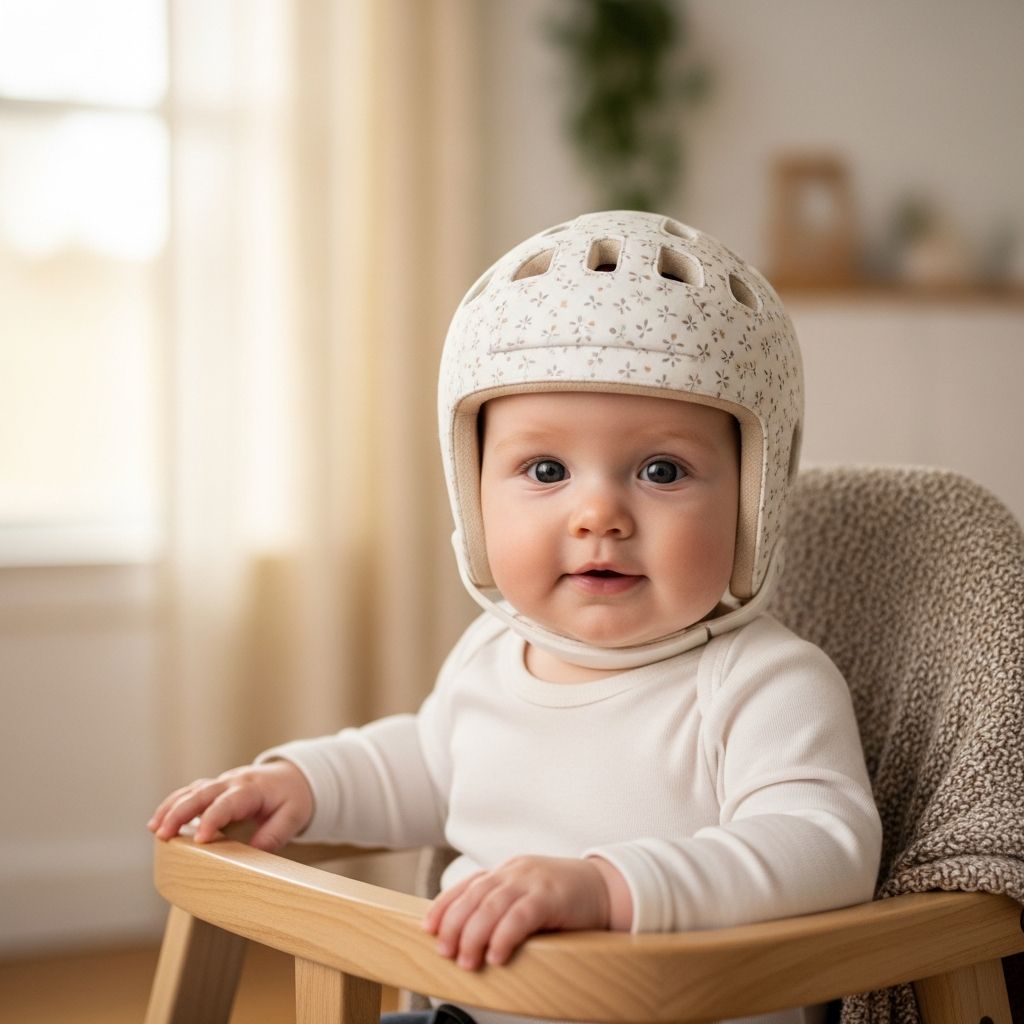
Helmet therapy, also known as cranial orthosis, helps correct abnormal head shapes in infants by guiding skull growth during rapid development phases. This non-invasive treatment addresses common issues like flat spots on the head, ensuring better symmetry and appearance without impacting brain function.
Common Head Shape Issues in Infants Requiring Helmets
Infants’ skulls are soft and pliable, composed of flexible plates connected by sutures that allow for quick brain growth in the first year. External pressures can deform these plates, leading to conditions treatable with helmets.
- Plagiocephaly: Asymmetrical flattening on one side of the back of the head, often from consistent positioning favoring one direction.
- Brachycephaly: Wide flattening across the back, typically from prolonged supine sleeping.
- Dolichocephaly: Elongated, narrow head shape, sometimes seen in premature infants or those in NICUs.
- Scaphocephaly: Similar to dolichocephaly but more pronounced, requiring targeted reshaping.
These positional deformities affect up to 1 in 5 infants due to safe sleep recommendations, but most resolve with repositioning; severe cases benefit from helmets.
More Serious Conditions: Craniosynostosis and Helmet Use
Craniosynostosis involves premature fusion of skull sutures, restricting brain growth and causing irregular shapes. Unlike positional issues, it often requires surgery, with helmets used post-operatively to maintain results between procedures or support healing.
This rare condition (1 in 2,000 births) demands early intervention to prevent developmental complications. Helmets post-surgery direct growth into corrected areas.
Root Causes Behind Infant Skull Deformities
Several factors contribute to head shape issues, many preventable through early habits.
| Cause | Description | Risk Factors |
|---|---|---|
| Sleep Positioning | Back sleeping, recommended to reduce SIDS, pressures the occiput. | Exclusive supine sleep without tummy time. |
| Torticollis | Tight neck muscles limit head turning, causing one-sided preference. | Present at birth or from positioning. |
| Prematurity | Soft skulls in NICUs endure prolonged pressure from medical equipment. | Low birth weight, extended hospital stays. |
| In-Utero Constraints | Tight positioning or multiples compress the skull before birth. | Firstborns, twins. |
| Craniosynostosis | Genetic or syndromic early suture fusion. | Family history, rare syndromes. |
Addressing these early with tummy time (starting day one, building to 30-60 minutes daily) can prevent 90% of cases.
The Science of How Cranial Helmets Reshape Skulls
Custom helmets feature a rigid outer shell and foam liner molded to the infant’s head via 3D scans. They restrict growth in protruding areas while permitting expansion in flattened spots, harnessing natural brain growth (1 cm/week in first months).
Treatment efficacy peaks between 4-6 months when growth is fastest; by 12 months, sutures begin hardening, reducing plasticity. Helmets are adjusted biweekly as heads grow 1-2 cm monthly.
Step-by-Step Process: Getting and Starting Helmet Therapy
- Initial Assessment: Pediatrician screens at well-visits using calipers or scans for asymmetry (e.g., cephalic index >93% for brachycephaly).
- Specialist Referral: Orthotist performs 3D optical scan for precise measurements, evaluating severity and neck mobility.
- Custom Fabrication: Helmet designed in 1-2 weeks, fitting like a second skin with open face/eyes for comfort.
- Fitting and Initiation: Worn 23/24 hours from 4-8 months ideal; duration 2-6 months based on progress.
- Follow-Ups: Weekly/monthly scans track correction (aim: 70-90% improvement).
Not all cases need helmets; mild deformities (<10mm asymmetry) often self-correct with repositioning.
Daily Life with a Baby Helmet: Practical Tips for Parents
Adapting takes time, but consistency yields results. Babies acclimate in 1-2 weeks.
- Wear Schedule: Continuous except baths; secure with straps, ensure no gaps.
- Cleaning Routine: Wash liner daily with mild soap, air-dry overnight; full deep clean weekly.
- Skin Care: Check for redness hourly; use barrier cream if irritated; rotate positions.
- Activity Integration: Safe for feeding, sleeping, tummy time; avoid direct sun (use hat over).
- Travel/Outings: Stroller-compatible; inform caregivers of protocol.
Summer heat increases sweat—opt for breathable liners; winter padding prevents chafing.
Potential Challenges and Solutions in Helmet Therapy
Parents report sweat, odor, and social curiosity, but benefits outweigh hurdles.
- Sweating/Overheating: Use fans, lightweight clothing; some helmets have ventilated models.
- Skin Irritation: Frequent checks, petroleum jelly; consult if persistent.
- Baby Distress: Gradual introduction, distractions like toys.
- Cost/Insurance: $2,000-$4,000; many plans cover with medical necessity.
- Social Stigma: Educate others—”It’s temporary for healthy growth.”
Compliance >90% wear time is key; apps track hours.
Expected Outcomes, Effectiveness, and Long-Term Impact
Studies show 70-95% correction in severe cases starting early; untreated mild cases often normalize by school age, but severe asymmetry may persist cosmetically. Helmets improve eyewear/bike helmet fit later and boost parental confidence in appearance.
No evidence links helmets to developmental delays; brain growth proceeds unaffected.
Prevention Strategies: Avoiding the Need for Helmets
Proactive steps reduce risk dramatically.
- Alternate head positions during sleep.
- Daily tummy time from birth.
- Carry upright, vary carrier positions.
- Limit time in swings/car seats.
- Physical therapy for torticollis.
Frequently Asked Questions About Baby Helmet Therapy
At what age is helmet therapy most effective?
Best between 4-6 months; ineffective after 12 months as skull hardens.
Does wearing a helmet hurt my baby?
No, it’s painless; babies adjust quickly without discomfort.
How long must the helmet be worn daily?
23 hours, removable only for bathing; full-time for optimal results.
Will my insurance cover the helmet?
Often yes for documented moderate-severe cases; check policy.
Can helmet therapy affect brain development?
No, it only shapes the exterior skull during natural growth.
What if we skip helmet therapy?
Mild cases self-resolve; severe may leave permanent asymmetry.
References
- How Does Helmet Therapy Help Babies? — Hackensack Meridian Health. 2023-09-14. https://www.hackensackmeridianhealth.org/en/healthu/2023/09/14/how-does-helmet-therapy-help-babies
- Why Do Babies Wear Helmets? (Helmet Therapy & Your Baby) — Cleveland Clinic. Accessed 2026. https://my.clevelandclinic.org/health/treatments/baby-helmet-for-flat-head
- Does My Baby Need A Cranial Remolding Helmet? — Applied Biomechanics. Accessed 2026. https://appliedbiomechanics.com/articles/does-my-baby-need-cranial-remolding-helmet/
- Helmet Therapy — Shriners Children’s. Accessed 2026. https://www.shrinerschildrens.org/en/pediatric-care/helmet-therapy
- Why Do Some Babies Wear Helmets? — WebMD. Accessed 2026. https://www.webmd.com/baby/why-do-some-babies-wear-helmets
- Baby Helmet Therapy: Parent FAQs — HealthyChildren.org (American Academy of Pediatrics). Accessed 2026. https://www.healthychildren.org/English/health-issues/conditions/Cleft-Craniofacial/Pages/Baby-Helmet-Therapy-Parent-FAQs.aspx