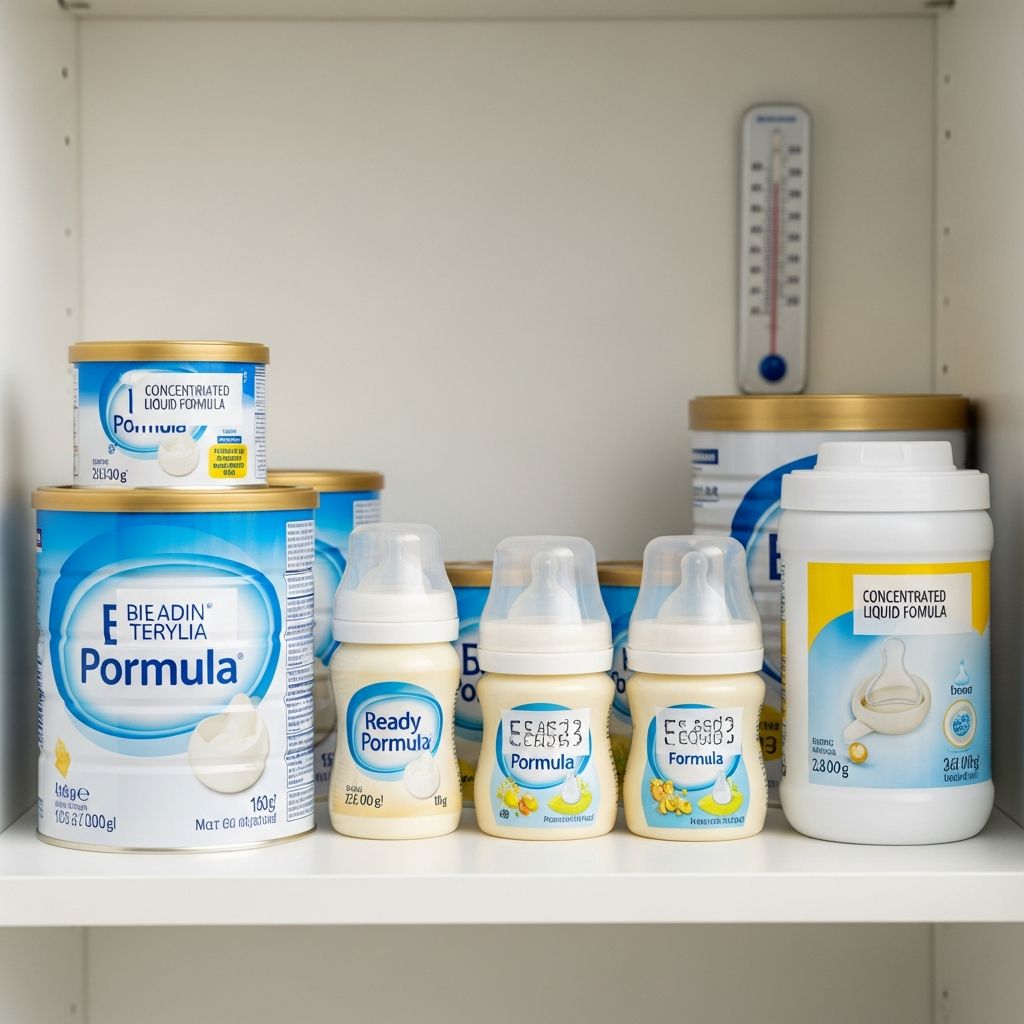
Properly storing baby formula is crucial for maintaining its nutritional value and preventing bacterial contamination that could harm infants. Whether using powdered, concentrated liquid, or ready-to-feed varieties, parents must follow strict guidelines to ensure safety. This comprehensive guide covers all aspects of formula handling, from pantry storage to refrigeration and safe disposal practices.
Understanding Different Types of Infant Formula
Infant formulas come in three primary forms, each with unique storage requirements. Powdered formula is the most common, mixed with water before feeding. Concentrated liquid requires dilution, while ready-to-feed options are pre-mixed and convenient for on-the-go use. Recognizing these differences helps parents apply the correct storage rules.
- Powdered formula: Dry powder that must be reconstituted; not sterile and requires careful handling.
- Concentrated liquid: Needs equal parts water; sterile until opened.
- Ready-to-feed: Sterile liquid in bottles or cartons; no mixing needed.
Storing Unopened Formula Containers
Unopened formula should be kept in a cool, dry indoor location away from heat sources, direct sunlight, and moisture. Ideal spots include kitchen cabinets or pantries, but avoid garages, vehicles, or areas near stoves and ovens where temperatures fluctuate.
Check the “Use By” or expiration date before purchase and use. Formulas past this date may lose nutritional quality and safety, so discard them immediately. Stock rotation is key: place newer cans behind older ones to use the freshest product first.
| Formula Type | Ideal Storage Temperature | Max Shelf Life Unopened |
|---|---|---|
| Powdered | Cool, dry (below 85°F) | Until “Use By” date |
| Concentrated Liquid | Cool, dry | Until “Use By” date |
| Ready-to-Feed | Cool, dry | Until “Use By” date |
Handling Opened Formula Powder
Once opened, powdered formula must be stored in a cool, dry place with the lid tightly sealed. Do not refrigerate or freeze the powder, as moisture causes clumping and spoilage. Most brands recommend using opened powder within 1 month; note the opening date on the container for tracking.
Avoid humid areas like near sinks or refrigerators. Keep the scoop dry and store it outside the powder to prevent contamination. If the powder smells off, clumps excessively, or shows signs of insects, discard it.
Refrigeration Rules for Prepared and Liquid Formulas
Prepared powdered formula or opened concentrated/ready-to-feed liquids require prompt refrigeration at 35-40°F (2-4°C). Cover bottles tightly and place them at the back of the fridge where it’s coldest.
- Powdered formula (prepared): Use within 24 hours refrigerated.
- Concentrated or ready-to-feed (opened): Up to 48 hours refrigerated.
Never freeze prepared formula, as it alters texture and nutrient quality. Warm refrigerated formula gently in warm water, not a microwave, to avoid hot spots.
Room Temperature Limits and Feeding Safety
Prepared formula left at room temperature should be discarded after 2 hours total, or 1 hour once feeding starts. Baby saliva introduces bacteria that multiply rapidly in formula.
During hot weather or travel, these times shorten due to faster bacterial growth. Use insulated coolers with ice packs for outings, but still adhere to the 2-hour rule.
| Scenario | Discard After |
|---|---|
| Preparation to fridge | 2 hours |
| Feeding begins | 1 hour |
| Refrigerated prepared powder | 24 hours |
| Refrigerated liquid (opened) | 48 hours |
Preparation Best Practices Before Storage
Always use water at 158°F (70°C) or hotter for powdered formula to kill bacteria like Cronobacter, then cool before feeding. Sterilize bottles, nipples, and utensils. Measure powder accurately using the provided scoop leveled off.
Follow label instructions precisely—too much or too little powder affects nutrition. For emergencies, FDA advises against powdered formula if sterile options are available.
Travel and Emergency Storage Tips
For travel, pack unopened formula and prepare fresh as needed. Use single-serve ready-to-feed packets for convenience. In power outages, prioritize fridge contents and discard prepared formula after 4 hours without cooling.
Label all bottles with preparation date and time. In childcare settings, follow strict labeling and first-in-first-out rules.
Common Mistakes and How to Avoid Them
Parents often refrigerate powder, save partially used bottles post-feeding, or ignore expiration dates. These errors risk bacterial growth like Salmonella or E. coli.
- Mistake: Reusing leftover formula after feeding.
Fix: Discard immediately. - Mistake: Storing powder in fridge.
Fix: Keep dry in pantry. - Mistake: Freezing prepared formula.
Fix: Never freeze.
Special Considerations for Vulnerable Infants
Premature babies, immunocompromised infants, or those with health issues should use sterile liquid formulas preferentially. Consult pediatricians for personalized advice.
Frequently Asked Questions (FAQs)
Can I refrigerate powdered formula?
No, refrigeration introduces moisture leading to clumping and spoilage. Store opened powder in a cool, dry pantry.
How long can I keep prepared formula in the fridge?
Powdered: 24 hours max. Liquid concentrate or ready-to-feed: 48 hours.
What if my baby doesn’t finish a bottle?
Discard after 1 hour from start of feeding due to saliva bacteria.
Is it safe to warm formula in a microwave?
No, it creates hot spots. Use warm water bath instead.
How do I know if formula is spoiled?
Check for off smells, unusual color, clumps, or expiration. When in doubt, throw it out.
Adhering to these storage protocols ensures your baby receives safe, nutritious feeds. Always consult your healthcare provider for specific concerns.
References
- Infant Formula Preparation and Storage — Centers for Disease Control and Prevention (CDC). 2023-10-01. https://www.cdc.gov/infant-toddler-nutrition/formula-feeding/preparation-and-storage.html
- Baby Formula Storage Guidelines — Enfamil. 2024-05-15. https://www.enfamil.ca/blogs/formula-feeding-and-supplementing-centre/baby-formula-storage-guidelines
- Formula Storage Guidelines and Safety Tips — Kendamil. 2024-02-20. https://us.kendamil.com/blogs/blog/formula-storage-guidelines-and-safety-tips
- Chapter 4: Handling and Storing Breastmilk and Infant Formula — USDA Food and Nutrition Service. 2022-08-01. https://fns-prod.azureedge.us/sites/default/files/resource-files/FI_Ch4_HandleandStore.pdf
- Safe Preparation, Storage and Handling of Powdered Infant Formula — World Health Organization (WHO). 2007-04-30. https://www.who.int/publications/i/item/9789241595414