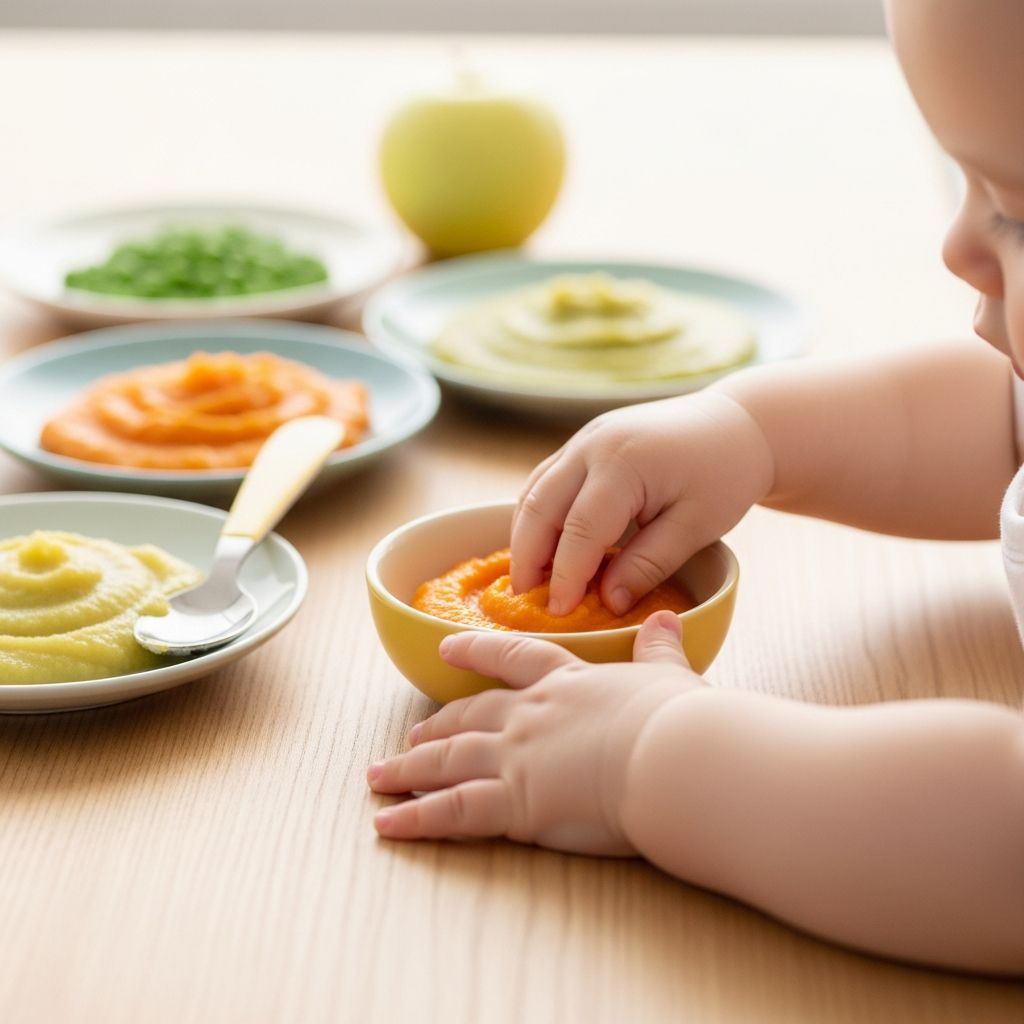
Food allergies affect a notable number of infants, with symptoms ranging from mild discomfort to severe reactions that demand immediate attention. Early recognition by parents can prevent complications and support healthy development.
Understanding Food Allergies in Infants
Food allergies occur when the immune system mistakenly identifies proteins in food as harmful, triggering a response. In babies, this often manifests during the introduction of solids or formula changes. Unlike intolerances, which cause digestive issues without immune involvement, true allergies can lead to rapid-onset symptoms.
The prevalence of certain allergies, like cow’s milk protein allergy (CMPA), impacts around 0.51% of U.S. infants, though broader food allergies are more common. Infants’ immature immune systems make them particularly susceptible, especially those with a family history of atopy or conditions like eczema.
Common Triggers for Baby Food Allergies
Several foods frequently provoke allergic responses in young children. Cow’s milk tops the list, particularly in non-IgE mediated forms affecting the gut. Other common culprits include:
- Soy proteins, often cross-reacting with milk allergens.
- Eggs, peanuts, and tree nuts, which can cause IgE-mediated reactions.
- Wheat, fish, and shellfish, though less common in the first year.
For delayed reactions like FPIES, triggers extend to rice, oats, poultry, and vegetables such as peas or potatoes. Breastfed babies may react to allergens passed through maternal diet, emphasizing the need for monitoring even before solids.
Recognizing Mild Allergic Reactions
Mild symptoms often appear within minutes to two hours of exposure and include isolated signs that resolve with avoidance. Parents should watch for:
- Itchy or runny nose, sneezing.
- Mild mouth itching or a few hives.
- Single vomiting episode or slight nausea.
These warrant stopping the food and consulting a pediatrician. Eczema flares can also signal allergy, particularly if widespread rather than contact-limited. Distinguishing from irritant rashes—those from acidic fruits like citrus, which fade quickly after cleaning—is key.
Severe and Life-Threatening Symptoms
Severe reactions involve multiple systems and require urgent care. In infants, anaphylaxis may present differently than in adults, with prominent skin and gut issues over respiratory ones. Key signs include:
- Widespread hives, facial swelling, or lip puffiness.
- Repetitive vomiting, diarrhea, or wheezing.
- Lethargy, pale/blue skin, or poor head control.
FPIES, a delayed severe form, strikes 1-5 hours post-ingestion with profuse vomiting, dehydration, and shock in 20% of cases. Hypotonia or hypothermia signals emergency intervention.
| Symptom Type | Mild Examples | Severe Examples |
|---|---|---|
| Skin | Few hives, mild itch | Widespread rash, angioedema |
| Gut | Single vomit, nausea | Repetitive vomiting, bloody stools |
| Respiratory | Runny nose | Wheezing, throat tightness |
| Systemic | – none – | Lethargy, hypotension, shock |
This table summarizes symptom progression, aiding quick parental assessment.
Non-IgE Mediated Allergies Explained
Unlike immediate IgE reactions, non-IgE types like CMPA or food protein-induced allergic proctocolitis cause delayed gut symptoms: pain, flatulence, diarrhea, or bloody stools. Eosinophilic disorders, such as enteropathies or esophagitis (EoE), may lead to reflux, food refusal, or growth faltering. Biopsies confirm EoE with ≥15 eosinophils per high-power field.
Resolution often follows allergen elimination, with milk restriction alleviating symptoms in 4-6 weeks for CMPA.
Diagnostic Approaches for Infants
Diagnosis starts with a thorough history: symptom timing, food amounts, and family allergies. No single test confirms allergy; skin prick tests or blood IgE levels indicate sensitization but not clinical allergy.
The gold standard, double-blind food challenge, is risky for infants and rarely first-line. For FPIES or EoE, history and endoscopy guide diagnosis. Pediatric allergists review patterns to avoid unnecessary restrictions.
Management and Treatment Strategies
Avoidance is primary: eliminate confirmed triggers while ensuring nutrition via hypoallergenic formulas. For anaphylaxis risk, epinephrine auto-injectors are prescribed, with parents trained in use.
Many outgrow allergies—50% resolve IgE-CMPA by age 5. Early introduction of allergens under guidance may build tolerance, per expert consensus.
Prevention Tips for Parents
Introduce solids around 6 months, starting small with one new food every 3-5 days. High-risk families may benefit from allergist-supervised early peanut exposure. Monitor breastfed infants for maternal diet links.
Maintain growth records; failure to thrive signals issues. Educate on emergency plans, including 911 calls for severe symptoms.
Frequently Asked Questions (FAQs)
Can food allergies cause bloody stools in babies?
Yes, non-IgE CMPA or proctocolitis often presents with blood-streaked stools, resolving with milk elimination.
How soon after eating do allergy symptoms start?
IgE reactions within minutes to 2 hours; FPIES 1-5 hours later.
Is eczema always a food allergy sign?
No, only about one-third of moderate-severe cases link to food; assess with a doctor.
What if my baby has mild hives from a new food?
Stop the food, observe, and contact your pediatrician; discard if severe.
Do all babies outgrow food allergies?
Many do, especially milk and egg by school age, but monitoring is essential.
Long-Term Outlook and Support
With proper management, allergic infants thrive. Regular allergist follow-ups track tolerance. Parental education reduces anxiety and errors.
(Word count: 1678)
References
- Food Allergies and Intolerances in Newborns and Infants — American Academy of Pediatrics (AAP). 2023. https://www.aap.org/en/patient-care/newborn-and-infant-nutrition/food-allergies-and-intolerances-in-newborns-and-infants/
- Symptoms of Allergic Reactions in Babies — Solid Starts. 2024. https://solidstarts.com/symptoms-of-allergic-reactions/
- Diagnosing Food Allergies — Nationwide Children’s Hospital. 2023. https://www.nationwidechildrens.org/specialties/allergy-and-immunology/food-allergy-treatment-center/diagnosing-food-allergies
- Food Allergy Anaphylaxis in Infants and Toddlers — Asthma and Allergy Foundation of America (AAFA). 2022. https://aafa.org/asthma-allergy-research/our-research/food-allergy-anaphylaxis-in-infants/
- Food Allergy – Diagnosis and Treatment — Mayo Clinic. 2025-01-10. https://www.mayoclinic.org/diseases-conditions/food-allergy/diagnosis-treatment/drc-20355101
- Infancy — Food Allergy Research & Education (FoodAllergy.org). 2024. https://www.foodallergy.org/resources/infancy
- Food Allergies: Causes, Common Examples & Cures — Cleveland Clinic. 2024. https://my.clevelandclinic.org/health/diseases/9196-food-allergies