Understanding your infant’s developmental journey is one of the most rewarding aspects of parenthood. From the moment your baby arrives, remarkable changes occur week by week and month by month. Each milestone represents not just physical growth, but the blossoming of cognitive abilities, emotional awareness, and communication skills. This guide explores the typical developmental progression babies experience during their first year, helping parents recognize important achievements and know when to seek professional guidance.
The Newborn Phase: Birth to Two Months
During the earliest weeks of life, your newborn is adjusting to the world outside the womb while establishing fundamental patterns of eating, sleeping, and interacting with caregivers. The first month brings primarily reflexive movements—jerky, uncoordinated actions that are entirely normal. Your baby’s muscles are gradually strengthening, setting the foundation for controlled movement.
Physical Development in Early Weeks
Newborns exhibit limited voluntary control over their body. Their neck muscles are particularly weak, which is why supporting the head during handling is crucial. By the end of the second month, however, most babies begin demonstrating noticeable improvements in muscle tone. When held upright, a two-month-old typically shows the ability to hold their head steady for brief periods. During tummy time—an important daily practice—your infant may briefly lift their head, strengthening the neck, shoulder, and upper back muscles essential for future developmental achievements.
Communication and Social Bonding
Newborns communicate almost exclusively through crying, but this changes rapidly. By two months of age, babies often begin “cooing”—repeating soft vowel sounds in response to your voice or gentle interaction. This early vocalization marks the beginning of language development. Babies also start recognizing their parents’ faces and voices, showing preference for familiar caregivers. Around two months, you’ll likely notice your baby responding with a genuine social smile, a developmental milestone that strengthens the emotional bond between parent and child.
The Three-Month Transition: Growing Strength and Awareness
By three months, your baby has progressed significantly from the newborn phase. Movements become less jerky and more purposeful, and awareness of the surrounding world expands noticeably. This period marks a transition toward greater control and intention in physical activity.
Motor Skill Advancement
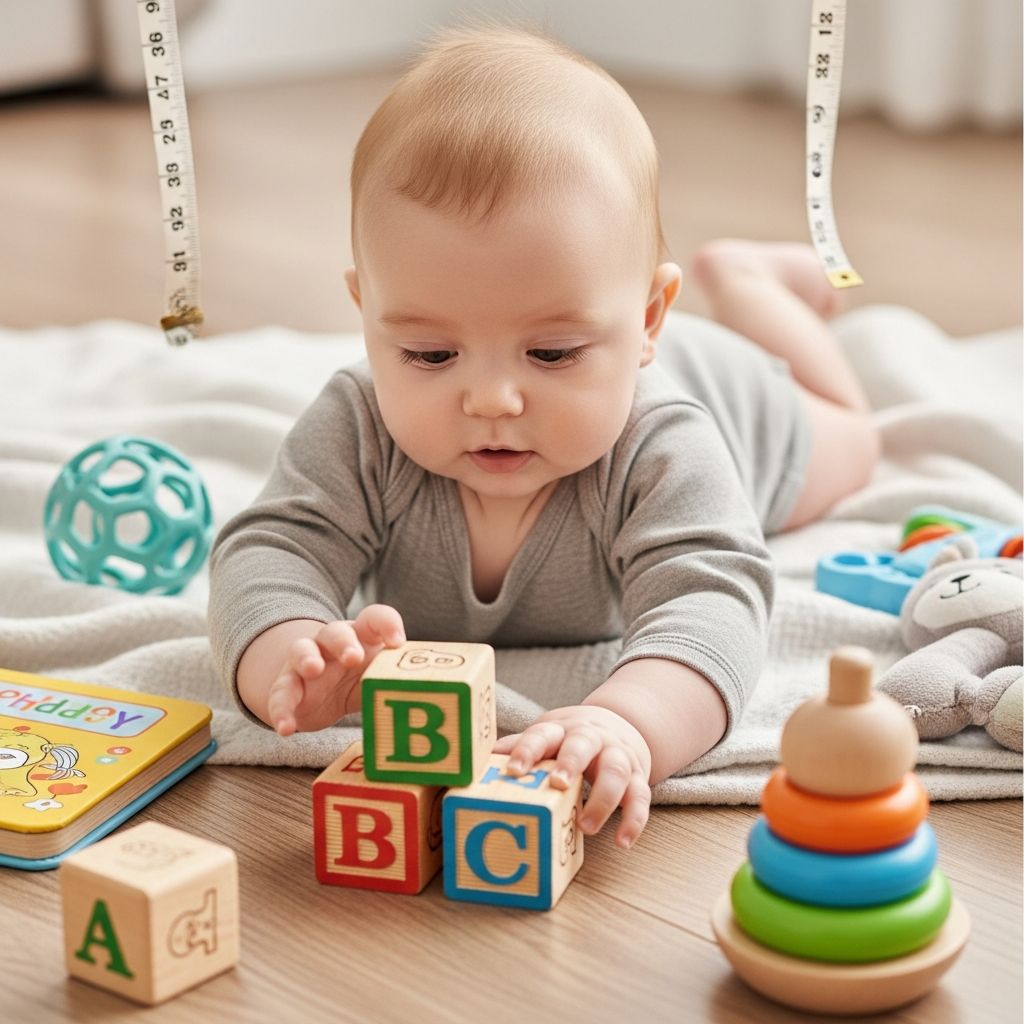
Three-month-olds typically demonstrate improved head control and the ability to lift their chest while lying on their stomach, supported by their forearms. They begin studying their own hands with fascination, discovering these appendages and learning they can control them. By the end of month three, many babies can grasp toys intentionally and bring them to their mouth for exploration. This oral exploration is a normal and healthy part of cognitive development, as babies learn about objects through taste and touch.
Cognitive and Communicative Growth
Three-month-old infants are increasingly interested in faces and may follow objects or people with their eyes as they move across their field of vision. Your baby might begin testing out new sounds beyond simple cooing—squeaks, growls, and “raspberries” indicate expanding vocal experimentation. Babies at this age often imitate sounds and smile in response to hearing your voice, showing early signs of reciprocal communication.
Four to Five Months: Building Coordination and Exploration
As your baby approaches the middle of their first year, physical capabilities expand dramatically. Four-month-olds hold their heads steady without support and can grasp toys deliberately when placed in their hands. Their hands increasingly move toward their mouth, and they demonstrate growing interest in reaching for nearby objects.
Rolling and Reaching
By five months, many babies accomplish the significant milestone of rolling from belly to back. Some begin rolling in both directions, though many take another month or two to master back-to-belly rolling. Five-month-olds also develop improved grasping abilities, using what’s called a “palmar grasp” where the entire palm, including the thumb, grips objects. At this stage, babies might sit with support and may rock back and forth while on their stomachs—precursor movements to crawling.
Cognitive Curiosity
Babies in this age range show increased curiosity about their environment. They reach for objects beyond their immediate grasp, demonstrating awareness of things slightly out of reach. Exploration intensifies as babies examine everything orally, placing objects in their mouths to learn about texture, taste, and form. This behavior is developmentally appropriate and important for cognitive growth, provided toys are safe and age-appropriate.
The Six-Month Milestone: Major Physical Achievements
The sixth month represents a significant turning point in infant development. Many babies achieve the ability to sit independently without support, a major milestone indicating substantial progress in core strength and balance. While some babies may still need occasional hand support, the trajectory toward independent sitting is clear.
Mobility and Physical Milestones
At six months, babies often roll over in both directions with confidence. When supported in a standing position, many six-month-olds can bear weight on their legs and may bounce rhythmically. Some babies begin the rocking motion that precedes crawling, often moving backward before attempting forward movement. Sitting with minimal or no hand support is a common achievement, though individual variation is normal.
Feeding and Nutritional Transition
Six months marks the typical introduction of solid foods, though breast milk or formula remains the primary nutrition source. Babies show readiness for solids by sitting upright with support, demonstrating interest in food, and losing the tongue-thrust reflex that pushes food out of the mouth. Self-feeding begins during this period, with babies reaching for spoons and attempting to bring food to their mouths, though parental assistance remains essential.
Social and Cognitive Development
At six months, babies recognize familiar faces and show developing stranger anxiety—they may become shy or clingy around unfamiliar people while remaining comfortable with regular caregivers. They enjoy looking at themselves in mirrors and laugh when amused. Cognitively, they pass objects from one hand to the other and reach for items of interest, demonstrating improving hand-eye coordination and intentional movement.
Seven to Nine Months: Increased Mobility and Social Understanding
During this three-month period, babies transition from primarily stationary activities to more mobile exploration. Physical development accelerates, and cognitive understanding of the world deepens significantly.
Crawling and Standing
By seven months, babies often sit independently without hand support for extended periods. Many begin crawling around this time, though the pattern varies—some babies move backward initially before progressing to forward crawling. By eight months, forward crawling is common, and babies can maintain balance while on hands and knees. Some babies may pull themselves to a standing position using furniture, displaying remarkable strength in their legs and arms. By nine months, many babies cruise along furniture, using it for balance as they move around their environment.
Fine Motor Skills and Object Permanence
During this period, babies develop more sophisticated grasping abilities. Around nine months, an “immature pincer grasp” emerges, where the thumb and index finger work together to pick up small objects. This skill is essential for self-feeding with finger foods. Cognitively, babies demonstrate understanding of object permanence—the concept that objects exist even when out of sight. They enjoy playing peek-a-boo, watching objects fall, and looking for hidden items.
Language and Gesture Development
Babies aged seven to nine months babble in increasingly varied ways, imitating sounds and gestures they observe in caregivers. By eight months, many babies understand simple commands like “no” and wave bye-bye. Sound play becomes more sophisticated, and between eight and nine months, recognizable words may emerge, particularly “mama” and “dada,” initially used indiscriminately but eventually directed toward specific people.
Ten to Twelve Months: Approaching Independence
The final quarter of the first year brings children closer to toddlerhood. Physical abilities near the level required for walking, cognitive understanding becomes increasingly complex, and communication skills expand rapidly.
Standing and Early Walking
By ten months, many babies cruise confidently along furniture and may stand momentarily without support. Some attempt a “bear walk,” moving on hands and feet rather than on hands and knees. By twelve months, many babies achieve independent standing and walking, though individual variation is normal—some walk earlier, others take several more months. Fine motor control improves, with babies developing a true pincer grasp and the ability to manipulate small objects with precision.
Comprehension and Early Language
Twelve-month-olds typically understand significantly more language than they produce. They follow one-step commands accompanied by gestures and recognize their own names when called. Most one-year-olds use at least one word beyond “mama” or “dada” and point to desired objects to communicate wants and needs. Some babies may use three to five words by this age, though vocabulary development varies widely.
Social and Cognitive Milestones
By one year, babies engage in more complex play, including playing gesture games like pat-a-cake and banging two objects together. They turn pages in books, demonstrating interest in stories and pictures. Self-feeding with a spoon progresses, though messiness is expected. Stranger anxiety may persist, but babies show clear attachment to primary caregivers and enjoy interactive play involving turn-taking and imitation.
Supporting Healthy Development Across the First Year
Creating Developmental Opportunities
- Tummy time: Practice from birth strengthens neck, shoulder, and upper body muscles essential for future milestones
- Language interaction: Respond to your baby’s vocalizations with words, encouraging back-and-forth communication patterns
- Safe exploration: Provide age-appropriate toys and objects for reaching, grasping, and oral exploration
- Social engagement: Mirror your baby’s expressions and sounds to encourage communication and emotional bonding
- Reading together: Colorful books and pointing games help babies associate sounds with meaning and objects
When to Consult a Healthcare Provider
- Significant delays in motor milestones such as head control or rolling
- Limited response to sound or lack of vocalization progression
- Absence of social smile or eye contact by three months
- Inability to sit with support by seven months
- No intentional grasping or reaching by six months
- Significant asymmetries in movement or muscle tone
- Loss of previously achieved skills
Frequently Asked Questions
What if my baby doesn’t meet milestones at the exact times listed?
Individual variation is normal and expected. Developmental milestones are ranges, not strict deadlines. Premature babies should have their age adjusted for prematurity when assessing milestones. However, significant delays warrant discussion with your pediatrician.
Is tummy time necessary if my baby doesn’t like it?
Yes, tummy time is important for strengthening neck and shoulder muscles. Start with short periods and gradually increase duration. Try placing toys at eye level to make it more engaging, and never leave your baby unattended during tummy time.
When should I introduce solid foods?
Most babies show readiness for solids around six months, when they can sit upright with support, show interest in food, and have lost the tongue-thrust reflex. Discuss timing with your pediatrician, as individual readiness varies.
How can I encourage language development?
Talk to your baby frequently, respond to their vocalizations, read together, and name objects in your environment. Avoid “baby talk” but do use exaggerated expressions and varied tones to maintain engagement.
What toys are best for each developmental stage?
Choose age-appropriate toys without small detachable parts. Younger infants benefit from high-contrast objects and simple rattles. Older babies enjoy toys that encourage reaching, grasping, and cause-and-effect play. Always supervise toy use.
References
- Infant development: Birth to 3 months — Mayo Clinic. 2024. https://www.mayoclinic.org/healthy-lifestyle/infant-and-toddler-health/in-depth/infant-development/art-20048012
- Month-by-Month Guide to Your Infant’s First Year — Allied Physicians Group. 2025. https://alliedphysiciansgroup.com/patient-resources/patient-education/month-by-month-guide-to-your-infants-first-year-essential-milestones-and-tips-for-parents/
- Developmental Milestones: Birth to 5 years — Stanford University School of Medicine. https://med.stanford.edu/content/dam/sm/pediatricsclerkship/documents/5-Developmental-Milestones-MedU.pdf
- Developmental Milestones: Birth–12 Months — Wee Care Pediatrics. 2024. https://weecarepediatrics.com/a-comprehensive-guide-to-developmental-milestones-from-birth-to-12-months/
- CDC’s Developmental Milestones — Centers for Disease Control and Prevention. 2025. https://www.cdc.gov/act-early/milestones/index.html