Depth perception, the ability to perceive the world in three dimensions and judge distances, emerges as a pivotal skill in infants around 3 to 7 months. This period marks a transition from basic visual tracking to sophisticated binocular vision, laying the foundation for exploration, mobility, and learning.
Foundations of Visual Growth in Early Infancy
At birth, a newborn’s vision is limited to about 8-12 inches, focusing primarily on high-contrast patterns like faces. By 2 months, eyes begin coordinating, though they may wander or cross intermittently, which is typically normal. This early phase sets the stage for more advanced skills.
Around 3 months, babies gain smoother eye coordination, tracking objects horizontally and vertically across their visual field. They start reaching for items, initiating hand-eye coordination. Color vision strengthens, with preference for bold hues over pastels.
Emergence of True Depth Perception Around Month 5
Depth perception truly develops by the fifth month when both eyes collaborate to create a 3D view. Infants discern object distances, crucial for safe interaction with their surroundings. Before this, vision is flat, relying on motion cues rather than stereopsis (binocular disparity).
Key indicators include swatting accurately at toys and hesitation at visual cliffs in experiments, showing newfound wariness of heights. By 5-8 months, color sensitivity rivals adults’, enhancing environmental engagement.
Milestones Table: Visual Progress 3-7 Months
| Age | Visual Milestone | Supporting Activities |
|---|---|---|
| 3 Months | Tracks objects side-to-side; begins reaching | Hold toys 8-10 inches away; use rattles for midline tracking |
| 4 Months | Follows across full field; eyes move independently | Mobiles above crib; slow head turns while holding baby |
| 5 Months | Depth perception onset; binocular 3D vision | Roll balls gently; vary distances of objects |
| 6-7 Months | Precise grasping; recognizes across room | Hand transfer games; explore textures |
Activities to Boost Depth and Coordination
- Tracking Exercises (3-4 Months): Position baby on back, dangle high-contrast toys midline, then move slowly left-right or up-down. This hones smooth pursuit.
- Distance Play (5 Months+): Roll a colorful ball toward baby at varying speeds and distances to practice judging proximity.
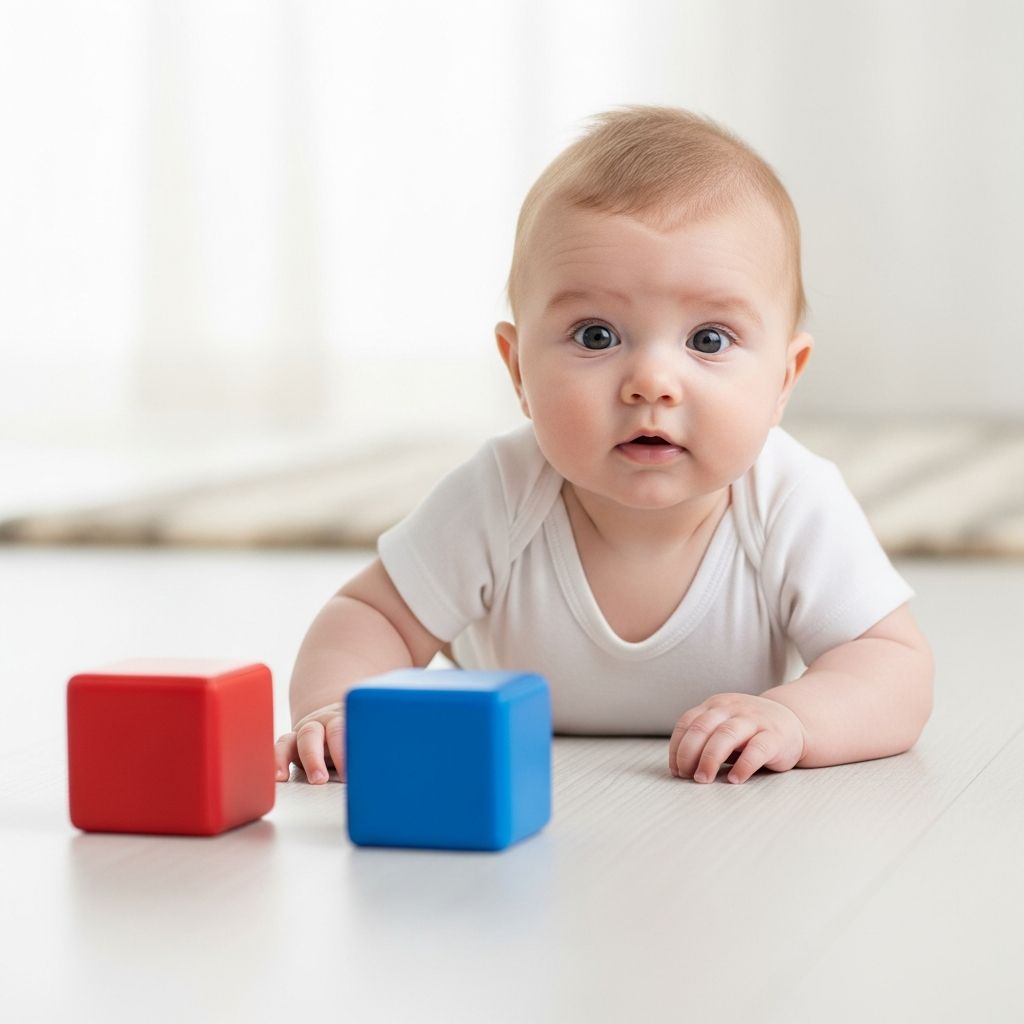
- Hand-Eye Games: Offer graspable toys like soft blocks; encourage passing between hands, fostering bilateral coordination.
- Movement Stimulation: Carry baby upright, pivoting slowly to scan rooms, building peripheral awareness without overstimulation.
Limit sessions to 5-10 minutes, interspersing with rest to prevent fatigue. Bright, patterned items captivate best.
Crawling’s Crucial Role in Visual Maturation
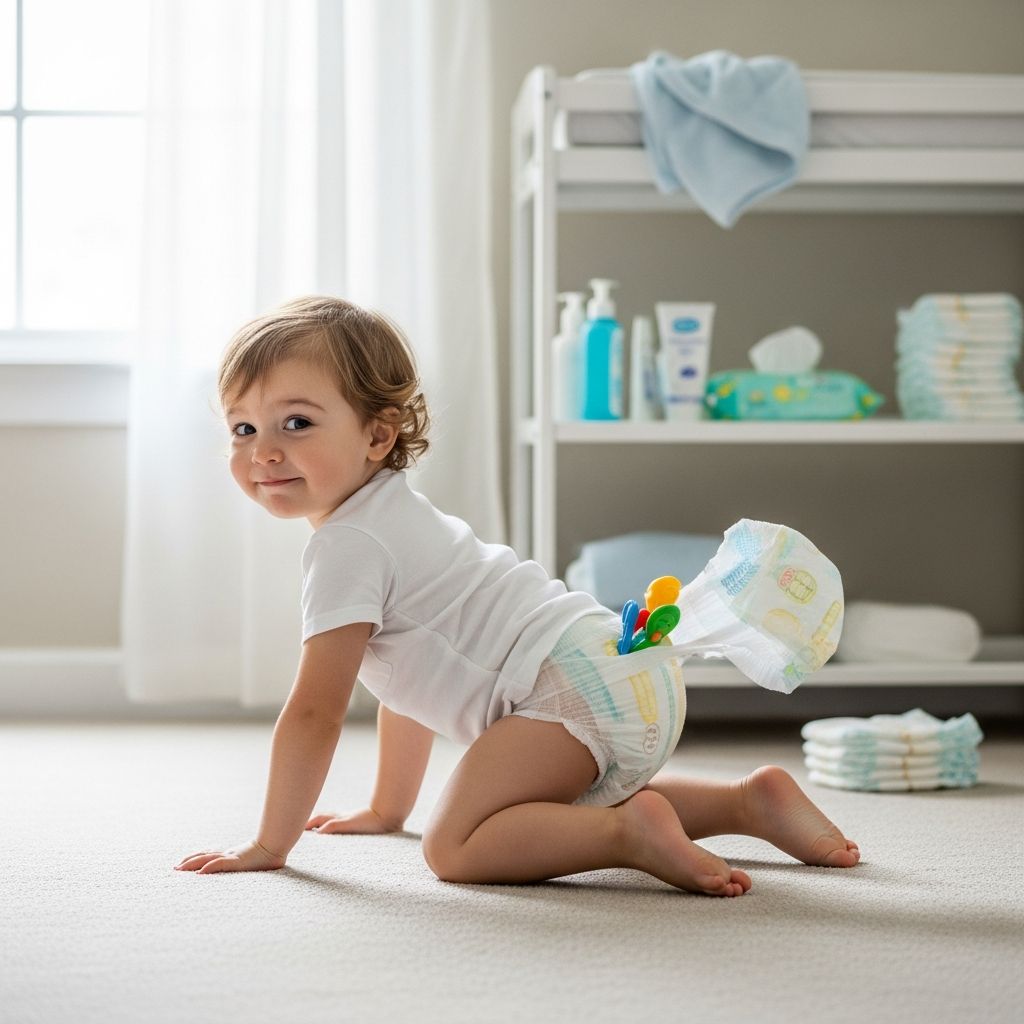
Around 8 months, crawling integrates vision with motor skills. It demands constant depth assessment, eye-hand-foot synchronization, and spatial mapping. Babies who crawl extensively develop superior binocular vision over early walkers.
Healthcare experts advocate floor time over aids like walkers. Crawling strengthens neural pathways for tracking, balance, and later skills like reading.
Signs of Concern and When to Seek Help
Monitor for persistent eye wandering beyond 2-3 months, lack of tracking by 3 months, or no reaching by 4 months. Unequal pupil response or light sensitivity warrants immediate pediatrician visit.
Early intervention via vision therapy yields best outcomes. Routine well-baby checks include red reflex tests and alignment assessments.
Extending Development Beyond 7 Months
From 9-12 months, infants pull to stand, grasp with thumb-finger pinch, and judge distances for throwing. Visual memory sharpens via peekaboo or hide-and-seek toys.
By 1-2 years, depth perception solidifies; toddlers explore boldly, scribble, and recognize distant objects. Outdoor play refines distance vision.
Nutrition and Environment for Optimal Vision
Vitamin A-rich foods (sweet potatoes, carrots) from 6 months support retinal health. Minimize screen time; prioritize natural light and varied textures.
A smoke-free, low-glare home aids focus. Responsive caregiving—narrating sights—links vision to language.
Frequently Asked Questions
At what age does depth perception fully develop in babies?
Around 5 months, babies achieve basic stereopsis, refining through crawling by 8-12 months.
Is it normal for a 3-month-old’s eyes to cross occasionally?
Yes, up to 3-4 months; persistent crossing needs evaluation.
How can parents test tracking at home?
Use a toy in midline, move slowly; baby should follow smoothly without head-only turns.
Why prioritize crawling over early walking?
Crawling builds essential eye-body coordination and depth skills.
What toys best support 3-7 month visual growth?
Bright, high-contrast mobiles, textured balls, rattles for grasping.
Long-Term Impact of Early Visual Milestones
Robust 3-7 month vision predicts academic success, as it underpins reading, sports, and spatial reasoning. Parental engagement multiplies these gains, turning play into profound development.
References
- Vision Development Timeline: A Guide for New Mothers — Insight Vision Center Optometry. 2023. https://www.insightvisionoc.com/vision-therapy/vision-development-timeline-a-guide-for-new-mothers/
- Infant vision development: Helping babies see their bright futures — Michigan State University Extension. 2023-10-01. https://www.canr.msu.edu/news/infant_vision_development_helping_babies_see_their_bright_futures
- Infant Vision: Birth to 24 Months of Age — American Optometric Association. 2024. https://www.aoa.org/healthy-eyes/eye-health-for-life/infant-vision
- Infant Vision Birth to One Year — Nationwide Children’s Hospital. 2023. https://www.nationwidechildrens.org/family-resources-education/health-wellness-and-safety-resources/helping-hands/infant-vision-birth-to-one-year
- Your Baby’s Hearing, Vision, and Other Senses: 3 Months — KidsHealth (Nemours). 2024. https://kidshealth.org/en/parents/senses-3mos.html
- Developmental Milestones: Fine Motor Skills and Visual — CHOC Children’s. 2023. https://choc.org/userfiles/file/Rehab-Developmental%20Milestones%20final.pdf