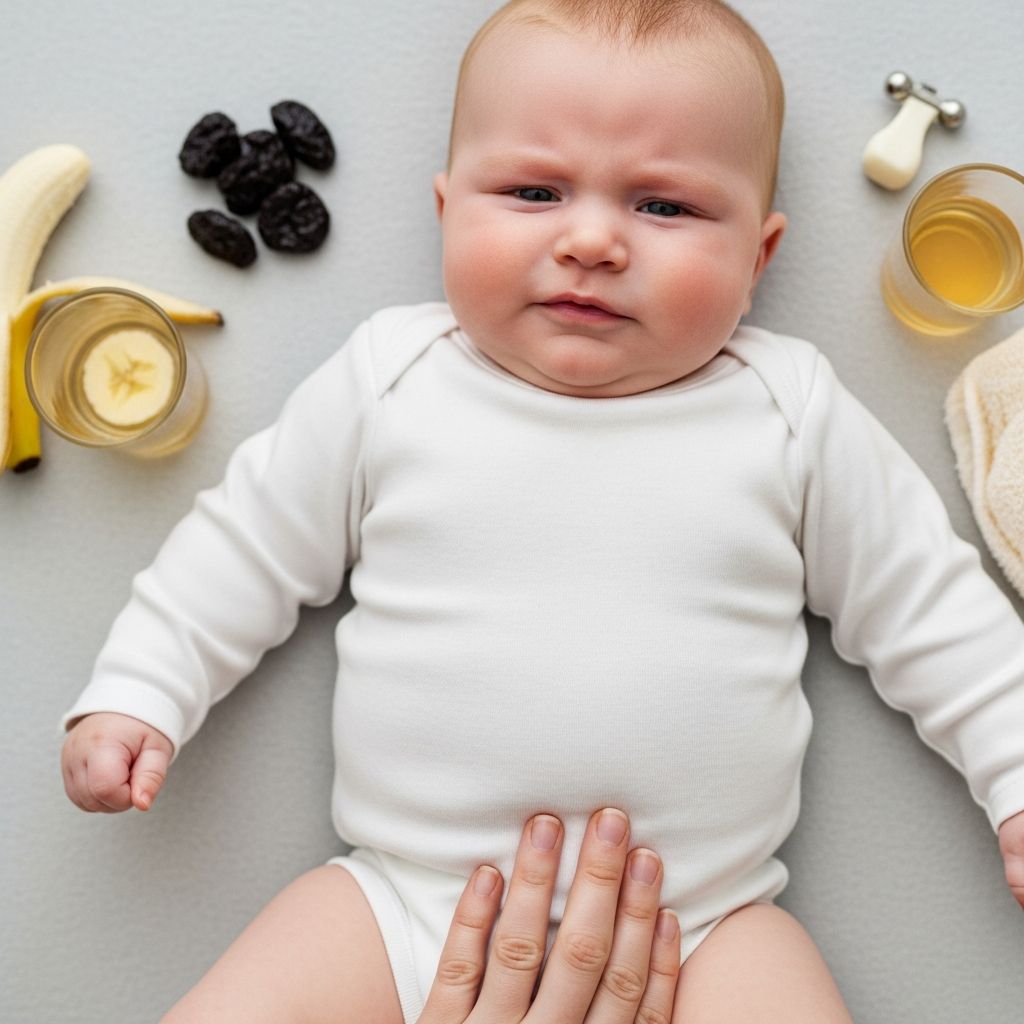
Constipation affects many infants, characterized by hard, dry stools that are painful to pass, often linked to diet changes or insufficient fluids. Early intervention through targeted foods and habits can restore normal bowel movements effectively.
Recognizing Constipation in Your Infant
Infants under six months typically pass stool frequently if breastfed, but patterns vary. Constipation manifests as firm, pellet-like stools, straining during bowel movements, fussiness, reduced feeding, or blood traces from anal fissures.
- Hard, dry poos: Primary indicator, unlike soft mustard-like stools in breastfed babies.
- Straining or discomfort: Baby may arch back, cry, or clench during attempts.
- Infrequent bowel movements: Fewer than usual, especially post-diet shifts.
- Abdominal bloating or pain: Visible tummy distension or irritability.
- Secondary signs: Poor appetite, liquid stool leaks, or rectal bleeding.
Breastfed babies rarely experience it due to milk’s laxative properties, while formula-fed ones are more prone. Transitioning to solids around six months heightens risk if fiber is low.
Common Dietary Culprits Behind Infant Constipation
Certain foods bind stools by low fiber or high starch content, exacerbating dehydration in the colon where excess water is absorbed.
| Food Type | Why It Contributes | Alternatives |
|---|---|---|
| Rice cereal | Low fiber, absorbent; common first solid that hardens stools. | Oatmeal or barley cereal for higher fiber. |
| Bananas, applesauce | Tannins slow digestion; unripe fruits worsen. | Pears, prunes for natural laxative effect. |
| Processed baby foods | Lack fluids/fiber; harder to digest than breast milk. | Fresh pureed veggies/fruits. |
| Cheese or yogurt (early intro) | High fat, low fiber; binds if overfed. | Delay dairy; prioritize fruits. |
Formula preparation errors, like insufficient water, mimic dehydration effects. Sudden switches from breast milk amplify issues.
Nutrient-Packed Foods to Soften Baby Stools
For babies over six months on solids, prioritize high-fiber, hydrating options to draw water into the colon and promote motility.
- Prunes and prune juice: Natural laxatives with sorbitol; dilute 1-2 oz for 2+ month olds, or puree for older infants. Up to 3 tbsp stewed, 3x/week.
- Pears and peaches: Pectin softens stools; offer pureed daily.
- Peas, beans, broccoli: Soluble fiber bulks stool; steam and mash.
- Apricots: Similar to prunes; stewed form aids 9+ month olds.
- Whole grains: Oat, barley cereals over rice; boost intake gradually.
Introduce one at a time to monitor tolerance. Pair with extra water (boiled/cooled for under 6 months).
Beyond Diet: Hydration and Movement Techniques
Water pulls vital for stool softening; offer 2-4 oz juice (prune/pear/apple) daily for 2+ month olds between feeds. Tummy massages in clockwise circles stimulate bowels.
- Gently bicycle legs to mimic squatting.
- Warm baths relax pelvic muscles.
- Rectal thermometer with lubricant for stimulation (under provider guidance).
Bottle-fed? Ensure correct formula ratios: water first. Frequent breast milk feeds prevent issues.
When Diet Alone Isn’t Enough: Safe Medical Interventions
For persistent cases, consult pediatricians before laxatives. Glycerin suppositories for infants stimulate evacuation safely. Avoid enemas, mineral oil, or stimulants.
Rarely, underlying issues like Hirschsprung’s disease (missing bowel nerves) or thyroid problems require screening; flagged by newborn checks or symptoms like no meconium in 48 hours.
Preventing Recurrence Through Smart Feeding Habits
Build fiber gradually post-solids intro. Maintain hydration: extra fluids during teething/illness. Respond to hunger cues for ample milk/formula.
- Daily fiber goal: Age-appropriate, e.g., fruits/veggies at meals for 6+ months.
- Consistent routines reduce stress-induced withholding.
- Monitor growth; poor weight gain signals issues.
Frequently Asked Questions
How often should a breastfed newborn poop?
Multiple times daily, soft and seedy; less frequent isn’t always constipation.
Is apple juice safe for constipated babies?
Yes, 2-4 oz diluted for 2+ months; prefer prune/pear for stronger effect.
When to call the doctor for baby constipation?
If blood in stool, vomiting, fever, no poop in days, or failure to thrive.
Can gripe water help constipation?
Not reliably; focus on diet/hydration. Consult provider.
Does switching formulas cause constipation?
Possibly; transition slowly under guidance.
Long-Term Digestive Wellness for Growing Babies
As toddlers emerge, sustain habits: balanced plates with 50% fruits/veggies, whole grains, adequate water. Early potty training avoids withholding fears. Track patterns; apps or journals aid pediatric discussions.
Empower parents: Most cases resolve with tweaks, fostering confident caregivers attuned to cues.
References
- Constipation in babies – causes, signs and treatments — Pregnancy Birth & Baby (Australian Government). 2023-2024. https://www.pregnancybirthbaby.org.au/constipation-in-babies
- Constipation in infants and children — MedlinePlus (U.S. National Library of Medicine). 2024-05-01. https://medlineplus.gov/ency/article/003125.htm
- Constipation – Breastfeeding – Best Start in Life — NHS UK. 2023. https://www.nhs.uk/best-start-in-life/baby/feeding-your-baby/breastfeeding/breastfeeding-challenges/constipation/
- Constipation in Infants — Nationwide Children’s Hospital. 2024. https://www.nationwidechildrens.org/conditions/constipation-infant
- Infant constipation: How is it treated? — Mayo Clinic. 2024-06-15. https://www.mayoclinic.org/healthy-lifestyle/infant-and-toddler-health/expert-answers/infant-constipation/faq-20058519
- Constipation in the First Year — Texas WIC (USDA). 2024. https://texaswic.org/health-nutrition/baby/constipation-first-year