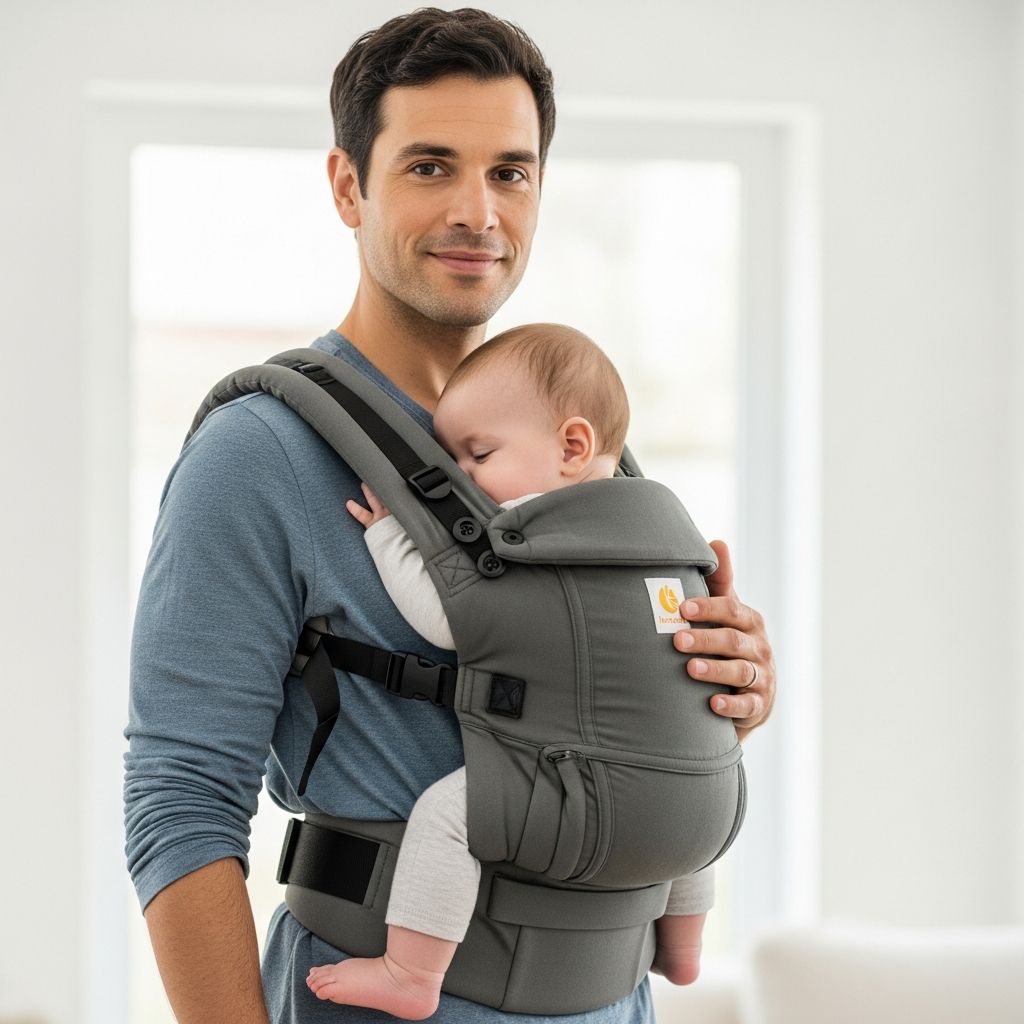
Baby carriers offer parents hands-free convenience for bonding and mobility, but improper use poses serious risks like suffocation and falls. Following structured safety protocols minimizes these dangers, ensuring secure carrying for infants from newborns to toddlers.
Understanding the Risks of Improper Babywearing
Infants, especially those under 4 months, premature babies, or those with respiratory issues, face heightened suffocation risks in carriers due to weak neck muscles and limited ability to adjust position. A chin pressed to the chest can block airways, while loose fabric may cause slumping. Falls occur from bending incorrectly or during active movements. The U.S. Consumer Product Safety Commission highlights these hazards in soft carriers, urging vigilant checks.
Statistics from health organizations show that correct positioning prevents most incidents. For instance, babies in upright, vertical holds facing the parent maintain open airways, unlike horizontal cradles which compress the chest.
Key Safety Rules: The T.I.C.K.S. Protocol
The T.I.C.K.S. rule, endorsed by babywearing experts, provides a simple checklist for safe positioning. Apply it every time you secure your baby.
- T – Tight: Adjust the carrier snugly so no loose fabric allows slumping. Press your hand against your baby’s back; they should not sink in more than an inch. This keeps them upright and close to your torso.
- I – In View: Glance down to see your baby’s entire face without obstruction. Fabric must not cover nose or mouth, preventing restricted airflow.
- C – Close Enough to Kiss: Position the baby’s head near your chin for easy monitoring and a quick kiss. This ensures proximity and chest-to-chest contact.
- K – Keep Chin Off Chest: Maintain a neutral or slightly extended neck position. Two fingers should fit under the chin; a tucked chin blocks breathing, especially in newborns lacking head control.
- S – Supported Back: The carrier must cradle the spine fully, from shoulders to pelvis. Legs should spread in an ‘M’ shape for hip health, avoiding inward squeezing that risks dysplasia.
Regularly recheck these during use, as babies shift with movement. Premature or low-birth-weight infants need extra caution; consult a pediatrician first.
Choosing the Right Baby Carrier for Your Child
Select carriers meeting weight limits (typically 7-45 lbs) and age guidelines. Soft-structured carriers suit newborns; framed backpacks are unsuitable under 4 months due to head support needs.
| Carrier Type | Best For | Safety Features | Age/Weight Range |
|---|---|---|---|
| Soft Slings/Wraps | Newborns | Adjustable fabric, upright hold | Birth to 15 lbs |
| Structured Front Packs | Infants/Toddlers | Buckles, padded straps, leg openings | 8-35 lbs |
| Mei Tais | All ages | Tie adjustments, versatile positions | Birth to 35 lbs |
| Backpacks (Framed) | Toddlers | External frame, hiking support | 6+ months, 15-45 lbs |
Test ease of solo donning/doffing and one-handed adjustments. Ensure reversible facing options for older babies preferring outward views after 4-6 months.
Proper Positioning Techniques by Age
Newborns (0-4 Months)
Hold vertically facing inward, legs frogged outward, knees higher than bottom. Support head fully; avoid facing out or horizontal.
Infants (4-8 Months)
Introduce forward-facing once head control is strong. Maintain supported back and visible face.
Toddlers (8+ Months)
Back carries possible with strong support. Watch for bracing feet against you, which shifts balance—readjust straps.
Never carry multiple children or exceed weight limits. Hot weather amplifies overheating; dress lightly and monitor temperature.
Daily Usage Best Practices
Inspect pre-use: scan seams, straps, buckles for damage. Discard torn items.
- Bend at knees, not waist, to pick up objects—support baby with one hand.
- Wear stable shoes; avoid uneven terrain, running, biking, or driving.
- Keep hazards away: no hot drinks, cooking, or chemicals nearby.
- Remove baby before loosening waist belts.
- Check breathing frequently; distress signs include grunting, color changes, or fussiness—extract immediately.
Practice putting on/taking off seated or with help to prevent drops. Balance shifts forward, so walk cautiously.
Common Mistakes and How to Avoid Them
Overlooking T.I.C.K.S. leads to 90% of issues. Other pitfalls: loose straps causing falls, ignoring weight limits, or using while impaired (tired, medicated).
- Mistake: Horizontal Cradling – Solution: Upright only.
- Mistake: Face Covered – Solution: Reposition fabric.
- Mistake: Overactive Use – Solution: Limit to calm activities.
- Mistake: Skipping Checks – Solution: Set phone reminders.
Special Considerations for Vulnerable Babies
Premature, low-weight, or ill infants require professional advice. Australian guidelines note higher suffocation risks; U.S. sources echo this for respiratory-challenged babies. Hip positioning matters: spread legs prevent dysplasia, per international standards.
Frequently Asked Questions
Can all babies use baby carriers right away?
Newborns can if positioned correctly, but consult doctors for preemies. Framed packs wait until 4 months.
How often should I check my baby?
Every few minutes, especially under 4 months. Look for breathing issues or position slips.
Is forward-facing safe?
Yes, after strong head control (around 4-6 months), briefly, with supported back.
What if my carrier feels uncomfortable?
Stop use; it may indicate poor fit or exceeded limits. Switch types as baby grows.
Are there legal standards for carriers?
No universal Australian standard, but follow CPSC guidance and T.I.C.K.S. for safety.
Benefits of Safe Babywearing
Beyond safety, proper use fosters bonding, soothes crying, and frees hands. Parents report easier errands and better posture when bending correctly. Long-term, it supports healthy hip development.
Expand usage gradually: start short sessions, building to hours. Join local babywearing groups for hands-on learning.
References
- Baby Carrier Safety — Happy Baby Carriers. Accessed 2026. https://happybabycarriers.com/pages/safety
- Baby carrier, sling & backpack safety — Raising Children Network (Australian Government-funded). Accessed 2026. https://raisingchildren.net.au/newborns/safety/equipment-furniture/baby-carrier-sling-safety
- Baby Carriers: Backpacks, Front Packs & Slings — American Academy of Pediatrics (healthychildren.org). Accessed 2026. https://www.healthychildren.org/English/safety-prevention/on-the-go/Pages/Baby-Carriers.aspx
- Safe and Snuggly Babywearing: Newborn Carrier Tips — Hope & Plum. Accessed 2026. https://www.hopeandplum.co/blogs/hope-and-plum-baby-carriers-blog/safe-and-snug-babywearing-hopeplums-newborn-carrier-tips
- Guide to Babywearing: When to Start, Types, and Safety Tips — Pathways.org. Accessed 2026. https://pathways.org/guide-to-babywearing-when-to-start-types-and-safety-tips
- Soft Infant and Toddler Carriers Business Guidance — U.S. Consumer Product Safety Commission (CPSC.gov). Accessed 2026. https://www.cpsc.gov/Business–Manufacturing/Business-Education/Business-Guidance/Soft-Infant-and-Toddler-Carriers