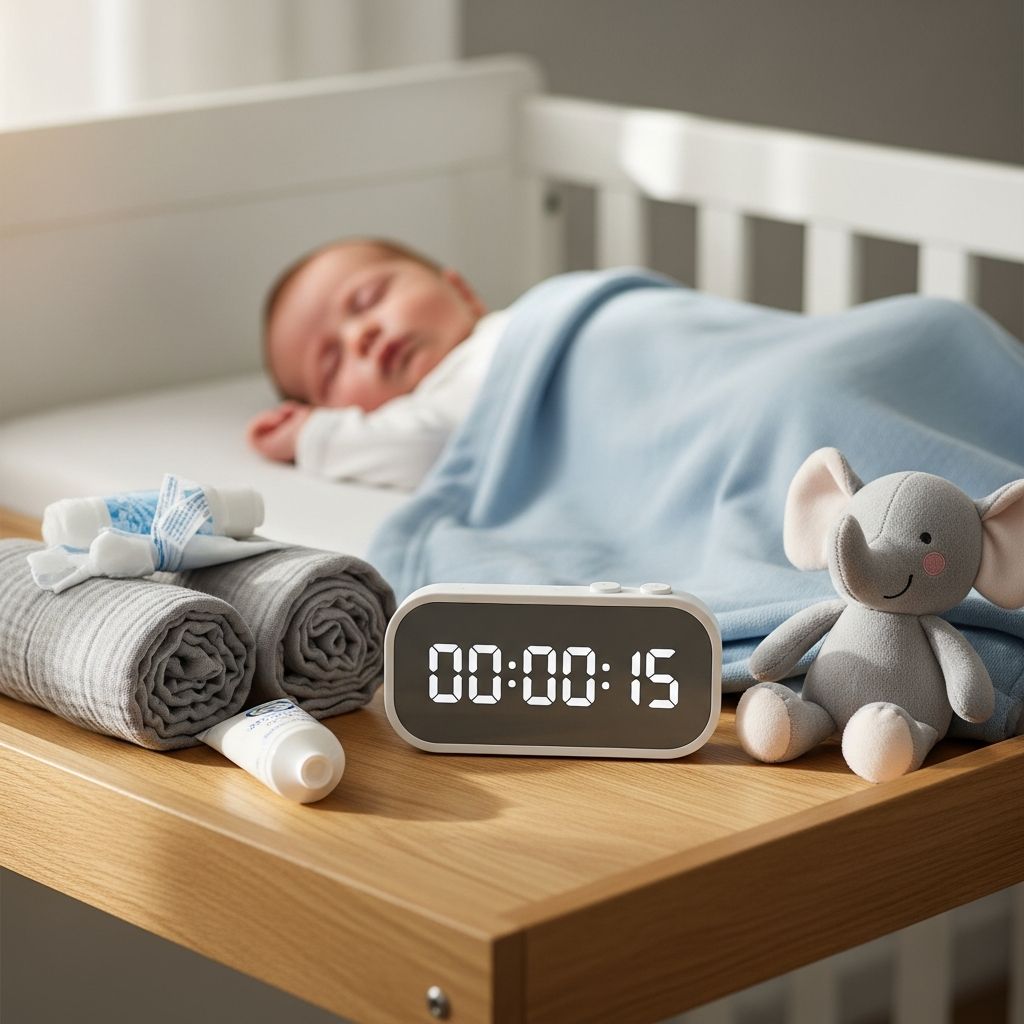
Life with a newborn is a blur of feedings, diaper changes, short naps, and constant questions about what your baby needs next. A dedicated baby care timer is a small tool that can make that blur feel more manageable, helping parents feel more confident and less overwhelmed.
What Is a Baby Care Timer?
A baby care timer is a small handheld device (or app) designed to track the time since essential baby tasks were last done: feeding, diaper changes, sleep, medications, and more. Instead of logging everything in a notebook or trying to remember on your own, you press a button after a task and the timer counts up until you do it again.
Unlike a standard kitchen timer or phone clock, a baby care timer typically has multiple dedicated buttons—one for each caregiving task—so you can see at a glance how long it’s been since your baby last ate, slept, or had a diaper change.
Why New Parents Struggle With Time
In the newborn stage, days and nights blend together. Sleep deprivation, irregular schedules, and physical recovery make it very hard to keep mental notes about when anything happened. You may find yourself staring into space, trying to remember whether the last feeding was at 3 a.m. or 5 a.m., or wondering how long the current nap has actually been.
This confusion is not a sign that you are disorganized; it is a normal response to constant interruptions and hormonal changes. Offloading the tracking to a simple device helps reduce mental clutter and cuts down on arguments like, “No, I’m sure we changed the diaper not that long ago!”
Main Tasks a Baby Care Timer Can Track
Most baby care timers are built around a few core caregiving tasks, with each one getting its own dedicated timer. This makes the device intuitive even in the middle of the night when your brain is foggy.
- Feedings: Time since the last nursing or bottle feeding so you can tell if your baby might be hungry again.
- Diaper changes: Time since the last wet or dirty diaper to help you monitor hydration and comfort.
- Sleep and awake periods: Time since the baby last fell asleep or woke up to support age-appropriate wake windows.
- “Other” tasks: A customizable timer often used for medications, pumping, tummy time, or anything else your baby needs at regular intervals.
Key Benefits for Exhausted Parents
A baby care timer offers more than just convenience. It can actively improve your sense of control and reduce anxiety in the chaotic newborn period. Many parents report that once they have objective data about their baby’s patterns, they feel calmer making decisions.
Here are some of the most helpful benefits:
- Reduced mental load: No need to constantly rehearse times in your head or maintain complicated notes.
- Fewer arguments: The device becomes the “neutral referee” when no one can agree on when something last happened.
- Better pattern recognition: Over time, you’ll notice how often your baby tends to feed, how long naps usually last, and what their typical diaper output looks like.
- Easier communication: Anyone caring for your baby can glance at the timer and immediately understand what might be needed next.
How a Baby Care Timer Fits Into Daily Life
To understand what this actually looks like, imagine a typical morning. Your baby wakes up around 6 a.m., and you start a feeding timer as you nurse or give a bottle. After the feeding, you press the diaper timer when you change them, and then the wake timer tracks how long your baby has been awake so you know when to offer the next nap.
Later, when your partner wakes up, they can look at the device and instantly see: it has been two hours since the last feeding and one hour since the last diaper. There is no need to ask you for a recap or scroll through multiple apps while juggling a crying baby.
Core Features to Look For
Not all baby care timers are the same. Some are simple and barebones, while others include extras that can be genuinely helpful. When you’re choosing one, pay attention to a few core features that affect daily usability.
| Feature | Why It Matters | Questions to Ask |
|---|---|---|
| Multiple dedicated timers | Lets you track several tasks (feeding, diapers, sleep, other) at once without confusion. | How many buttons does it have, and are they clearly labeled? |
| One-touch start/reset | Essential when holding a squirmy baby or moving quickly at night. | Can you operate it with one hand in the dark? |
| Backlight | Makes it usable during night feeds without turning on bright lights. | Is the light bright enough to read but not so bright that it wakes the baby? |
| Reminder alarms | Helps you remember medications or minimum feeding intervals, especially under pediatric guidance. | Can you set different alarms for different timers? |
| Battery life | Frequent recharging or battery changes become frustrating fast. | Does it use standard batteries or require a proprietary charger? |
| Portability | Clip or stand options make it easy to move from bedroom to living room to diaper bag. | Can it stand on a nightstand and also be clipped to a pocket or bag? |
| Nursing side indicator | For breastfeeding parents, tracking which side you used last helps keep supply even and avoid engorgement. | Is there a simple left/right toggle or indicator? |
Baby Care Timer vs. Phone Apps
Many parents wonder whether a dedicated device is truly necessary when there are countless free apps available. Both options have advantages, and the right choice often comes down to personal preference and lifestyle.
- Dedicated timer advantages: Always on, no unlocking, no notifications to distract you, and can be passed easily between caregivers without logging in.
- Phone app advantages: Detailed logging, charts, exportable data, and remote sharing with your pediatrician or co-parent.
- Potential downsides of phones: Battery drain, temptation to scroll at 3 a.m., and the need to hand over your personal device to another caregiver if they are watching the baby.
For many families, a dedicated timer functions as the household’s shared information hub, while one or both parents still use a phone app for long-term tracking or medical conversations.
How a Timer Supports Feeding Routines
Whether you are breastfeeding, bottle-feeding, or using a combination, knowing how long it has been since the last feeding can be incredibly reassuring. Newborns often feed every two to three hours, but their behavior can be confusing—crying might signal hunger, discomfort, or simply fatigue.
With a timer, you can quickly ask yourself, “Is this likely to be hunger?” If the feeding timer reads 30 minutes, you might first consider a diaper or burping. If it reads 3 hours, hunger becomes a more obvious possibility. For breastfeeding parents, a side indicator helps ensure you rotate sides and reduces mental effort during those groggy overnight feeds.
Tracking Diaper Changes and Output
In the early weeks, pediatricians often ask how many wet and dirty diapers your baby produces each day. This information helps assess hydration, feeding effectiveness, and overall health. Trying to count in your head while functioning on minimal sleep is challenging.
Using the diaper timer, you can see at a glance whether your baby has gone an unusually long time without a wet diaper, which might prompt a call to your provider. Similarly, if your baby seems unusually fussy, noticing that it has been several hours since the last change might be the nudge you need to check their diaper.
Making Sense of Baby Sleep
Newborn sleep is often unpredictable, but patterns do gradually emerge. A sleep/awake timer helps you track how long your baby stays awake between naps and how long naps tend to last. This can make it easier to spot overtiredness or shifts in your baby’s natural rhythm.
- Wake windows: Newborns usually do best with short periods of wakefulness before needing another nap. A timer helps you respect these windows.
- Nap length: Tracking naps over time gives you a general sense of whether your baby tends to take several short naps or a few longer ones, which can guide your daily planning.
- Night wakings: In the middle of the night, seeing how long it has been since the last wake-up can help you distinguish between habitual waking and a longer stretch of sleep.
Using the “Other” Timer: Medications and More
Many baby care timers include a flexible “other” button that you can assign to any recurring task. This might be infant medications prescribed at specific intervals, pumping sessions, vitamin drops, or even structured tummy time.
Instead of trying to remember when you last gave a dose or pumped, you press the button and let the timer run. When combined with a reminder alarm, this feature can help you stay on schedule without constantly checking the clock or setting multiple phone alarms.
Sharing Caregiving Duties More Smoothly
In households where caregiving duties are shared between partners, grandparents, or babysitters, a baby care timer becomes a central reference point. The person coming on duty doesn’t need a long verbal recap; they can check each timer to understand what happened when.
This can reduce miscommunication and tension. For example, if your partner assumes the baby just napped, but the timer shows a long stretch of wakefulness, it becomes clear that sleep is probably a higher priority than another play session.
Pros and Cons at a Glance
| Pros | Cons |
|---|---|
|
|
Practical Tips for Getting the Most Out of Your Timer
Like any tool, a baby care timer works best when used consistently and realistically. You do not need to track every second of your baby’s life; focus on the functions that genuinely reduce stress for your family.
- Start with two or three buttons: Begin by consistently using feeding and diaper timers. Add sleep or “other” once you’re comfortable.
- Keep it in one “home base” spot: Choose a central location—like the nightstand or nursing chair—so you always know where it is.
- Pair it with a routine: Press the button immediately after each task before you do anything else. Over time, this becomes automatic.
- Use alarms thoughtfully: Reserve alarms for high-priority needs like medications or minimum feeding intervals, so you don’t tune them out.
Is a Baby Care Timer Right for Every Family?
Not every household needs a dedicated baby care timer, and that is okay. Some parents are comfortable with more flexible routines or prefer minimal data tracking. Others find that a simple notebook or a whiteboard works perfectly well.
A baby care timer tends to be most appreciated by parents who like structure, families juggling multiple caregivers, and households with medical or feeding concerns that require closer monitoring. It can also be a thoughtful baby shower gift for first-time parents who might not yet realize how fuzzy their memory will feel at 3 a.m.
Frequently Asked Questions
Do I really need a baby care timer, or is it just another gadget?
You do not need a baby care timer to be a good parent, but it can be a helpful tool if you feel overwhelmed trying to remember feeding, diaper, and sleep times. Its main value lies in reducing mental clutter and easing communication between caregivers, not in obsessively tracking every detail.
How long will I actually use it?
Most families find a baby care timer most useful in the first few months, when routines are still forming and pediatricians ask frequent questions about intake and output. As your baby grows, you may rely on it less, but some parents continue using it for medications, nap timing, or even later toddler routines.
Is a baby care timer safe to keep near the crib?
The device itself is typically safe to place on a nightstand or dresser near the crib, but it should not go inside the crib due to small parts and cords or clips that could pose a hazard. Treat it like any other electronic: keep it out of reach of the baby and secure any accessories.
What if my partner prefers an app while I like a physical timer?
It is possible to use both. You can rely on the physical timer in real time throughout the day and then log major events into an app once or twice per day if you want long-term charts. The key is to decide together who is responsible for what, so you are not both duplicating work.
Will using a timer make me too rigid about my baby’s schedule?
A timer is simply information, not a rule book. The goal is not to force your baby into a strict schedule but to give you context when they cry or seem unsettled. You can use the data as a gentle guide while still following your baby’s cues and remaining flexible as their needs change.
Final Thoughts
A baby care timer is a modest, low-tech tool that can make an outsized difference in how calm and organized you feel in the early months of parenting. By taking over the job of remembering when each essential task last happened, it frees your mind to focus on bonding with your baby and taking care of yourself.
Whether you choose a dedicated device, a phone app, or a simple notebook, the underlying principle is the same: when you track basic patterns in a way that feels sustainable, you make everyday decisions easier and create a gentler, more predictable environment for your growing family.