Preparing a nursery often starts with dreaming about the crib: soft colors, adorable patterns, and bedding sets that promise instant cuteness. Yet the most important part of a baby’s sleep space is not how coordinated everything looks, but whether it supports safe, comfortable sleep. This guide walks through how to choose baby bedding that is safe, practical, and still visually appealing.
Why Baby Bedding Matters More Than You Think
Baby bedding influences more than the look of your nursery. It affects how easy it is to follow safe-sleep recommendations, how much laundry you do, and how long your purchases remain useful as your child grows. Parents are often sold elaborate sets that include multiple pieces a baby should never sleep with, such as comforters, bumpers, and extra pillows. Focusing on essentials rather than sheer volume can save money and reduce risks.
Understanding what your baby actually needs versus what is marketed as a must-have allows you to build a sleep space that is simple, functional, and easier to keep clean. A clear plan also prevents last-minute impulse buys when you are exhausted and just want the nursery to feel finished.
The Core Components of a Safe Crib
Most newborns need far fewer bedding items than parents expect. When you strip away the decorative extras, the sleep setup becomes straightforward and easier to manage on busy nights and in the middle of diaper changes.
- Crib or bassinet: A product that meets modern safety standards, with sturdy construction and properly spaced slats.
- Firm, flat mattress: Designed to fit snugly in the crib or bassinet without gaps around the edges.
- Fitted crib sheets: Made for your specific mattress size, with strong elastic that holds the sheet tightly in place.
- Optional wearable blanket or sleep sack: Used instead of loose blankets for warmth.
Everything else—pillows, decorative cushions, loose blankets, stuffed animals, comforters, and crib bumpers—belongs in the category of decor, not sleep safety essentials. These items can be cute in photos but introduce entrapment, suffocation, or strangulation risks when left in the crib with a sleeping baby.
Safe Sleep Principles Every Bedding Choice Should Follow
Before comparing colors or prints, ground your decisions in basic safe-sleep principles. A baby should sleep alone in a dedicated sleep space, on their back, on a firm, flat surface with only a tight-fitting sheet over the mattress. Keeping the crib free of soft items and clutter is key to lowering the risk of sleep-related incidents.
Room-sharing without bed-sharing is also widely recommended during early infancy. Positioning the crib or bassinet near your bed can make night feedings easier while ensuring that your child still has a separate, protected sleep environment. When the basics are right, the bedding choices you make will naturally support safer sleep.
Choosing the Right Mattress and Sheets
The combination of mattress and sheet creates the surface your baby spends most of their time on. A mattress that is too soft or a sheet that bunches up can undermine even the most beautiful nursery design. Start by confirming that the mattress is firm, returns to shape quickly when pressed, and is designed for infant use.
Fitted sheets should be sized to your exact mattress dimensions and remain smooth when your hand glides across them. Avoid any sheet that slips off easily or creates wrinkles and folds. When in doubt, choose tighter rather than looser, as long as you can get the sheet on without forcing the corners and damaging the elastic.
Materials and Fabrics: Comfort, Breathability, and Care
Fabric choice affects how comfortable your baby feels and how much time you spend on laundry. Many parents gravitate toward cotton because it is widely available, relatively breathable, and easy to wash and dry. Organic cotton can be appealing if you want to reduce exposure to certain chemicals, though it often costs more.
Blends that include bamboo, modal, or other fibers can feel very soft, but extremely stretchy materials may fit less securely on the mattress. Look for sheets that balance softness with structure and come with clear washing instructions. Whatever you choose, plan to prewash everything in a fragrance-free detergent before your baby uses it.
How Many Bedding Pieces Do You Really Need?
Marketing often encourages buying large coordinated sets, but a minimalist, practical approach usually works better for sleep-deprived parents. Think about nighttime blowouts, spit-up patterns, and how often you like to run laundry when deciding how many sheets and backups you want on hand.
| Item | Minimum Quantity | Comfortable Quantity | Notes |
|---|---|---|---|
| Firm crib or bassinet mattress | 1 | 1 | Focus on quality; replacement is rare unless damaged. |
| Fitted crib sheets | 2 | 3–5 | Enough to handle middle-of-the-night changes without urgent laundry. |
| Waterproof mattress protector | 1 | 2 | Layering two protectors and two sheets speeds up nighttime bedding swaps. |
| Wearable blankets / sleep sacks | 1–2 | 2–4 | Rotate during washing days and seasonal changes. |
| Decor-only quilts / blankets | 0 | 1–2 | Use for tummy time or stroller outings, not sleep in the crib. |
This type of inventory keeps your costs reasonable while still giving you enough flexibility for everyday messes. It also prevents your nursery storage from being overwhelmed by items you rarely or never use.
Decorating the Nursery Without Crowding the Crib
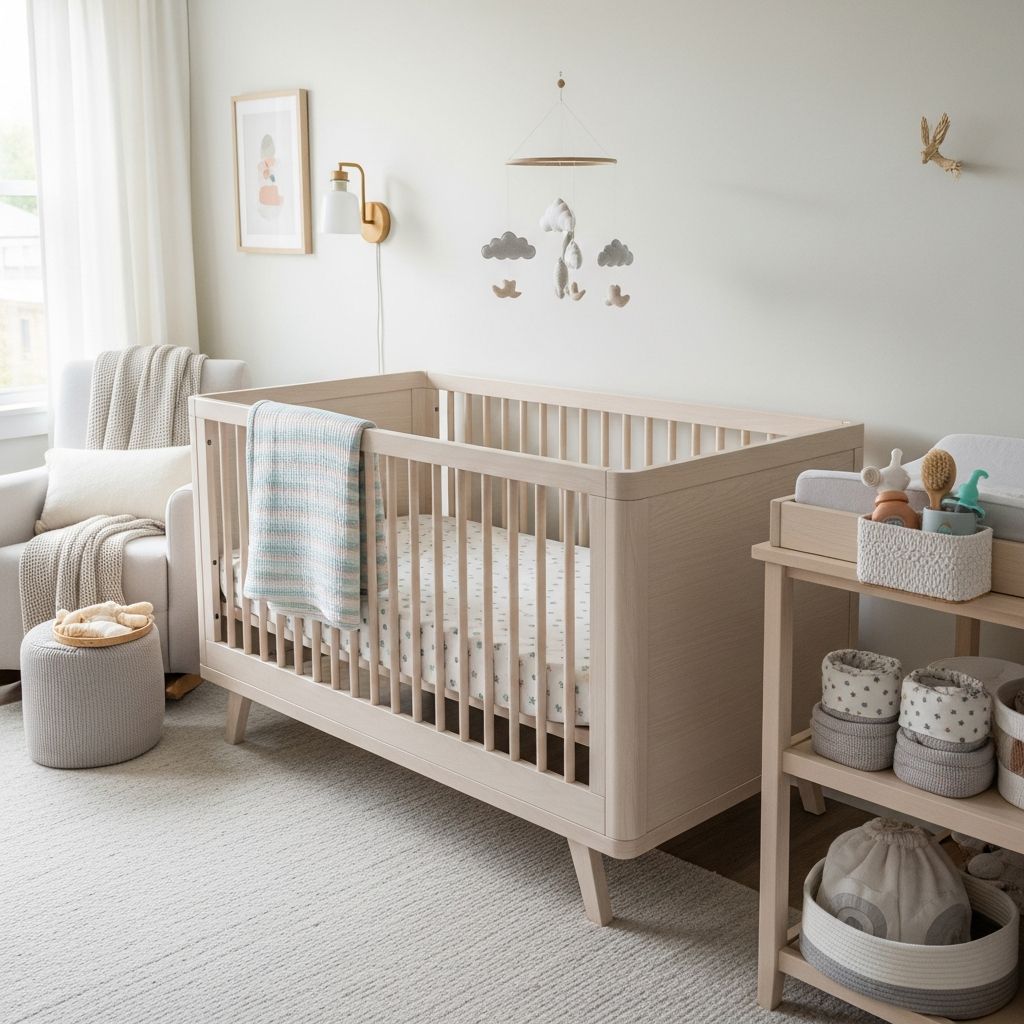
A cozy, inviting nursery is still completely compatible with a bare crib. Instead of piling everything into the sleep space, direct your decorating energy toward walls, furniture, and textiles that sit outside the crib. Wall decals, framed artwork, paint colors, and a patterned rug can carry a theme without touching the mattress.
Coordinated curtains, a chair pillow, or a storage basket that matches the sheet pattern help the room feel pulled together. You can even drape a folded quilt on the back of a rocking chair as a decorative accent, using it later for supervised floor play or outdoor outings. This approach preserves a visually cohesive nursery while honoring safe-sleep recommendations.
Avoiding Common Baby Bedding Pitfalls
Some products are heavily promoted yet conflict with modern safety guidance or offer more style than substance. Crib bumpers—whether padded, braided, or pillow-like—remain a top example. Though they may claim to prevent limb entrapment, they can also obstruct airflow or pose a strangulation risk when a baby’s face presses against them.
Weighted blankets, thick comforters, and plush pillows are other items to skip in the crib. Even if they are labeled for babies, they can interfere with a child’s ability to move freely and maintain a clear airway. Keeping these pieces out of the sleep environment protects your baby and makes it much easier to change the sheet quickly.
Budgeting for Baby Bedding Without Regretting Purchases
Nursery decor can easily consume a large portion of a baby budget. Focusing first on safety and durability helps you spend where it matters and cut back where it doesn’t. It often makes sense to invest more in a high-quality mattress and midrange sheets, then save on purely decorative extras.
To stay within budget, consider these strategies:
- Prioritize essential items—crib, mattress, sheets, protector—before browsing optional decor.
- Buy one or two neutral sheet sets, then add a single statement print for fun.
- Put nonessential decorative bedding on a registry so others can choose whether to gift them.
- Skip coordinating bundles that include unsafe sleep items; build your own set from individual pieces.
By treating the nursery like any other room makeover—with a clear spending plan and list—you avoid overbuying on impulse and end up with a more functional space.
Adapting Bedding as Your Baby Grows
Your baby’s bedding needs will shift as they become more mobile, transition out of a swaddle, and later move into a toddler bed. Items that worked well during the newborn phase might require adjustments for safety or comfort. For instance, you may move from a swaddle to a sleep sack when your baby begins rolling, keeping arms free for movement while still providing warmth.
When your child eventually transitions to a toddler bed, you might introduce a light blanket and small pillow, always watching for signs that they can reposition themselves easily if bedding covers their face. Thinking ahead about how bedding can grow with your child helps you choose pieces that remain useful beyond a few months.
Practical Laundry and Maintenance Tips
Even the cutest bedding loses its charm if it is difficult to keep clean. Between diaper leaks, spit-up, and nighttime illnesses, crib sheets see heavy use. Choose machine-washable fabrics that can withstand frequent cycles without fading or losing elasticity around the edges.
It often helps to set up a routine: strip the crib once a week on a schedule and change sheets immediately after any mess. Store clean backups within arm’s reach of the crib so late-night changes do not require a full search of the house. A small basket or drawer dedicated to sheets and protectors keeps everything organized and ready.
Frequently Asked Questions About Baby Bedding
1. Does my baby need a full bedding set?
No. For actual sleep, a baby needs only a firm mattress, a properly sized fitted sheet, and possibly a wearable blanket for warmth. Full comforter-and-bumper sets are primarily decorative and can introduce safety concerns if used in the crib.
2. Are crib bumpers ever a good idea?
Current guidance strongly advises against crib bumpers, including padded, mesh, and pillow-style versions, because they can pose suffocation or entanglement risks. If you are worried about your baby’s limbs reaching through the slats, verify that your crib meets modern spacing standards rather than adding padding.
3. How can I keep my baby warm without loose blankets?
Dress your baby in one more thin layer than you are wearing and use a wearable blanket or sleep sack sized for their current weight and length. Check the back of their neck or torso to gauge warmth rather than relying on cold hands or feet.
4. What thread count is best for crib sheets?
Ultra-high thread counts are not necessary and can sometimes result in fabric that feels heavy or less breathable. A moderate, good-quality cotton or cotton-blend sheet that feels soft to the touch and washes well is sufficient for everyday use.
5. Can I use hand-me-down bedding?
Hand-me-down sheets can be fine if they fit your mattress tightly, have no rips or stretched-out elastic, and come from a smoke-free environment. However, avoid using older crib bumpers, thick comforters in the crib, or mattresses that are sagging, stained, or no longer firm.
Creating a Nursery That Works for Your Family
Thoughtful baby bedding choices are less about assembling a picture-perfect crib and more about building a sleep space that is safe, flexible, and manageable in real life. When you prioritize a firm mattress, well-fitting sheets, and a clutter-free crib, you set a strong foundation for healthy sleep habits.
From there, you can layer in personality through wall art, furniture accents, and a few carefully chosen textiles outside the crib. The result is a nursery that feels peaceful and inviting to adults while giving your baby a protected, comfortable place to rest and grow.