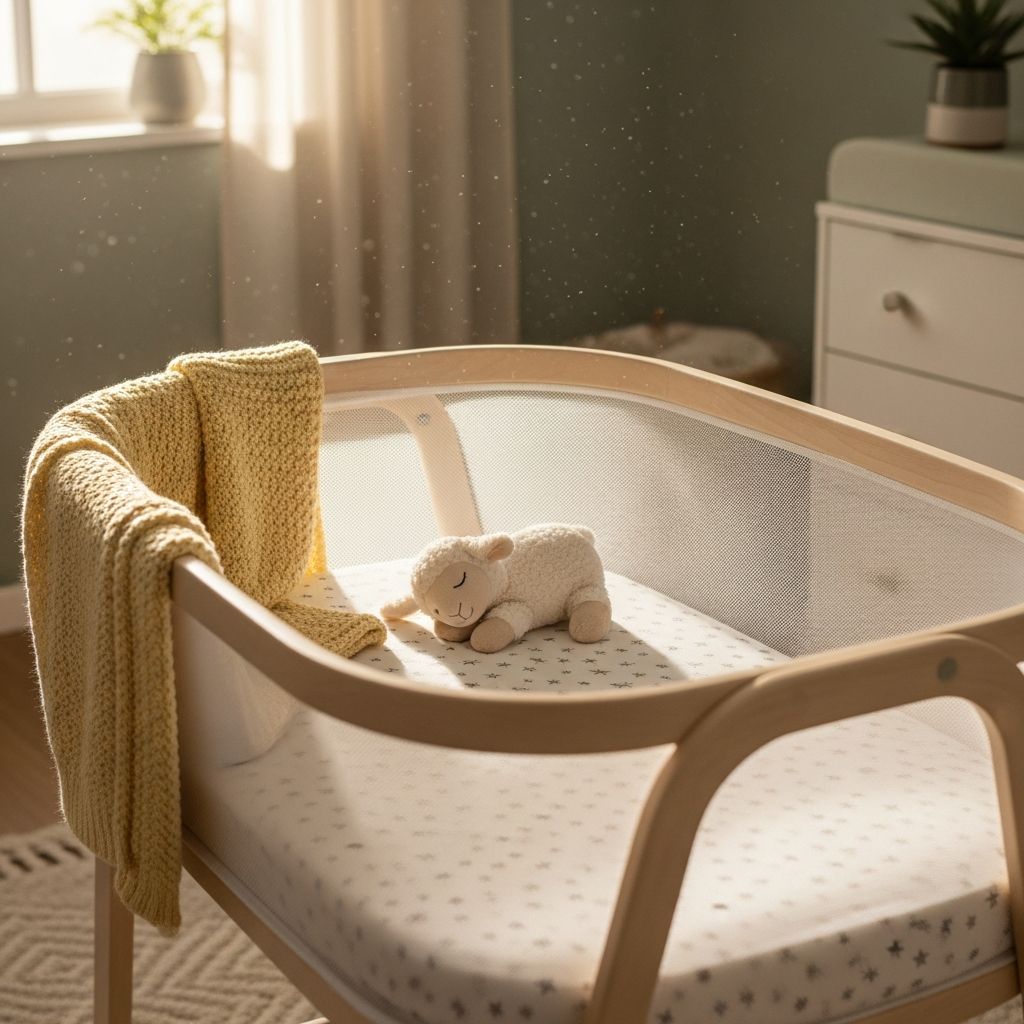
Baby bassinets give your newborn a snug, dedicated sleep space that can stay close to your bed, making night feeds easier while supporting safe-sleep practices recommended by pediatric experts.
What Is a Baby Bassinet?
A baby bassinet is a small, portable sleep space designed specifically for newborns and young infants, usually used from birth until roughly four to six months of age, or until the baby outgrows the weight and mobility limits set by the manufacturer.
Compared with a full-size crib, a bassinet has a smaller footprint, higher sides, and is often lighter and easier to move between rooms, which is why many parents use a bassinet in the early months before transitioning to a crib.
Why Parents Love Bassinets
Parents often choose bassinets for the first months because they strike a balance between safety, convenience, and emotional comfort.
- Room-sharing made simple: A bassinet fits beside the bed, allowing parents to keep their baby within arm’s reach without bed-sharing.
- Easier night feeds: Being able to reach the baby without crossing the room can reduce stress during frequent night wakings, especially for postpartum recovery.
- Compact for small spaces: Apartments or small bedrooms benefit from the smaller footprint of a bassinet compared with a full crib.
- Portability: Many models have wheels or lightweight frames so you can move baby from bedroom to living room without disturbing sleep.
- Soothing features: Some bassinets offer gentle rocking, vibration, or white noise to help calm fussy babies.
Types of Baby Bassinets
Not all bassinets are the same. Understanding the main types helps you match features to your lifestyle, home layout, and budget.
Standard Stationary Bassinets
Standard bassinets stand on a fixed base and provide a simple, no-frills sleep space. They typically include a firm, flat mattress pad, breathable sides, and sometimes a small storage shelf underneath.
- Best for parents seeking a budget-friendly, straightforward option.
- Usually lightweight and easy to move within the home.
- May include a removable canopy or basic mobile for visual interest.
Bedside or Co-Sleeper Bassinets
Bedside bassinets are designed to sit flush with your mattress, often with one side that lowers or opens so you can access your baby more easily while still maintaining a separate sleep surface.
- Helpful for nighttime breastfeeding, pumping, or bottle feeding.
- Can be reassuring if you want to see and hear your baby without getting out of bed.
- Some models strap or clip to the adult bed; secure installation is essential for safety.
Portable and Travel Bassinets
Portable bassinets focus on mobility. They may fold flat, include a carry handle, or convert into a travel bag, making them ideal for visits to grandparents, vacations, or daytime naps in different rooms.
- Often lighter and more compact, but still need a firm, flat sleep surface.
- Useful as a secondary sleep space when away from home.
- Some models double as a changing station or play area when baby is awake.
Rocking and Gliding Bassinets
Rocking or gliding bassinets add movement to help soothe babies. Some rock manually when nudged, while others glide gently on a fixed track.
- Motion can be calming for fussy babies when used under supervision.
- Look for designs that limit the angle of tilt to avoid unsafe positions.
- Parents should stop the rocking motion once baby is asleep to maintain a steady, flat surface.
Smart Bassinets
Smart bassinets use technology—sensors, gentle motion, and built-in white noise—to respond automatically when a baby fusses, often offering several levels of sound and movement.
- Some models track sleep patterns and can be controlled via smartphone apps.
- They tend to be significantly more expensive than traditional bassinets.
- Parents should still follow safe-sleep guidelines regardless of smart features.
Bassinet Styles Overview Table
| Type | Key Benefit | Best For |
|---|---|---|
| Standard stationary | Simple, budget-friendly, compact | Everyday home use on a budget |
| Bedside / co-Sleeper | Easy access from bed | Night feeds and recovery after birth |
| Portable / travel | Lightweight and foldable | Trips, small homes, multi-room use |
| Rocking / gliding | Gentle soothing motion | Parents who like motion-based calming |
| Smart | Automated soothing and tracking | Tech-friendly families with higher budgets |
Safety Guidelines for Bassinet Use
Safety should guide every decision about your baby’s sleep space. A bassinet must meet current safety standards, and it needs to be used correctly every time your baby sleeps.
- Firm, flat surface: The mattress pad should be firm and lie flat, with no sagging or inclines.
- Snug fit: There should be no gaps between the mattress and the bassinet walls where a baby’s face or body could become trapped.
- Breathable sides: Mesh or other breathable materials improve air circulation and visibility.
- No extra bedding: Keep the bassinet free of pillows, bumpers, quilts, and stuffed animals.
- Back to sleep: Always place your baby on their back for every sleep, including naps.
- Respect weight and age limits: Stop using the bassinet as soon as your baby reaches the manufacturer’s limit or starts rolling, pushing up, or attempting to sit.
- Stable placement: Set the bassinet on a flat, level surface away from cords, curtains, or window blinds.
Choosing the Right Bassinet for Your Family
Think beyond looks when picking a bassinet. Functionality, safety certifications, and long-term practicality matter most, especially during sleep-deprived nights.
Key Features to Consider
- Safety certification: Choose products that meet your country’s recognized infant sleep safety standards.
- Weight and age limits: Make sure the listed limits align with your baby’s projected growth.
- Adjustable height: An adjustable frame can line up the mattress with your bed height for easier access.
- Mobility: Lockable wheels or a lightweight frame help you move the bassinet safely between rooms.
- Ease of cleaning: Removable, washable covers and waterproof mattress protectors simplify cleanup after inevitable messes.
- Storage: A shelf or pockets underneath can hold diapers, wipes, and swaddles within reach.
- Soothing extras: Decide whether you want built-in white noise, vibration, or gentle rocking.
Bassinet vs. Crib: Which Comes First?
Many families use both a bassinet and a crib. A bassinet works well in the earliest months when you want baby near your bed, while a crib generally serves as the long-term sleep space through toddlerhood.
| Feature | Bassinet | Crib |
|---|---|---|
| Recommended age range | Birth to around 4–6 months (or until limits reached) | Birth to 2–3 years (or until outgrown) |
| Size | Small, easy to fit beside bed | Larger, requires more floor space |
| Portability | Often portable, sometimes foldable | Usually stationary, heavier |
| Longevity | Short-term use | Long-term primary sleep space |
| Cost | Wide range; standard models can be affordable | Greater initial investment but used longer |
Setting Up a Cozy Bassinet Area
Designing a bassinet corner can be both practical and enchanting, combining safety, comfort, and a style that fits your home.
Placement Tips
- Position the bassinet on a flat, uncluttered section of floor near your bed for easy nighttime access.
- Keep it away from windows, heaters, and direct air conditioning vents.
- Ensure nearby lamps or night-lights are bright enough for diaper changes but dim enough not to fully wake your baby.
Soft, Practical Touches
- Use a fitted sheet made for your specific bassinet mattress; avoid loose fabric.
- Keep a small caddy or basket next to the bassinet for diapers, wipes, spare onesies, and burp cloths.
- Add decor elements—such as wall art or a mobile mounted safely away from baby’s reach—that complement the space without overcrowding it.
When to Transition From Bassinet to Crib
Every baby grows at a different pace, so the right time to transition depends on both physical growth and developmental milestones. Always follow the recommendations in your bassinet’s manual.
- Transition when your baby approaches the maximum weight or height limit, even if they still seem small.
- Move to a crib if your baby begins rolling frequently, pushing up on hands and knees, or attempting to sit or pull up.
- Plan the move over several days, letting your baby take some naps in the crib before fully switching nighttime sleep.
Common Mistakes to Avoid
New parents juggle many details, so it helps to know the most frequent bassinet errors ahead of time.
- Adding extra padding, blankets, or pillows in an attempt to make the bassinet “cozier.”
- Continuing to use the bassinet after baby exceeds the listed limits or shows advanced mobility.
- Using aftermarket add-ons that are not designed or tested for your specific model.
- Forgetting to lock the wheels after moving the bassinet to a new location.
- Placing the bassinet near cords, blinds, or hanging decorations that baby could eventually grab.
Frequently Asked Questions About Baby Bassinets
How long can my baby safely sleep in a bassinet?
Most babies use a bassinet safely for around the first four to six months, but the exact length of time depends on your baby’s size, developmental milestones, and the specific product’s limits. Always stop using the bassinet once your baby rolls consistently, pushes up, or attempts to sit, even if they have not reached the weight limit yet.
Is a bassinet necessary if I already have a crib?
A bassinet is not strictly necessary, but many families find it highly convenient. The smaller size, portability, and ease of room-sharing can make nighttime care smoother in the early months, while a crib remains the long-term sleep solution.
Can my baby nap in the bassinet during the day?
Yes, as long as the bassinet meets safety standards and is used correctly, your baby can nap there during the day as well as sleep there at night. Keeping naps and nights in the same safe space can also help create a consistent sleep association.
What should my baby wear to sleep in a bassinet?
Choose fitted, breathable sleepwear appropriate for the room temperature, such as a onesie, footed pajamas, and optionally a wearable blanket or sleep sack instead of loose blankets. Your baby should be comfortably warm but not sweaty or overheated.
Can I use secondhand or handed-down bassinets?
Secondhand bassinets can be safe if they meet current safety standards, are structurally sound, and have not been recalled. Replace any old or ill-fitting mattresses with a new, firm pad designed for that model, and avoid using products that show signs of damage or missing parts.
A thoughtfully chosen bassinet can make the newborn stage feel more manageable—keeping your baby close, comfortable, and supported in a safe sleep environment while giving you the reassurance of having them right at your side.