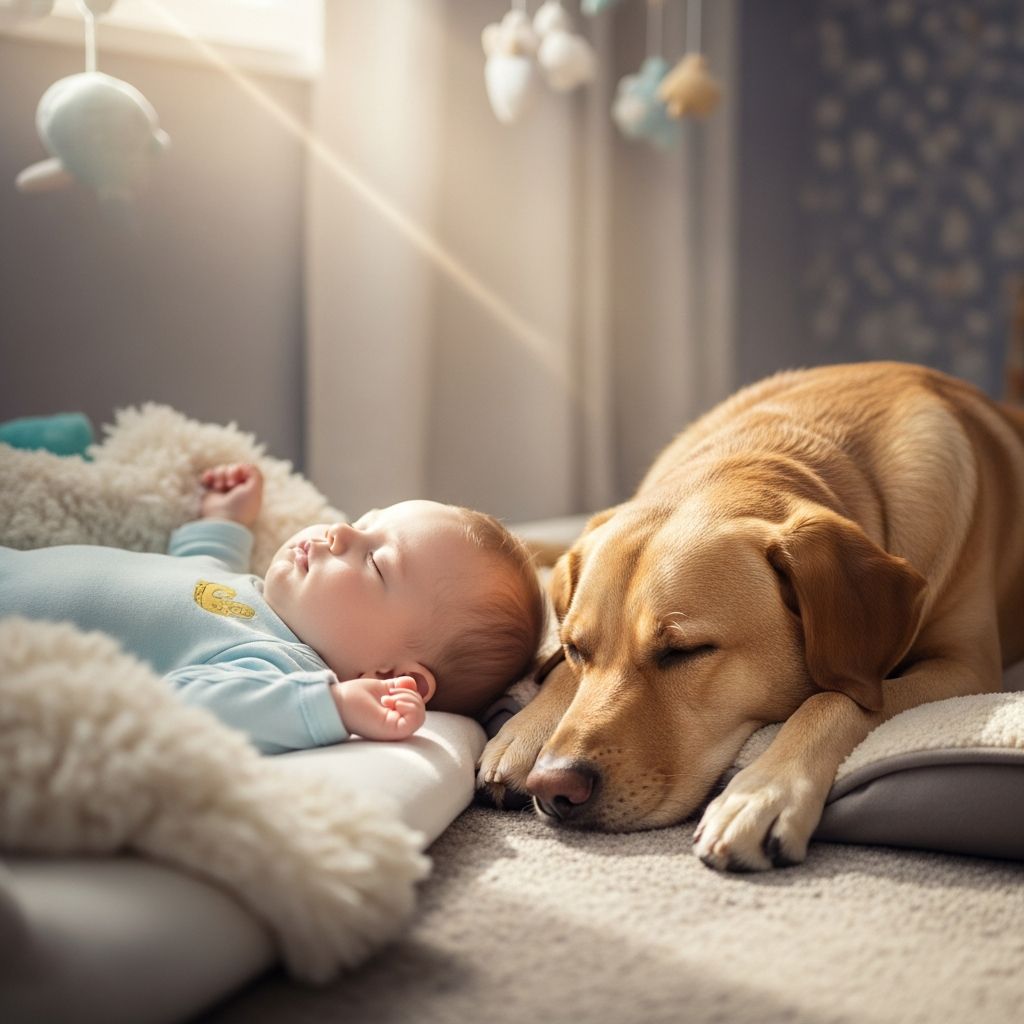
For many families, the bond between a baby and a beloved dog becomes one of the most unexpected joys of early parenthood. Watching a tiny child curl up beside a gentle pup can feel like a scene from a storybook, but those tender moments work best when safety and thoughtful routines come first.
Why Babies and Dogs Form Such Strong Bonds
Dogs often gravitate toward the newest, smallest family member with an instinctive mix of curiosity and protectiveness. Babies, in turn, grow fascinated by the warmth, movement, and soft fur of a dog resting nearby. Over time, this mutual fascination can turn into a powerful emotional connection that supports both comfort and confidence.
As this relationship grows, the sight of a baby dozing peacefully while a dog lies close by can become a symbol of trust in the household. That trust, however, should always be supported by clear rules and careful supervision, especially during naps when everyone is more relaxed and less alert.
Safety First: Ground Rules for Shared Nap Spaces
Nap-time is when parents want to exhale and savor the quiet, but it is also the moment when a few smart ground rules matter most. The priority is always the baby’s safety and the dog’s comfort, so the nap environment should be set up to protect both. When expectations are clear, nap-time can be sweet instead of stressful.
- Always keep the baby’s primary sleep space separate, secure, and compliant with safe-sleep guidelines (such as a crib or bassinet with a firm mattress and no loose bedding).
- Allow the dog to rest nearby, not in the crib or bassinet, so the baby has a fully protected personal space.
- Supervise any shared couch, floor, or bed naps closely; if you feel sleepy, move the baby to a safe, independent sleep surface and gently guide the dog to a comfortable spot on the floor.
- Watch for signs of discomfort from the dog (stiff body, yawning, lip-licking, moving away) and give the dog immediate space from the baby if they appear uneasy.
- Teach children, as they grow, that the dog’s bed is a resting zone that deserves respect and gentle behavior.
Setting Up the Ideal Nap Environment
Creating a peaceful nap environment that feels safe for everyone is the foundation of successful baby-and-dog rest time. A thoughtfully prepared space not only protects your child but also gives your dog predictable boundaries, which helps reduce anxiety and overstimulation.
| Element | For the Baby | For the Dog |
|---|---|---|
| Sleep Surface | Firm mattress, fitted sheet, no pillows or loose blankets, approved crib or bassinet | Comfortable bed or mat placed a safe distance from the crib |
| Noise Level | White noise or soft household sounds to promote consistent sleep | Predictable sound environment so sudden noises do not trigger barking |
| Lighting | Dim or filtered light to encourage drowsiness and longer naps | Soft light that keeps the dog calm while still letting them see surroundings |
| Boundaries | Crib rails or bassinet walls to ensure a defined, secure baby zone | Baby gate, crate, or designated rest spot to prevent crowding the crib |
| Safety Checks | No cords, small toys, or loose items within reach of the baby | No chewable baby items near the dog that might cause resource guarding |
Building Trust Through Gentle Introductions
Heart-melting nap photos usually come after many small, calm introductions between baby and dog. In the early weeks and months, the focus should be on teaching the dog to relax around the baby’s sounds and movements, not on orchestrating cute poses. This approach helps your dog understand that the baby’s presence predicts positive experiences, not chaos.
- Start by letting the dog observe the baby from a short distance while you speak in a calm, reassuring voice.
- Offer treats or praise when the dog lies down quietly near the baby’s space, reinforcing relaxed behavior.
- Gradually shorten the distance over time, always watching the dog’s body language for signs of stress or excitement.
- Keep early interactions brief and end them on a calm note, before either the baby or the dog becomes overstimulated.
Creating a Predictable Nap Routine
Children and dogs both respond well to predictable rhythms, and nap-time is no exception. A consistent routine signals to the baby that sleep is coming, and it helps the dog anticipate when quiet time is expected. Over time, both may naturally drift into resting together, each in their own space, without much prompting.
An example routine might include a short wind-down period, placing the baby in the crib, inviting the dog to a designated bed nearby, and then using the same simple cue words each day. By linking the same sequence of steps to nap-time, everyone in the household learns what comes next.
Sample Nap-Time Flow for Families with Dogs
Every family will adapt routines to their own schedule, but having a simple model can be helpful when starting out. The key idea is to weave together the baby’s sleep needs and the dog’s exercise and attention in a way that supports calm behavior from both.
- Pre-nap play: Give the dog a short walk or play session to release extra energy while the baby is awake but winding down.
- Quiet transition: Dim the lights, lower the household noise, and speak softly to both baby and dog.
- Baby wind-down: Change the baby’s diaper, offer a feeding if needed, and use a short, soothing ritual like a song or gentle rocking.
- Dog cue: Ask the dog to go to their bed or mat, rewarding calm behavior with a chew, toy, or simple praise.
- Safe placement: Lay the baby in the crib or bassinet, check that the area is clear of loose items, and make sure the dog cannot jump into the sleep space.
- Supervised rest: Stay close for a few minutes, observing how both settle; adjust distances or boundaries as needed.
Reading Your Dog’s Body Language Around the Baby
Safe nap-time depends as much on the dog’s emotional state as on the physical setup of the room. Learning to read subtle signals can help you make timely decisions before tension or discomfort escalates. When in doubt, more space and more structure are always better than less.
- Relaxed signs: Soft eyes, loose body, slow breathing, and choosing to lie down near but not on top of the baby’s space.
- Overstimulated signs: Rapid tail wagging, pacing, whining, or repeatedly trying to jump onto furniture near the baby.
- Stressed signs: Stiff posture, yawning outside of tiredness, lip-licking, pinned-back ears, or turning the head away.
- Clear boundary: If any stressed or overstimulated signs appear, calmly redirect the dog to a separate rest area and reward relaxation there.
Respecting the Baby’s Developmental Stages
As babies grow from sleepy newborns into curious crawlers, nap-time dynamics change dramatically. A dog that was content to lie beside a still infant may feel overwhelmed once the baby begins grabbing fur or pulling ears. Adjusting expectations at each stage keeps both baby and dog safe and comfortable.
When the baby becomes mobile, supervision must become even more active. This is the time to reinforce gentle touch, short, structured interactions, and the idea that the dog’s bed is not a playground. Nap-time may shift from close proximity to more defined separation again, and that is perfectly fine.
Health and Hygiene Considerations
Beyond behavior, health and hygiene deserve thoughtful attention whenever babies and dogs share living spaces. While most family dogs pose little risk when vaccinated and well cared for, small preventative steps can reduce allergens, germs, and avoidable discomfort. This becomes especially important if the baby has sensitive skin or respiratory issues.
- Keep the dog up to date on veterinary checkups, vaccinations, and parasite prevention.
- Brush the dog regularly to reduce loose hair in the areas where the baby spends time.
- Wash baby bedding frequently, especially if the dog often relaxes nearby.
- Have a designated spot for the dog to shake off water or dirt after outdoor play, away from the baby’s nap zone.
Capturing Memories Without Compromising Safety
Many parents cherish photos of their child snuggled up with the family pet, especially during quiet naps. It is natural to want to capture these moments, but staged photos should never override common-sense safety measures. A cute picture is not worth any risk to your child or unnecessary stress for your dog.
- Arrange the baby on a secure surface, keeping the dog on the floor or on a separate, stable area next to it.
- Keep at least one adult within arm’s reach of both baby and dog while photos are being taken.
- Limit photo sessions to very short periods so neither the baby nor the dog becomes restless or frustrated.
- Consider using angles, pillows behind the camera, or close cropping to make them look closer together than they truly are.
When to Seek Professional Guidance
Most families will never encounter serious issues when managing nap-time with a dog and baby, but some situations call for expert help. If your dog shows repeated signs of anxiety or aggression around the baby, professional guidance can make the difference between ongoing stress and a harmonious household.
Consider reaching out to a certified trainer or behaviorist if the dog growls, snaps, or guards space or objects when the baby is nearby. Early intervention can help rebuild positive associations and offer training strategies tailored to your dog’s temperament and your living environment.
Frequently Asked Questions
Is it ever safe for a dog to sleep in the crib with a baby?
No. A dog should never be allowed in the crib or bassinet with a baby. Even the gentlest dog is too large, too heavy, and too unpredictable to share such a small sleep space safely.
Can my dog stay in the nursery during naps?
Yes, many families allow a calm, well-trained dog to rest in the nursery during naps, as long as the dog remains on the floor or in a separate bed. Always supervise and ensure the dog cannot jump into the crib or block access to the baby.
What if my dog whines when the baby goes down for a nap?
Whining may signal anxiety, excitement, or confusion about the new routine. Try giving the dog a special chew or puzzle toy that comes out only at nap-time, helping them associate the baby’s rest with their own relaxing, positive activity.
How close is too close for my dog during nap-time?
If the dog can reach the baby with a sudden movement, they are too close. A safe distance is one where the dog can see and smell the baby but cannot make physical contact without you intentionally bridging the gap.
Will my baby’s naps improve or worsen with a dog in the room?
Every child is different. Some babies find the rhythmic breathing and presence of a dog calming, while others may wake more frequently if the dog shifts, scratches, or barks. Observe your child’s patterns and adjust by moving the dog farther away or out of the room if naps become too disrupted.
Key Takeaways for Sweet, Safe Nap-Time
The dream of baby-and-dog nap-time harmony is absolutely achievable with patience, preparation, and clear boundaries. When parents combine safe sleep practices for the baby with structured routines and close supervision for the dog, those quiet, heartwarming moments can unfold naturally.
- Keep the baby’s sleep surface dog-free, firm, and uncluttered.
- Offer the dog its own restful spot nearby and reward calm behavior.
- Supervise all nap-time interactions and adjust your setup as your baby grows and becomes more active.
- Seek professional help if your dog shows signs of stress or aggression around the baby.