Understanding Preeclampsia and Its Impact on Maternal Health
Preeclampsia represents one of the most serious complications that can develop during pregnancy, affecting between 2% and 8% of pregnancies worldwide. This condition, characterized by elevated blood pressure and protein in the urine, poses significant risks to both mother and developing fetus. The World Health Organization estimates that preeclampsia and related conditions contribute to over 70,000 maternal deaths and approximately 500,000 fetal deaths annually across the globe. Despite its prevalence and severity, preeclampsia remains notoriously difficult to predict using traditional clinical methods, often catching healthcare providers and expectant mothers off guard.
The unpredictable nature of preeclampsia has long presented a clinical challenge. Many women develop the condition without displaying obvious warning signs in advance, and conventional risk assessment strategies based solely on maternal history and demographics miss more than half of the cases that eventually occur. This diagnostic gap has driven medical researchers to develop innovative screening approaches that can identify at-risk pregnancies much earlier, potentially allowing for preventive interventions before serious complications emerge.
The Science Behind At-Home Blood Test Technology
Recent breakthroughs in prenatal screening have introduced a revolutionary approach to preeclampsia detection through advanced blood testing methods. These tests leverage cutting-edge molecular biology techniques that analyze circulating cell-free RNA and DNA shed from the placenta into the maternal bloodstream during pregnancy. The placenta continuously releases microscopic fragments of genetic material into the mother’s circulation, creating a biological signal that scientists can now capture and analyze to assess pregnancy health.
The innovation centers on using liquid biopsy technology, which involves analyzing biological materials in blood samples without requiring invasive procedures. Researchers identified specific patterns in gene expression that are associated with preeclampsia development. For example, one groundbreaking study identified 18 genes whose expression patterns, when measured through a simple blood test before 16 weeks of pregnancy, can predict preeclampsia risk with substantial accuracy. Other approaches examine cell-free DNA sequences and apply machine learning algorithms to identify subtle molecular signatures indicative of future preeclampsia development.
What makes this technology particularly valuable is its ability to detect preeclampsia risk months before clinical symptoms appear. Studies demonstrate that first-trimester blood tests can identify high-risk pregnancies as early as 18 weeks before symptom onset, providing a crucial window for medical intervention and enhanced monitoring. This early warning system fundamentally changes the approach to managing this dangerous condition.
Clinical Accuracy and Effectiveness of Current Tests
Multiple blood-based preeclampsia screening tests have demonstrated impressive accuracy rates across different stages of pregnancy. These tests vary slightly in their methodology and timing, but all offer significant improvements over traditional screening approaches.
First-Trimester Screening Performance
First-trimester blood tests represent the earliest opportunity for preeclampsia risk assessment. Recent research published in peer-reviewed journals shows that cell-free RNA-based models can achieve 83% sensitivity and 90% specificity for detecting early-onset preeclampsia when conducted between 9 and 14 weeks of gestation. Another approach utilizing gene expression analysis demonstrates 75% accuracy in identifying women who will develop preeclampsia with or without severe features. These tests combine maternal demographic factors with biochemical and biophysical markers including placental growth factor (PlGF), pregnancy-associated plasma protein-A (PAPP-A), and uterine artery pulsatility index (UtAPI) measurements, achieving sensitivities up to 90%.
Second and Third Trimester Options
For women who receive prenatal care later in pregnancy, alternative screening approaches exist. Tests administered during the second and third trimesters use biomarkers such as soluble fms-like tyrosine kinase-1 (sFlt-1) and PlGF to assess the risk of preeclampsia progressing to severe features within the subsequent two weeks, with sensitivity reaching 93.5%. Even more specialized tests for women presenting with new-onset hypertension in pregnancy can predict severe preeclampsia development within two weeks with up to 96% accuracy.
Advantages of At-Home Testing Convenience
The introduction of at-home blood collection options for preeclampsia screening offers several practical benefits for pregnant individuals:
- Accessibility and Ease: At-home testing eliminates the need for office visits specifically for screening purposes, allowing women to participate in testing on their own schedule from the comfort of their homes.
- Reduced Healthcare Burden: Pregnant women can minimize time away from work or family obligations by collecting samples at home rather than scheduling separate appointments for blood draws.
- Lower Anxiety: Some women experience anxiety related to medical office visits or blood draws; home testing can reduce this stress while maintaining the medical benefits of screening.
- Wide Availability: At-home tests make preeclampsia screening accessible to women in underserved areas with limited access to specialized prenatal care facilities.
- Simplified Collection: Modern at-home blood collection kits use minimally invasive finger-stick technology rather than traditional venipuncture, making the process simpler and less intimidating.
Integration Into Standard Prenatal Care
Medical professionals anticipate that at-home preeclampsia blood testing will become increasingly integrated into routine prenatal screening protocols. The goal is to make these tests a seamless component of standard pregnancy care, similar to how gestational diabetes screening or chromosome abnormality testing currently functions. To achieve this integration, researchers are conducting studies on the practical implementation of cfRNA-based screening within clinical practice settings, with some experts projecting availability within standard care within one year.
Healthcare providers emphasize that at-home testing represents a complementary tool rather than a replacement for clinical monitoring. Women who screen positive or at elevated risk would still require follow-up evaluations and more intensive monitoring by their healthcare team. The value of early identification lies in enabling preventive strategies and closer supervision that can reduce the likelihood of serious complications.
Risk Factors and Population-Specific Considerations
Certain groups of women face higher preeclampsia risk and may benefit particularly from early screening through at-home blood tests. Traditional risk factors include first pregnancy status, prior history of preeclampsia, existing hypertension, chronic kidney disease, and maternal age over 35 years. However, preeclampsia can develop in women without any recognized risk factors, highlighting the importance of universal screening capabilities.
Research also indicates that racial and ethnic disparities exist in preeclampsia incidence and outcomes. Black women in the United States experience significantly higher preeclampsia rates than white and Asian counterparts due to complex interactions of biological, social, and cultural factors. At-home testing availability may help address healthcare equity by providing convenient screening access across diverse populations and reducing barriers to early detection.
How At-Home Blood Collection Works
The practical process for at-home preeclampsia screening involves several straightforward steps designed for ease and safety:
- Women order a testing kit online or receive one from their healthcare provider
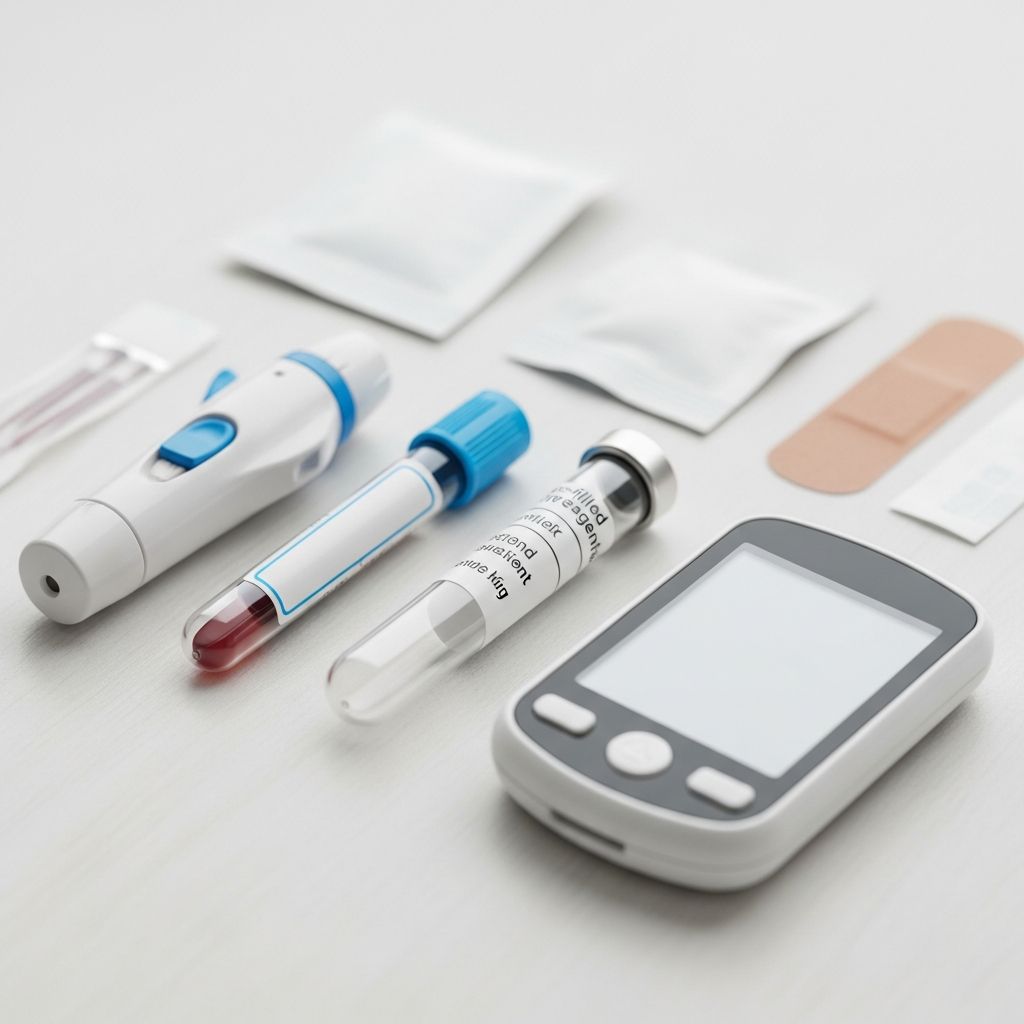
- The kit arrives with detailed instructions for blood sample collection using a sterile lancet for a finger stick
- A small blood sample is collected onto a collection card or into a special tube provided in the kit
- The sample is sealed and prepared according to kit instructions
- The sample is mailed to the testing laboratory using a prepaid return envelope
- Laboratory personnel process and analyze the sample using advanced sequencing and gene expression analysis
- Results are typically returned to the patient and her healthcare provider within one to two weeks
- Healthcare providers review results and recommend appropriate follow-up care based on findings
Interpreting Test Results and Next Steps
At-home preeclampsia blood test results typically categorize risk into defined tiers. Women receiving results indicating elevated preeclampsia risk require closer monitoring and may benefit from preventive interventions recommended by their medical team. Common management approaches for high-risk pregnancies include more frequent blood pressure monitoring, regular fetal assessments, increased prenatal visit frequency, and consideration of medications such as low-dose aspirin or other interventions shown to reduce preeclampsia progression.
Results indicating lower risk allow for more standard prenatal care while maintaining awareness of preeclampsia symptoms. All pregnant women should understand warning signs including severe headaches, vision disturbances, upper abdominal pain, swelling, and rapid weight gain, requiring immediate medical attention regardless of test results.
Addressing Common Questions About At-Home Testing
Q: How accurate are at-home preeclampsia blood tests compared to office-based testing?
A: At-home blood collection methods achieve the same accuracy as office-based draws when the sample is properly collected and processed. The testing laboratory performs identical analyses regardless of collection location, with accuracy rates ranging from 75% to 96% depending on the specific test and pregnancy stage.
Q: Can at-home blood tests detect preeclampsia at any stage of pregnancy?
A: Different tests are optimized for different pregnancy stages. First-trimester tests provide earliest detection around 9 to 14 weeks, while other tests are specifically designed for second and third trimester use. Your healthcare provider will recommend the most appropriate test based on your pregnancy timeline.
Q: What should I do if my at-home preeclampsia test results indicate elevated risk?
A: Contact your healthcare provider immediately to discuss results and establish an appropriate monitoring plan. Elevated risk does not mean you will definitely develop preeclampsia but indicates the need for closer supervision and potentially preventive measures to reduce your risk.
Q: Are at-home preeclampsia blood tests covered by insurance?
A: Coverage varies by insurance plan and individual policy terms. Many plans cover preeclampsia screening, particularly for women with risk factors, but you should check with your insurance provider about coverage before ordering a test.
Q: How do at-home blood collection kits ensure sample quality and prevent contamination?
A: Professional testing kits include sterile collection supplies, detailed instruction materials, and secure packaging designed to maintain sample integrity during transport. Following kit instructions carefully ensures results reliability.
The Future of Prenatal Screening and Preeclampsia Detection
The advancement of at-home blood testing for preeclampsia represents part of a broader transformation in prenatal care toward earlier, more accessible screening. As technology continues improving, these tests will likely become more sensitive, more specific, and easier to integrate into routine pregnancy care. Ongoing research focuses on further refining the molecular signatures associated with preeclampsia, expanding testing capabilities to predict late-onset preeclampsia more accurately, and understanding how to best implement these tools across diverse healthcare settings and populations.
The ultimate goal of this medical innovation extends beyond simply detecting preeclampsia risk—it aims to enable preventive interventions that reduce maternal and fetal complications, improve pregnancy outcomes, and save lives. By shifting from reactive disease management to proactive early identification, at-home blood testing technology has the potential to fundamentally improve the safety and quality of prenatal care for millions of pregnant individuals worldwide.
References
- New blood test accurately predicts preeclampsia — UW Medicine. 2024. https://newsroom.uw.edu/news-releases/new-blood-test-accurately-predicts-preeclampsia
- Early blood test accurately predicts preeclampsia months before symptoms — Contemporary OB/GYN. 2025. https://www.contemporaryobgyn.net/view/early-blood-test-accurately-predicts-preeclampsia-months-before-symptoms
- Stanford PRC Scientists Predict Preeclampsia Risk with Blood Test — March of Dimes. 2024. https://www.marchofdimes.org/our-work/research/blog/preeclampsia-risk-prediction
- Cedars-Sinai Study Leads FDA to Approve Test for Preeclampsia in Preterm Pregnancies — Cedars-Sinai. 2024. https://pulse.cedars-sinai.org/news/cedars-sinai-study-leads-fda-to-approve-test-for-preeclampsia-in-preterm-pregnancies
- Preeclampsia Testing for Early Detection — Labcorp Women’s Health. 2025. https://womenshealth.labcorp.com/providers/pregnancy/preeclampsia-screening
- New blood test could predict preeclampsia in the first trimester — STAT News. 2025. https://www.statnews.com/2025/06/30/preeclampsia-blood-test-first-trimester-detection-new-research/