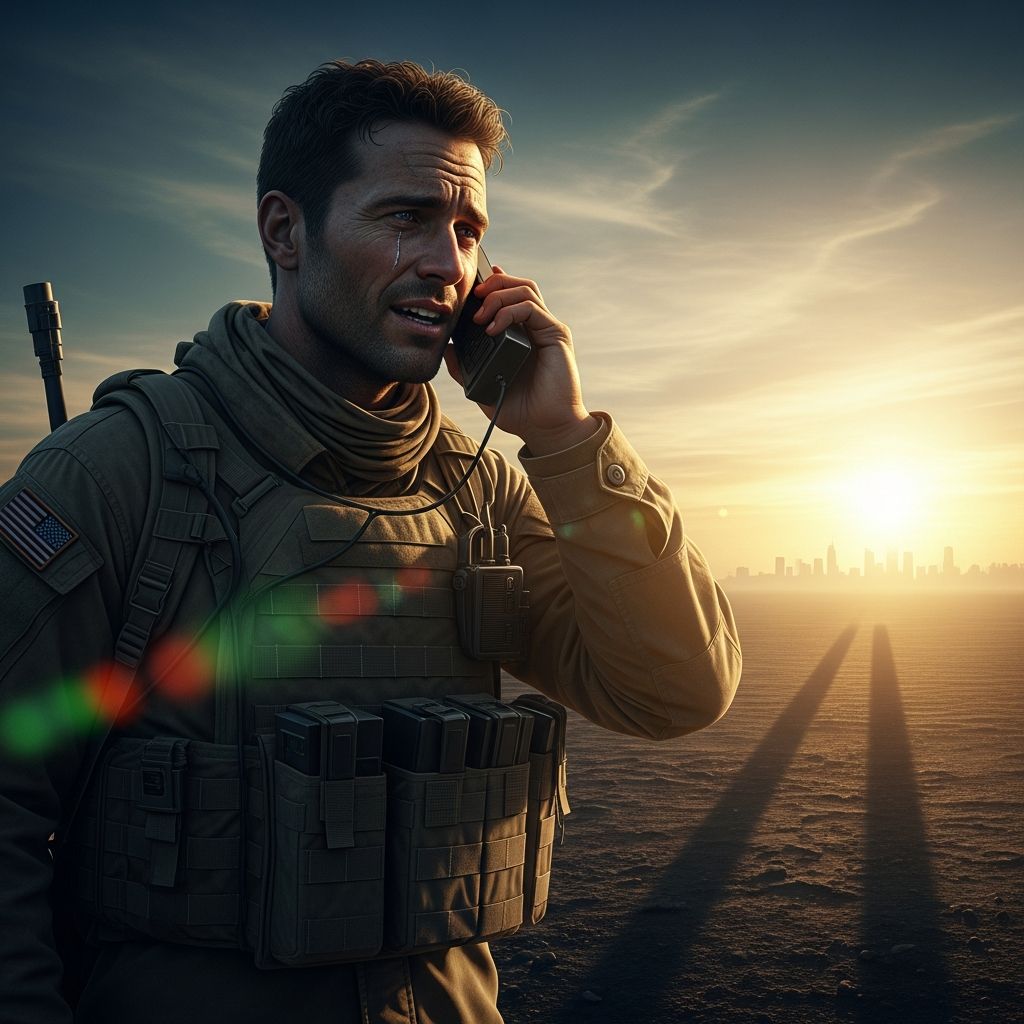
In an era where military service often separates families across continents, one U.S. Army sergeant’s determination turned an impossible timeline into a heartwarming reality. Army Sgt. Francois Clerfe, stationed in Iraq, embarked on a grueling two-day journey spanning over 8,000 miles and 10 flights to be present for the birth of his first child. His story highlights the unbreakable bonds of family and the supportive policies that make such feats possible.
The Call to Action: Leveraging Military Leave Policy
Military families face unique challenges, especially during pivotal life events like the arrival of a newborn. The U.S. Army provides emergency leave provisions for service members expecting their first child, allowing them to prioritize family without career repercussions. Sgt. Clerfe activated this policy upon learning his wife, Natallia Svistunova, was approaching labor. This regulation, outlined in Army Directive 2020-06 (updated for contemporary use), ensures that soldiers can travel home for births, adoptions, or other family emergencies, reflecting the branch’s commitment to family readiness.
Such policies are crucial in maintaining morale among troops deployed overseas. According to the U.S. Department of Defense’s Family Support Programs, over 70% of active-duty personnel are parents, making family separation a persistent stressor. Clerfe’s swift approval for leave underscores how these measures bridge the gap between duty and home life.
Mapping the Epic Route: From Iraq to California
The sergeant’s itinerary was a logistical marvel, crisscrossing the globe in a bid against time. Starting from a forward operating base in Iraq, he boarded his first flight to Kuwait, a common hub for U.S. military transit in the region. From there, the path veered to Turkey for a connection, then to Frankfurt, Germany—a major U.S. Air Force gateway in Europe.
Crossing the Atlantic, Clerfe landed in Baltimore, Maryland, before a domestic hop to Atlanta, Georgia. His final leg brought him to Monterey Peninsula Airport in California, just minutes before the big moment. This route exemplifies the complex web of military and commercial flights that service members navigate during emergency travel.
| Leg | From | To | Distance (Approx.) |
|---|---|---|---|
| 1 | Iraq | Kuwait | 500 miles |
| 2 | Kuwait | Turkey | 1,200 miles |
| 3 | Turkey | Frankfurt | 1,500 miles |
| 4 | Frankfurt | Baltimore | 4,000 miles |
| 5 | Baltimore | Atlanta | 600 miles |
| 6-10 | Various | Monterey, CA | 2,200 miles total |
| Total Air Miles | ~8,000 miles | ||
This table illustrates the scale of Clerfe’s endeavor, with layovers adding to the physical and emotional toll. Jet lag, security screenings, and unpredictable delays tested his resolve, yet he pressed on.
A New Year’s Miracle: Julia’s Arrival
Julia Clerfe entered the world at 9:53 a.m. on January 1, 2026, at Community Hospital of the Monterey Peninsula in California. Weighing in healthy and strong, she was officially the hospital’s first baby of the new year, earning her family local recognition and celebratory gifts. Natallia, enduring labor while her husband raced across time zones, welcomed both her daughter and her exhausted partner into the delivery room.
The timing was serendipitous; Julia was due on January 9 but arrived nine days early, forcing Clerfe into high gear. Hospital staff noted the emotional reunion, with the sergeant cutting the umbilical cord and holding his daughter for the first time after 48 hours of non-stop travel.
Challenges of Military Parenthood
- Deployment Separations: Over 200,000 U.S. military children have a parent deployed annually, per DoD statistics, leading to heightened anxiety and adjustment issues.
- Travel Logistics: Emergency leaves involve coordinating with unit commanders, securing flights via the Air Mobility Command, and managing fatigue from 20+ hour journeys.
- Emotional Strain: Spouses like Natallia often handle pregnancies solo, relying on military family support networks for medical and emotional aid.
- Post-Birth Transitions: Returning soldiers face reintegration, balancing newborn care with potential redeployment.
Clerfe’s experience amplifies these realities. As a combat engineer, his role in Iraq involved high-stakes infrastructure projects, yet family remained paramount.
Support Systems for Military Families
The military ecosystem offers robust resources to ease these burdens. Programs like the Army Family and Morale, Welfare and Recreation (MWR) provide counseling, childcare, and financial aid. The Exceptional Family Member Program (EFMP) supports families with special needs, while New Parent Support Programs offer home visits and parenting classes.
In Clerfe’s case, his wife’s proximity to a military community in Monterey—home to the Defense Language Institute—ensured top-tier prenatal care. Non-profits like Blue Star Families further bridge gaps with virtual support groups and advocacy.
Personal Reflections: Fatherhood Amid Duty
Sgt. Clerfe later shared that the exhaustion paled against the joy of witnessing Julia’s first cry. “Every mile was worth it,” he remarked, encapsulating the paternal drive that propelled him. Natallia described the moment as surreal, transitioning from solo labor anticipation to a complete family unit.
This narrative resonates with countless service members. Similar stories, like that of Spc. Brooks Lindsey who watched his daughter’s birth via FaceTime due to delays, highlight varied outcomes but shared devotion.
Broader Implications for Policy and Society
Clerfe’s journey spotlights the need for enhanced travel support. Recent DoD initiatives, including expanded telehealth for prenatal care and priority boarding for emergency leaves, aim to modernize these aids. Advocacy groups push for extended paternity leave, currently 12 weeks for new military parents under the Federal Employee Paid Leave Act.
Society benefits too; strong family units bolster troop retention. A 2025 RAND Corporation study found that family satisfaction correlates with 15% higher reenlistment rates.
Frequently Asked Questions (FAQs)
What policy allowed Sgt. Clerfe to travel home?
The U.S. Army’s emergency leave policy for first births, permitting up to 14 days of travel and recovery time.
How long was the total journey?
Approximately two days, covering 8,000 air miles across 10 flights from Iraq to California.
Was Julia healthy at birth?
Yes, born healthy at 9:53 a.m. on January 1, 2026, as the hospital’s first newborn of the year.
Are such travels common for deployed soldiers?
Yes, thousands utilize emergency leave annually, supported by Air Mobility Command logistics.
What support exists for military moms during deployment?
Programs like New Parent Support and EFMP provide counseling, childcare, and medical resources.
Lessons in Resilience and Reunion
Sgt. Francois Clerfe’s odyssey from Iraqi sands to a California delivery room exemplifies human endurance. It reminds us that amid global conflicts and separations, family anchors us. As Julia grows, her father’s epic homecoming will be a cherished family legend, inspiring future generations of military kin.
References
- Soldier travels across the world to see his daughter’s birth — WSVN. 2026-01-03. https://wsvn.com/news/us-world/soldier-travels-across-the-world-to-see-his-daughters-birth/
- Stranded soldier watches daughter’s birth on FaceTime — CBS Evening News (YouTube). 2026 (approx.). https://www.youtube.com/watch?v=KBM2gU7cZVM
- This soldier traveled around the world just in time to see his first baby born — Mother.ly. 2026-01 (approx.). https://www.mother.ly/life/this-soldier-traveled-around-the-world-just-in-time-to-see-his-first-baby-born/