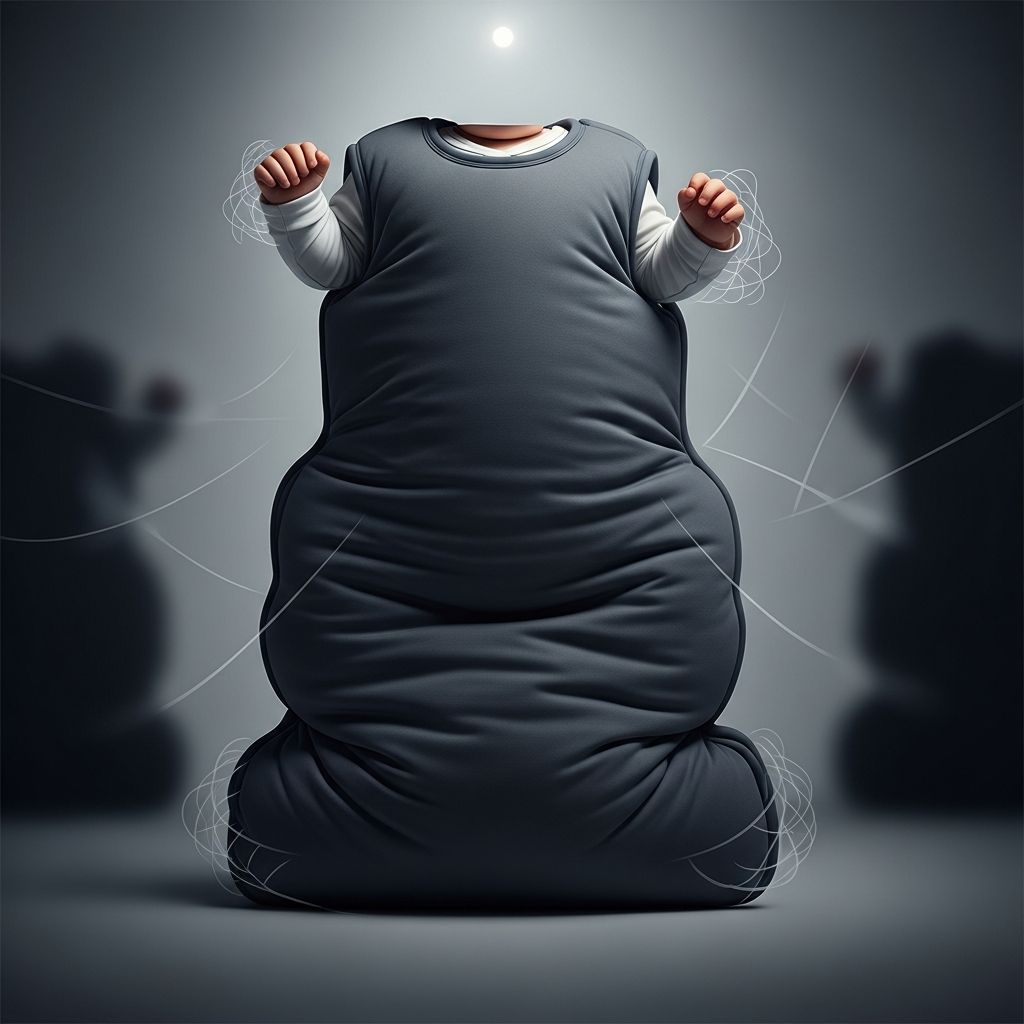
Weighted sleep sacks have gained popularity among exhausted parents seeking longer stretches of infant sleep, but leading health organizations classify them as unsafe for babies under 12 months. These products, designed to mimic the comforting pressure of parental touch through added weight, raise serious concerns about breathing difficulties, oxygen deprivation, and heightened SIDS risk, prompting urgent warnings from authorities like the American Academy of Pediatrics (AAP) and the Consumer Product Safety Commission (CPSC).
Understanding Weighted Sleep Sacks and Their Appeal
These garments typically feature evenly distributed weights, often using beads or pellets sewn into panels, ranging from 0.5 to 1 pound total depending on baby size. Manufacturers claim they promote deeper sleep by providing deep pressure stimulation, similar to weighted blankets used by adults for anxiety relief. Parents report anecdotal success, with some brands boasting thousands of positive reviews for faster sleep onset and fewer night wakings.
However, infant physiology differs vastly from adults. Newborns possess flexible rib cages and underdeveloped respiratory systems, making them vulnerable to even mild chest pressure. This theoretical benefit clashes with physiological realities, fueling expert debates.
Official Stances from Health Authorities
The AAP’s 2022 safe sleep guidelines explicitly state: “It is recommended that weighted blankets, weighted sleepers, weighted swaddles, or other weighted objects not be placed on or near the sleeping infant.” This position stems from insufficient safety data and potential arousal suppression, a key SIDS protective mechanism.
The CPSC echoes this, issuing stark warnings: “Don’t use weighted blankets or weighted swaddles for your babies.” They highlight documented infant deaths linked to these items and reductions in oxygen saturation (SpO2) levels, which could impair brain development if prolonged.
CDC and NIH align, deeming weighted sleepers, sacks, swaddles, and blankets unsafe for infants. Retail giants like Amazon and Walmart have pulled select products following CPSC letters, underscoring regulatory gravity.
Scientific Evidence: Limited Data, Serious Implications
No peer-reviewed studies confirm weighted sleep sacks’ safety for healthy infants in unsupervised home environments. The AAP notes in a 2023 CPSC letter: “There is no evidence in the peer-reviewed scientific literature evaluating the safety of weighted sleep products on typical, healthy infants.” Absence of proof isn’t proof of safety, especially given SIDS hypotheses involving impaired arousal.
Preliminary data links these products to lower SpO2, potentially harmful to developing brains. Dr. Rachel Moon, AAP SIDS task force co-chair, explains newborns’ non-rigid rib cages allow minimal pressure to obstruct breathing or cardiac function.
One small study on 16 infants with neonatal abstinence syndrome (NAS) found weighted blankets tolerable under monitoring, but it doesn’t generalize to healthy babies or unmonitored sleep. Manufacturers cite millions of sales without hazard patterns and ongoing trials, like Dreamland Baby’s 2024 Indiana University study, yet experts prioritize proven risks over unverified claims.
| Organization | Recommendation | Primary Concern |
|---|---|---|
| AAP | Do not use | No safety data; arousal suppression; SIDS risk |
| CPSC | Strongly advise against | Infant deaths; low oxygen levels |
| CDC/NIH | Not safe | Breathing obstruction in infants |
Reported Risks and Real-World Incidents
Multiple infant fatalities are associated with weighted sleep products, mirroring inclined sleeper tragedies like the Rock N’ Play, linked to over 100 deaths. CPSC Commissioner Richard Trumka Jr. references personal encounters with grieving parents, emphasizing sustained low oxygen’s brain harm.
Pediatricians like Dr. Nilong Vyas warn of chest weight hindering deep breaths in growing bodies, risking severe harm or death. Even distribution doesn’t eliminate concerns, as supine positioning offers no escape from pressure during sleep.
- Reduced Oxygen Saturation: Evidence shows drops in SpO2, threatening neurodevelopment.
- Breathing Obstruction: Flexible infant chests compress easily.
- Arousal Impairment: May elevate SIDS by blunting wake responses.
- Overheating/Movement Restriction: Added layers and weight limit natural positioning.
Manufacturer Counterarguments and Parental Dilemmas
Brands like Dreamland Baby and Nested Bean assert safety through pediatric collaborations, breathable fabrics, and NICU use for NAS infants. They challenge AAP references as theoretical, noting 3.5 million units sold without incident patterns and high review scores.
Parents face tough choices amid sleep deprivation. Some, like Gloria Gamboa, reject sacks for feeling too heavy and mobility-restricting. Others weigh unproven benefits against authority warnings, but experts urge erring on caution.
Safer Alternatives for Better Baby Sleep
Adhere to AAP’s ABCs: Alone, Back, Crib. Opt for lightweight, unwrapped sleep sacks meeting safety standards (e.g., no more than 1 tog, armholes for rolling).
- Standard Sleep Sacks: Promote safe swaddling transition; allow hip movement.
- White Noise Machines: Mimic womb sounds for calming.
- Consistent Routines: Bath, feed, bed fosters natural sleep cycles.
- Room-Sharing: Reduces SIDS by 50% without bed-sharing risks.
For older toddlers (post-12 months), consult pediatricians on light weighted options if needed.
Age-Specific Guidance and Developmental Milestones
Newborns (0-3 Months)
Avoid all weights; prioritize skin-to-skin and responsive feeding for regulation.
Infants (4-11 Months)
Transition from swaddle to sack as rolling begins; monitor for overheating.
Toddlers (12+ Months)
Limited evidence suggests possible use, but data scarce; prioritize firm sleep surfaces.
Frequently Asked Questions About Weighted Sleep Sacks
Are weighted sleep sacks ever safe for any age?
No for infants under 12 months per AAP/CPSC; limited data for toddlers—consult a doctor.
Why do manufacturers claim their products are safe?
They cite sales volume, reviews, and monitored studies, but lack peer-reviewed home-use proof.
Can weighted sacks help with reflux or colic?
No evidence supports this; may worsen breathing issues. Use elevated head under medical advice.
What if my baby sleeps better in one?
Anecdotes don’t outweigh risks. Switch to AAP-approved methods for long-term safety.
Have there been recalls on weighted sleep sacks?
No blanket recalls, but retailers removed products post-CPSC warnings; monitor updates.
Empowering Parents with Informed Choices
While the quest for sleep is universal, infant safety trumps convenience. Stay updated via AAP/CPSC sites, discuss with pediatricians, and prioritize evidence-based practices. Healthy sleep foundations now prevent future issues.
References
- Are weighted sleep sacks safe for babies? — Kyte Baby. 2022-06. https://kytebaby.com/blogs/news/are-weighted-sleep-sacks-safe-for-babies
- Beware: Weighted Infant Swaddles and Blankets Are Unsafe for Sleep — U.S. Consumer Product Safety Commission (CPSC). 2023. https://www.cpsc.gov/About-CPSC/Commissioner/Richard-Trumka/Statement/Beware-Weighted-Infant-Swaddles-and-Blankets-Are-Unsafe-for-Sleep-Retailers-Should-Consider-Stopping-Sales
- Weighted Sleep Sacks: Everything You Need to Know — Babylist. 2023. https://www.babylist.com/hello-baby/weighted-sleep-sacks
- Are Weighted Sleeping Sacks Safe for Babies? — Dreamland Baby. 2024. https://www.dreamlandbaby.co.uk/blogs/news/our-commitment-to-safety-at-dreamland-baby
- Safety concerns arise over weighted baby sleeping products after CPSC warning — CBS News. 2023. https://www.cbsnews.com/news/safety-concerns-arise-over-weighted-baby-sleeping-products-after-cpsc-warning/
- AAP leaders call decision to pull harmful weighted sleep products a win for babies — American Academy of Pediatrics (AAP). 2023. https://publications.aap.org/aapnews/news/28768/AAP-leaders-call-decision-to-pull-harmful-weighted