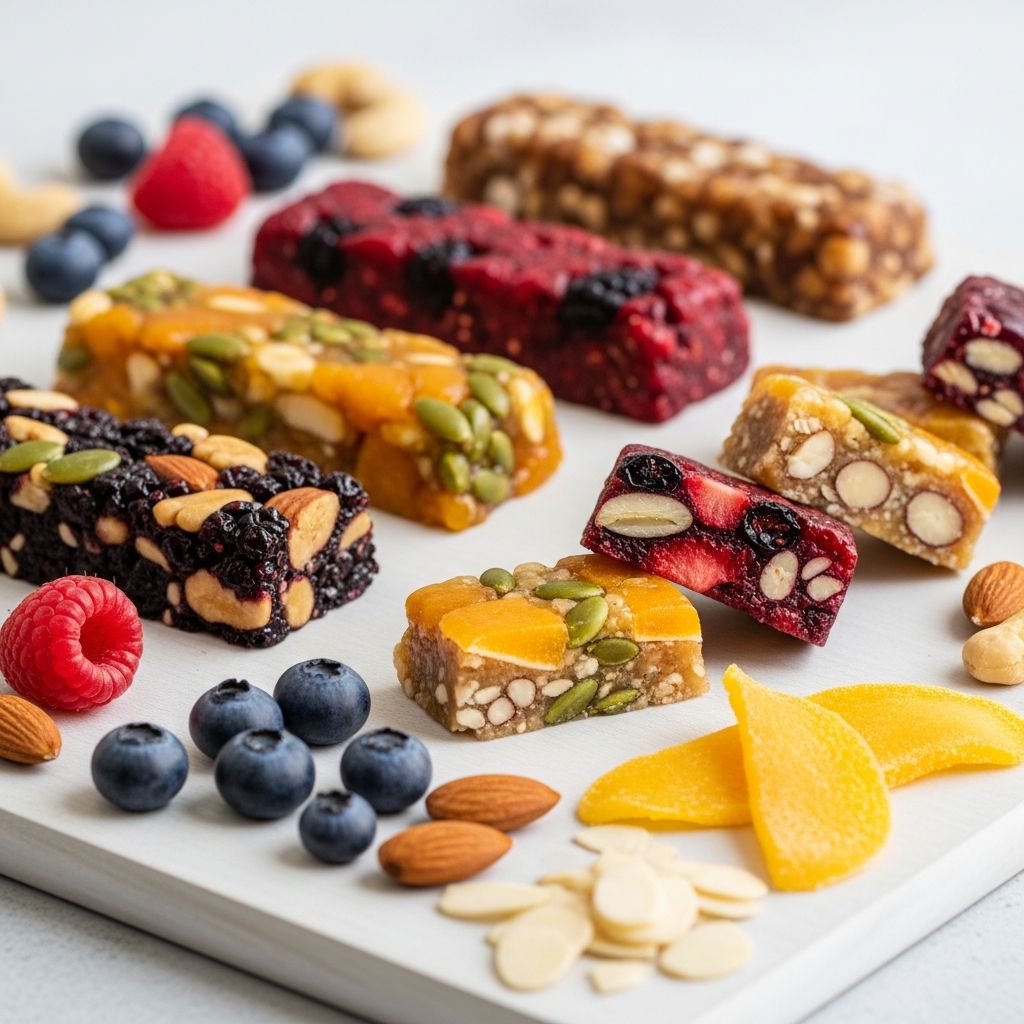
Pressed fruit bars promise the sweetness of fruit in a neat, portable package. For busy parents, commuters, and anyone trying to snack smarter, they can feel like a win: short ingredient lists, no messy peels, and a health halo that rivals fresh produce. But not every bar is created equal, and the way you compare them matters far more than the front-of-pack claims.
This guide uses popular brands such as That’s It and Pressed by KIND as reference points to explain what really makes a pressed fruit bar healthy, when they make sense, and when whole fruit or another snack may be a better choice.
What Exactly Is a Pressed Fruit Bar?
A pressed fruit bar is typically made by combining puréed or chopped fruit (sometimes with nuts, seeds, or vegetables), then dehydrating and compressing the mixture into a bar shape. The result is a chewy, shelf-stable snack that concentrates fruit’s natural sugars, fiber, vitamins, and phytochemicals into a small volume.
Because the water is largely removed, these bars are:
- More calorie-dense than whole fruit of the same weight
- Higher in natural sugars per bite, even when nothing is added
- Convenient and portable, requiring no washing, cutting, or refrigeration
Pressed Fruit vs. Whole Fruit: The Nutritional Trade-Off
Dehydrating fruit concentrates both nutrients and energy. One scientific review notes that fruit bars can have higher concentrated nutrients than fresh fruit, including antioxidants from phenolic compounds, while also being substantial sources of carbohydrates and minerals.
However, there are important trade-offs to consider:
- Fiber retention: Bars that use whole fruit and peels (like many apple-based bars) may retain much of the fruit’s fiber, supporting digestive health and satiety.
- Natural sugar load: Even without added sugar, pressed fruit bars can deliver 17–23 g of sugar per bar, since all the fruit’s sugars are packed into a smaller serving.
- Portion control: It is easier to eat several bars than multiple pieces of whole fruit, which can lead to unexpectedly high sugar and calorie intake.
In other words, pressed fruit bars can mimic the nutrition of fruit, but they are also a more concentrated, easy-to-overeat version of it.
Key Brands at a Glance: That’s It vs. Pressed by KIND
The Fatherly article compares two big names in the pressed bar category: That’s It and Pressed by KIND. While each brand offers several flavors, their core bar types share some general patterns.
| Feature | That’s It Fruit Bars* | Pressed by KIND Fruit Bars* |
|---|---|---|
| Typical calories per bar | ~100–110 kcal | ~130 kcal |
| Total sugar (per bar) | ~17–23 g (all natural fruit sugar) | ~17 g (mostly from fruit) |
| Fiber | ~3–5 g | ~3 g (varies by flavor) |
| Protein | ~1 g | ~1–3 g (slightly higher in some flavors) |
| Added sugars | None reported | Generally no added sugar; depends on flavor |
| Core ingredients | Just fruit (e.g., apple + one other fruit) | Fruit plus sometimes vegetables, chia, or nuts |
*Values are typical ranges; always check the label for the specific bar you buy.
How to Read a Pressed Fruit Bar Label
Instead of focusing on the front-of-pack claims, turn the bar over and evaluate these elements carefully:
1. Ingredient List
The best pressed fruit bars keep it simple. Look for:
- Short, recognizable ingredients (e.g., “apples, strawberries” rather than syrups and concentrates)
- No added sugars such as cane sugar, rice syrup, honey, or fruit juice concentrates beyond what is naturally present in whole fruit
- Minimal additives (little to no artificial colors, flavors, or preservatives)
That’s It, for example, emphasizes bars made only from fruit, providing a full serving of fruit per bar without added sugars or preservatives.
2. Sugar Content
Even without added sugar, the total sugar number can be high. A bar with 17–23 g of sugar is roughly equivalent to eating one to two servings of fruit at once, but in fewer bites.
For healthy adults, the focus is on total dietary pattern, but guidelines from organizations such as the American Heart Association recommend limiting added sugars; fruit sugars naturally occurring in whole or minimally processed fruit are less of a concern when eaten in reasonable portions. The key with bars is portion awareness and avoiding multiple bars in a day as your primary snack.
3. Fiber
Fiber slows digestion, blunts blood sugar spikes, and supports gut health. Bars like That’s It often provide 3–5 g of fiber, which can contribute meaningfully to the recommended daily fiber intake (about 25–38 g for adults).
Choose bars that list at least 3 g of fiber per serving and contain whole fruit ingredients, not just juices or concentrates which strip away most fiber.
4. Protein and Fat
Most pure fruit bars are low in protein (~1 g per bar) and contain little fat. While that keeps calories modest, it also means they are not very filling on their own, especially for active adults or as a post-workout snack.
If you want more staying power, consider:
- Pairing a fruit bar with a handful of nuts or seeds
- Choosing bars that blend fruit with nuts or chia seeds (more common in brands like KIND)
Pressed Fruit Bars in a Healthy Diet
When used thoughtfully, pressed fruit bars can support a balanced eating pattern:
- Quick, portable produce: They can be helpful when fresh fruit is impractical, such as travel, hiking, or long commutes.
- Kid-friendly option: Many children accept chewy bars more readily than whole fruit, and the fiber can aid digestive health.
- Backup snack: Keeping a few bars in a bag or desk drawer can prevent more processed, high-sugar, low-fiber choices from vending machines.
Research on dried fruit and fruit-based snacks suggests that, when made without large amounts of added sugars and with careful processing, such products can retain much of fruit’s antioxidant capacity, fiber, and minerals, which may help reduce the risk of chronic disease.
When a Fruit Bar Is Not the Best Choice
Despite their benefits, there are situations where pressed fruit bars may not be ideal:
- Weight management focus: For people who are carefully tracking calories, bars can be relatively high in energy for their size and may not be as filling as higher-protein snacks.
- Blood sugar concerns: Individuals with diabetes or prediabetes may need to be cautious, as concentrated fruit sugars can raise blood glucose quickly, especially if eaten alone without protein or fat.
- Dental health: Sticky dried fruit can cling to teeth and increase cavity risk if oral hygiene is poor.
- Allergies and intolerances: Some varieties include nuts or seeds, which are common allergens.
In these cases, pairing a smaller portion of dried or pressed fruit with nuts, yogurt, or cheese, or opting for a lower-sugar, higher-protein snack, may be wiser.
How to Choose Between Two Bars on the Shelf
Imagine you are comparing a That’s It bar and a Pressed by KIND bar side by side. Instead of asking which brand is universally “best,” use this quick checklist:
- Check added sugar: If one bar includes sweeteners beyond fruit and the other does not, the no-added-sugar option usually wins for daily snacking.
- Compare fiber: Go for the bar with at least 3 g of fiber; more is usually better, assuming your digestive system tolerates it well.
- Look at protein: If calories are similar and one has more protein (e.g., from nuts or seeds), that bar may keep you fuller for longer.
- Scan total sugar and calories: If one bar is substantially higher in sugar or calories without added benefits (like extra fiber or protein), favor the lighter option.
- Consider your goal: For a child’s lunchbox, simplicity and lower sugar might rank highest. For a post-workout snack, pairing a bar with another protein source may be key.
Pressed Fruit Bars vs. Other Snack Bars
Many granola or cereal bars rely on refined grains and added sugars. Compared with those, fruit-forward bars can be a meaningful upgrade:
- More whole-food ingredients: Fruits and nuts provide vitamins, minerals, antioxidants, and healthy fats that heavily processed ingredients lack.
- Less reliance on refined sugars: Bars without added sugar avoid one of the biggest problems in modern snack foods.
- Better nutrient density: The combination of fruit and nuts can provide a mix of fiber, healthy fats, and small amounts of protein that support steady energy.
Still, pressed fruit bars should complement—not replace—regular servings of fresh fruits and vegetables, grains, and proteins.
Practical Tips for Parents and Busy Adults
To make the most of pressed fruit bars in everyday life:
- Set a guideline: Treat fruit bars as an occasional snack, not an all-day staple. For many families, one bar per day or a few per week is reasonable.
- Teach label reading: Show older kids and teens how to spot added sugars and how to compare fiber and protein across brands.
- Pair smartly: Combine bars with nuts, yogurt, or a hard-boiled egg for better satiety and blood sugar control.
- Rotate whole foods: Have fresh fruit, cut vegetables, and nuts available so bars are just one of several options.
Frequently Asked Questions (FAQs)
Are pressed fruit bars as healthy as eating whole fruit?
Pressed fruit bars can be nutritionally similar in terms of fiber and natural sugars when made from whole fruit without added sugar, but they are more concentrated and easier to overeat. Whole fruit also contributes more water volume and chewing effort, which can promote fullness.
Are That’s It bars good for kids?
That’s It bars are made from just fruit and contain 3–5 g of fiber with no added sugars or preservatives, making them a reasonable snack choice for many children when used in moderation and balanced with fresh fruits and other whole foods.
Is Pressed by KIND a healthy option?
Pressed by KIND bars use whole fruit and often include nuts or vegetables, and they usually avoid artificial additives. They are generally a nutritious snack when eaten in moderation, but they may be relatively high in natural sugar and somewhat higher in calories than some simpler fruit bars.
Can pressed fruit bars help with weight loss?
They can fit into a weight-loss plan if you account for their calories, pair them with protein for satiety, and avoid treating them as unlimited health foods. Bars alone tend to be low in protein, which limits how filling they are relative to their sugar content.
How often should I eat pressed fruit bars?
There is no single rule, but using them as an occasional, convenient snack—especially when whole fruit is not available—is more in line with most nutrition recommendations than relying on them as your primary source of fruit.
References
- The Power of Fruit and Nut Bars: Nature’s Perfect Snack — Kate’s Real Food Blog. 2023-07-10. https://katesrealfood.com/blogs/blog/the-power-of-fruit-and-nut-bars-natures-perfect-snack
- Is Pressed by KIND Fruit Bar Actually Healthy: Nutrition Facts — Curex. 2024-03-15. https://getcurex.com/weight-loss-blog/is-pressed-by-kind-fruit-bar-actually-healthy-nutrition-facts
- Developments and trends in fruit bar production and characterization — Rodríguez-Amaya DB et al., Critical Reviews in Food Science and Nutrition. 2014-02-01. https://pubmed.ncbi.nlm.nih.gov/24188234/
- Are That’s It Bars Healthy? A Dietitian Review — Caroline Thomason, RD. 2023-08-21. https://carolinethomason.com/are-thats-it-bars-healthy/
- Which Pressed Fruit Bar Is The Best — “That’s It” Or “Pressed” By Kind? — Fatherly. 2019-06-05. https://www.fatherly.com/health/which-pressed-fruit-bar-is-best-thats-it-pressed-by-kind
- Fruit Bar Variety Pack – Blueberry, Mango & Strawberry — That’s It. 2024-01-01. https://www.thatsitfruit.com/products/fruit-bar-variety-pack