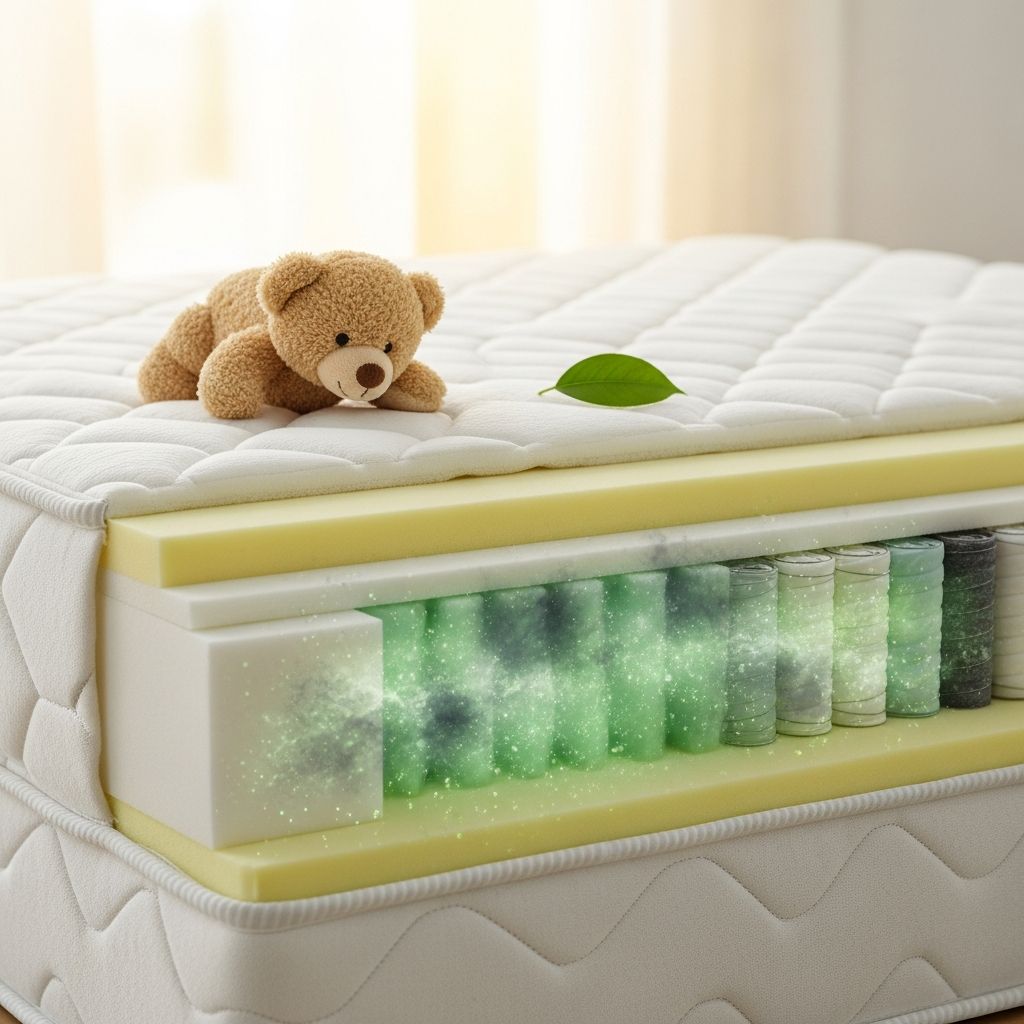
Children’s mattresses, where kids spend hours sleeping each night, can release harmful semivolatile organic compounds (SVOCs) like organophosphate flame retardants and phthalates. These chemicals, detected in recent studies, elevate exposure levels in sleeping zones, posing risks to developing bodies.
Why Children’s Sleep Environments Matter for Health
Infants and toddlers spend up to 18 hours daily in close contact with their bedding, making mattresses a primary exposure pathway. Young children breathe faster, have more skin surface relative to body weight, and often mouth objects, amplifying chemical absorption risks compared to adults.
Semivolatile chemicals start as solids or liquids in products but slowly volatilize into gases, inhalable air, or skin-contact residues. In bedroom air samplers placed near sleep spots, concentrations were markedly higher than room averages, confirming mattresses as key emitters.
Common Chemicals Found and Their Origins
Researchers analyzed 16 new children’s mattresses from major retailers, detecting 21 SVOCs. High levels included:
- Organophosphate flame retardants (OPEs): Used for fire resistance, some at 1-3% mattress mass; one banned in Canada was present.
- Phthalates (PAEs): Plasticizers like DEHP and BzBP, higher in older mattresses.
- UV stabilizers: Benzophenones and others to prevent sun damage.
Bedding and toys in the sleep microenvironment (SME) boosted tris(2-butoxyethyl) phosphate (TBOEP) levels further.
Health Impacts on Growing Children
These chemicals link to serious issues:
| Chemical Type | Potential Risks |
|---|---|
| Phthalates | Endocrine disruption, childhood asthma. |
| Flame Retardants | Carcinogenicity, behavioral problems. |
| UV Blockers | Suspected hormone interference. |
Combined exposures heighten dangers, as multiple chemicals interact. Children’s susceptibility stems from ongoing organ development, making early-life contact particularly worrisome.
Scientific Evidence from Recent Studies
A University of Toronto study (2025) tested new mattresses under simulated sleep conditions—warmed and weighted—revealing elevated emissions. Passive silicone samplers in 25 Toronto homes showed mattress-top levels exceeding room air for most targets.
Consumer Reports corroborated this, noting federal regulations lag due to industry influence. State rules help, but consumers bear the research burden.
Toxicologist Jamie DeWitt affirms the methodology’s reliability, predicting blood presence of these compounds.
Regulatory Gaps and Calls for Change
Canada, US, and EU restrict some PAEs and OPEs in toys, yet mattresses escape similar scrutiny. Detected levels sometimes exceed limits; researchers urge bans and producer accountability.
Tracey Woodruff, PhD, emphasizes government action over parental burden: “The burden should not be on parents, period.”
Practical Steps to Minimize Exposure
Parents can act now:
- Select certified mattresses: Prioritize GOTS, GOLS, or Made Safe verified options avoiding polyurethane foam, vinyl, PFAS, and added flame retardants.
- Use safe protectors: Choose chemical-free covers to block accidents without adding risks.
- Declutter cribs: Limit toys and extras in sleep zones to cut secondary emissions.
- Wash bedding often: Frequent laundering removes accumulated SVOCs from sheets and blankets.
- Ventilate rooms: Improve airflow to dilute airborne chemicals.
While no mattress is risk-free, these choices significantly lower exposure.
Understanding Mattress Materials and Certifications
Conventional mattresses rely on synthetic foams treated with chemicals for durability and safety. Organic alternatives use natural latex, cotton, and wool, inherently flame-resistant without additives.
Key certifications decoded:
- GOTS: Ensures organic fibers, no harmful substances.
- GOLS: Validates organic latex purity.
- EWG Verified: Screens for toxics per strict criteria.
Even certified products warrant label checks, as no standard guarantees zero contaminants.
Long-Term Implications for Child Development
Chronic low-level exposure during critical windows—brain growth, immune maturation—may contribute to lifelong health trajectories. Asthma links from phthalates and behavioral risks from retardants underscore prevention’s urgency.
Studies affirm higher SME concentrations signal mattresses’ outsized role versus carpets or paint.
Comparing Conventional vs. Safer Mattresses
| Feature | Conventional | Safer Organic |
|---|---|---|
| Core Materials | Polyurethane foam, vinyl cover | Organic cotton, wool, latex |
| Chemical Additives | Flame retardants, phthalates, PFAS | None or minimal, naturally fire-resistant |
| Certifications | Often none | GOTS, GOLS, GREENGUARD |
| Cost | Lower upfront | Higher, but durable |
| Health Risk | High SVOC emissions | Low, tested safer |
Frequently Asked Questions
Are all kids’ mattresses unsafe?
No, but many emit SVOCs. Opt for certified organic to minimize risks.
How do I know if a mattress has flame retardants?
Check labels; avoid those listing chemical treatments. Certifications like GOTS prohibit them.
Can washing reduce chemical exposure?
Yes, regular bedding washes remove settled chemicals. Declutter SME too.
Do older mattresses pose more risk?
Some phthalates accumulate over time, increasing emissions.
What’s the safest crib setup?
Certified mattress, organic protector, minimal bedding, good ventilation.
Empowering Parents for Safer Choices
Informed selection transforms sleep from potential hazard to health haven. By prioritizing transparency and science-backed options, families safeguard vulnerable little ones against invisible threats. Ongoing advocacy may drive industry-wide shifts, but today’s actions matter most.
References
- Children’s mattresses can emit semivolatile chemicals — Chemical & Engineering News (C&EN), American Chemical Society. 2025-04-15. https://cen.acs.org/safety/consumer-safety/Childrens-mattresses-emit-semivolatile-chemicals/103/web/2025/04
- Mattresses Can Be a Major Source of Harmful Chemicals in Kids’ Rooms — Consumer Reports. 2025-04-15. https://www.consumerreports.org/babies-kids/childrens-health/mattresses-can-be-source-of-harmful-chemicals-in-kids-rooms-a5263703680/
- Young Children’s Exposure to Chemicals of Concern in Their Sleep Microenvironment — Environmental Science & Technology (via PubMed Central). 2025. https://pmc.ncbi.nlm.nih.gov/articles/PMC12080337/