The Central Highway of the Circulatory System
The human body relies on a continuous, high-pressure delivery system to keep every organ and tissue alive. At the center of this system is a single, powerful blood vessel: the aorta. More than just the largest artery in the body, the aorta acts as the primary distribution line for oxygen-rich blood, connecting the heart directly to the rest of the body. Without it, the entire circulatory network would collapse, and vital organs would quickly fail.
Understanding the aorta is essential for grasping how blood pressure, heart function, and organ health are all interconnected. It’s not just a passive tube; it’s a dynamic, layered structure that must withstand the force of every heartbeat while maintaining flexibility and integrity over decades of use.
What Exactly Is the Aorta?
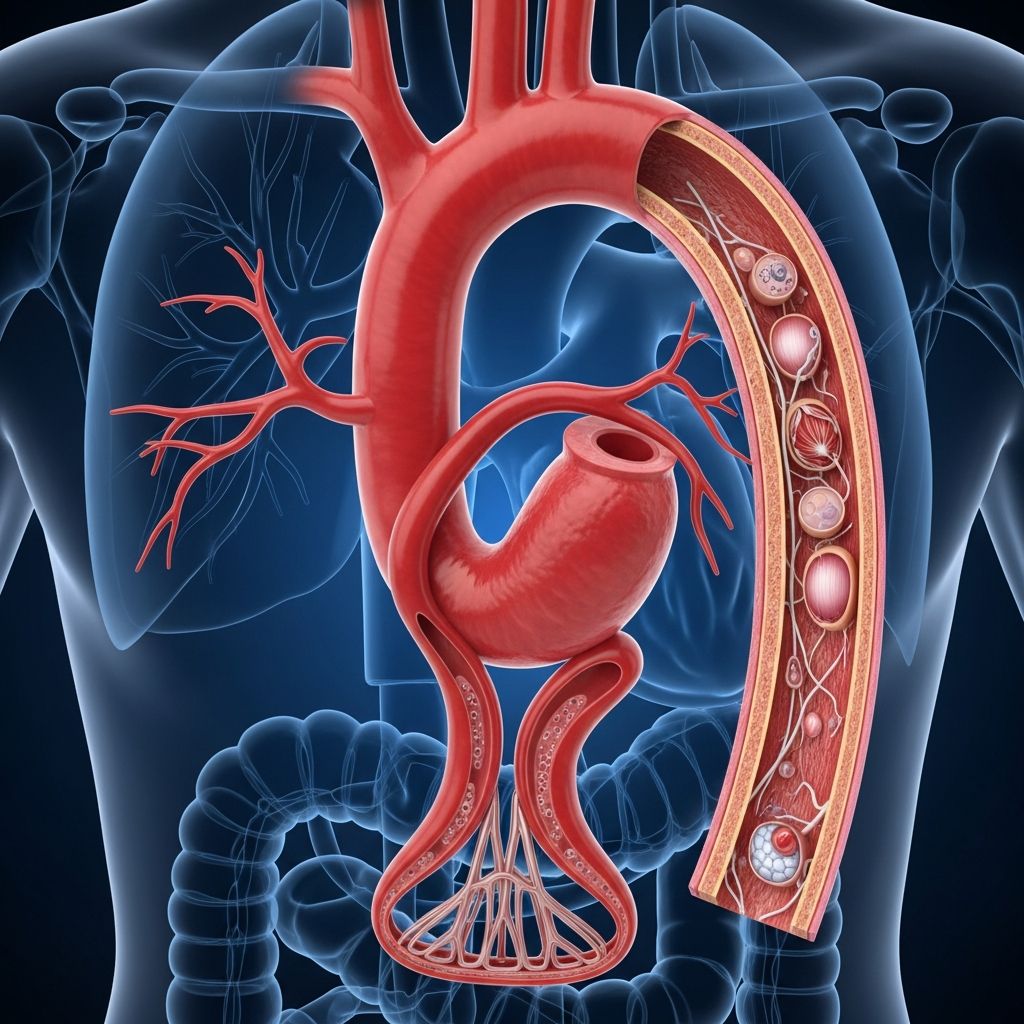
The aorta is the main artery that carries blood away from the heart. It originates at the left ventricle, the heart’s strongest pumping chamber, and extends from the chest down through the abdomen. From this central trunk, countless smaller arteries branch off to supply blood to the head, arms, chest, abdomen, pelvis, and legs.
Because it handles the full force of blood ejected from the heart, the aorta is built to be both strong and elastic. It can expand slightly with each heartbeat to absorb pressure and then recoil to help push blood forward. This elasticity is crucial for maintaining steady blood flow and protecting smaller vessels from excessive pressure spikes.
How the Aorta Fits Into the Circulatory System
The circulatory system is divided into two main circuits: pulmonary circulation (which carries blood to and from the lungs) and systemic circulation (which delivers blood to the rest of the body). The aorta is the starting point of systemic circulation.
After blood is oxygenated in the lungs, it returns to the left side of the heart. From the left ventricle, it is pumped through the aortic valve and into the aorta. From there, it travels outward to supply:
- The brain and spinal cord
- The muscles of the arms and chest
- The digestive organs, liver, and kidneys
- The reproductive organs and pelvic structures
- The legs and lower limbs
Because the aorta serves as the origin of systemic circulation, any disruption in its function can have widespread effects. A problem in the aorta doesn’t just affect one organ—it can compromise blood flow to multiple systems at once.
Breaking Down the Aorta’s Structure
The aorta is not a simple, uniform tube. It has a complex, multi-layered wall and is divided into several anatomical segments based on its path through the body.
Layers of the Aortic Wall
The wall of the aorta consists of three distinct layers, each with a specific role:
- Tunica intima: The innermost layer, made of a smooth endothelial lining that allows blood to flow freely and helps regulate vascular tone.
- Tunica media: The middle and thickest layer, composed mainly of smooth muscle and elastic fibers. This layer gives the aorta its strength and ability to stretch and recoil.
- Tunica adventitia (or externa): The outer layer, made of connective tissue that anchors the aorta to surrounding structures and contains small blood vessels (vasa vasorum) that supply the aortic wall itself.
Damage to any of these layers—especially the tunica media—can lead to serious conditions like aneurysms or dissections.
Main Anatomical Segments
The aorta is typically described in four main parts:
| Segment | Location | Key Features |
|---|---|---|
| Ascending aorta | From the heart upward through the chest | Contains the aortic valve and gives rise to the coronary arteries |
| Aortic arch | Curves over the heart toward the back of the chest | Branches supply the head, neck, and arms |
| Descending thoracic aorta | From the arch down through the chest | Supplies the chest wall, spinal cord, and esophagus |
| Abdominal aorta | From the diaphragm down through the abdomen | Branches supply the abdominal organs and splits into the iliac arteries |
Key Functions of the Aorta
The aorta performs several critical roles that keep the body functioning properly:
- Primary conduit for systemic blood flow: It receives all the oxygenated blood pumped by the left ventricle and distributes it to the rest of the body.
- Pressure regulation: Its elastic walls help smooth out the pulsatile flow from the heart, reducing stress on smaller arteries and capillaries.
- Origin of major arteries: Vital branches arise directly from the aorta, including the coronary, carotid, subclavian, renal, and mesenteric arteries.
- Integration with autonomic control: Baroreceptors in the aortic arch monitor blood pressure and send signals to the brain to adjust heart rate and vessel tone as needed.
Because of these functions, the aorta is not just a passive pipe—it’s an active participant in maintaining cardiovascular homeostasis.
How Blood Travels Through the Aorta
With each heartbeat, the left ventricle contracts and forces blood through the aortic valve into the ascending aorta. From there, the path of blood depends on the segment of the aorta and the branches that arise from it.
From Heart to Head and Arms
Shortly after leaving the heart, the aorta forms the aortic arch. From this arch, three major branches arise:
- Brachiocephalic (innominate) artery – supplies the right arm and right side of the head
- Left common carotid artery – supplies the left side of the head and neck
- Left subclavian artery – supplies the left arm
These vessels ensure that the brain and upper limbs receive a constant supply of oxygen and nutrients, even during periods of high demand.
Supplying the Chest and Abdomen
As the aorta descends through the chest (thoracic aorta), it gives off smaller branches that supply:
- Chest wall muscles
- Spinal cord
- Esophagus
- Lymph nodes and surrounding tissues
When the aorta passes through the diaphragm into the abdomen, it becomes the abdominal aorta. Here, it gives rise to several critical arteries:
- Celiac trunk – supplies the stomach, liver, spleen, and pancreas
- Superior mesenteric artery – supplies the small intestine and part of the large intestine
- Inferior mesenteric artery – supplies the rest of the large intestine
- Renal arteries – supply the kidneys
- Gonadal arteries – supply the reproductive organs
Reaching the Lower Body
At the level of the lower abdomen, the abdominal aorta divides into the left and right common iliac arteries. These vessels continue into the pelvis and legs, supplying blood to the pelvic organs and lower limbs. This bifurcation marks the end of the aorta as a single vessel and the beginning of the arterial supply to the lower extremities.
Why the Aorta Is So Important for Health
The aorta’s central role in circulation makes it essential for overall health. Because it delivers blood to nearly every organ, any problem with the aorta can have widespread consequences.
- It ensures that the brain receives enough oxygen to maintain consciousness and cognitive function.
- It supplies the kidneys with blood needed for filtering waste and regulating blood pressure.
- It delivers nutrients to the digestive organs so they can process food and absorb energy.
- It supports muscle function in the arms and legs by providing oxygen during activity.
Because of this, conditions that affect the aorta—such as aneurysms, dissections, or severe narrowing—are considered medical emergencies. Even small changes in aortic function can lead to symptoms like chest pain, shortness of breath, dizziness, or organ failure if not addressed promptly.
Common Conditions That Affect the Aorta
Despite its strength, the aorta is vulnerable to several diseases, especially as people age or develop risk factors like high blood pressure, smoking, or atherosclerosis.
Aortic Aneurysm
An aneurysm is a bulge or weakening in the wall of the aorta. It can occur in the chest (thoracic aortic aneurysm) or abdomen (abdominal aortic aneurysm). Over time, the weakened area can expand and may eventually rupture, which is often fatal without immediate treatment.
Aortic Dissection
A dissection occurs when a tear forms in the inner layer of the aorta, allowing blood to flow between the layers of the wall. This can block blood flow to organs or cause the aorta to rupture. It typically causes sudden, severe chest or back pain and requires emergency care.
Atherosclerosis and Narrowing
Fatty deposits (plaques) can build up in the aortic wall, leading to hardening and narrowing of the vessel. This reduces blood flow and increases the risk of aneurysms, dissections, and other complications.
Congenital and Inflammatory Conditions
Some people are born with structural problems in the aorta (like coarctation of the aorta), while others develop inflammatory conditions (such as aortitis) that damage the vessel wall. These conditions often require specialized monitoring and treatment.
How Doctors Evaluate the Aorta
Because aortic problems can be life-threatening, doctors use several tools to assess its structure and function:
- Physical exam: Listening for abnormal sounds (bruits) and checking pulses in the arms and legs.
- Imaging tests: CT scans, MRI, and ultrasound (including echocardiography) provide detailed views of the aorta’s size, shape, and blood flow.
- Blood pressure monitoring: Persistent high blood pressure can strain the aorta and increase the risk of complications.
- Genetic and family history: Certain inherited conditions (like Marfan syndrome) increase the risk of aortic disease.
Regular screening may be recommended for people with risk factors, especially those with a family history of aortic aneurysms or connective tissue disorders.
Protecting the Health of Your Aorta
While some risk factors for aortic disease are genetic, many can be managed through lifestyle and medical care:
- Maintain healthy blood pressure through diet, exercise, and medication if needed.
- Avoid smoking, which damages blood vessels and accelerates atherosclerosis.
- Follow a heart-healthy diet low in saturated fats and sodium.
- Stay physically active to support cardiovascular fitness.
- Attend regular check-ups, especially if you have a family history of aortic or heart disease.
For people with known aortic conditions, doctors may recommend medications (like beta-blockers or blood pressure drugs), regular imaging, and sometimes surgery to repair or replace damaged sections of the aorta.
Frequently Asked Questions About the Aorta
What is the aorta’s main job?
The aorta’s primary role is to carry oxygen-rich blood from the heart’s left ventricle to the rest of the body through the systemic circulation.
Where is the aorta located?
The aorta starts at the heart, travels upward through the chest, curves over the heart (aortic arch), continues down through the chest and abdomen, and splits into the iliac arteries in the lower abdomen.
What happens if the aorta is damaged?
Damage to the aorta—such as an aneurysm, dissection, or severe narrowing—can reduce blood flow to organs, cause internal bleeding, or lead to organ failure. These are often medical emergencies requiring immediate treatment.
Can problems with the aorta be prevented?
While some conditions are genetic, many aortic problems can be prevented or delayed by controlling blood pressure, avoiding smoking, eating a healthy diet, and staying active. Regular medical check-ups are also important for early detection.
How is the aorta different from other arteries?
The aorta is the largest and most central artery in the body. It receives blood directly from the heart and gives rise to all major systemic arteries, making it the starting point of the body’s arterial network.
References
- Aorta: Anatomy and Function — Cleveland Clinic. Updated 2023. https://my.clevelandclinic.org/health/body/17058-aorta-anatomy
- Anatomy, Abdomen and Pelvis: Aorta — StatPearls, NCBI Bookshelf. Updated 2023. https://www.ncbi.nlm.nih.gov/books/NBK537319/
- The Aorta: The Largest Blood Vessel Explained — Yale Medicine. https://www.yalemedicine.org/news/the-aorta-explained