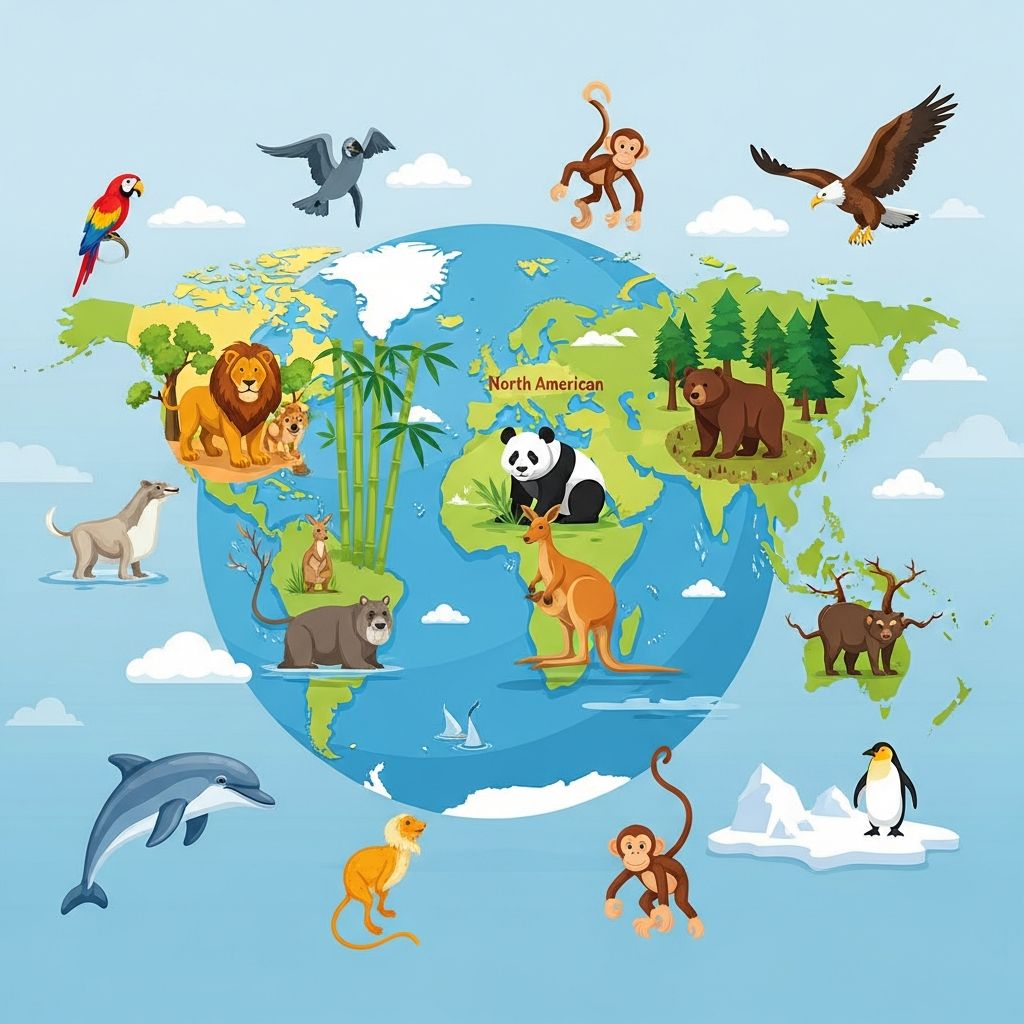
Animals are living things that move, eat, grow, and sense the world around them. From tiny insects to giant whales, every animal has special features that help it survive. This kid-friendly guide will help you explore what animals are like, where they live, how they act, and how you can care for them.
What Makes an Animal an Animal?
Animals may look very different from each other, but they share some important traits. Knowing these basics helps you tell animals apart from plants, fungi, and other living things.
Key Features of Animals
- They are made of many cells that work together to form organs like the heart, lungs, or stomach.
- They eat food for energy instead of making it from sunlight the way plants do.
- They can move at least at some point in their lives, using legs, fins, wings, or muscles.
- They respond to their environment, using senses like sight, smell, touch, taste, and hearing.
- They grow and reproduce, making new animals of their own kind.
Even animals that seem simple, like jellyfish or worms, still follow these basic rules of life.
Types of Animals
Scientists group animals into different categories based on their body parts and how they live.
- Mammals – usually have hair or fur and feed milk to their babies (like cats, dogs, and humans).
- Birds – have feathers, beaks, and lay eggs (like eagles, penguins, and parrots).
- Reptiles – have scaly skin and usually lay eggs on land (like snakes, lizards, and turtles).
- Amphibians – live part of life in water and part on land (like frogs and salamanders).
- Fish – live in water, have gills to breathe, and usually have fins and scales.
- Invertebrates – animals without backbones, such as insects, spiders, worms, and jellyfish.
Animal Bodies: Clever Designs for Survival
Every animal body is designed to help it live in its environment. Some animals are built for speed, others for hiding, and others for finding food in special ways.
Common Animal Body Parts
| Body Part | What It Does | Example |
|---|---|---|
| Fur or feathers | Keep the animal warm and sometimes help it blend in | Polar bears have thick fur to stay warm in the Arctic. |
| Scales | Protect the body and reduce water loss | Snakes have dry scales to move smoothly over surfaces. |
| Fins | Help swim and steer in water | Fish use fins to move and balance in lakes and oceans. |
| Wings | Allow flying or gliding | Birds and some insects use wings to travel and escape danger. |
| Claws or hooves | Help with digging, hunting, or running | Lions use claws to catch prey; horses use hooves to run fast. |
| Teeth or beaks | Break up food in different ways | Carnivores have sharp teeth; plant-eaters often have flat teeth. |
How Animals Use Their Senses
Animals use senses to find food, avoid danger, and communicate. Some senses are much stronger than ours.
- Smell: Many mammals and insects use smell to track food, mates, or territory.
- Hearing: Bats and some dolphins use special sounds called echolocation to find objects in the dark.
- Sight: Eagles and other birds of prey can see much farther and sharper than humans.
- Touch and vibration: Some animals feel tiny movements in air or water, helping them sense predators.
Where Animals Live: Habitats Around the World
A habitat is the place where an animal naturally lives and finds food, water, shelter, and space. Different habitats support different kinds of animals.
Major Animal Habitats
- Forests: These areas are filled with trees and plants, giving animals places to hide and climb. Bears, monkeys, birds, and insects often live here.
- Grasslands: Wide open spaces with grasses and few trees. Large plant-eaters like zebras and antelope graze here, along with hunters like lions or cheetahs.
- Deserts: Very dry places with little rain. Animals like camels, lizards, and some rodents survive with special ways to save water.
- Oceans: Huge saltwater habitats home to whales, dolphins, fish, sea turtles, and tiny drifting creatures called plankton.
- Freshwater: Lakes, rivers, ponds, and streams where frogs, freshwater fish, beavers, and many insects live.
- Polar regions: Extremely cold areas near the North and South Poles, where animals like polar bears, seals, and penguins live on ice and in icy water.
Animals are adapted to their habitats. For example, Arctic animals often have thick fur or fat, while desert animals may be active mostly at night to avoid heat.
Pets and People: Living With Domestic Animals
Some animals live closely with people and are called domestic animals. They may be pets, farm animals, or helpers in work and safety.
Common Pets
Kids often enjoy having a pet, but pets need care every day. Common pets include:
- Dogs – Loyal companions that need exercise, training, and attention.
- Cats – Curious animals that like play, climbing, and quiet resting spots.
- Fish – Live in tanks and need clean water and the right food.
- Small mammals – Like hamsters, guinea pigs, and rabbits, which need safe cages and gentle handling.
How to Treat Pets Kindly
Spending time with animals can help kids learn empathy, responsibility, and patience when they are guided to interact gently.
- Always ask an adult before touching or holding an animal.
- Use a calm voice and move slowly so the animal does not feel scared.
- Pet gently, usually along the back, and avoid pulling fur, tails, or ears.
- Wash your hands after playing with pets or visiting a farm.
- Help with simple chores like filling water bowls or brushing fur if an adult says it is okay.
Wild Animals: Amazing But Not for Cuddling
Wild animals live in nature, not in our homes. They find their own food, shelter, and mates without people caring for them. Wild animals can be beautiful and interesting, but they can also be dangerous or easily frightened.
Examples of Wild Animals
- Forest animals – deer, foxes, owls, and bears.
- Jungle animals – tigers, monkeys, parrots, and snakes.
- Ocean animals – sharks, dolphins, sea turtles, and coral reef fish.
- Savanna animals – elephants, giraffes, lions, and zebras.
Watching Wildlife Safely
When you see a wild animal, remember:
- Enjoy it from a distance; never chase, corner, or try to catch it.
- Do not feed wild animals; human food can harm them or change their natural behavior.
- Stay quiet and calm so animals do not feel threatened.
- In parks or at the zoo, follow all signs and listen to the adults in charge.
How Animals Behave: From Herds to Hunters
Animal behavior is the way animals act, alone or with others. Watching behavior can tell you how animals find food, protect themselves, and raise young.
Living Alone or in Groups
- Social animals live in groups called herds, packs, troops, or flocks. This can help them defend against predators or care for young together. Elephants, wolves, and many birds are social.
- Solitary animals spend most of their time alone, meeting others only to mate or raise babies. Many big cats, like leopards, are solitary.
Finding Food
Animals need energy from food to grow and move. Scientists describe animals by what they usually eat:
- Herbivores – eat mostly plants (e.g., rabbits, giraffes).
- Carnivores – eat other animals (e.g., lions, sharks).
- Omnivores – eat both plants and animals (e.g., bears, many humans).
Some hunters use speed to catch prey, while others use camouflage to sneak up on it. Prey animals may travel in groups or use quick escapes and hiding spots to survive.
Why Animals Matter: Nature’s Great Web
Every animal, from the smallest insect to the biggest whale, has a role in its ecosystem. Together with plants, fungi, and microbes, animals help keep the environment balanced.
Roles Animals Play
- Pollinators – bees, butterflies, bats, and some birds help plants make seeds by moving pollen.
- Seed spreaders – many birds and mammals spread seeds in their droppings, helping new plants grow.
- Predators – keep prey populations from getting too large.
- Decomposers and scavengers – some insects and other animals help break down dead plants and animals, returning nutrients to the soil.
Helping Animals: Simple Things Kids Can Do
Lots of animals around the world are in danger because of habitat loss, pollution, and climate change. These species are called endangered animals. Even kids can help protect animals and their homes.
Easy Actions to Protect Wildlife
- Respect local wildlife: Leave wild animals where they are, and do not disturb nests or dens.
- Keep habitats clean: Help pick up litter (with an adult) in parks, beaches, and playgrounds so animals do not eat or get stuck in trash.
- Save water and energy: Turning off lights and taps when not in use helps reduce pollution and protect habitats.
- Support animal organizations: Some groups and zoos work to protect endangered animals and restore habitats.
- Learn and share: Reading about animals and telling friends what you learn can inspire more people to care about wildlife.
Fun Ways to Learn More About Animals
Exploring the animal world can be a lifelong adventure. Here are fun ideas to keep learning:
- Visit a local zoo, aquarium, or wildlife center with your family.
- Keep an animal journal where you draw animals you see and write down questions about them.
- Watch nature documentaries or trusted kids’ science videos about animals.
- Read books and magazines that share real animal photos and facts.
- Spend time in nature and quietly observe birds, insects, and other creatures near your home.
Frequently Asked Questions (FAQs)
Are humans animals?
Yes. Humans are mammals, a group of animals with backbones that usually have hair and feed milk to their babies.
Why do some animals hibernate?
In cold places with little winter food, some animals rest for long periods and slow their body processes. This hibernation helps them save energy until food is easier to find.
What is the difference between a pet and a wild animal?
Pets are domestic animals that live with people, get regular food and care, and are used to humans. Wild animals live in natural habitats, find their own food, and are not meant to be kept in homes.
Why are some animals endangered?
Animals can become endangered when their habitats are destroyed, when they are hunted too much, or when pollution and climate change make it hard for them to survive or find food.
How can kids safely help animals?
Kids can help by treating pets kindly, respecting wild animals, keeping outdoor spaces clean with an adult’s help, and learning about wildlife through books, museums, and science programs.
References
- Animals for Kids — Ducksters. 2024-01-10. https://www.ducksters.com/animals.php
- Animal facts for kids — National Geographic Kids. 2024-03-01. https://www.natgeokids.com/ie/category/discover/animals/
- Animal Facts for Kids & Endangered Animals — Animal Fact Guide. 2023-06-15. https://animalfactguide.com/animal-facts/
- Learn All About Animals — La Petite Academy. 2024-06-01. https://www.lapetite.com/blog/2024/06/learn-all-about-animals/
- Basic classification of animals — Ducksters. 2023-11-20. https://www.ducksters.com/animals.php