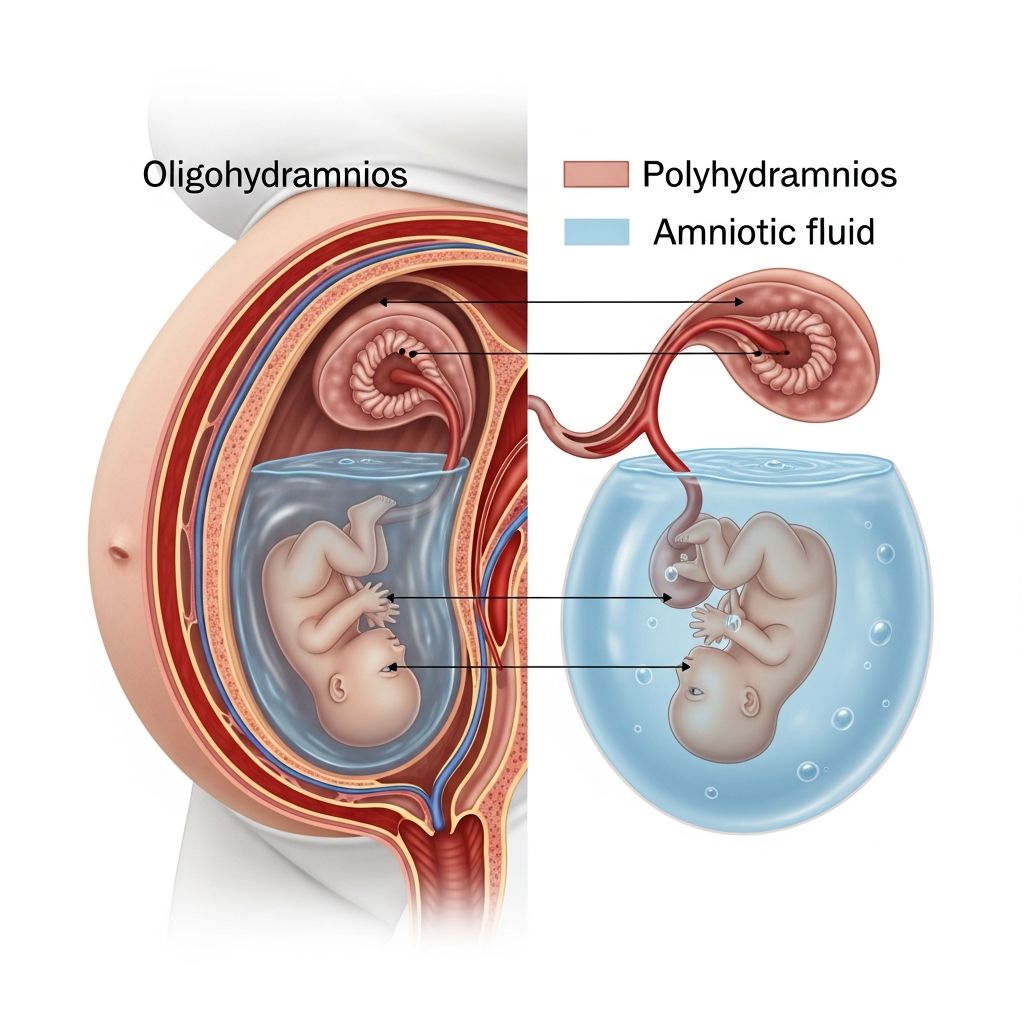
Amniotic fluid plays a crucial role in fetal development, providing cushioning, temperature regulation, and a medium for movement. However, deviations from normal levels—either too much (polyhydramnios) or too little (oligohydramnios)—can signal underlying issues and pose risks. This guide delves into the science, identification, and handling of these conditions, empowering expectant parents with knowledge for informed care.
The Vital Role of Amniotic Fluid
Amniotic fluid begins forming shortly after conception and peaks around 34-36 weeks of gestation, typically measuring 800-1000 mL. It protects the fetus from trauma, aids lung and limb development, and allows practice of breathing and swallowing movements. Imbalances disrupt this delicate equilibrium, potentially affecting pregnancy outcomes.
- Protection: Acts as a shock absorber against uterine pressure.
- Development: Prevents compression of the umbilical cord and supports musculoskeletal growth.
- Infection Barrier: Contains antimicrobial properties to safeguard the fetus.
Polyhydramnios: When There’s Too Much Fluid
Polyhydramnios occurs when amniotic fluid exceeds normal volumes, diagnosed via ultrasound if the deepest vertical pocket measures ≥8 cm or the Amniotic Fluid Index (AFI) ≥24-25 cm. Mild cases (AFI 24-30 cm) affect about 70% of instances, moderate (30.1-35 cm) 20%, and severe (>35 cm) 10%. It arises from disrupted fluid regulation, often due to fetal overproduction or reduced swallowing.
Common Causes of Excess Fluid
Several factors contribute to polyhydramnios:
- Maternal Diabetes: Uncontrolled gestational diabetes leads to fetal hyperglycemia, increasing urine output.
- Multiple Gestations: Twins or more amplify fluid production.
- Fetal Anomalies: Esophageal atresia, gastrointestinal obstructions, or neuromuscular issues impair swallowing.
- Idiopathic: Up to 50-60% of cases have no identifiable cause.
Symptoms and Maternal Experience
Many cases are asymptomatic, detected routinely via ultrasound. Noticeable signs include rapid uterine growth, severe shortness of breath from diaphragm pressure, heartburn, leg swelling, and abdominal discomfort. Severe polyhydramnios may cause uterine irritability mimicking contractions.
Associated Risks and Complications
Excess fluid heightens several dangers, escalating with severity:
| Complication | Description | Risk Increase |
|---|---|---|
| Preterm Labor | Uterine overdistension triggers early contractions. | High in severe cases |
| Placental Abruption | Rapid fluid shift post-rupture detaches placenta. | 2-3x higher |
| Cord Prolapse | Cord slips ahead of fetus after membranes rupture. | Elevated |
| Postpartum Hemorrhage | Uterine atony from chronic stretching. | Common |
| Fetal Malpresentation | Breech or transverse lie due to space. | Frequent |
Neonatal issues include respiratory distress, low Apgar scores, and macrosomia. Perinatal mortality rises in severe untreated cases.
Oligohydramnios: Insufficient Amniotic Fluid
Oligohydramnios, too little fluid, is identified when AFI ≤5 cm or deepest pocket ≤2 cm. It restricts fetal movement and development, particularly harmful if early in pregnancy.
Primary Causes
- Premature Rupture of Membranes (PROM): Leakage reduces volume rapidly.
- Placental Insufficiency: Impaired blood flow limits fetal urine production.
- Fetal Renal Issues: Kidney agenesis or obstructions halt urine output, the main fluid source post-20 weeks.
- Maternal Medications: ACE inhibitors or NSAIDs like ibuprofen suppress fluid.
- Post-Term Pregnancy: Fluid naturally decreases after 41 weeks.
Signs and Effects
Symptoms are subtle: smaller-than-expected uterus, reduced fetal movements, and visible cord on ultrasound (leather-like skin). Mothers may note leakage if PROM-related.
Potential Complications
- Potter Sequence: Facial/limb deformities from compression.
- Lung Hypoplasia: Inadequate fluid impairs alveolar growth.
- Cord Compression: Reduced cushioning causes hypoxia.
- Increased C-Section Rates: Poor labor tolerance.
Diagnosing Amniotic Fluid Disorders
Ultrasound is the gold standard, using AFI (sum of vertical pockets in four quadrants) or single deepest pocket (SDP). Normal AFI: 8-18 cm. Serial scans track progression. Additional tests include glucose screening for diabetes, fetal echocardiography for anomalies, and non-stress tests for well-being.
Grading Severity:
- Mild Poly: AFI 24-30 cm, often resolves.
- Moderate: 30-35 cm, closer monitoring.
- Severe: >35 cm, intervention likely.
Management Strategies
For Polyhydramnios
Focus on underlying causes:
- Diabetes control via diet, insulin.
- Serial ultrasounds, non-stress tests.
- Medications like indomethacin (before 32 weeks) to reduce fetal urine, cautiously.
- Amnioreduction: Draining excess fluid for symptom relief, though risks infection.
- Delivery planning: Earlier in severe cases at tertiary centers.
For Oligohydramnios
- Bed rest, hydration to boost fluid.
- Address PROM with antibiotics, steroids for lung maturity.
- Stop offending meds; monitor growth via Doppler.
- Early delivery if distress evident.
Lifestyle Tips and Monitoring
Attend all prenatal visits. Report symptoms like fluid leakage, decreased movements, or pain promptly. Maintain balanced diet, control weight, manage chronic conditions. Kick counts daily from 28 weeks: 10 movements in 2 hours.
Frequently Asked Questions (FAQs)
Can polyhydramnios resolve on its own?
Yes, mild cases often do, especially if idiopathic or diabetes-controlled. Close monitoring is key.
Is oligohydramnios always dangerous?
Not always; late-pregnancy mild cases may not harm. Early severe ones risk lung issues.
How is amniotic fluid measured?
Via ultrasound: AFI or SDP provides quick, non-invasive assessment.
Does too much fluid mean twins?
It raises likelihood but also links to diabetes, anomalies, or unknown causes.
Can I prevent these imbalances?
Not fully, but glycemic control, avoiding certain meds, and prompt care help mitigate risks.
Outlook and When to Seek Help
Most pregnancies with fluid imbalances result in healthy outcomes with vigilant care. Mild polyhydramnios resolves in 70% without intervention; oligohydramnios management averts many complications. Consult specialists like maternal-fetal medicine for tailored plans. Early detection via routine scans improves prognosis significantly.
References
- Polyhydramnios – StatPearls — NCBI Bookshelf. 2023-10-01. https://www.ncbi.nlm.nih.gov/books/NBK562140/
- Problems With Amniotic Fluid — Merck Manuals. 2023-08-15. https://www.merckmanuals.com/home/women-s-health-issues/complications-of-pregnancy/problems-with-amniotic-fluid
- Polyhydramnios (too much amniotic fluid) — NHS. 2024-02-20. https://www.nhs.uk/conditions/polyhydramnios/
- Polyhydramnios: Causes, Symptoms, Complications & Treatment — Cleveland Clinic. 2023-11-10. https://my.clevelandclinic.org/health/diseases/17852-polyhydramnios
- Amniotic Fluid Problems while Pregnancy — Valley Perinatal Services. 2024-01-05. https://valleyperinatal.com/amniotic-fluid-disorders/
- Polyhydramnios (High Amniotic Fluid) — Children’s Hospital Colorado. 2023-09-12. https://www.childrenscolorado.org/conditions-and-advice/conditions-and-symptoms/conditions/polyhydramnios/