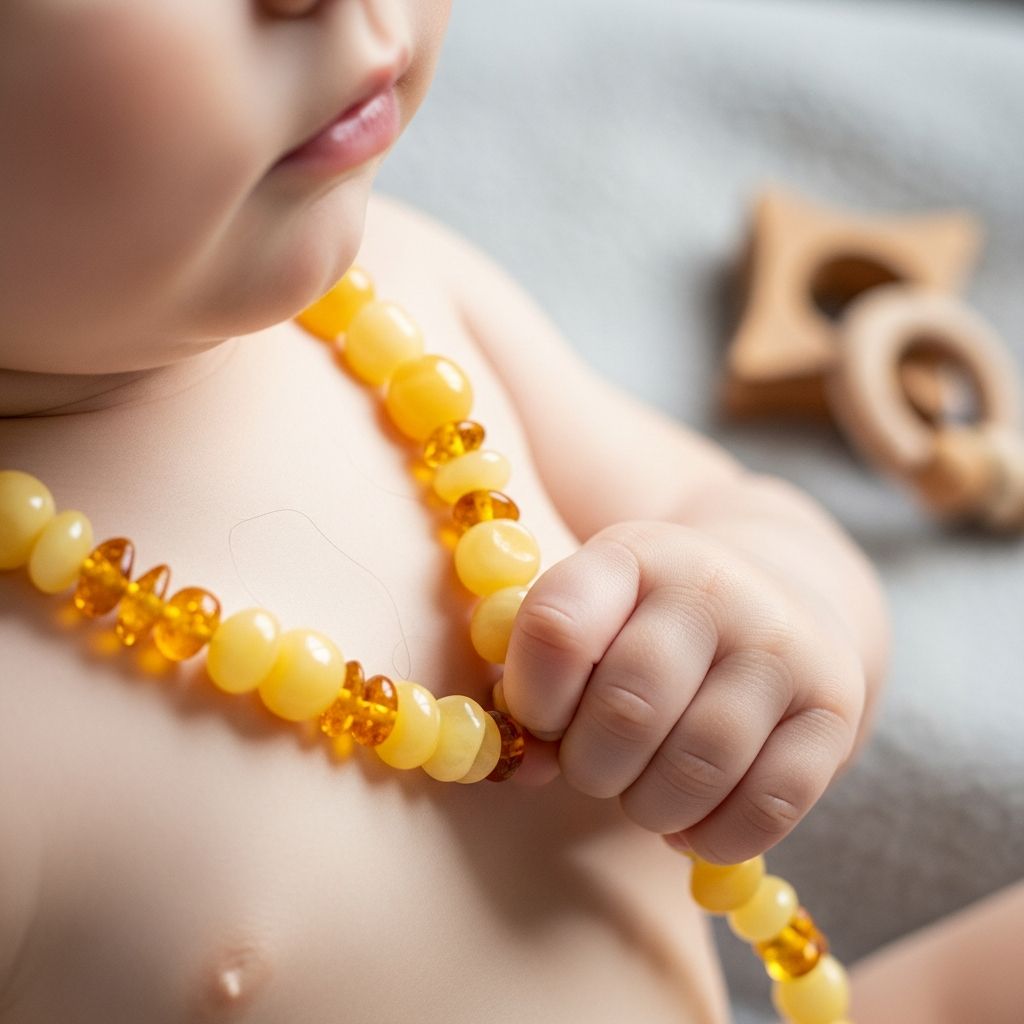
Teething can turn even the happiest baby into an unsettled, drooling, sleep-resistant bundle of misery, leaving exhausted parents eager to try anything that promises relief. Many caregivers eventually discover amber teething necklaces, which are marketed as a natural, drug-free solution that can supposedly soothe sore gums and calm fussy babies. Yet behind the glowing testimonials and beautiful beads lies an important question: are amber teething necklaces truly helpful, or are they mostly hype—and potentially dangerous?
This article explores what amber teething necklaces are, how they are claimed to work, what current medical evidence actually shows, the documented safety risks, and which safer strategies parents can use instead. The goal is not to judge parents’ choices, but to offer clear, science-based information so you can decide what feels right for your family.
What Exactly Is an Amber Teething Necklace?
Amber teething necklaces are strands of small beads, usually made from Baltic amber, designed to be worn around a baby’s neck, wrist, or ankle. The beads are often individually knotted along a cord and marketed specifically for infants and toddlers in the teething stage.
Unlike traditional teething toys, these necklaces are not meant to be actively chewed (although babies often try). Instead, sellers usually claim that simple contact with the skin is enough to create the supposed therapeutic benefits. Many versions are sold as handmade, eco-friendly, and stylish accessories that double as a home remedy for teething pain.
- Common materials: Baltic amber beads on cotton, silk, or nylon cord.
- Typical age of use: from early teething (around 4–6 months) into toddlerhood.
- Marketing angle: “natural,” “chemical-free,” and “holistic” pain relief.
How Are Amber Necklaces Supposed to Work?
The main theory promoted by manufacturers is that Baltic amber contains succinic acid, a substance they claim is released when the beads warm against the child’s skin. Once absorbed, this acid is said to have anti-inflammatory and pain-relieving properties, thereby easing teething discomfort. Some brands go even further, suggesting that amber can also reduce drooling, boost immunity, and calm general fussiness.
On paper, this story sounds appealing: a natural resin containing a gentle compound that melts into the skin and quietly soothes pain. However, several steps in that chain of claims are unproven, and each one would need to be demonstrated scientifically before the overall promise could be considered reliable.
| Marketing Claim | What Needs to Be True | What Research and Experts Report |
|---|---|---|
| Amber releases succinic acid when warmed by skin. | Beads must reach a temperature that meaningfully releases compounds without degrading. | No robust evidence that normal body warmth causes clinically relevant release from intact beads. |
| Succinic acid is absorbed through intact skin. | Enough acid must penetrate the skin barrier and enter local tissues or bloodstream. | Current medical literature does not demonstrate effective skin absorption from wearing beads. |
| Succinic acid reduces teething pain and inflammation. | It must have proven analgesic/anti-inflammatory effects in babies at those doses. | Systematic reviews describe insufficient evidence of pain relief in infants. |
What Scientific Evidence Says About Effectiveness
When researchers and pediatric specialists have looked at amber teething necklaces, they have consistently found a lack of high-quality studies showing that these products actually relieve teething pain. Review articles and literature overviews have concluded that there is more evidence of risk than of benefit, and that the proposed mechanisms of action remain speculative rather than proven.
Professional organizations and child-health bodies emphasize that anecdotal reports, social media stories, and testimonials are not the same as controlled scientific evidence. Without studies that clearly demonstrate pain reduction compared to safe alternatives or placebos, it is impossible to say with confidence that amber necklaces provide real, clinically meaningful relief.
Documented Safety Concerns and Warnings
While the benefits of amber teething necklaces remain unproven, the safety concerns are well documented and have prompted formal warnings from pediatric experts and regulatory agencies. The two major hazards are strangulation and choking, both of which can occur quickly and with little warning.
- Strangulation risk: Any cord or necklace worn around an infant’s neck can get caught on crib rails, car-seat straps, clothing, or furniture. If the child becomes entangled, the necklace can tighten and restrict breathing.
- Choking hazard: If the cord breaks or a clasp releases, small beads can scatter. Curious babies may put these in their mouth, nose, or ears, which can block the airway or require emergency removal.
Case reports have described infants who were strangled or nearly strangled by teething jewelry, as well as children who choked on beads. These incidents led to official alerts advising that teething necklaces and similar products should not be used on infants and young children. In these warnings, experts often stress that even so-called “breakaway” clasps or individually knotted beads do not eliminate the underlying hazards.
Why the Risks Outweigh The Unproven Benefits
For parents, it can be confusing when a product is widely sold and enthusiastically reviewed yet strongly discouraged by pediatricians. The key reason experts recommend against amber teething necklaces is the imbalance between potential harm and uncertain benefit. Serious outcomes such as strangulation or choking may be rare, but when they do occur the consequences can be catastrophic.
By contrast, the potential benefit—mild teething relief—is not clearly supported by scientific evidence and can be achieved by safer, well-studied methods. When a remedy carries risk to a baby’s life yet offers no proven advantage over other options, most child-health specialists consider it an unacceptable gamble.
Common Misconceptions About Teething and Amber
Part of the appeal of amber necklaces comes from misunderstandings about both teething and “natural” products. Clearing up these myths can help parents make more grounded decisions.
- Myth: Teething causes high fevers and serious illness. While teething may slightly disrupt sleep or appetite and cause drooling or mild irritability, significant fever, severe diarrhea, or marked lethargy usually signal something else and should be evaluated by a healthcare provider.
- Myth: Natural equals safe. Poison ivy and certain mushrooms are natural, yet very dangerous. A product being plant-based, mineral, or “ancient” does not guarantee safety or effectiveness.
- Myth: If other parents love it, it must work. Placebo effects, coincidence (symptoms improving on their own), and confirmation bias can all make an ineffective remedy seem powerful, especially when parents are desperate for a solution.
Safer Ways to Help a Teething Baby
Fortunately, there are many gentler, safer methods to help ease teething discomfort that do not involve placing jewelry around a baby’s neck. These options focus on cooling, pressure, and comfort, all of which can provide genuine relief with minimal risk when used correctly.
- Cool objects for chewing: Chilled (but not rock-hard frozen) teething rings, silicone toys, or pacifiers can soothe inflamed gums. The cold temperature numbs the area slightly while the pressure gives babies something safe to gnaw on.
- Clean, cold washcloths: A damp washcloth that has been placed in the refrigerator or briefly in the freezer until cool and slightly firm can be twisted into a shape that is easy for a baby to hold and chew.
- Gentle gum massage: With washed hands, a caregiver can softly rub the baby’s gums using a clean finger or a soft silicone finger brush. This direct pressure may briefly ease discomfort.
- Age-appropriate pain relief: When discomfort is significant, pediatricians may recommend carefully dosed over-the-counter pain relievers such as infant acetaminophen. Parents should always follow professional guidance and dosing instructions.
Products and Practices to Avoid
Alongside amber necklaces, certain other teething remedies are discouraged by pediatric and regulatory bodies due to safety concerns ranging from choking to toxic side effects. Some practices may seem harmless but can carry unexpected risks when used on young infants.
- Teething gels with numbing agents: Products containing benzocaine or similar topical anesthetics are generally discouraged for babies due to links to rare but serious blood-oxygen problems and the risk of swallowing the gel.
- Homeopathic tablets or unregulated drops: Past recalls and safety alerts have involved variable ingredient concentrations and potentially harmful substances in some “natural” teething pills or liquids.
- Anything tied around the neck: Bibs, teething toys, pacifiers, or jewelry that are fastened around a baby’s neck increase the risk of strangulation and should be avoided, especially during sleep.
Practical Tips for Sleep-Deprived Parents
Most parents searching for teething remedies are not chasing trends—they are simply exhausted and worried, longing to see their baby comfortable again. Keeping a few practical principles in mind can make the search for relief feel more manageable and less overwhelming.
- Prioritize breathing safety first. Any remedy that introduces strangulation or choking risk should be off the table, no matter how popular it appears online.
- Start with the simplest options. Often, basic measures like cool chewable toys, extra cuddling, and gum massage make a significant difference without complicated products or expense.
- Watch for red-flag symptoms. High fever, difficulty breathing, extreme sleepiness, or persistent vomiting are not typical teething issues and merit medical advice.
- Talk openly with trusted professionals. Pediatricians or family doctors can help sort fact from marketing and tailor recommendations to your baby’s health history.
Frequently Asked Questions About Amber Teething Necklaces
Do amber teething necklaces actually work?
There is currently no strong scientific evidence that wearing amber beads reduces teething pain, inflammation, or drooling in infants. Many reports of improvement are anecdotal and may reflect normal developmental changes, placebo effects, or other soothing measures used at the same time.
If my baby only wears the necklace while awake, is it safe?
Limiting use to awake times may reduce risk, but it does not eliminate it. Babies can become entangled in necklaces in high chairs, carriers, car seats, or while rolling and exploring, and beads can still break loose and become choking hazards. For this reason, many pediatric experts advise against any routine use.
Are there “safer” designs of amber teething jewelry?
Some manufacturers promote features such as breakaway clasps or individually knotted beads. While these may reduce certain dangers, they cannot fully remove the underlying risks associated with cords around the neck and small detachable pieces near a baby’s mouth.
Can my older child wear amber jewelry instead?
Older children may have better motor control and less constant supervision than infants, which can actually increase some risks. Necklaces can still snag while playing, and beads remain choking hazards if they break. If jewelry is worn at all, it should be removed during sleep and active play and never be used for medical purposes.
What should I do if I’ve already been using an amber necklace?
If your baby has been wearing an amber necklace, consider removing it and switching to safer comfort measures such as cooled teething toys and gentle gum massage. If you have questions or concerns about any past incidents—such as coughing fits, marks around the neck, or unexplained distress—discuss them with your child’s healthcare provider.
Key Takeaways for Parents
- Amber teething necklaces are marketed as natural pain relievers, but their proposed mechanism—releasing and absorbing succinic acid through the skin—remains unproven.
- Current research and expert reviews do not show clear evidence that amber necklaces meaningfully reduce teething pain or inflammation.
- The documented hazards of strangulation and choking have led pediatric organizations and regulators to caution against their use for infants and young children.
- Safer, effective alternatives include cooled teething toys, cold washcloths, gentle gum massage, and, when appropriate, medically guided use of infant pain relievers.
- Parents need and deserve reliable, judgment-free information; choosing not to use amber teething necklaces is a decision rooted in safety and evidence, not in overreaction.