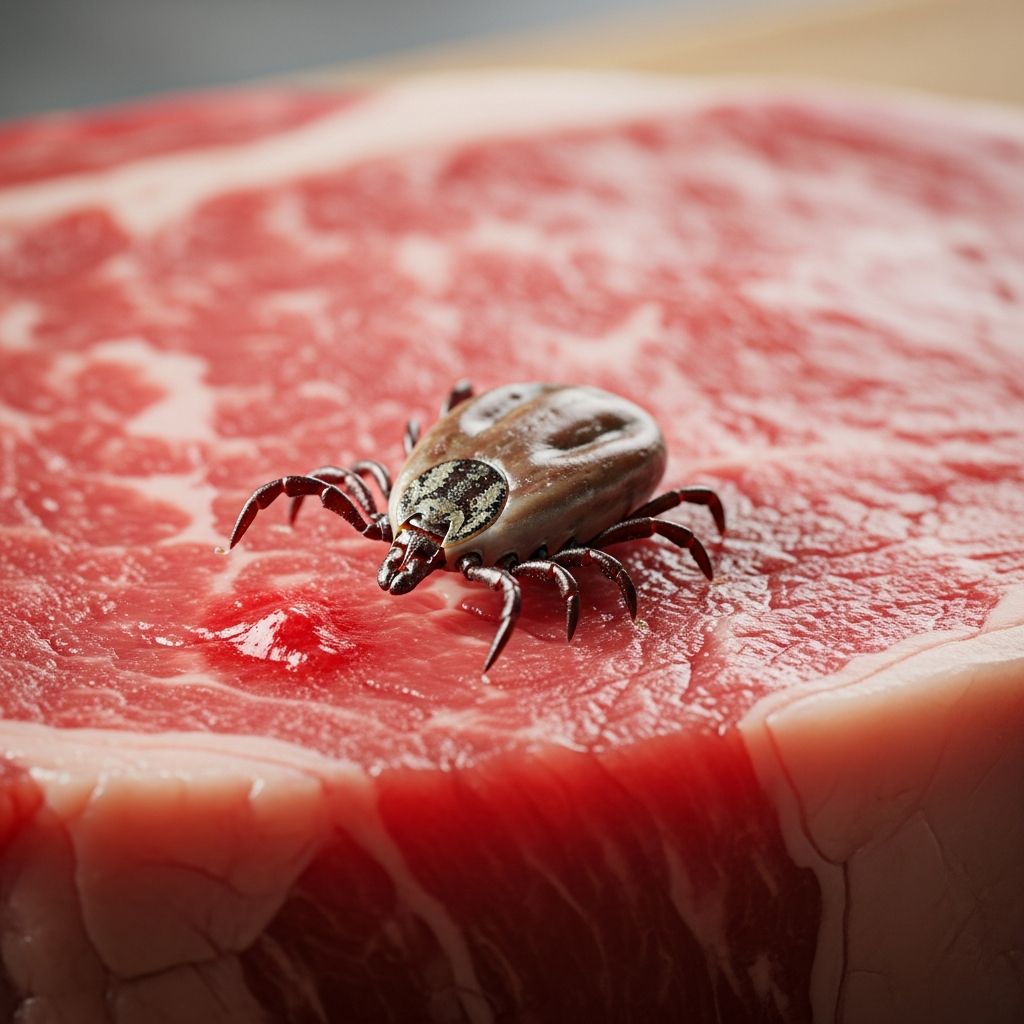
Alpha-gal syndrome (AGS) represents a unique form of food allergy where individuals develop severe reactions to red meat and certain mammalian products following a tick bite. Unlike typical food allergies that strike immediately, AGS symptoms emerge hours later, often catching people off guard during family dinners or casual meals.
Understanding the Rise of This Unusual Allergy
In recent years, reports of allergies to beef, pork, lamb, and other red meats have surged, particularly in regions with high tick populations. This condition, primarily linked to the Lone Star tick in the United States, affects people of all ages but is increasingly noted in children exploring outdoors.[10] The allergy stems from an immune response to a carbohydrate called galactose-alpha-1,3-galactose (alpha-gal), present in non-primate mammals but absent in humans, triggering IgE antibodies after tick exposure.
Geographically, AGS is prominent in the southeastern and midwestern U.S., Europe, Australia, and beyond, correlating with tick habitats. Adults often report prior tick bites, but children may not recall them, leading to diagnostic challenges.[10]
How Tick Bites Spark the Allergic Cascade
The Lone Star tick (Amblyomma americanum) carries alpha-gal in its saliva, sensitizing the human immune system upon biting. This process can take weeks to months, after which consuming red meat prompts a delayed IgE-mediated reaction. Other ticks worldwide, like those in Europe and Australia, contribute similarly.
- Key Sensitization Factors: Prolonged tick attachment increases risk; salivary alpha-gal directly immunizes.
- Demographics: More common in adults, but pediatric cases are rising with outdoor activities.
- Non-Tick Cases: Rare primary red meat allergies exist via gastrointestinal or skin sensitization, unrelated to alpha-gal.
Prevention starts with tick avoidance: use repellents, wear protective clothing, and check skin after outdoor play.[10]
Recognizing Delayed Symptoms in Daily Life
AGS reactions typically onset 3-6 hours post-ingestion, distinguishing it from standard allergies. This delay—sometimes up to 8 hours—means symptoms might appear at bedtime, complicating identification.
| Symptom Category | Common Signs | Severity Level |
|---|---|---|
| Skin | Hives, itchy rash, swelling of lips/eyelids | Mild to Moderate |
| Digestive | Nausea, vomiting, diarrhea, abdominal pain, heartburn | Moderate to Severe |
| Respiratory | Shortness of breath, wheezing | Severe |
| Systemic | Dizziness, low blood pressure, anaphylaxis | Life-Threatening |
Symptom variability occurs; one meal might cause mild indigestion, another severe anaphylaxis. Children may describe tummy aches or rashes without connecting to dinner.
Navigating Diagnosis for Families
Diagnosis involves history of tick exposure, delayed symptoms, and specific tests. Allergists use blood tests measuring alpha-gal-specific IgE levels; elevated titers confirm AGS.
- Skin Prick Tests: To mammalian meats like beef or pork.
- Component Testing: IgE to alpha-gal itself, aiding precision.
- Oral Challenges: Rarely done due to anaphylaxis risk; supervised only if needed.
Differential diagnosis rules out other allergies, like pork-cat syndrome (cross-reactivity via albumins). Early testing prevents repeated exposures.
Essential Management and Avoidance Strategies
No cure exists; strict avoidance is key. Eliminate red meats (beef, pork, lamb, venison, horse) and monitor mammalian-derived products.
Hidden Alpha-Gal Sources:
- Gelatin in medications, vaccines, candies.
- Dairy (variable; some tolerate milk, others react to aged cheeses).
- Organ meats, lard, broths.
- Cosmetics, heparin injections.
Read labels meticulously; consult pharmacists for meds. Epinephrine auto-injectors (e.g., EpiPen) are prescribed for anaphylaxis risk. Antihistamines and corticosteroids manage milder symptoms.
Family Nutrition: Thriving Without Red Meat
Transitioning diets challenges families, especially picky eaters. Poultry, fish, eggs, and plants provide protein alternatives.
| Protein Swap | Examples | Nutritional Benefits |
|---|---|---|
| Poultry/Fish | Chicken, turkey, salmon | Lean protein, omega-3s |
| Plant-Based | Beans, lentils, tofu, nuts | Fiber, vitamins |
| Eggs/Dairy (if tolerated) | Eggs, yogurt | Complete proteins, calcium |
Work with dietitians for balanced meals. Cooking hacks: grill turkey burgers mimicking beef or use mushroom “steaks.”
Long-Term Outlook and Potential Resolution
Optimistically, AGS IgE levels often decline over 1-5 years with avoidance and no further bites, allowing gradual reintroduction in some. Monitor via follow-up tests. Desensitization trials exist but are experimental.
Ticks remain a threat; ongoing prevention is vital to avoid re-sensitization.[10]
Frequently Asked Questions (FAQs)
Can children outgrow alpha-gal syndrome?
Yes, many do within 1-5 years if avoiding triggers and ticks, as IgE levels naturally decrease.
Is dairy always off-limits with AGS?
Not always; fresh dairy is often tolerated due to lower alpha-gal, but test tolerance cautiously.
What if my child has a reaction—first steps?
Administer epinephrine if severe (breathing issues, swelling), call 911. Mild cases: antihistamines, seek allergist.
How do I prevent tick bites in kids?
Use DEET repellent, long sleeves/pants, daily checks, avoid wooded areas at dawn/dusk.[10]
Are there vaccines for AGS?
No approved vaccines yet; research focuses on tick saliva components.
Empowering Families Against AGS
Awareness arms parents: educate schools, pack safe lunches, travel with epinephrine. Support groups share tips. Consult allergists promptly post-tick bite or odd symptoms.
Word count: 1728 (excluding metadata and references).
References
- Red Meat Allergy: Symptoms, Causes, Diagnosis, Treatment — Healthline. 2023-10-15. https://www.healthline.com/health/red-meat-allergy
- Alpha-gal syndrome – Symptoms and causes — Mayo Clinic. 2024-05-22. https://www.mayoclinic.org/diseases-conditions/alpha-gal-syndrome/symptoms-causes/syc-20428608
- Alpha-gal and Red Meat Allergy — American Academy of Allergy, Asthma & Immunology (AAAAI). 2023-01-01. https://www.aaaai.org/tools-for-the-public/conditions-library/allergies/alpha-gal-and-red-meat-allergy
- Red meat allergy in children and adults — PubMed Central (PMC). 2019-04-26. https://pmc.ncbi.nlm.nih.gov/articles/PMC6488443/
- Alpha-Gal Meat Allergy — Columbia University Lyme & Tick-Borne Diseases Research Center. 2023-06-12. https://www.columbia-lyme.org/alpha-gal-meat-allergy
- Alpha-Gal Syndrome, Lone Star Tick Allergy, and Red Meat Allergy — Asthma and Allergy Foundation of America (AAFA). 2024-02-14. https://aafa.org/allergies/types-of-allergies/insect-allergy/alpha-gal-syndrome/
- Red Meat Allergy — Children’s Minnesota. 2023-11-08. https://www.childrensmn.org/educationmaterials/parents/article/23136/red-meat-allergy/
- About Alpha-gal Syndrome — Centers for Disease Control and Prevention (CDC). 2024-07-30. https://www.cdc.gov/alpha-gal-syndrome/about/index.html