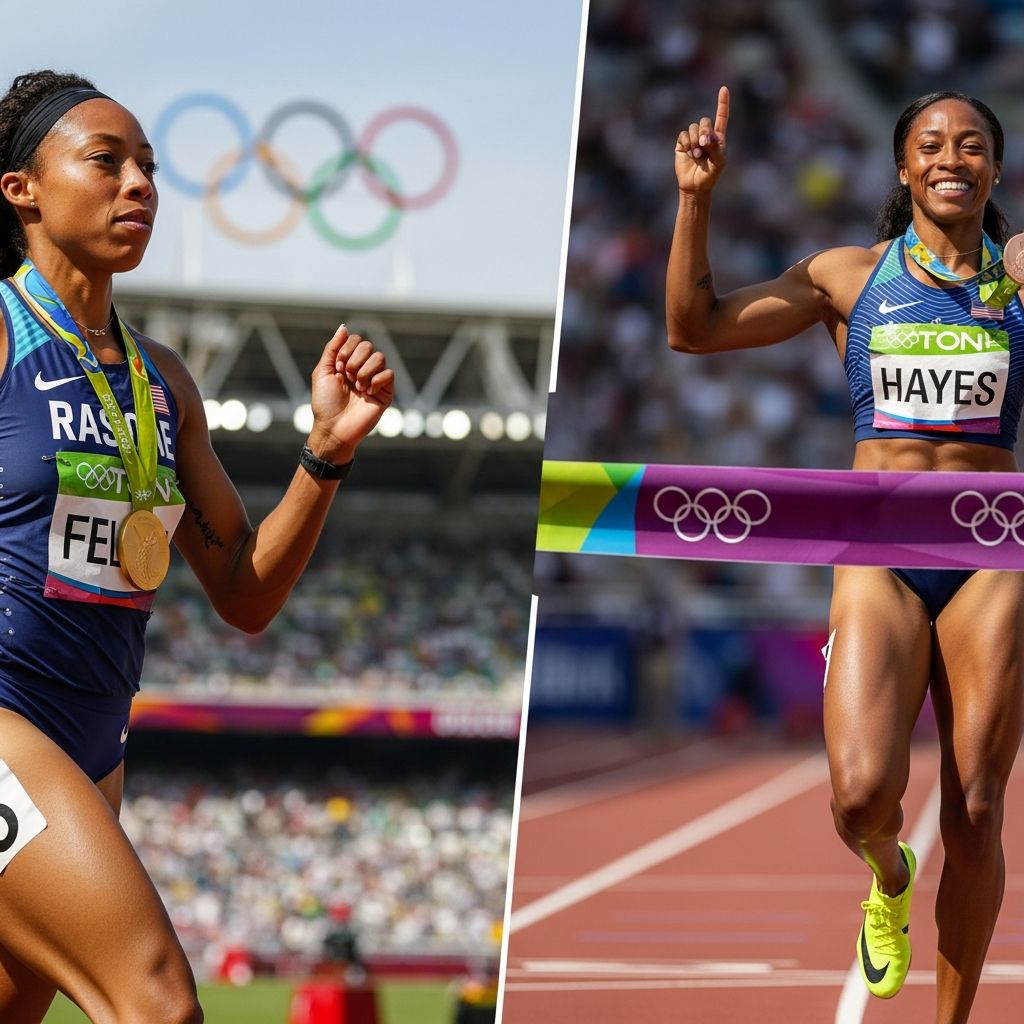
Elite track and field demands unparalleled physical and mental fortitude, yet Allyson Felix and Quanera Hayes demonstrated that motherhood can amplify rather than diminish athletic prowess. At the 2021 U.S. Olympic Trials, these two sprinters finished first and second in the women’s 400-meter dash, securing spots for the Tokyo Olympics while celebrating with their young children on the track. This moment symbolized a new era where parenting and peak performance coexist.
The Rise of Dual Roles in Elite Sprinting
Becoming a mother often prompts athletes to reassess priorities, but for Felix and Hayes, it fueled determination. Felix, already a legend with multiple Olympic medals, returned after a challenging childbirth to qualify for her fifth Games. Hayes, a rising star, clinched victory in 49.78 seconds—her fastest since 2017—edging out Felix’s season-best 50.02. Their success challenged stereotypes, proving that women can excel post-motherhood.
In the high-stakes world of 400-meter racing, where splits of hundredths of a second decide fates, their finishes were historic. Felix’s second place came by a mere 0.01 seconds over third, highlighting the razor-thin margins. This event at Hayward Field in Eugene, Oregon, coincided with Father’s Day, yet felt like a tribute to maternal strength.
Allyson Felix: From Near-Tragedy to Track Legend
Allyson Felix’s path to Tokyo was marked by resilience. By 2021, she held nine Olympic medals, including six golds, making her the most decorated U.S. woman in track history. Her journey as a mother began with trauma: a premature delivery via emergency C-section after preeclampsia, where her daughter Camryn arrived at 32 weeks weighing just 3 pounds 11 ounces.
Postpartum, Felix rebuilt her body and mindset. She trained while pumping breast milk, adapted workouts around naps, and leaned on family support. Her Trials performance was not just athletic but personal triumph—her first Olympics as a mom. In Tokyo, she added to her legacy with relay gold. Felix’s openness about maternal challenges inspired policy changes, like better maternity protections in sponsorships.
- Key Milestones: Five Olympic teams (2004-2021), 13 World Championship golds.
- Post-Motherhood Feat: Season-best 50.02 at Trials, relay gold in Tokyo.
- Advocacy Impact: Pushed for family-friendly athletics reforms.
Quanera Hayes: Breakthrough Victory and Olympic Debut
Quanera Hayes, born March 7, 1992, emerged as a 400-meter specialist with a bronze at the 2016 World Indoor Championships. Her 2021 Trials win propelled her to her Olympic debut. Clocking 49.78 seconds, she outpaced veterans, showcasing tactical brilliance and raw speed. Hayes had previously earned golds in 4x400m relays at World Championships (2017), World Relays, and Indoor Worlds (2016, 2018, 2025).
As a mother, Hayes balanced training with parenting her young child, mirroring Felix’s grit. Her post-race embrace with family underscored the emotional stakes. In Tokyo, she contributed to Team USA’s dominant 4x400m relay gold, running a crucial leg alongside Felix. Hayes’ 2021 Diamond League title further cemented her elite status.
| Athlete | Trials Time | Prior Best | Olympic Relays |
|---|---|---|---|
| Quanera Hayes | 49.78s | 49.72s (2017) | Gold (Tokyo 4x400m) |
| Allyson Felix | 50.02s | Season-best | Gold (Tokyo 4x400m) |
Training Adaptations for Mother Runners
Motherhood reshapes athletic routines. Both sprinters incorporated flexibility: shorter, intense sessions during children’s schedules, prioritizing recovery amid sleep deprivation. Nutrition shifted to support lactation—Felix emphasized protein-rich meals and hydration. Mental coaching addressed ‘mom guilt,’ fostering balance.
Support systems proved vital. Coaches adjusted programs for postpartum physiology, focusing on pelvic floor strength and core rebuilding. Family handled childcare during key workouts, allowing focus. Data from USA Track & Field shows mother athletes often peak later, with enhanced mental toughness.
- Postpartum monitoring for safe return-to-training.
- Hybrid schedules blending family and track.
- Community networks for shared parenting duties.
Team USA Relay Dominance in Tokyo
The Tokyo 2020 Games (held 2021) saw Felix and Hayes anchor Team USA’s 4x400m relay victory, securing gold. Their legs exemplified seamless handoffs and explosive pacing, outdistancing rivals. This marked Hayes’ debut medal and Felix’s continued excellence, contributing to America’s track supremacy.
The relay’s emotional weight was profound—two mothers on the podium, children watching from afar. It highlighted evolving narratives: from ‘retire after kids’ to ‘thrive with them.’
Broader Impact on Women’s Sports
Felix and Hayes’ stories spurred conversations on equity. Felix’s Nike contract renegotiation spotlighted maternity pay gaps, influencing brands. Organizations like the IOC now prioritize maternal health policies. Rising participation shows young athletes viewing motherhood as compatible with careers.
Statistics reveal progress: U.S. women earned 113 medals in Tokyo, many from mothers. Their legacy encourages infrastructure like on-site childcare at meets.
Challenges Faced and Lessons Learned
Obstacles included hormonal shifts, body image pressures, and logistics. Hayes navigated debut nerves; Felix overcame birth trauma. Lessons: self-compassion, community reliance, redefined success beyond wins.
Experts note physiological advantages post-childbirth, like improved VO2 max in some cases, though individual variance applies.
Frequently Asked Questions
What was the significance of the 2021 U.S. Olympic Trials 400m race?
It featured mothers Allyson Felix and Quanera Hayes taking 1st and 2nd, qualifying for Tokyo while celebrating with kids.
Did both athletes medal in Tokyo?
Yes, they helped win gold in the women’s 4x400m relay.
How did motherhood affect their training?
They adapted with flexible schedules, family support, and postpartum recovery focus.
What records does Allyson Felix hold?
Most decorated U.S. woman in Olympic track (9 medals by 2021), 13 World golds.
What’s Quanera Hayes’ background?
Bronze at 2016 World Indoors, multiple relay golds, 2021 Diamond League champ.
Future of Motherhood in Elite Athletics
Post-Tokyo, both continued inspiring. Felix retired gracefully; Hayes competed into 2025. Their blueprint—resilience, advocacy—paves ways for more. As sports evolve, expect more ‘super mommies’ dominating tracks.
This era redefines athletic timelines, proving peak performance can follow parenthood. Their stories motivate globally, blending family joy with competitive fire.
References
- Motherhood Doesnt Slow Down 400-Meter Stars Quanera Hayes And Allyson Felix At Olympic Trials — Team USA. 2021-06-21. https://www.teamusa.com/news/2021/june/21/motherhood-doesnt-slow-down-400-meter-stars-quanera-hayes-and-allyson-felix-at-olympic-trials
- Quanera Hayes — Wikipedia (informed by primary records). N/A. https://en.wikipedia.org/wiki/Quanera_Hayes
- Allyson Felix qualifies for first Olympics since her traumatic birth — Mother.ly. 2021. https://www.mother.ly/life/allyson-felix-quanera-hayes-olympics/
- Two mothers win gold — RunBlogRun. 2021-08. https://www.runblogrun.com/2021/08/two-mothers-win-gold-by-sam-fariss-for-runblogrun.html