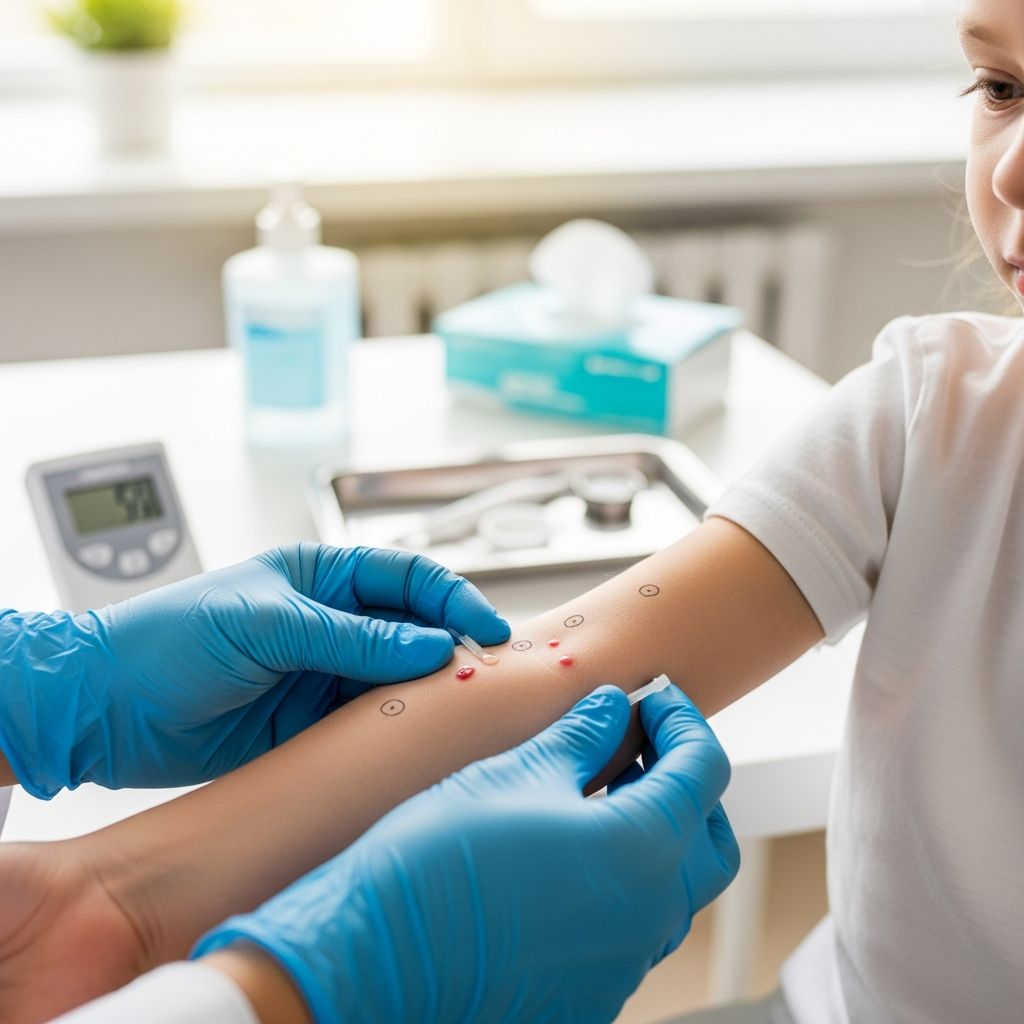
Allergy testing helps identify specific triggers causing reactions in children, enabling targeted management strategies like avoidance or immunotherapy. These tests range from simple skin pricks to supervised challenges, tailored to a child’s age, symptoms, and health history.
Why Test for Allergies in Kids?
Children often experience allergy symptoms such as sneezing, itchy eyes, rashes, or breathing issues, which can disrupt daily life and school. Early identification of allergens like pollen, dust mites, foods, or pet dander prevents severe reactions like anaphylaxis. Testing informs personalized plans, including medications or desensitization, improving quality of life.
Common symptoms prompting tests include respiratory issues (runny nose, wheezing), skin problems (eczema, hives), and gastrointestinal distress from foods. Allergists start with a detailed history and exam before recommending tests.
Main Types of Allergy Testing Methods
Several reliable methods exist, each suited to different allergens and patient needs. Skin tests are quick for environmental allergies, while blood tests suit those on medications or with skin conditions.
Skin Prick Testing: The First-Line Approach
This common, non-invasive test detects immediate allergies to foods, pollen, mold, or insects. Drops of allergen extracts are placed on the forearm or back, then pricked with a lancet to introduce tiny amounts under the skin. Reactions appear as raised wheals within 15-20 minutes, measured against controls.
It’s safe for most kids over 6 months, providing results in one visit. Avoid antihistamines 5-7 days prior for accuracy. False positives occur, so results pair with history.
Intradermal Skin Testing for Deeper Insights
For subtler reactions, allergists inject dilute allergen under the skin. This heightens sensitivity, useful for drug or insect venom allergies when prick tests are negative. It’s more uncomfortable and risks stronger reactions, so reserved for necessary cases.
Blood Tests: Reliable When Skin Isn’t an Option
Specific IgE blood tests measure allergy antibodies without skin contact. A venous sample analyzes responses to numerous allergens. Ideal for infants, eczema patients, or those on antihistamines/pregnant. Though slightly less sensitive, consistent and unaffected by skin issues.
Tests like ImmunoCAP offer precise quantification, guiding treatment even in complex cases like chronic hives.
Patch Testing for Contact Allergies
Applied to the back, patches with chemicals/metals stay 48 hours, checked for delayed rashes. Targets eczema from nickel or fragrances, not immediate IgE reactions.
Specialized Tests for Food and Respiratory Allergies
Food Challenges: The Gold Standard Confirmation
Under medical supervision, incremental doses of suspected foods are given orally. Monitors for reactions confirm true allergies post other tests. Riskiest method, done in equipped facilities with epinephrine ready. Not first-line due to anaphylaxis potential.
Spirometry: Assessing Allergy-Related Asthma
This lung function test measures exhaled air volume/speed after deep inhalation. Detects asthma often linked to allergies. Kids blow into a spirometer; results guide inhaler therapy.
Preparation and What to Expect During Testing
Discuss medications with your allergist—stop antihistamines, tricyclics days before skin tests. For blood draws, no special prep; challenges require fasting. Tests last 30-60 minutes; kids can distract with toys.
Post-test: Watch for delayed reactions. Results discussed immediately for skin tests, lab-processed for blood.
Interpreting Results and Accuracy Factors
Positive skin wheal >3mm indicates sensitization, but clinical history confirms allergy. Blood IgE levels correlate with risk. No test is 100% accurate—combinations enhance reliability. False positives/negatives possible; challenges verify.
| Test Type | Best For | Accuracy | Time | Risks |
|---|---|---|---|---|
| Skin Prick | Environmental/Food | High | 15-20 min | Low (itch) |
| Intradermal | Venom/Drugs | Very High | 15-20 min | Moderate |
| Blood IgE | All, esp. skin issues | Good | Days | Minimal |
| Patch | Contact Dermatitis | High | 48-96 hrs | Low |
| Food Challenge | Food Confirmation | Gold Std | Hours | High (anaph.) |
| Spirometry | Asthma | High | 15 min | None |
Risks, Safety, and When to Avoid Tests
Most tests safe; skin tests rarely cause systemic reactions. Challenges risk anaphylaxis—only in controlled settings. Avoid skin tests in severe eczema, uncontrolled asthma, or recent reactions. Blood tests nearly risk-free.
Treatment Paths After Testing
Positive results lead to avoidance (e.g., allergen-free diet), meds (antihistamines, nasal sprays), or immunotherapy shots/drops building tolerance. Long-term, reduces symptoms/med reliance.
Frequently Asked Questions (FAQs)
Which allergy test is most accurate for kids?
Skin prick and blood IgE are reliable; challenges confirm foods. Choice depends on history—often combined.
Can babies under 1 year get allergy tests?
Yes, blood tests preferred; skin viable from 6 months if skin clear.
How painful are allergy tests?
Skin pricks feel like mosquito bites; blood like routine draw; challenges monitored closely.
What if tests are negative but symptoms persist?
May indicate non-allergic causes; further eval like elimination diets or specialist consult.
Do allergy tests change over time?
Yes, retest if symptoms evolve; some allergies resolve with age.
Empowering Parents: Next Steps
Consult pediatric allergists for tailored testing. Track symptoms in a diary. Educate on epinephrine auto-injectors for severe allergies. Regular follow-ups monitor progress.
(Word count: 1723)
References
- 7 Types of Allergy Tests or Procedures From Allergists — Alpha Allergy & Asthma. 2023. https://www.alphaallergy.com/allergy-tests/
- Comparing the 5 Types of Allergy Testing — Aspire Allergy. 2024. https://www.aspireallergy.com/blog/comparing-types-of-allergy-testing
- Explaining the Different Types of Allergy Testing — Allergy Affiliates. 2023. https://www.allergyaffiliates.com/explaining-the-different-types-of-allergy-testing
- What is Allergy Testing? — Moffitt & Mesaros ENT. 2024. https://mmment.com/services/allergy-sinus/allergy/comprehensive-allergy-testing/
- Allergy Testing | Skin Testing — American Academy of Allergy, Asthma & Immunology (AAAAI). 2024-01-15. https://www.aaaai.org/tools-for-the-public/conditions-library/allergies/allergy-testing
- Allergy Testing Options — Thermo Fisher Scientific. 2025. https://www.thermofisher.com/diagnostic-education/patient/wo/de/testing-for-allergy-triggers.html
- In brief: What kinds of allergy tests are there? — National Center for Biotechnology Information (NCBI), NIH. 2023-05-12. https://www.ncbi.nlm.nih.gov/books/NBK367583/