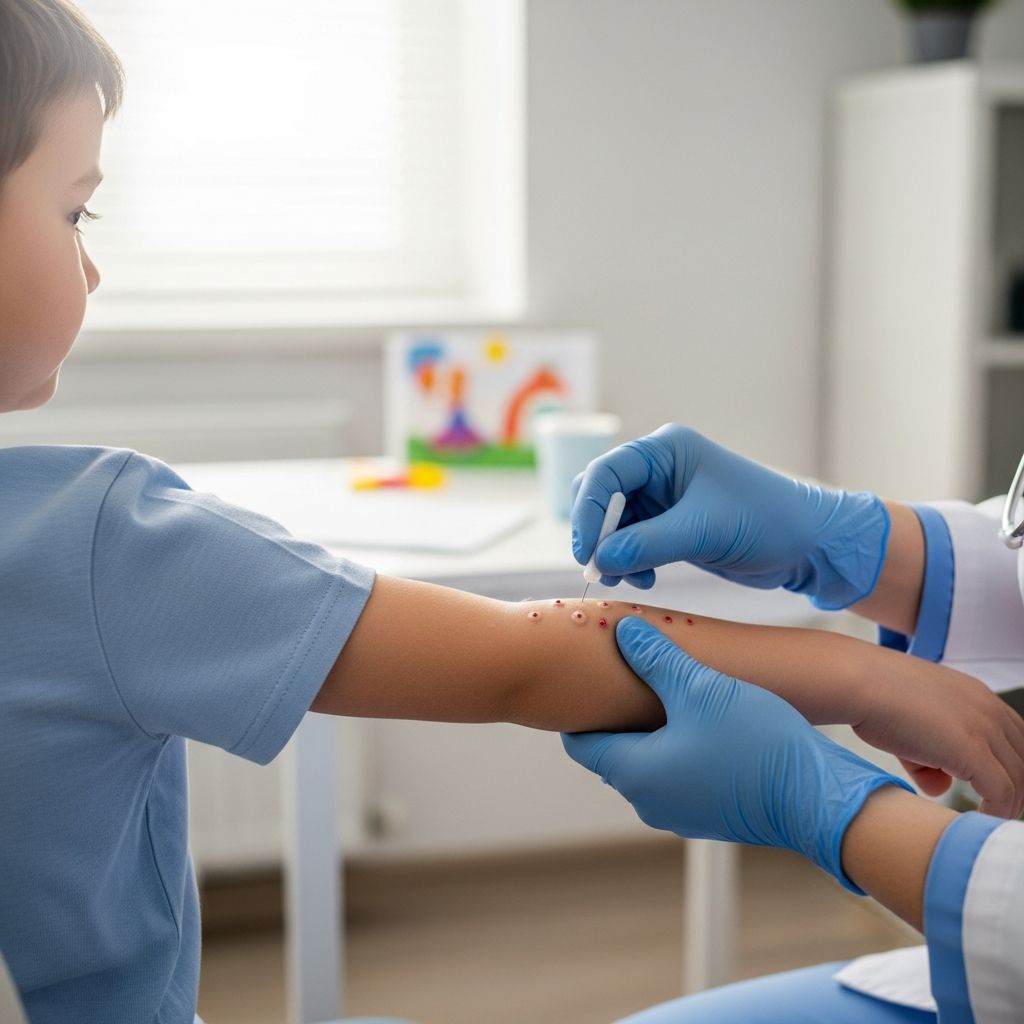
When a child has frequent sneezing, rashes, or reactions to foods or insect stings, doctors may recommend an allergy skin test to help find out what is triggering the symptoms. Understanding how these tests work can make the experience calmer for both you and your child.
This guide explains the main types of allergy skin tests used in children, what happens during the appointment, how safe they are, and how you can help your child get ready.
Why Doctors Use Allergy Skin Tests
Allergy skin tests help specialists identify substances (allergens) that cause an immediate or delayed allergic response in your child’s body. These substances can include airborne triggers, foods, insect venoms, and items that touch the skin such as metals or cosmetics.
Common reasons for ordering a skin test
- Repeated sneezing, itchy or runny nose, or nasal congestion without a cold (possible hay fever or dust/pet allergy)
- Chronic or recurrent hives, itchy rashes, or eczema that worsens after exposure to certain triggers
- Reactions after eating particular foods (such as hives, swelling, vomiting, or wheezing)
- History of stings from bees, wasps, or fire ants that cause large local swelling or systemic reactions
- Rashes or skin irritation after contact with jewelry, fragrances, hair dye, or other products (possible contact dermatitis)
Skin tests are often preferred over blood tests because they can be done in the office, cost less, and provide results within minutes or a few days, depending on the type of test.
Main Types of Allergy Skin Tests for Kids
Allergy specialists choose from several testing methods based on your child’s symptoms and medical history. The three most common are:
- Skin prick (or puncture) tests – for airborne and many food allergies
- Intradermal tests – usually for insect venom and certain medication allergies, or to clarify unclear prick test results
- Patch tests – for delayed skin reactions such as contact dermatitis
| Test type | Best for | How long it takes | Where it’s done on the body |
|---|---|---|---|
| Skin prick test | Airborne allergens, many foods, some insect venoms and medications | Usually within 30–60 minutes (including waiting time) | Typically the forearms or upper back |
| Intradermal test | Venom allergies, some drugs, or when prick test is unclear | About 60–90 minutes, especially if several steps are needed | Often the upper arm or forearm |
| Patch test | Contact dermatitis and delayed skin reactions | Patches stay on 2–4 days; readings may continue for several days after removal | Usually the back |
How a Skin Prick Test Works
A skin prick test (sometimes called a puncture test) is the most common allergy skin test used in children. It checks for the presence of allergy-related antibodies (IgE) against specific substances.
Step-by-step overview
- Preparation of the skin: The nurse or allergist cleans a small area on your child’s forearm or back with alcohol.
- Marking the test spots: Small marks are drawn on the skin to label each allergen and the control solutions.
- Applying allergen drops: A tiny drop of liquid, each containing a different potential allergen (such as pollen, dust mite, pet dander, milk, egg, or peanut), is placed beside the marks.
- Pricking the skin: Using a very small, sterile lancet, the clinician makes a shallow prick through each drop so a trace amount of allergen enters just beneath the surface.
- Waiting period: Your child then waits, usually about 15 minutes, while the staff watches for any reaction.
- Measuring the reactions: If a raised, red, itchy bump (a wheal) appears like a mosquito bite, the nurse measures its size with a ruler and compares it with control spots.
Controls used in the test
- Positive control: A tiny amount of histamine is used to show what a typical reaction looks like on your child’s skin.
- Negative control: A drop of saline shows what your child’s skin looks like when no allergen is present.
The specialist interprets the test by comparing each allergen bump with the controls and by considering your child’s history and symptoms. A positive bump means the immune system recognizes that substance, but it does not always guarantee that the child will react to it in everyday life. Clinical judgment is still essential.
What to Expect From Intradermal Testing
Intradermal tests use a small needle to inject a very dilute allergen solution into the top layer of the skin. They are more sensitive than prick tests and are mainly used when
- A skin prick test is negative or unclear, but the history strongly suggests an allergy
- Doctors are checking for venom or certain medication allergies
Your child may feel a brief pinch with the tiny injection. As with prick testing, results are checked after about 10–15 minutes by measuring any wheals or redness. Because intradermal tests are slightly more likely to cause a stronger reaction, they are done under close medical supervision.
Patch Testing for Contact Skin Allergies
For rashes that show up hours or days after contact with a substance, such as nickel or fragrance, doctors often use a patch test.
How patch testing is done
- The dermatologist or allergist selects panels of common contact allergens (metals, preservatives, rubber chemicals, fragrances, dyes, and more).
- Small amounts of these substances are placed on adhesive patches.
- The patches are taped onto your child’s back, where the skin is usually less exposed to sunlight and trauma.
- Patches typically remain in place for 48 hours; your child should keep them dry and avoid activities that cause heavy sweating.
- After removal, the skin is checked at least once, and often again 24–48 hours later, for redness, swelling, or small blisters.
Patch tests detect delayed allergic reactions (also called type IV hypersensitivity), which can take several days to appear.
Safety and Possible Side Effects
Allergy skin testing is considered safe for most children and is performed routinely in allergy clinics. The amount of allergen used is extremely small, and staff are trained to manage any reactions quickly.
Typical, mild side effects
- Red, itchy bumps where the allergens were applied (wheals) that resemble mosquito bites
- Mild local swelling or warmth at a test site
- Temporary discomfort or itching that fades within a few hours
Less common but more serious risks
- Widespread hives
- Dizziness or breathing difficulty
- Very rarely, anaphylaxis (a severe allergic reaction) requiring urgent treatment
Because of these rare risks, skin testing is always carried out where emergency medications and trained professionals are available.
Children who may not be good candidates
- Kids with uncontrolled asthma or serious heart or lung disease
- Children taking medications that interfere with test results or with treatment of a reaction (for example, some antidepressants or beta-blockers)
- Children who have had severe life-threatening reactions where blood tests may be preferred first
The allergy specialist will review your child’s medical history and current medicines carefully before deciding whether skin tests are appropriate.
How to Prepare Your Child for Allergy Skin Testing
Preparing ahead of time can make testing smoother and help ensure accurate results.
Medication review
Certain medicines, especially antihistamines, can block allergic responses and interfere with skin test results. Your child’s doctor will give specific instructions on what to stop and when. Common examples include:
- Over-the-counter allergy pills or syrups
- Some cold medications that contain antihistamines
- Certain prescription allergy or itch medicines
Never stop asthma controllers or other essential medications without medical advice. If your child cannot safely stop a needed medicine, the allergist may choose alternative testing methods.
Helping your child feel comfortable
- Explain that the test uses tiny pricks or scratches that feel more like a quick pinch or fingernail scratch rather than a big shot.
- Reassure your child that the bumps may itch but the staff can help with cream, cold packs, or medicine afterward if needed.
- Bring a favorite toy, book, or game to keep your child occupied during waiting times.
- Dress your child in loose clothing so the arms or back are easy to access.
Understanding Your Child’s Results
When the testing is finished, the allergist will review the findings with you.
What a “positive” skin test means
- Your child’s immune system has IgE antibodies to that allergen.
- The bump size suggests how strongly the skin reacted, but size alone does not determine how severe symptoms might be in real life.
What a “negative” skin test means
- The test did not show IgE sensitivity to that specific allergen at the time of testing.
- A negative result makes an immediate-type allergy less likely, but the doctor will still consider your child’s history and may use blood tests or food/drug challenges in special cases.
Ultimately, test results are only one part of a complete evaluation. The allergist combines the history, physical examination, and sometimes additional testing to decide whether an allergy diagnosis is appropriate and to create a treatment plan.
After the Test: Next Steps for Your Child
Depending on what the testing shows, the allergy team may suggest several strategies.
Allergen avoidance
- Adjusting the home to reduce dust mites, pet dander, mold, or pollen exposure
- Changing skin or hair products if a contact allergen is found
- Strictly avoiding specific foods or insect stings that trigger allergic reactions
Medications
- Non-sedating antihistamines to relieve nasal or skin symptoms
- Topical creams for eczema or contact rashes
- Inhalers for allergic asthma
- Epinephrine auto-injectors for children with risk of severe reactions
Allergen immunotherapy
For some children with significant environmental or venom allergies, the allergist may discuss allergen immunotherapy (such as allergy shots). This treatment gradually exposes the child to increasing amounts of an allergen under medical supervision to reduce sensitivity over time.
Frequently Asked Questions (FAQs)
At what age can a child have an allergy skin test?
Skin prick testing can be performed even in very young children if there is a clear medical reason, although the exact timing is decided individually by the allergist. In infants and toddlers, doctors may be more selective about which allergens to test.
Are allergy skin tests painful for kids?
Most children describe the feeling as brief and mildly uncomfortable, similar to a fingernail scratch, not like a deep injection. The main nuisance is usually the itchiness from positive bumps.
How long do the marks from the test last?
The raised itchy bumps usually peak within about 15–20 minutes and then fade over a few hours. Any mild redness may last a little longer but typically resolves the same day.
Can my child eat normally before a skin test?
In most cases, children can eat and drink as usual before an allergy skin test, unless the clinic gives specific instructions for a supervised food challenge or sedation. Always follow the directions from your child’s allergy team.
If the test is positive, does my child need to avoid that food or allergen forever?
Not always. A positive test means the immune system recognizes that allergen, but whether it must be avoided depends on symptoms, risk of severe reaction, age, and the allergist’s overall assessment. Some children outgrow certain food allergies, while others need lifelong precautions.
References
- Allergy Skin Test: Purpose, Procedure & Results — Cleveland Clinic. 2022-09-02. https://my.clevelandclinic.org/health/diagnostics/24912-allergy-skin-test
- Skin Prick Tests — Food Allergy Research & Education (FARE). 2022-01-01. https://www.foodallergy.org/resources/skin-prick-tests
- Allergy skin tests — Mayo Clinic. 2022-06-11. https://www.mayoclinic.org/tests-procedures/allergy-tests/about/pac-20392895
- Skin prick testing – for the diagnosis of allergic disease — Australasian Society of Clinical Immunology and Allergy (ASCIA). 2016-03-01. https://www.allergy.org.au/images/stories/pospapers/ASCIA_SPT_Manual_March_2016.pdf
- Patch Testing for Skin Allergies — Nationwide Children’s Hospital. 2019-08-01. https://www.nationwidechildrens.org/family-resources-education/health-wellness-and-safety-resources/helping-hands/patch-testing-for-skin-allergies