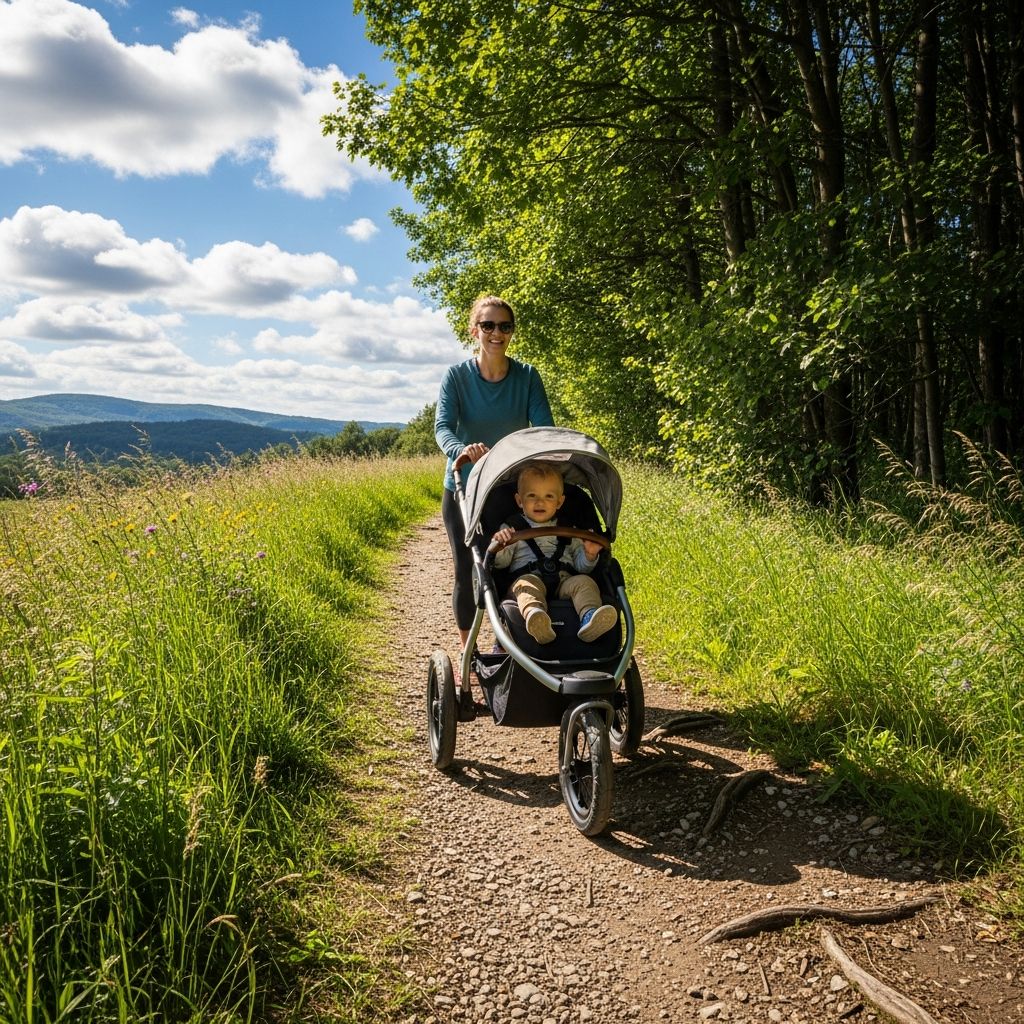
For parents who love hiking trails, wandering through parks, or exploring uneven city streets, an all-terrain stroller can be the bridge between your pre-kid lifestyle and your new family adventures.
What Makes a Stroller “All-Terrain”?
An all-terrain stroller is built to handle more than just smooth mall floors and perfectly paved sidewalks. It is designed to roll over grass, gravel, dirt paths, cracked city pavement, and even packed sand with more stability and comfort than a standard stroller.
While every model is a bit different, most all-terrain strollers share a few core traits that set them apart from everyday options.
- Larger wheels: Typically 12–16 inches in diameter, often with pneumatic (air-filled) or foam-filled rubber tires.
- Better suspension: Built-in shock absorption to smooth out bumps for your baby and your wrists.
- Sturdy frame: A more robust chassis that can withstand bumps, curbs, and off-road use.
- Improved maneuverability: Swivel and lockable front wheel(s) for navigating tight corners or rough tracks.
- Performance-oriented design: Many are shaped like jogging strollers, with three wheels and a longer wheelbase.
All-Terrain vs. Everyday Strollers
Before investing in a more rugged stroller, it helps to understand how it differs from a typical full-size or lightweight stroller. The table below summarizes key differences so you can quickly see whether an all-terrain option fits your lifestyle.
| Feature | All-Terrain Stroller | Everyday / Standard Stroller |
|---|---|---|
| Wheel size | Large, often 12–16 inch wheels for better obstacle clearance | Small to medium wheels, best on flat surfaces |
| Tire type | Rubber, often air-filled or foam-filled for grip and cushioning | Plastic or smaller rubber wheels with minimal tread |
| Suspension | Usually includes built-in suspension or shock absorbers | May have basic suspension or none at all |
| Weight | Heavier, due to stronger frame and larger wheels | Lighter and more compact, especially travel strollers |
| Use case | Trails, parks, uneven sidewalks, light jogging (if rated for it) | Errands, malls, smooth sidewalks, public transit |
| Fold size | Bulkier fold, may take more trunk space | More compact, better for tight storage |
| Price range | Generally higher due to premium components | Wide range from budget to premium |
Key Features to Look For
Shopping for an all-terrain stroller can be overwhelming because so many models look similar at a glance. Focusing on a few critical features helps you filter quickly and choose a stroller you will actually love using.
1. Wheels and Tires
The wheels are the heart of any all-terrain stroller. Their size, material, and design will directly affect how easily you can push the stroller and how comfortable the ride feels for your child.
- Diameter: Larger wheels roll more easily over roots, stones, and curbs.
- Tire type: Air-filled tires offer excellent cushioning but can go flat; foam-filled or rubber tires avoid punctures but may feel slightly firmer.
- Tread pattern: Deeper tread offers more grip on grass and gravel but may feel draggy indoors.
- Front-wheel function: A swiveling front wheel helps with tight turns; a lockable mode adds stability on rough surfaces or during jogging.
2. Suspension and Ride Comfort
Suspension systems reduce the jarring effect of rocks, potholes, and uneven sidewalks. They matter for your child’s comfort and can also protect your wrists and shoulders from strain.
- Look for visible shocks or clearly described suspension in the marketing materials.
- Test the stroller (if possible) by pushing it over bumps or rolling it empty to feel how it absorbs impact.
- Pair good suspension with a padded, supportive seat and secure harness for the smoothest ride.
3. Safety and Age Recommendations
All-terrain capability does not automatically mean a stroller is safe for every age or for running. Always check the manufacturer’s guidelines on age, weight, and activity type.
- Harness: A 5-point harness is preferred for active use and bumpy surfaces.
- Brakes: Rear foot brake is essential; a hand brake offers more control on hills or while jogging.
- Age minimums: Many jogging-capable strollers recommend waiting until at least 6–8 months, sometimes longer, for running.
- Car seat compatibility: Some models can be used from birth with an infant car seat and adapter, but typically only for walking.
4. Handlebar and Parent Comfort
Parents often underestimate how much the handlebar affects everyday comfort. If you or your partner are taller or shorter than average, adjustability can make or break your experience.
- Seek an adjustable handlebar or multiple height settings if more than one adult will use the stroller regularly.
- Check the grip material; foam grips feel cushy but may wear faster, while rubber is durable and easy to clean.
- Consider a wrist strap for extra safety on hills or during jogs.
5. Fold, Storage, and Everyday Practicality
A stroller that performs beautifully on trails but is impossible to fold or store will eventually gather dust. Take a realistic look at how you plan to transport and store your stroller.
- Try folding the stroller yourself if you can; aim for a fold you can manage with a baby on your hip.
- Measure your trunk and compare it to the stroller’s folded dimensions.
- Evaluate the under-seat basket and pockets for snacks, diapers, and gear.
Matching the Stroller to Your Lifestyle
Not every all-terrain stroller is built for the same type of parent. To narrow down your options, start by describing the way you truly live—not the fantasy version of your life that exists only on social media.
Urban Explorers
If you live in a city and spend most of your time on sidewalks, public transit, and busy parks, you may want a more compact all-terrain stroller that still handles cracked pavement and occasional dirt paths.
- Prioritize maneuverability and a shorter wheelbase that can weave through crowds.
- Look for an easy, relatively compact fold and lighter weight.
- Consider hybrid wheels that roll smoothly indoors but still offer some tread.
Trail and Park Lovers
Parents who walk or hike on unpaved trails, grass fields, or gravel will benefit from bigger wheels, deeper tread, and robust suspension. Comfort for longer outings also becomes more important.
- Choose larger-diameter wheels, especially in the rear, and a more aggressive tread.
- Opt for a roomier seat with a deeper recline for trail naps.
- Pack-friendly storage and a good canopy will make long walks more enjoyable.
Runners and Joggers
If you plan to run with your child, you will need a stroller specifically rated for jogging. Not every all-terrain stroller is safe for this purpose, even if it looks the part.
- Confirm that the manufacturer explicitly markets the stroller as a running or jogging stroller.
- Look for a fixed or lockable front wheel, a hand brake, and a sturdy frame.
- Check weight and age minimums for jogging, and follow them strictly.
Pros and Cons of All-Terrain Strollers
Every stroller category involves compromise. Understanding the tradeoffs of all-terrain models helps you decide if their strengths outweigh the drawbacks for your family.
Benefits
- More comfortable ride on rough surfaces and broken sidewalks.
- Smoother steering and less wrist strain due to higher-quality wheels and suspension.
- Better stability on curbs, grass, and light off-road paths.
- Often higher weight limits, allowing use for bigger toddlers and preschoolers.
- Great for active families who want to stay outdoors with their children.
Potential Drawbacks
- Heavier and bulkier than many standard or travel strollers.
- May be harder to carry up stairs or lift into small trunks.
- Higher upfront cost due to premium materials.
- Air-filled tires require occasional maintenance, including pumping and dealing with flats.
- Not always ideal for tight indoor spaces or frequent public transit use.
Questions to Ask Before You Buy
Because an all-terrain stroller is a bigger investment, it pays to slow down and think through your needs. Use the checklist below to guide your research and in-store testing.
- Where will you use the stroller most often: city sidewalks, neighborhood paths, hiking trails, or all of the above?
- How often will you need to lift it into a car, up stairs, or onto public transit?
- Will multiple caregivers use it, and do you need an adjustable handlebar?
- Do you plan to run with it, or just walk and hike?
- Do you want to use it from birth with an infant car seat, or will you start later?
- How much storage space do you have at home and in your vehicle?
- What is your realistic budget when you factor in accessories like rain covers and snack trays?
Helpful Accessories for Off-Road Adventures
Once you choose your stroller, a few thoughtfully selected accessories can make outdoor excursions far more pleasant for both you and your child.
- Weather covers: Rain shields and wind covers protect your child from sudden weather changes.
- Sun canopies and shades: Extendable canopies or clip-on shades offer extra UV protection.
- Parent console: Cup holders and zippered pockets for keys, phone, and snacks.
- Child tray: A snack tray helps keep toddlers entertained and reduces spills.
- Pump and repair kit: Essential if your stroller uses air-filled tires and you frequently go off-road.
- Travel bag: A dedicated bag can protect your stroller during flights or storage.
Maintenance Tips to Keep Your Stroller Rolling Smoothly
Regular maintenance extends the lifespan of your all-terrain stroller and keeps rides safer and more comfortable. The good news is that most tasks are quick and easy once you know what to look for.
- Periodically check tire pressure if you have air-filled wheels; under-inflated tires feel sluggish and are more prone to flats.
- After muddy or sandy outings, wipe down the frame and wheels to prevent grit from wearing on moving parts.
- Inspect brakes, harness straps, and buckles routinely to ensure everything locks and releases properly.
- Lubricate moving joints as recommended by the manufacturer, avoiding oil or products that attract dirt if they are not specified.
- Remove and wash fabrics according to the care label to avoid mold and lingering odors.
FAQs About All-Terrain Strollers
Are all-terrain strollers safe for newborns?
Many all-terrain strollers can safely carry a newborn only when paired with a compatible infant car seat and adapter, and typically for walking, not running. Once your baby can sit with strong head and neck control, you can usually transition to the main stroller seat as long as it has a supportive recline.
Can I use an all-terrain stroller as my only stroller?
Yes, many families rely on a single all-terrain stroller for everything from grocery runs to nature walks. However, you will need to be comfortable with the extra size and weight; some parents eventually add a lightweight travel stroller for quick errands or flights.
Do all-terrain strollers work well on the beach?
They generally handle packed, damp sand better than deep, dry sand. Larger wheels with good tread and lower tire pressure can help, but in very soft sand you may still end up pulling the stroller backward or choosing a beach wagon instead.
What is the difference between an all-terrain stroller and a jogging stroller?
Many jogging strollers are all-terrain, but not all all-terrain models are designed for running. A jogging stroller will explicitly state that it is safe for running and usually includes a fixed or lockable front wheel, a hand brake, and specific age/weight guidelines for jogging.
How long can I use an all-terrain stroller?
Most models list both a weight limit and height or age range; some go up to 50–75 pounds. Because of their sturdier build, they often accommodate taller toddlers and preschoolers comfortably, making them a long-lasting investment for active families.
Final Thoughts: Focus on Your Real Life, Not the Label
The best all-terrain stroller is not necessarily the flashiest brand or the one that claims to conquer the wildest mountain trail. It is the stroller that feels easy to push on the paths you actually take, fits in the car you actually drive, and makes it simpler to live the life your family genuinely enjoys.
When you focus on how and where you will really use your stroller day after day, the right all-terrain model becomes much easier to spot—and your adventures with your child become that much more fun.